Cubist Style
Mechanical Elements (Fernand Léger)
Fernand Léger (1881–1955) vytvořil dílo Mechanical Elements. Patří k hnutí Cubist Style. Je vyrobeno z Oil On Canvas. Nachází se v Metropolitan Museum of Art v New York, Spojené státy americké.
- Oil On Canvas
- Metropolitan Museum of Art, New York

 Náhled v interiéru

 Ručně malovaná olejná reprodukce
 Sdílet
 Sdílet
 Informační list


 Stáhnout
 Podobné položky
 Rentgenové snímky
 Slideshow
 Otázky a odpovědi

 Statistiky
Mechanical Elements v kostce
- Název díla
- Mechanical Elements
- Autor
- Fernand Léger (1881–1955)
- Rok narození umělce
- Argentan, Francie
- Technika
- Oil On Canvas
- Kde jej vidět
- Metropolitan Museum of Art, New York, Spojené státy americké
- Pohyb
- Cubist Style
- Období
- Modern
- Motiv
- mechanical elements, cubism, geometry, industrial design, abstraction, assemblage
Co przedstawuje dílo Mechanical Elements?
A Vision of Industrial Harmony
Fernand Léger’s “Mechanical Elements,” painted in 1924, stands as a striking testament to the burgeoning fascination with technology during the interwar period. More than just a depiction of gears and pipes—though undeniably prominent—the artwork embodies Léger's ambitious goal: to synthesize Cubist fragmentation with the dynamism of the machine age, creating an aesthetic that simultaneously challenged artistic conventions and reflected the transformative realities of modern life.
Born Joseph Fernand Henri Léger in Argentan, Normandy, 1881, Léger embarked on a journey from rural landscapes to the epicenter of Parisian avant-garde. Initially drawn to architecture, his artistic path swiftly pivoted toward painting after arriving in Paris around 1900, fueled by an unwavering conviction that art could engage with the complexities of its time.
Cubism Revisited: Geometric Precision
Léger’s stylistic evolution is inextricably linked to Cubism. Influenced profoundly by Picasso and Braque, he adopted the fractured perspective and simultaneous viewpoints characteristic of this revolutionary movement—a deliberate rejection of traditional representation in favor of exploring spatial relationships through geometric forms. However, Léger didn't simply replicate Cubist principles; he pushed them further, distilling them into a simplified vocabulary of circles, squares, and lines.
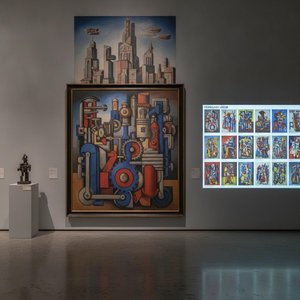
“Mechanical Elements” exemplifies this approach brilliantly. The canvas is dominated by interlocking geometric shapes—primarily circles and squares—arranged in a rhythmic pattern that evokes the precision and repetition found in industrial machinery. These forms aren’t merely decorative; they actively contribute to conveying a sense of movement and energy, mirroring the ceaseless pace of urban life.
Symbolism Beyond Mechanism
While the artwork's visual language speaks directly to the influence of technology, Léger imbued “Mechanical Elements” with deeper symbolic resonance. The repetition of geometric shapes isn’t merely a stylistic device; it represents an attempt to capture the impersonal logic and order inherent in industrial processes—a deliberate contrast to the organic forms favored by Impressionism and Post-Impressionism.
Furthermore, Léger's use of color – predominantly shades of gray punctuated by vibrant accents – underscores this thematic preoccupation. Gray symbolizes the materiality of metal and concrete, while bursts of color represent human vitality and creativity—a harmonious blend reflecting Léger’s belief that art could coexist with technological advancement without sacrificing beauty or emotional depth.
A Legacy of Innovation
"Mechanical Elements" cemented Léger's position as a pioneer of Tubism – a variant of Cubism developed by Léger himself—characterized by the use of tubular forms to represent objects and figures. This innovative technique anticipated developments in Pop Art decades later, demonstrating Léger’s enduring influence on subsequent generations of artists.
Today, reproductions of “Mechanical Elements” continue to captivate audiences with their bold aesthetic and intellectual ambition. They serve as a powerful reminder that art can not only reflect the spirit of its time but also actively shape our understanding of it—a timeless masterpiece celebrating both geometric precision and human resilience.
Ve kterém muzeu se nachází Mechanical Elements?
Metropolitan Museum of Art
New York, Spojené státy americké
Původy a historie Metropolitan Museum of Art Cesta Metropolitan Museum of Art začala s vizí, kterou sdílel skupina podnikatelů, financierských magnátů i předních umělců a myslitelů. Po své založení v roce 1870 instituce hledala trvalé sídlo, které by mohlo pojmout její neustále rostoucí sbírky. Než se muzeum usadilo na svém současném místě, krátce sídlilo v areálu sídla Douglas Mansion na West 14th Street.


Vysokorozlišené fotografie díla Mechanical Elements

Fernand Léger, Mechanical Elements, Metropolitan Museum of Art. Veřejná doména
Barvy sladěné s originálem digitálním expertem, soubor jemně retušovaný a věrný tahům umělcovy štětce.
Stáhněte si soubor ve vysokém rozlišeníOdpovědi na otázky k dílu Mechanical Elements
Které muzeum uchovává originál díla "Mechanical Elements"?
Originál díla „Mechanical Elements“ od Fernand Léger je uložen v instituci Metropolitan Museum of Art, New York, Spojené státy americké. Reprodukce však umožňuje toto dílo vystavit i ve vašem domově.
V jaké technice je vytvořeno dílo „Mechanical Elements“ od Fernand Léger?
Technikou díla „Mechanical Elements“ od Fernand Léger je Oil On Canvas. Reprodukce mají za cíl věrně zachytit vzhled této techniky.
Jaká témata se objevují v díle „Mechanical Elements“ od Fernand Léger?
„Mechanical Elements“ od Fernand Léger zobrazuje: mechanical elements, cubism, geometry, industrial design, abstraction, assemblage, modern art.
Lze obraz díla „Mechanical Elements“ od Fernand Léger volně reprodukovat?
Stav autorských práv pro dílo „Mechanical Elements“ od Fernand Léger: toto dílo spadá do v rámci volného užití – autorská práva vypršela. To určuje, zda lze volně vytvářet reprodukce tohoto obrazu.
Kdo je autorem díla "Mechanical Elements"?
Dílo "Mechanical Elements" vytvořil/a Fernand Léger. Informace na této stránce popisují originální dílo umělce Fernand Léger.
K kterému uměleckému směru patří „Mechanical Elements“ od Fernand Léger?
Dílo „Mechanical Elements“ od Fernand Léger patří k období směru Cubist Style, který dílu dodává jeho stylistický kontext.
Do jaké fáze tvůrčího rozvoje Fernand Léger patří dílo „Mechanical Elements“?
„Mechanical Elements“ představuje období Mechanical Period umělce Fernand Léger.
Jak lze vysvětlit situaci s autorskými právy u díla „Mechanical Elements“ od Fernand Léger?
Autorskoprávní status díla „Mechanical Elements“ – v rámci volného užití – autorská práva vypršela – vyplývá ze smrti umělce v roce 1955.
Zůstalo dílo "Mechanical Elements" ve své domovské zemi?
Ne – dílo se nachází v zahraničí. Fernand Léger se narodil(a) v Francie, zatímco originál díla „Mechanical Elements“ je uchováván v muzeu v Spojené státy americké.
O umělci, Fernand Léger

1881–1955, Francie
Fernand Léger
Život Fernanda Légera Příběh Fernanda Légera začíná v obci Argentan, která leží v departementu Orne v Dolní Normandii. Na svět přišel 4. února 1881 jako jediný syn. Jeho raná léta byla formována klidem francouzského venkova a přítomností jeho matky, Marie-Adèle Daunou.
Také od autora Fernand Léger
 Město1919
 Mechanik1920
 Tři ženy1921
 Nudy ve Výšinném lese1910

Eseje k tématu Mechanical Elements
 Cubism Unveiled: How Picasso and Braque Redefined Modern Art through Geometric RevolutionExplore the revolutionary world of Cubism. Discover how Pablo Picasso and Georges Braque dismantled perspective to redefine modern art thro…
 Mastering the Machine Age: The 25 Best Artworks by Fernand LégerImmerse yourself in the vibrant world of Fernand Léger. Explore 25 iconic masterpieces of Cubism and Tubism, from bold geometric forms to m…
 Průmyslová estetika v umění: 10 ikonických děl pro váš interiérProzkoumejte 10 ikonických děl, která zachycují sílu a estetiku průmyslové revoluce. Od Monetových továren po realistické scény Maneta – ob…