
 Náhled v interiéru
 Sdílet
 Sdílet
 Podrobnosti o díle
 Průvodce

 Stáhnout
 Podobné položky
 Rentgenové snímky
 Slideshow
 Q&A
Q&A Statistiky
Výstavní studie

- 43.0 x 28.0 cm


 Zobrazit více
Získejte soubor připravený k tisku, který svou kvalitou výrazně převyšuje webový náhled. Každý prodávaný digitální obraz pochází z vysokorozlišeného originálu v naší databázi – obvykle o šířce 5 000 až 15 000 pixelů – díky čemuž můžete tisknout ve velkém formátu, provádět těsný střih nebo si s jistotou užít i ty nejjemnější detaily.
Žádný soubor neopustí naše studio bez úprav. Digitální expert kontroluje barvy v porovnání s původním malířským dílem a v případě potřeby je upravuje, poté pomocí profesionálních nástrojů pro retuš zvyšuje ostrost a detailnost — přičemž vždy zůstává věrný tahům štětcem a stylu umělce. Výsledkem je obraz, který vypadá jako malba, nikoliv jako naskenovaný snímek s filtrem.
Schvalování před dokončením: náš expert vám do 72 hodin zašle obraz e-mailem k revizi. Nejsste spokojeni? Můžete požádat o úpravy či opravy, nebo si můžete vyžádat vrácení peněz, pokud kvalita neodpovídá vašim očekáváním.
Tuto kvalitu využívají vydavatelství, designová studia, galerie i tiskárny.
Digitální obrazy
Stáhněte si soubor ve vysokém rozlišení pro osobní prohlížení, tisk nebo kreativní projekty. ( Přepnout na tisk Koupit ručně malovaný obraz)
Součást každé objednávky digitálního obrazu
Profesionální digitální doručení, zaručené
Když si vyberete OriginalUniqueArt.com, nezískáváte pouze obrázek – získáváte digitální umělecké dílo s profesionálně vylepšenými detaily, zpracované s precizností a podpořené zárukou za spokojenost. Zde je vše, co vaše objednávka automaticky obsahuje:

Rychlé doručení e-mailem
Váš digitální obraz ve vysokém rozlišení vám bude zaslán e-mailem do 72 hodin od objednávky – připraven k okamžitému použití.

Digitální soubor s využitím AI
Vaše umělecké dílo je profesionálně optimalizováno pomocí pokročilých nástrojů umělé inteligence a manuální úpravy, což zajišťuje maximální úroveň detailu, ostrosti a přesnosti barev.

Doživotní bezplatné znovuodeslání digitálních obrazů
Soubor jste omylem smazali nebo ztratili? Žádný problém – kdykoliv vám ho znovu zašleme zcela zdarma.

Bez poplatků za dovoz – navždy
Užijte si své umělecké dílo okamžitě bez celních poplatků, daní nebo nákladů na dopravu – digitální stažení je vždy bez daňových povinností.

Záruka přesnosti barev
Díky profesionálním nástrojům a správě barev zajišťujeme, aby váš digitální obraz odrážel původní barvy co nejvěrněji.

100dená záruka spokojenosti
Pokud nebudete s digitálním obrázkem spokojeni, provedeme jeho revizi nebo vám vrátíme 100% platby do 100 dnů – bez jakýchkoliv dotazů.

100% záruka vrácení peněz
Nespokojeni? Získejte plnou náhradu peněz do 100 dnů od obdržení digitálního souboru – bez zbytečných dotazů.

Slevy při hromadných objednávkách
Koupě 3 obrazů ušetří 10% – Koupě 5 obrazů ušetří 15% – Koupě 10+ obrazů ušetří 20%. Ideální pro kreativní projekty, galerie a agentury.
Ferdinand Hodler: Symbolism, Parallelism & The Quest For Universal Harmony
Hodler’s oeuvre stands as a singular testament to the artistic fervor of late 19th century Switzerland and embodies the profound influence of Symbolist aesthetics. Born in Bern in 1853 amidst considerable familial hardship—the premature deaths of his father and two brothers profoundly shaping his worldview—Ferdinand Hodler embarked on an artistic journey characterized by unwavering dedication to exploring the depths of human emotion and capturing the ethereal beauty of nature. His formative years instilled within him a contemplative spirit that would permeate his subsequent paintings, establishing a core preoccupation with mortality and the transient nature of existence – themes recurrent throughout his prolific output. Hodler’s initial artistic explorations centered on portraiture and landscape painting executed in a realist style, diligently copied from prints to satisfy the burgeoning demand for decorative art amongst tourists. However, it was during his formative years at Collège de Genève that he encountered Alexandre Calame's evocative landscapes, sparking an interest in capturing the sublime grandeur of Alpine vistas with meticulous detail. This early exposure solidified his conviction that artistic expression could transcend mere representation, striving instead to convey intangible feelings and ideas—a principle that would become central to his groundbreaking stylistic innovation. The pivotal moment arrived during Hodler’s encounter with Hans Holbein's monumental Dead Christ in the Tomb, which irrevocably altered his artistic sensibilities. The profound solemnity of Holbein’s depiction captivated Hodler’s imagination, prompting him to delve into the complexities of human psychology and exploring themes of death and decay with unflinching honesty. This influence manifested itself in numerous paintings where Hodler wrestled with confronting mortality head-on—a courageous undertaking that cemented his reputation as a pioneer of Symbolist art. Hodler's distinctive “parallelism” style emerged from this crucible of artistic experimentation, rejecting conventional compositional conventions in favor of symmetrical arrangements and rhythmic patterns mirroring the perceived harmony underlying human society. Paintings like The Chosen One exemplify this approach, presenting figures posed with deliberate precision—suggestive of ritual or dance—to convey a sense of order and balance. Hodler envisioned woman as embodying the desire for unity with nature, while youth represented vitality and innocence – concepts meticulously rendered in his canvases. Hodler’s artistic legacy extends far beyond stylistic innovation; it resides in his unwavering commitment to conveying profound emotional resonance through his artwork. His paintings—particularly Night—remain powerfully evocative, capturing the anxieties of modern life alongside glimpses of transcendent beauty. Hodler's exploration of symbolism—evident throughout his oeuvre—continues to inspire artists and collectors alike, reminding us that art possesses the capacity to illuminate hidden truths and elevate our understanding of the human condition.Figure Study - Ferdinand Hodler
This striking pencil drawing depicts a solitary female figure seated on a chair, embodying the core tenets of Hodler’s Symbolist aesthetic. The composition is meticulously balanced, with the subject occupying a significant portion of the frame while simultaneously utilizing subtle shading and contrasts to establish depth—a technique characteristic of Hodler's masterful command of artistic expression. The drawing’s subdued palette—dominated by shades of grey—underscores its contemplative mood, inviting viewers to contemplate themes of introspection and vulnerability. Hodler’s meticulous attention to detail is evident in the rendering of the figure’s posture—characterized by crossed legs and a solemn gaze—reflecting his preoccupation with mortality and conveying an aura of quiet dignity. The artist skillfully employs hatching and cross-hatching to sculpt the form, creating a tactile illusion that enhances the drawing's expressive power. Furthermore, Hodler’s masterful manipulation of light and shadow imbues the image with atmospheric depth, capturing the ethereal quality favored by Symbolist painters. The artwork’s historical context—rooted in the burgeoning Symbolist movement—is underscored by its stylistic parallels to paintings produced during Pont-Aven School, where artists sought inspiration from Breton folklore and mythology. Hodler's exploration of psychological states—expressed through nuanced gestures and facial expressions—demonstrates his conviction that art could penetrate beneath surface appearances, accessing the innermost recesses of human consciousness. Hodler’s Figure Study serves as a poignant reminder of the artist’s enduring fascination with confronting existential anxieties while simultaneously celebrating the beauty inherent in solitude and contemplation. Its understated elegance—coupled with its profound emotional impact—solidifies Hodler's position as one of Switzerland’s most influential painters—a figure whose artistic vision continues to resonate powerfully across generations.Hodler's Technique: Mastering Parallelism
Ferdinand Hodler’s distinctive “parallelism” technique represents a radical departure from traditional compositional conventions, prioritizing symmetry and rhythmic patterns to convey the perceived harmony underpinning human existence. Unlike Impressionists who sought to capture fleeting moments of sensory experience—Hodler deliberately eschewed spontaneity in favor of calculated precision—his artistic process demanded exhaustive planning and meticulous execution. Hodler’s approach involved constructing elaborate sketches—often employing geometric shapes—to determine the optimal arrangement of figures within a painting. He painstakingly measured distances between points on the canvas, ensuring that compositional elements aligned with unwavering accuracy—a practice reflecting his belief in mathematical principles governing visual perception. This methodical methodology yielded strikingly balanced compositions—characterized by mirrored poses and symmetrical groupings—that conveyed a sense of order and stability. Hodler’s masterful use of hatching and cross-hatching—combined with subtle shading—created a palpable illusion of volume and texture—a technique honed through extensive study of Holbein's monumental Dead Christ in the Tomb. He skillfully modulated tonal values to delineate form, emphasizing contours and highlighting areas of illumination—resulting in images imbued with atmospheric depth and conveying an emotional resonance that transcends mere visual representation. Hodler’s unwavering commitment to stylistic innovation—coupled with his profound understanding of human psychology—established him as a visionary artist whose oeuvre continues to inspire admiration and scholarly inquiry. His “parallelism” technique—a testament to his meticulous craftsmanship—remains unparalleled in its ability to capture the sublime beauty of nature while simultaneously confronting existential anxieties—solidifying Hodler’s legacy as one of Switzerland's most enduring artistic voices.Symbolic Resonance: Exploring Themes of Death and Eternity
Throughout his prolific output, Ferdinand Hodler consistently wrestled with confronting mortality head-on—a courageous undertaking that cemented his reputation as a pioneer of Symbolist art. His paintings—particularly Night—retain an arresting power to evoke profound emotional responses—capturing the anxieties of modern life alongside glimpses of transcendent beauty. Hodler’s exploration of symbolism—evident across his entire oeuvre—continues to fascinate scholars and collectors alike—underscoring art's capacity to illuminate hidden truths and elevate our understanding of the human condition. Hodler’s preoccupation with death stemmed from a deeply personal conviction that confronting mortality was essential for achieving spiritual enlightenment—a perspective informed by Breton folklore and mythology—which he skillfully incorporated into his artistic vision. Recurring motifs—such as skulls, draped figures, and barren landscapes—served as visual metaphors for the inevitability of decay—yet simultaneously conveyed an affirmation of life’s enduring beauty—reflecting Hodler's belief in reincarnation and the cyclical nature of existence. Hodler’s masterful manipulation of color—particularly muted hues—reinforced these symbolic themes—creating images imbued with melancholic grandeur—that resonated powerfully with audiences during his lifetime. He eschewed vibrant palettes favored by Impressionists—opting instead for subdued tones that conveyed a sense of solemn contemplation—a stylistic choice mirroring the spiritual quest inherent in Symbolist art. Hodler’s exploration of eternity—expressed through depictions of celestial landscapes and ethereal figures—served as counterpoint to his meditations on death—affirming the belief in an afterlife beyond earthly confines—a conviction rooted in Christian theology but imbued with mystical fervor. His paintings—such as The Chosen One—presented figures posed with deliberate precision—suggestive of ritual or dance—to convey a sense of order and balance—reflecting Hodler’s conviction that human society was governed by immutable laws—inspiring awe and reverence for the sublime grandeur of creation.Emotional Impact: Capturing the Soul's Interior Landscape
Hodler’s paintings transcend mere visual representation—tapping into the deepest recesses of human emotion—capturing the soul’s interior landscape with unparalleled sensitivity—a hallmark of Symbolist art that continues to resonate powerfully across generations. His artistic process demanded unwavering introspection—fueled by a profound awareness of existential anxieties—resulting in images imbued with palpable psychological depth—that provoke contemplation and inspire empathy. Hodler's masterful use of gesture—characterized by subtle movements and expressive postures—captured the dynamism of human experience—revealing inner turmoil alongside moments of serene repose—a stylistic choice mirroring Symbolist artists’ preoccupation with portraying psychological states—rather than simply depicting external appearances. He skillfully conveyed emotion through nuanced facial expressions—capturing fleeting nuances of feeling—that resonated deeply with audiences during his lifetime—solidifying Hodler's reputation as a visionary artist whose oeuvre embodies the sublime beauty of human consciousness. Hodler’s exploration of vulnerability—expressed through depictions of nude figures—challenged conventional artistic norms—affirming the belief in confronting mortality head-on—a conviction rooted in Christian theology but imbued with mystical fervor—resulting in images imbued with melancholic grandeur—that evoked profound emotional responses—inspiring awe and reverence for the sublime beauty of human existence. His paintings—such as Night—remain powerfully evocative—capturing the anxieties of modern life alongside glimpses of transcendent beauty—demonstrating Hodler’s unwavering commitment to conveying psychological depth—a legacy that continues to inspire artists and collectors alike—affirming art's capacity to illuminate hidden truths and elevate our understanding of the human condition.Otázky a odpovědi
Jaká je vnímaná jasnost díla „Výstavní studie“ od Ferdinand Hodler?
Z hlediska vnímané jasnosti je dílo „Výstavní studie“ od Ferdinand Hodler zářivý.
Jakou celkovou náladu vyzařuje „Výstavní studie“ od Ferdinand Hodler?
Celková nálada díla „Výstavní studie“ od Ferdinand Hodler je Dramatické. Tato nálada vystihuje obecnou atmosféru tohoto díla.
Jaký je poměr stran díla „Výstavní studie“ od Ferdinand Hodler a jaké jsou jeho rozměry?
Formát díla „Výstavní studie“ je Portrétní orientace a originál měří 43 x 28 cm. Obě informace jsou užitečné při plánování reprodukce.
Biografie umělce
A Life Etched in Symbolism: The World of Ferdinand Hodler
Ferdinand Hodler, jméno neodmyslitelně spojené s výtvarným landscapem Švýcarska a silnou řečí symbolizmu, se z modestních začátků vypracoval na jednoho z nejvýznamnějších umělců konce 19. a počátku 20. století. Narodil se v Bernu, ve Švýcarsku, v roce 1853, jeho život byl hluboce ovlivněn ranými ztrátami – tématem, kterému bude průzračně dominovat v jeho umělecké vizi. Nečekané úmrtí otce a dvou mladších bratrů ještě předtím, než dosáhl dospělosti, zanechalo dlouhý stín, instinktivně ho vedl k hlubokému zamyšlení nad smrtí a plyknutím existence. Tyto zkušenosti, propletené s ostrým citlivostí k kráse a síle přírody, se staly centrálními pilíři jeho vyvíjejícího se díla. Zpočátku byl učně dekorativními malíři, Hodlerův vrozený talent však rychle překročil hranice pouhé řemeslné zručnosti; toužil po formálním vzdělání a uměleckém prozkoumávání za hranicemi omezení komerční práce. Tato ambice ho v roce 1871 dovedla do Ženevy, kde se ponořil do studia, účastnil se vědeckých přednášek vedle důkladného kopírování mistrovských děl v městském muzeu – přísné vzdělání, které položilo základy pro jeho budoucí inovace.Od Realismu k ‘Paralelizmu’: Tvorba Jedinečného Vize
Hodlerova umělecká cesta byla charakterizována neustálou evolucí a neochvějným úsilím o vyjádření. Jeho rané díla odrážela převládající realistický styl doby – portréty, krajiny a žánrové scény provedené s pečlivým detailem. Brzy se však ocitl v těchto konvencích omezený, hledal prostředky k vyjádření hlubších emocionálních pravd a filozofických myšlenek. Tato touha vedla ho k symbolismu, proud, který odmítl naturalistickou reprezentaci ve prospěch subjektivního zážitku a sugestivních obrazů. Přesto Hodler tento proud nechal prostupovat svými vlastními jedinečnými cestami, vyvinul co nazval “paralelizmus”. Tento charakteristický styl zahrnoval uspořádání postav a tvarů v rytmických, téměř geometrických vzorech, vytvářející pocit harmonie i napětí – vizuální reprezentaci propojenosti. Snažil se tak vyobrazit nejen *co* viděl, ale *jak* cítil – podkladové emocionální proudy, které spojovaly všechny věci. Noc (1890), která se stala klíčovým dílem, pevně zakotvila jeho symbolistickou vizi a vyvolala značné kontroverze díky své sugestivní reprezentaci ležících postav naznačující smrti a odpočinku. Přestože byla původně kritizována, obraz získal pozornost v Paříži, čímž Hodlerovi zajistil pověst mimo hranice Švýcarska a signalizoval příchod skutečně originálního hlasu.Klíčové Děla a Jejich Význam
Během svého plodného působení vytvořil Hodler pozoruhodný soubor děl, který i dnes rezonuje s publikem. Den (1893) je jedním z jeho nejambicióznějších a nejslavnějších děl – monumentální historický obraz, který demonstruje jeho mistrovství v kompozici a symbolismu. Umužován v Kunsthaus v Zürichu, tento obraz představuje hlubokou meditaci nad životem, smrtí a obnovou, ztvárněnou působivým spojením realismu a vizionářské intenzity. Rozměr a emocionální váha Dne pevně zakotvila Hodlerovu pozici mezi předními evropskými umělci. Dalšími významnými díly jsou řada obrazů švýcarských Alp, nabitých pocitem ohromující nádhery, a portréty, které odhalují jeho hluboké porozumění lidské psychice. Často se vrátil k tématům ztráty a žalosti, možná odrážejíc vlastní dětinské traumata, ale vždy je obdařil pocitem důstojnosti a odolnosti. Jeho obrazy nebyly pouhými reprezentacemi; byly emocionálními krajinami, které vybízel diváky k zamyšlení nad základními otázkami existence. Díla jako Pravda II (1897) ukazují jeho schopnost kombinovat klasické formy s moderními smysly a vytvářet obrazy, které jsou současně věčné a působivě soudobé – důkazem jeho inovativního ducha.Dlouhodobá Dědictví: Vliv a Historický Kontext
Hodlerův vliv se rozprostřel daleko za hranice Švýcarska. Jeho inovativní použití symbolismu a vývoj “paralelizmu” otevířil cestu pro expresionismus, s jeho důrazem na subjektivní emoce a zkreslené formy. Umělci, kteří ho následovali, si ho prohlédli jako předchůdce svých vlastních průzkumů vnitřního zážitku. Hodlerova díla rezonovala také s širšími kulturními proudy konce 19. a počátku 20. století – období rychlé sociální změny, vědeckého pokroku a rostoucího pocitu existenciálního úzkosti. Jeho obrazy nabízely vizuální jazyk pro zvládání těchto složitých problémů, poskytovaly útěchu a vhled v stále nejistém světě. Dnes jsou díla Hodlera vystavována v předních muzeích po celé Evropě a dále, zajišťují, že jeho umělecké vize i nadále inspiruje a provokuje generace diváků. Zůstává impozantní postavou ve švýcarské umělecké historii, oslavovaný nejen pro svou technickou zručnost, ale také pro svůj hluboký emocionální hloubku a neochvějný závazek k prozkoumávání tajemství lidské existence.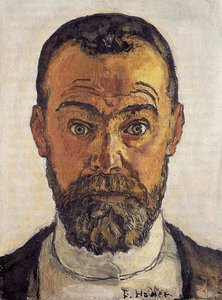
Ferdinand Hodler
1853 - 1918 , Švýcarsko
Stručné informace
- Artistic Movement Or Style: Symbolismus, Paralelizmus
- Artists Or Movements Influenced By This Artist: ['Expressionismus']
- Artists Who Influenced This Artist:
- Courbet
- Gauguin
- Date Of Birth: 1853
- Date Of Death: 1918
- Full Name: Ferdinand Hodler
- Nationality: Švýcarský
- Notable Artworks:
- The Night
- The Day
- Truth II
- Place Of Birth: Bern, Švýcarsko