

 Náhled v interiéru
 Sdílet
 Sdílet
 Podrobnosti o díle
 Průvodce

 Stáhnout
 Podobné položky
 Rentgenové snímky
 Slideshow
 Q&A
Q&A Statistiky
Feeding The Rabbits

 Zobrazit více
Giclée / Umělecký tisk
Giclée nebo plátěný tisk muzeální kvality s rychlou výrobou a širokou nabídkou povrchových úprav. ( Koupit ručně malovaný obraz Přepnout na digitální obraz)




P118B Kč10

P118H Kč10

P118W Kč10

P438Z Kč10

P508JH Kč12

P508YH Kč12

P805H Kč10

P805Z Kč10

P919BZ Kč10

P919G Kč10

P919XJ Kč10

P959ZH Kč10

P968JZ Kč12

W106C Kč8

W218G Kč10

W218JH Kč8

W218Y Kč10

W307PJ Kč10

W316G Kč10

W316PJ Kč8

W316Y Kč10

W398PJ Kč8

W4111J Kč10

W500HY Kč15

W500JH Kč15

W692G Kč12

W849H Kč8

W940BG Kč15

W953PJ Kč8




Vyberte si z našich přednastavených velikostí, které odpovídají původním proporcím díla.

Zadejte šířku a výšku, které potřebujete pro váš rám nebo stěnu. Tisk lze pouze oříznout, nikdy však nelze zvětšit obraz nad jeho původní rozměr, proto při výběru jiného formátu dochází ke ztrátě části obrazu. Před samotným tiskem vám zašleme digitální náhled k schválení. Obraz zobrazený na této stránce nenabízí skutečný výřez — ten uvidíte pouze v náhledu.
Celosvětové doručení () do 2 týdnů namísto standardních 4/5 týdnů. (29 říjen)

Zdarma celosvětová expresní doprava

Vysoce kvalitní lněné plátno

Kompletní pojištění přepravy

Záruka vrácení celního poplatku

Záruka věrného barevného souladu

100dení lhůta pro vrácení zboží (pouze při vadách výroby)

100% záruka vrácení peněz

Sleva při více objednávkách
 Skleněná varianta je dostupná pouze u rozměrů menších než 110 cm

Feeding The Rabbits
Giclée / Umělecký tisk
Rozměry reprodukce
-


Celková cena za vybrané možnosti reprodukcí
Kč 1724
Biografie umělce
Early Life and Artistic Foundations
Felix Schlesinger, born in the bustling port city of Hamburg, Germany, on October 9, 1833, emerged from a family steeped in artistic tradition. This familial inclination proved pivotal to his development as a painter, setting him on a path that would ultimately capture the tender essence of childhood and domestic life with remarkable sensitivity. His formal training commenced in 1848 under the guidance of Friedrich Heimerdinger at Hamburg’s newly established Preparatory School for Artists. Heimerdinger, himself a product of the prestigious Kunstakademie Düsseldorf, instilled in Schlesinger a foundational understanding of artistic principles rooted in historical genre painting. This early exposure would shape his initial approach to composition and narrative. Schlesinger's pursuit of knowledge didn’t end there; he continued his education at the Düsseldorf Art Academy itself, further refining his skills under Rudolf Jordan, an artist known for depicting moral and comic scenes. A subsequent period in Antwerp with Ferdinandus de Braekeler, a specialist in humorous genre painting, broadened his artistic palette and introduced him to a lighter, more playful sensibility. However, it was his time in Paris during the mid-1850s that proved particularly transformative.A Parisian Interlude and Evolving Style
Paris in the 1850s was a crucible of artistic innovation, witnessing the rise of Realism and a renewed appreciation for Dutch masters. The controversial works exhibited at the Salon – Gustave Courbet’s *The Stonebreakers* and *Burial at Ornans*, for example – challenged conventional norms and sparked intense debate. This environment undoubtedly influenced Schlesinger, prompting him to move away from purely narrative approaches towards a more grounded, realistic depiction of everyday life. He studied with Eugène Isabey, an artist successful in historical genre painting and marine subjects, further solidifying his aesthetic direction. While in Paris, Schlesinger began to focus on genre scenes, but it was after relocating to Munich in 1861 that he truly found his voice. Initially settling briefly in Frankfurt, the move to Munich proved decisive. He established himself as a respected genre painter, regularly exhibiting his work in major artistic centers like Dresden and Vienna alongside Berlin.The Mature Style: Childhood, Family, and Domesticity
Schlesinger’s mature style is characterized by charming scenes of family life and children engaged in idyllic pursuits. His paintings evoke a sense of warmth, nostalgia, and quiet contentment. He became particularly adept at capturing the innocence and joy of childhood, often depicting children playing, interacting with animals, or simply enjoying the simple pleasures of rural existence. Realistic brushwork, muted tones, and intimate compositions are hallmarks of his technique. While early works retained a narrative quality reminiscent of his teachers, his style gradually evolved towards greater naturalism and expressiveness. It is believed that Schlesinger married in the 1860s and used his own children as models for many of his paintings; the same faces appear at different ages throughout his oeuvre, offering a poignant glimpse into his personal life.Recognition and Lasting Legacy
Schlesinger’s work resonated with collectors across Europe and particularly in the United States, where his paintings found their way into numerous private collections. His ability to capture universal themes of family love, childhood innocence, and domestic harmony appealed to a broad audience.- His humorous and sensitive depictions of everyday life were highly sought after.
- Paintings like *Children Playing with a Guitar* and *Feeding the Rabbits* exemplify his ability to evoke nostalgia and warmth.
- *Besuch beim* (Visit) offers a more poignant glimpse into familial hardship, demonstrating his range as an artist.

Felix Schlesinger
1833 - 1910 , Germany
Rychlé informace o umělci
- Full Name: Felix Schlesinger
- Nationality: German
- Date Of Birth: 1833
- Date Of Death: 1910
- Place Of Birth: Hamburg, Germany
- Notable Artworks:
- Children Playing with a Guitar
- Besuch beim (Visit)
- Feeding The Rabbits
- Artistic Movement Or Style: Romanticism, Realism
- Artists Who Influenced This Artist:
- Friedrich Heimerdinger
- Rudolf Jordan
- Eugène Isabey
Související články
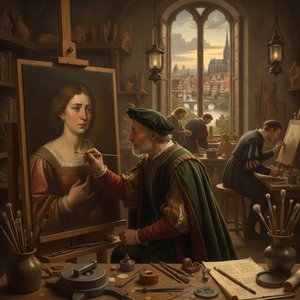
The Northern Awakening: Artistic Innovation & Cultural Transformation in the German Renaissance
Explore the artistic innovation of the German Renaissance! Discover Dürer, the Danube School & Reformation art. Learn about techniques, materials & lasting influence. Find museum-quality reproductions at OriginalUniqueArt.

Unmasking Emotion: A Journey Through the Raw Power and Visceral Beauty of German Expressionism
Explore the raw emotional power of German Expressionism. From Kirchner to Die Brücke, discover how artists used distortion and vibrant color to unmask the human psyche. A deep dive into art history for the discerning collector and enthusiast.
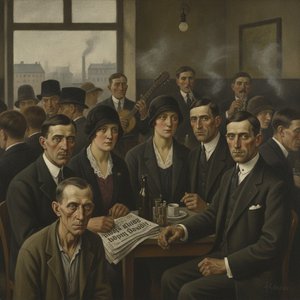
Neue Sachlichkeit: The Unflinching Realism and Social Critique of German New Objectivity
Explore the raw realism of Neue Sachlichkeit. Discover how German New Objectivity artists like Otto Dix and George Grosz captured the turbulent Weimar Republic through unflinching social critique and precise detail. A definitive guide for art historians and collectors.

Top 10 děl německého expresionismu: Umění plné emocí pro váš domov | OriginalUniqueArt
Prozkoumejte 10 ikonických děl německého expresionismu od Muncha, Kirchnera a dalších. Objevte příběhy za obrazy plnými emocí a výrazných barev. Reprodukce umění nejvyšší kvality na OriginalUniqueArt.com – inspirace pro váš interiér!

Anton von Werner: Imperial Painter, Historical Witness & Shifting German Identity
Explore the life & work of Anton von Werner, Imperial Germany's leading painter. Discover his dramatic depictions of war, unification, and court life – a fascinating insight into 19th-century German history & art.