() ·
A painting made for you, by hand
Ručně malovaná olejová reprodukce
Rukou malované olejné plátno v libovolném rozměru i s rámem, vyrobené našimi umělci na zakázku. ( Přepnout na tisk Přepnout na digitální obraz)
Popis sbírného předmětu
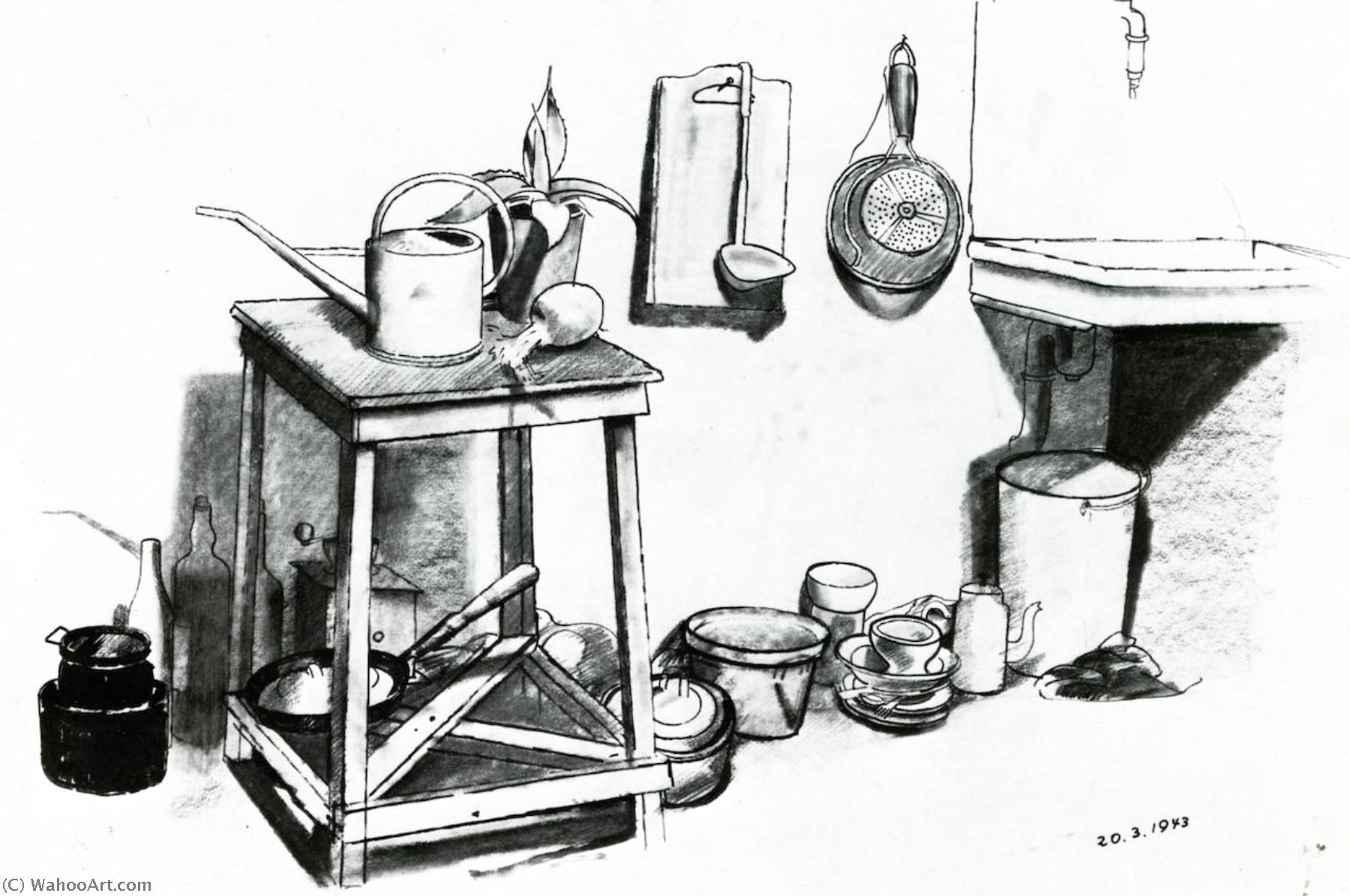
Felix Nussbaum’s ‘The Kitchen in Hiding’ (1943): A detailed black & white drawing of a domestic scene, showcasing realism & subtle symbolism. Explore this poignant WWII artwork.
Biografie umělce
Felix Nussbaum byl německým židovským surrealistickým malířem, jehož dědictví je poznamenáno tragickou smrtí během holocaustu a jeho tvorbou vyjadřující bolest a odpor vůči násilí. Jeho dílo „Nová objektivita“ kombinuje realismus s prvky fantastiky a zobrazuje často témata izolace a ztráty. Objevte jeho ikonické obraz „Sam портрет с еврейской идентификационной картой“ и další výtvarná díla, která
 Zobrazit více
from ·
Chapter 1
How large should it be?
Slide to change the size; the picture on the left shows the frame at its real width. The proportions of the original are kept.
Vyberte si z našich přednastavených velikostí, které odpovídají původním proporcím díla.

Zadejte šířku a výšku, které potřebujete pro váš rám nebo stěnu. Protože se jedná o ruční malbu, při výběru jiného formátu může umělec kolem obrazu domalovat o něco více, nebo jej mírně oříznout — rozhodnete si vy. Před zahájením malby vám zašleme digitální náhled ke schválení. Obraz zobrazený na této stránce neodpovídá skutečnému výsledku — pouze digitální náhled jej zobrazuje.
Chapter 2
How should it arrive?
Choose the edges of the stretched canvas
Choose your frame

White Kč1

Blurside Kč1

Extended Kč1

P118B Kč10

P118H Kč10

P118W Kč10

P438Z Kč10

P508JH Kč12

P508YH Kč12

P805H Kč10

P805Z Kč10

P919BZ Kč10

P919G Kč10

P919XJ Kč10

P959ZH Kč10

P968JZ Kč12

W106C Kč8

W218G Kč10

W218JH Kč8

W218Y Kč10

W307PJ Kč10

W316G Kč10

W316PJ Kč8

W316Y Kč10

W398PJ Kč8

W4111J Kč10

W500HY Kč15

W500JH Kč15

W692G Kč12

W849H Kč8

W940BG Kč15

W953PJ Kč8

H24-GOLD Kč30

H24-SILVER Kč30

H36-GOLD Kč45

H36-SILVER Kč45
V rámu
Moulding: . Overall size with the frame: .
Chapter 3
Who paints it, and should anything change?
After order, OriginalUniqueArt.com team will email client for instructions and provide a mockup preview
Celosvětová doprava () za 3–4 týdny namísto standardních 5 týdnů. (2 listopad). Bez kompromisů v kvalitě.
Chapter 4
The finishing touches
A nameplate, as in a museum?
Detaily ryté bronzové plakety
This elegant plaque features the artist's name and the title of the artwork, finely engraved for a timeless presentation.
It is made from bronze with a refined, elegant finish. The text is precisely laser-engraved for a sharp and permanent result. Measuring 9x2 cm, the plaque is compact yet easy to read. It's built to be durable and scratch-resistant, offering a professional, museum-quality look. Mounting is simple thanks to the included adhesive backing.
Detaily průhledné akrylové desky
The plaque includes essential engraved details such as the artist's name, the title of the artwork, the date it was created, the type of media used-like oil on canvas or watercolor-a brief description of the piece, and a QR code that links to the complete artwork information.
It is crafted from clear acrylic, offering a sleek, modern appearance. The text is UV-engraved in black to ensure strong visual contrast. With a size of 10x15 cm, it ensures optimal readability. It comes equipped with two metal hooks for secure wall mounting. The plaque is designed to be weather-resistant, making it suitable for various environments, and it includes interactive features that work seamlessly with smartphone scanning.
Detaily černé akrylové destičky
This elegant plaque includes engraved information such as the artist's name, the title of the artwork, the date it was created, the type of media used (like oil on canvas or watercolor), a short description of the artwork, and a QR code for quick access to more information.
The plaque itself is made from refined black acrylic with a premium finish. The text is laser-engraved in white for high contrast and readability. Its size is 10x15 cm, designed to be easy to read. It comes with two metal hooks for professional mounting. The design is sleek and fits any interior style. It is also weather-resistant and durable, with built-in digital integration for mobile compatibility.
A protective varnish?
When do you need it?
Chapter 5
Your painting, as you ordered it

The Kitchen in Hiding
Technika reprodukce
Rozměry reprodukce
-

Vybraní mistři umění
Vyšší míra detailu, jemnosti a delší doba výroby
-

Možnosti rámování reprodukcí
-
-
U děl nebo reprodukcí, u nichž je jakákoliv strana větší než 105 cm (přibližně 41 palců), bude rám dodán jako sestava v rozloženém stavu. Tato metoda zajišťuje bezpečné doručení a chrání dílo před poškozením během přepravy.
Vyžaduje se odborná montáž – nejedná se o produkt pro svépomocnou realizaci (DIY).
Sestava musí být složena a plátno napnuto zkušeným profesionálním rámovačem s použitím dřevěného lepidla (není součástí balení), kleští na napínání plátna a svorek pro udržení pravých úhlů křížů během schnutí lepidla. Nesprávná montáž nebo nerovnoměrné napnutí plátna může způsobit trvalé poškození uměleckého díla, které není kryto naší zárukou.
 U děl nebo reprodukcí, u nichž je jakákoliv strana větší než 105 cm (přibližně 41 palců), bude rám dodán jako sestava v rozloženém stavu. Tato metoda zajišťuje bezpečné doručení a chrání dílo před poškozením během přepravy.
Jsou zahrnuty všechny lišty z masivního dřeva, přesně na míru nařezané.
Sestavuje se pomocí součástí balení (šroubů), plus dřevěného lepidla na rohové spoje, které není součástí balení a musí jej zajistit váš rámovač.
Vyžaduje se profesionální nářadí, které není součástí sady: kleště na napínání plátna a svorky pro udržení kolmosti příček během schnutí lepidla.
Důležité:
Spoje v rozích vyžadují lepidlo na dřevo, tyčinky musí být přichyceny pomocí svorek, dokud lepidlo zcela neuschne, a pro napnutí plátna na sestavený rám je zapotřebí kleští na natahování plátna. Žádný z těchto náčiní není součástí sady. Před objednáním této velikosti prosím zajistěte zkušeného profesionálního rámovače.

Popisek díla
-
-

Ochranný lak
Lesklý lak (zvýrazňuje barvy, chrání před světlem a vlhkostí)
-

Přizpůsobit své umělecké dílo
Příklady možných úprav: nahrazení obličeje fotografií zákazníka; přidání domácího mazlíčka (např. výměna kočky za psa); vložení skrytého vzkazu do pozadí; změna krajiny nebo prvků v pozadí.
-

Prioritní doručení
Celosvětové doručení () za 3–4 týdny namísto standardních 5 týdnů. (2 listopad). Bez kompromisů v kvalitě.
-
Expresní doručení
Celosvětová doprava () do 5 týdnů. (9 listopad).
V ceně
Celková cena za vybrané možnosti reprodukcí
Kč 6515
Skleněná varianta je dostupná pouze u rozměrů menších než 110 cm
Included with every order
- Zdarma celosvětová expresní doprava
- Vysoce kvalitní lněné plátno
- Kompletní pojištění přepravy
- Záruka vrácení celního poplatku
- Záruka věrného barevného souladu
- 100dení lhůta pro vrácení zboží (pouze při vadách výroby)
- 100% záruka vrácení peněz
- Sleva při více objednávkách


 Náhled v interiéru
 Sdílet
 Sdílet
 Podrobnosti o díle
 Průvodce

 Stáhnout
 Podobné položky
 Rentgenové snímky
 Slideshow
 Q&A
Q&A Statistiky
In numbers
- 1943the year it was painted
- 29frames to choose from
- standard sizes, in its own proportions
- 5weeks to paint and deliver it
About the original

- 48.0 x 64.0 cm


Felix Nussbaum
1904 - 1945, Германия
Quick facts about Felix Nussbaum
- Artistic Movement Or Style: Surrealismus, Nová Objektivita
- Artists Who Influenced This Artist:
- Vincent van Gogh
- Henri Rousseau
- Giorgio de Chirico
- Carlo Carrà
- Carl Hofer
- Date Of Birth: 1904
- Date Of Death: 1944
- Full Name: Felix Nussbaum
- Nationality: Německý Židovský
- Notable Artworks:
- Sebeprůobraz s Židovským Identifikačním Kartou
- Přemožitelství smrti
- Plátno Felky Platek
- Maskarád
- Gypsy
- Place Of Birth: Osnabrück, Německo
Biografie umělce
A Life Etched in Exile: The Haunting Vision of Felix Nussbaum
Felix Nussbaum’s story is a stark and profoundly moving testament to the power of art born from unimaginable suffering. Born in Osnabrück, Germany, in 1904, his life unfolded against the backdrop of rising nationalism and escalating persecution, culminating in the horrors of the Holocaust. He wasn't simply a victim *of* history; he was an artist who meticulously documented its impact on his soul, creating a body of work that stands as both a personal lament and a universal warning. Nussbaum’s paintings offer a rare, unflinching glimpse into the psychological landscape of displacement, fear, and ultimately, annihilation – a perspective often absent from broader historical narratives. His father, Philipp Nussbaum, a World War I veteran with an early passion for painting himself, recognized and nurtured his son's talent, providing encouragement that would prove vital in the darkening years to come. This initial support fostered a lifelong dedication to art, even as political realities increasingly constricted his path.Formative Years and Artistic Influences
Nussbaum’s artistic journey began with formal studies in Hamburg and Berlin in 1920, continuing for as long as circumstances allowed. His early work reveals a clear debt to the Post-Impressionist masters, particularly Vincent van Gogh and Henri Rousseau. The vibrant colors and expressive brushwork of these artists provided a foundation upon which Nussbaum would later build his unique style. However, he wasn’t content with mere imitation. He actively sought out new influences, drawn to the unsettling dreamscapes of Giorgio de Chirico and Carlo Carrà, pioneers of the *pittura metafisica* movement. The careful attention to color demonstrated by Carl Hofer's expressionist paintings also left a lasting impression on Nussbaum’s approach. These diverse inspirations coalesced into what would become known as his “New Objectivity” style – a blend of realism and surrealism, characterized by precise detail, unsettling compositions, and a pervasive sense of alienation. This period was marked by experimentation and growth, but the looming shadow of Nazi ideology soon threatened to extinguish his artistic promise.Exile, Isolation, and the Shadow of War
The ascent of the Nazis in 1933 irrevocably altered Nussbaum’s life. Studying on a scholarship in Rome at the Berlin Academy of the Arts, he witnessed firsthand the chilling pronouncements of Hitler's propaganda minister, outlining the tenets of Nazi art – glorification of heroism and the Aryan race. It became painfully clear that as a Jew, his place within the German artistic establishment was untenable. This realization forced him into exile, first to Paris and then to Belgium, where he married Felka Platek in 1937. The following decade was defined by fear and isolation. Despite finding some measure of safety, Nussbaum lived under constant threat, haunted by the knowledge of his parents’ perilous situation back in Germany. They had initially resisted his pleas to join them in exile, clinging to a misguided hope that things would improve, but ultimately returned home only to face the full force of Nazi persecution. This loss – the severing of his spiritual and financial support – deeply impacted Nussbaum's work, infusing it with an increasingly desperate and melancholic tone. He continued to paint prolifically during this period, finding solace and purpose in his art even as his world crumbled around him.A Testament to Suffering: Late Works and Lasting Legacy
The Nazi invasion of Belgium in 1940 marked a turning point. Nussbaum was arrested as a “hostile alien” and interned at the Saint-Cyprien camp in France, an experience that profoundly shaped his artistic vision. He managed to escape and went into hiding with Felka, relying on the generosity of friends for shelter and supplies. The final years of his life were spent in constant danger, producing some of his most powerful and haunting works. Self-Portrait with Jewish Identity Card (1943) is perhaps his most iconic painting – a stark and unflinching depiction of dehumanization, showing Nussbaum clutching the document that marked him as an outcast. Triumph of Death (1944), another masterpiece from this period, is filled with symbolic details—a crumpled music score playing “The Lambeth Walk,” a poignant reminder of what was lost—revealing Nussbaum’s meticulous attention to detail and his ability to imbue even mundane objects with profound meaning. Tragically, in 1944, Nussbaum's parents were murdered at Auschwitz. Shortly after, he and Felka were discovered by German forces, deported to Mechelen transit camp, and ultimately sent to Auschwitz themselves, where Felix was murdered upon arrival in August of that year. His brother and sister-in-law followed soon after, completing the annihilation of his family within a single year. Despite this unimaginable loss, Nussbaum’s art endures as a powerful testament to the resilience of the human spirit and a chilling reminder of the horrors of the Holocaust. The Felix Nussbaum Haus in Osnabrück stands as a fitting tribute to his life and work, ensuring that his voice continues to resonate for generations to come. His inclusion in documentaries like *Eyewitness* further solidifies his place among those artists who bore witness to history’s darkest chapters.Související články

Top 10 slavných obrazů s dominantní černou barvou | OriginalUniqueArt.cz
Prozkoumejte 10 nejslavnějších obrazů s dominantní černou barvou od Van Gogha, Muncha a dalších mistrů. Objevte příběhy za uměleckými díly, techniky a inspiraci. Reprodukce obrazů nejvyšší kvality na OriginalUniqueArt.com.

Timeless & Chic: Elevating Your New Home with the Sophistication of Black and White Photography
Transform your new home with the timeless allure of black and white photography. OriginalUniqueArt.com specializes in elegant monochrome decor and custom hand-painted wedding portraits that turn cherished milestones into lasting, soulful masterpieces. Elevate your space with ease.

Monochrome Visions: Exploring the Aesthetic & Historical Significance of Black & White Photography
Explore the rich history & artistic power of black and white photography. From early techniques to iconic masters like Ansel Adams, discover why monochrome continues to captivate art lovers today. Expert insights for collectors.

Top 10 slavných obrazů vládnutých bílou barvou – Umění a inspirace pro interiér
Objevte top 10 slavných obrazů, kde bílá barva hraje klíčovou roli. Claude Monet, Van Gogh a další mistři! Inspirace pro váš interiér a reprodukce umění nejvyšší kvality na OriginalUniqueArt.com.
