Olejová verze
 Vše o Claude Monet







































 U děl nebo reprodukcí, u nichž je jakákoliv strana větší než 105 cm (přibližně 41 palců), bude rám dodán jako sestava v rozloženém stavu. Tato metoda zajišťuje bezpečné doručení a chrání dílo před poškozením během přepravy.


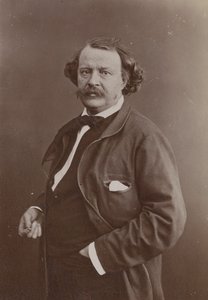
A Portrait of Claude Monet by Nadar
This 1899 portrait captures Claude Monet, a central figure of the Impressionist movement. Taken by the photographer Nadar, the image presents the painter in a close-up bust shot. The subject's weathered features and long beard reflect a life spent observing the natural world. His gaze remains intense, suggesting a character defined by observation.
Nadar, a pioneer of photography, moved his studio from Paris to Marseille in 1895, and this work dates to the period following that transition. The portrait focuses on the physical presence of the artist, utilizing the specific tonal qualities of the era's photographic processes. It provides a direct likeness of the man responsible for the philosophy of plein air landscape painting.
Composition and Visual Elements of the Portrait
This close-up bust shot centers the subject within the frame, with his head tilted slightly to the left. The composition focuses on the facial features and upper torso, utilizing a shallow depth of field. A blurred, indistinct background ensures that all visual attention remains fixed on the sitter, emphasizing the physical presence of the man rather than his surroundings.
The image is entirely monochrome, relying on a range of gray tones to define form. Strong contrast exists between the dark textures of the beard and hair and the lighter tones of the skin. These organic shapes, derived from the contours of the face and the facial hair, dominate the visual field. Soft, diffused lighting creates gentle gradations in tone, highlighting the weathered textures of the skin and the fabric of the jacket without creating harsh shadows.
Technique and Materials of the Photograph
This portrait was likely produced using the wet collodion process, a method requiring the photographer to coat a glass plate with chemicals and expose it while the surface remained damp. This specific technique demands precise timing and a controlled environment to ensure the plate is developed before the emulsion dries. The resulting negative, captured on these glass plates, provides the high level of detail and tonal range visible in the subject's features.
The final image was realized through the use of various photographic chemicals to stabilize the image and transfer it onto paper for printing. The interaction between the light and the chemical emulsion allows for the subtle gradations of gray that define the textures of the beard and skin. Such technical precision was essential to capturing the specific likeness of the sitter in the late 19th century.
Otázky a odpovědi
Je dílo Claude Monet ručně malované, nebo jde o tisk?
Ručně malováno: zkušený malíř přetvoří Claude Monet v olejomalbu na lněném plátně.
Jakou velikost si mám vybrat pro Claude Monet?
Velikosti se pohybují od 40.3 x 24.8 cm (Kč4355) až po 246.3 x 151.5 cm (Kč30684); v tabulce na této stránce jsou uvedeny jednotlivé varianty a jejich ceny.
Jak dlouho trvá doručení?
Doručení trvá 4 až 5 týdnů a zahrnuje bezplatnou expresní přepravu po celém světě; na této stránce je k dispozici i možnost urgentní výroby. Dílo můžete vrátit během 100 dnů s plným vrácením peniędzy, bez jakýchkoliv podmínek.
Jakou techniku použil/a Nadar pro dílo Claude Monet?
Black and White Photography
Více informací o tomto obrazu
 Sdílet
 Sdílet
 Podrobnosti o díle
 Informační list


 Stáhnout
 Podobné položky
 Slideshow
 Otázky a odpovědi

 Statistiky