

 Náhled
 Sdílet
 Sdílet
 Podrobnosti o díle

 Stáhnout
 Podobné položky
 Rentgenové snímky
 Slideshow
Still-life with Instruments
 Oil On Canvas
- WallArt
- Baroque
 1667
1667- Early Modern
 108.0 x 153.0 cm
 Gallerie dell’Accademia
 Zobrazit více
Giclée / Umělecký tisk
Giclée nebo plátěný tisk muzeální kvality s rychlou výrobou a flexibilními možnostmi povrchové úpravy. ( Koupit ručně malovaný obraz Koupit obrázek)




P118B $10

P118H $10

P118W $10

P438Z $10

P508JH $12

P508YH $12

P805H $10

P805Z $10

P919BZ $10

P919G $10

P919XJ $10

P959ZH $10

P968JZ $12

W106C $8

W218G $10

W218JH $8

W218Y $10

W307PJ $10

W316G $10

W316PJ $8

W316Y $10

W398PJ $8

W4111J $10

W500HY $15

W500JH $15

W692G $12

W849H $8

W940BG $15

W953PJ $8




Vyberte si z našich přednastavených velikostí, které odpovídají původním proporcím díla.

Můžete zadat vlastní rozměry tak, aby výtvor odpovídal konkrétnímu rámu nebo prostoru. Pokud zvolená velikost nebude odpovídat poměru stran původního obrazu, dílo buď ořížeme, nebo obraz rozšíříme pomocí zrcadlového efektu či jednobarevného okraje. Před zahájením výroby vám bude zaslán digitální náhled k schválení.
Mějte prosím na paměti, že náhled na obrazovce neodráží skutečné oříznutí nebo rozšíření. Pouze digitální náhled přesně zobrazí finální kompozici.
Ačkoliv jsou k dispozici i vlastní rozměry, pro zachování původních proporcí doporučujeme vybrat si rozměr z předdefinovaného seznamu.
Celosvětové doručení () do 2 týdnů namísto standardních 4/5 týdnů. (30 srpen)

Zdarma celosvětová expresní doprava

Vysoce kvalitní lněné plátno

Kompletní přepravní pojištění

Záruka vrácení celního poplatku

Záruka přesného barevného shodu

60denní lhůta pro vrácení zboží (pouze při vadách výroby)

100% garance vrácení peněz

Sleva při hromadné objednávce
 Skleněná varianta je dostupná pouze u rozměrů menších než 110 cm

Still-life with Instruments
Giclée / Umělecký tisk
Rozměry reprodukce
-


Celková cena za výběr
$ 80
A Quiet Study in Baroque Abundance
To gaze upon this still life with Instruments is to step directly into the richly appointed study of a 17th-century maestro. Evaristo Baschenis, the Provincial Maestro of Bergamo, has gifted us a scene that transcends mere arrangement; it is a carefully curated meditation on knowledge, artistry, and the passage of time. The composition unfolds with an almost deliberate generosity, presenting a tableau brimming with objects—a celestial globe hinting at worldly exploration, the precise mechanism of a clock marking relentless moments, and scattered volumes suggesting lives spent in deep contemplation. These elements are not randomly placed; they coalesce into a visual conversation across the painted surface.
The Craftsmanship of Still Life
Baschenis’s mastery is most evident in his handling of texture and light. Observe how the artist renders the sheen on polished wood, the matte depth of aged paper from the scattered books, or the subtle drape of that nearby red curtain. His technique allows each object to possess its own distinct materiality, inviting the viewer's eye to linger over minute details. This is not simply a collection of items; it is an exercise in visual taxonomy, where every book spine and curved instrument contributes to the overall harmony. The composition achieves a remarkable balance between meticulous detail and overarching serenity.
Symbolism Woven into Objects
In Baroque art, nothing is accidental. This still life pulses with quiet symbolism. The inclusion of musical instruments speaks directly to Baschenis’s own passion and familial ties to Cremona's renowned violin makers—it celebrates the human capacity for structured beauty and emotional expression through sound. Meanwhile, the juxtaposition of the globe and the clock creates a poignant dialogue: the vastness of human knowledge against the finite measure of a single life. It suggests that while our understanding of the world is boundless, time itself remains the most precious, ticking commodity.
Bringing Baroque Intimacy Home
For the modern collector or designer, this piece offers an unparalleled depth for any interior space. Reproducing Baschenis’s vision allows one to infuse a room with the intellectual gravitas and warm, cultivated elegance of the Italian Golden Age. Imagine this scene anchoring a library, a sophisticated drawing-room, or even a richly paneled study. It serves not merely as decoration, but as an evocative centerpiece—a silent testament to culture, learning, and enduring artistic passion.
Biografie umělce
Evaristo Baschenis: A Provincial Maestro of Still Life
Evaristo Baschenis (1617–1677) stands as a singular figure in the Baroque landscape of Bergamo, Italy—a testament to artistic innovation emerging from unexpected corners. Born into a family steeped in artistic tradition, he inherited a legacy that would profoundly shape his distinctive style and contribute to the burgeoning fascination with unconventional subjects within Italian painting. Unlike many of his contemporaries who focused on grand narratives of religion or mythology, Baschenis carved out a niche for himself through meticulously crafted still lifes, primarily depicting musical instruments—a genre largely unexplored by painters prior to the 17th century. This preoccupation wasn’t merely coincidental; it resonated deeply with his familial connections to prominent violin makers from Cremona, fostering an environment ripe for experimentation and observation.- Early Life & Family Influence: Baschenis's upbringing instilled in him a deep appreciation for artistic craftsmanship and visual representation—qualities that would become hallmarks of his oeuvre. His family’s involvement in the violin trade undoubtedly fueled his interest in capturing the beauty and complexity of manufactured objects, mirroring the meticulous attention to detail characteristic of Dutch painters.
- Style & Technique: Baschenis's approach to still life differed markedly from prevailing artistic trends. Rather than striving for dramatic grandeur or emotive expression, he prioritized geometric precision and subtle tonal gradations—drawing inspiration perhaps from Caravaggio’s early depiction of peaches and the contemplative aesthetic of Dutch masters. He sought to convey a sense of quiet contemplation, emphasizing the inherent beauty found within seemingly mundane subjects.
- Notable Works: Baschenis gained recognition for several captivating pieces, including “Kitchen Still-Life,” “Boy with a Basket of Bread,” and “Agliardi Triptych (right).” These works exemplify his signature style—characterized by carefully arranged objects bathed in diffused light, creating an atmosphere of serene stillness.
- Influence & Legacy: Baschenis’s influence extended beyond Bergamo, notably impacting Bartolomeo Bettera, a younger colleague who adopted similar stylistic sensibilities. Furthermore, he appears to have fostered connections with Cristoforo Munari and Carlo Ceresa—artists whose careers benefited from his pioneering vision of still life as an artistic medium.
The Provincial Genius: Exploring Baschenis’s Unique Vision
Baschenis's stylistic choices represent a deliberate departure from the dominant Baroque conventions, prioritizing form and texture over narrative complexity. He eschewed theatrical displays of emotion or monumental scale, instead focusing on capturing the essence of his subjects—musical instruments—through geometric precision and tonal subtlety. This approach aligns with observations about Caravaggio’s early paintings and Dutch artistic sensibilities, suggesting a broader engagement with visual culture beyond the confines of Bergamo. His meticulous attention to detail—evident in the rendering of surfaces and textures—demonstrates an unwavering commitment to capturing the inherent beauty of manufactured objects.Connections & Collaborations: Shaping Artistic Dialogue
Baschenis’s artistic journey was interwoven with collaborative relationships that broadened his creative horizons. His kinship with Cremona violin makers fostered a stimulating environment for observation and experimentation—a connection mirrored in the stylistic tendencies of Bartolomeo Bettera, who similarly embraced a contemplative aesthetic reminiscent of Baschenis's own approach. Moreover, his interactions with Cristoforo Munari and Carlo Ceresa facilitated artistic exchange and contributed to the dissemination of innovative ideas within the Bolognese art scene.Historical Significance: A Counterpoint to Grand Manner Tradition
Evaristo Baschenis’s contribution to Baroque art lies in his courageous assertion of stylistic independence—a refusal to conform to prevailing trends that prioritized narrative grandeur and emotive expression. He championed a visual language rooted in geometric precision and tonal subtlety, establishing himself as a pivotal figure in the development of still life painting during a period dominated by religious iconography and mythological narratives. His legacy endures as a reminder that artistic brilliance can flourish even outside the established centers of power—a testament to the transformative potential of provincial creativity.
Evaristo Baschenis
1617 - 1677 , Italy
Rychlé fakta
- Artistic Movement Or Style: Baroque
- Artists Or Movements Influenced By This Artist:
- Bartolomeo Bettera
- Cristoforo Munari
- Artists Who Influenced This Artist:
- Caravaggio
- Dutch painters
- Date Of Birth: Bergamo, Italy (1617)
- Date Of Death: 1677
- Full Name: Evaristo Baschenis
- Nationality: Italian
- Notable Artworks:
- Kitchen Still-Life
- Boy with a Basket of Bread
- Agliardi Triptych (right)
- Place Of Birth: Bergamo
Související články

Top 10 mistrovských děl holandského baroka – obrazy a umělci | OriginalUniqueArt.cz
Objevte 10 ikonických děl holandského baroka! Prozkoumejte příběhy Rembrandta, Vermeera a dalších mistrů. Repliky obrazů nejvyšší kvality pro váš interiér na OriginalUniqueArt.cz – inspirace a umělecké reprodukce online.

Golden Age Reflections: Dutch Baroque Painting & Cultural Innovation
Explore the Dutch Golden Age of painting! Discover key artists like Vermeer & ter Borch, their innovative techniques, and the rich cultural context behind these Baroque masterpieces. Learn about collecting & appreciating this iconic art period.
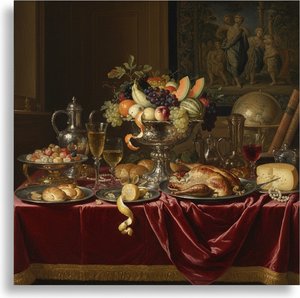
Abraham Hendricksz van Beyeren: Pioneering Dutch Still Life & the Banquet Tradition
Explore the captivating world of Dutch Golden Age still life with Abraham van Beyeren. Discover his innovative techniques, symbolic banquet scenes & lasting influence on art history. Learn about collecting these masterpieces.
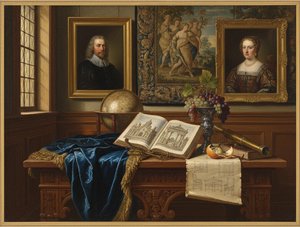
Umění 17. století: Top 10 děl a jejich příběhy | OriginalUniqueArt.cz
Prozkoumejte 10 ikonických děl umění 17. století – od Rembrandta po Vermeera! Objevte příběhy, techniky a barokní krásu těchto mistrovských kousků. Reprodukce obrazů nejvyšší kvality na OriginalUniqueArt.com.

Silent Narratives: Exploring the Enduring Appeal of Still Life Painting Across Centuries
Explore the rich history of still life painting with OriginalUniqueArt. Discover Dutch Masters, decode vanitas symbolism & learn about collecting timeless art. Expert insights and museum-quality reproductions.

