Expressionism · 1909
Round Dance (Emil Nolde, 1909)
Emil Nolde (1867–1956) vytvořil dílo Round Dance. Pochází z roku 1909. Patří k hnutí Expressionism. Je vyrobeno z Oil On Canvas. Rozměry jsou 74 × 89 cm.
- 1909
- Oil On Canvas
- 74 × 89 cm

 Náhled v interiéru

 Ručně malovaná olejná reprodukce
 Sdílet
 Sdílet
 Informační list


 Stáhnout
 Podobné položky
 Rentgenové snímky
 Slideshow
 Otázky a odpovědi

 Statistiky
Round Dance v kostce
- Název díla
- Round Dance
- Autor
- Emil Nolde (1867–1956)
- Rok narození umělce
- Nolde, Dánsko
- Datum vytvoření
- 1909
- Technika
- Oil On Canvas
- Rozměry
- 74 × 89 cm
- Pohyb
- Expressionism
- Období
- Modern
- Motiv
- children, dancing, circle, foliage, yellow, orange
Co przedstawuje dílo Round Dance?
The Depiction of Round Dance by Emil Nolde
In "Round Dance" by Emil Nolde, we encounter a quiet, everyday moment of childhood. The artist, Emil Nolde, focuses on a group of children engaged in a circular dance. It is a simple scene of play, stripped of complex narrative, focusing instead on the fundamental interaction between the figures. The subject matter is grounded in the rhythms of daily life, capturing a sense of communal movement through the figures' shared activity.
At the heart of the work, four children hold hands to form a circle. This arrangement centers the composition, drawing the eye to their connection. They move against a backdrop of loosely rendered foliage and sky, which provides a soft environment for their play. The scene is viewed from a slightly elevated perspective, looking down upon the children as they move through their ritual of play. This viewpoint offers a sense of intimacy, as if we are observing a private moment from a gentle distance.
Composition and Visual Elements of the Work
The composition centers on four children holding hands in a circle, a rhythmic arrangement that generates a palpable sense of movement and energy. They are positioned against a backdrop of loosely painted foliage and sky, which provides a soft, gestural environment for their activity. By employing a slightly elevated viewpoint, the artist looks down upon the children, a perspective that emphasizes the circularity of their dance and their connection to the earth beneath them.
There is a deliberate flattening of the perspective here. Traditional depth is eschewed in favor of a more immediate, expressive space. Instead of using receding lines to create a sense of distance, the work suggests depth through the overlapping of forms and subtle variations in color intensity. This approach keeps the viewer’s attention focused on the interaction of the figures rather than the physical space they occupy.
Technique and Artistic Style of the Painting
In this work, the artist embraces the core tenets of Expressionism, moving away from the constraints of academic realism to prioritize subjective emotion. The application of oil paint on canvas is remarkably tactile. By using a thick impasto technique, the paint is laid down in heavy, visible layers that create a physical presence on the surface. This heavy application gives the work a sculptural quality, where the texture of the medium itself contributes to the energy of the scene.
The forms are rendered with a deliberate lack of precision. Lines are loose and gestural, favoring movement over exactness. Rather than seeking a literal likeness, the artist employs simplified and somewhat distorted shapes to convey the essence of the figures. This approach allows the brushstrokes to remain energetic and uninhibited, emphasizing the rhythm of the dance through the very way the pigment is handled.
The visual language here relies on a directness of form. The figures are not defined by fine detail but by broad, sweeping strokes that prioritize the feeling of the moment. This method ensures that the physical movement of the brush is as much a part of the composition as the subject matter itself.
Color Palette and Lighting Effects
The palette is dominated by a series of warm tones that define the atmosphere of the scene. You will notice a heavy presence of yellows, oranges, and reds, which are grounded by earthy browns. These colors are applied with a certain weight, creating a sense of heat and vitality. Amidst these primary warmth-driven hues, there are subtle accents of white and delicate touches of purple and blue that provide a necessary counterpoint to the more intense pigments.
The lighting within the composition is diffused and remains somewhat even across the canvas. There is no single, harsh directional light source to create deep shadows; instead, the illumination feels inherent to the colors themselves. This approach allows the pigments to generate their own sense of warmth. The interaction of these tones produces a feeling of energy that moves through the figures and the background alike.
Vysokorozlišené fotografie díla Round Dance
Emil Nolde, Round Dance (1909). Veřejná doména
Odpovědi na otázky k dílu Round Dance
V jakém roce bylo vytvořeno dílo „Round Dance“ od Emil Nolde?
Vznik díla „Round Dance“ od Emil Nolde se datuje do roku 1909.
V jaké technice je vytvořeno dílo „Round Dance“ od Emil Nolde?
Technikou díla „Round Dance“ od Emil Nolde je Oil On Canvas. Reprodukce mají za cíl věrně zachytit vzhled této techniky.
Jaké jsou skutečné rozměry díla „Round Dance“ od Emil Nolde?
Zaznamenané rozměry díla „Round Dance“ od Emil Nolde jsou 74 x 89 cm. Reprodukce lze objednat v jiných velikostech při zachování stejných proporcí.
Jaká témata se objevují v díle „Round Dance“ od Emil Nolde?
Motivy díla „Round Dance“ jsou children, dancing, circle, foliage, yellow, orange, red, impasto.
Lze obraz díla „Round Dance“ od Emil Nolde volně reprodukovat?
Co se týče autorských práv, dílo "Round Dance" spadá do v rámci volného užití – autorská práva vypršela.
Kdo je autorem díla "Round Dance"?
Dílo "Round Dance" se připisuje autorovi Emil Nolde.
K kterému uměleckému směru patří „Round Dance“ od Emil Nolde?
Umělecký směr, ke kterému patří dílo „Round Dance“ od Emil Nolde, je Expressionism. Tato klasifikace toto dílo umísťuje mezi související umělce a další umělecká díla.
Do které období tvorby Emil Nolde patří dílo „Round Dance“?
Dílo „Round Dance“ pochází z období Early Period v tvorbě umělce Emil Nolde. Tato klasifikace dílo zasazuje do kontextu vývoje jeho tvůrčí dráhy.
Kolik let bylo Emil Nolde, když v roce 1909 vytvořil(a) dílo „Round Dance“?
Emil Nolde vytvořil/a dílo „Round Dance“ v возрасте 42 let. Umělec se narodil/a v 1867 a dílo je datováno na 1909.
O umělci, Emil Nolde
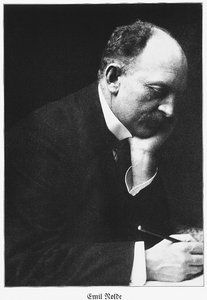
1867–1956, Dánsko
Emil Nolde
Život a identita Emila Noldeho Narodil se jako Hans Emil Hansen 7. srpna 1867, muž, který se později proslavil pod jménem Emil Nolde, vyrůstal v blízkosti vesnice Nolde v kurmarku Šlezvig. Jeho raná léta byla formována venkovským, zemědělským životem jeho rodiny. Postupem času se však od této cesty odvrátil a místo toho se vydal cestou dřevořezbaře a dekoratéra nábytku.
Také od autora Emil Nolde
 Sunset
 Sea with Red Sky
 Couple on the beach1903
 Masks1911
Eseje k tématu Round Dance
 20th century Danish painters20th-century Danish painters like Emil Nolde, Vilhelm Hammershøi, and Michael Ancher define a unique era. Find museum-quality reproductions…
 Expressionism vs. New Objectivity: Emotion vs. Precision in German ArtMaster the tension between Expressionist emotion and New Objectivity precision. Explore the soul of German modern art now.
 Danish artworks of the 1900sDanish art from the 1900s featuring Vilhelm Hammershøi, Anna Ancher, and Michael Ancher. View the full collection online at OriginalUniqueA…