
 Náhled v interiéru
 Sdílet
 Sdílet
 Podrobnosti o díle
 Průvodce

 Stáhnout
 Podobné položky
 Rentgenové snímky
 Slideshow
 Otázky a odpovědi
 Statistiky
Interior with a Lady Playing the Virginal


 Zobrazit více
Giclée / Umělecký tisk
Giclée nebo plátěný tisk muzeální kvality s rychlou výrobou a širokou nabídkou povrchových úprav. ( Koupit ručně malovaný obraz Přepnout na digitální obraz)




P118B Kč10

P118H Kč10

P118W Kč10

P438Z Kč10

P508JH Kč12

P508YH Kč12

P805H Kč10

P805Z Kč10

P919BZ Kč10

P919G Kč10

P919XJ Kč10

P959ZH Kč10

P968JZ Kč12

W106C Kč8

W218G Kč10

W218JH Kč8

W218Y Kč10

W307PJ Kč10

W316G Kč10

W316PJ Kč8

W316Y Kč10

W398PJ Kč8

W4111J Kč10

W500HY Kč15

W500JH Kč15

W692G Kč12

W849H Kč8

W940BG Kč15

W953PJ Kč8




Vyberte si z našich přednastavených velikostí, které odpovídají původním proporcím díla.

Zadejte šířku a výšku, které potřebujete pro váš rám nebo stěnu. Tisk lze pouze oříznout, nikdy však nelze zvětšit obraz nad jeho původní rozměr, proto při výběru jiného formátu dochází ke ztrátě části obrazu. Před samotným tiskem vám zašleme digitální náhled k schválení. Obraz zobrazený na této stránce nenabízí skutečný výřez — ten uvidíte pouze v náhledu.
Celosvětové doručení () do 2 týdnů namísto standardních 4/5 týdnů. (7 listopad)

Zdarma celosvětová expresní doprava

Vysoce kvalitní lněné plátno

Kompletní pojištění přepravy

Záruka vrácení celního poplatku

Záruka věrného barevného souladu

100dení lhůta pro vrácení zboží (pouze při vadách výroby)

100% záruka vrácení peněz

Sleva při více objednávkách
 Skleněná varianta je dostupná pouze u rozměrů menších než 110 cm

Interior with a Lady Playing the Virginal
Giclée / Umělecký tisk
Rozměry reprodukce
-


Celková cena za vybrané možnosti reprodukcí
Kč 1763
A Glimpse into Dutch Golden Age Intimacy
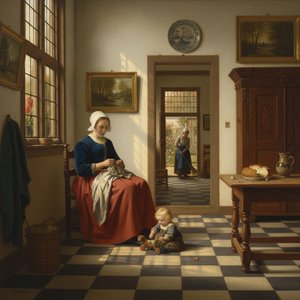
Emanuel de Witte’s “Interior with a Lady Playing the Virginal” isn't merely a painting; it’s a carefully constructed invitation. Completed around 1665, this oil on canvas transports us to a private chamber within a grand Dutch house, radiating an atmosphere of quiet contemplation and subtle drama. De Witte, a master of capturing the essence of space and light, eschews the meticulous architectural documentation favored by his contemporary, Pieter Saenredam, instead focusing on the *feeling* of being present within this intimate scene. The painting whispers stories of domestic life, musical performance, and perhaps even a touch of melancholy – all rendered with an exquisite sensitivity to color, texture, and the play of light.
The composition is immediately arresting. A woman, elegantly dressed and absorbed in her music, dominates the central space. She plays a virginal, a keyboard instrument popular during the period, its intricate workings hinted at by the surrounding instruments – a violin resting against a wall and a harpsichord subtly visible in the background. The room itself is richly detailed: a checkered floor suggesting a sense of order, a chandelier casting a warm glow, and two figures observing the performance from doorways—one standing, one seated. De Witte’s skill lies not just in depicting these objects but in creating an illusion of depth and perspective that draws us into the scene.
The Language of Light and Shadow
De Witte's mastery of chiaroscuro – the dramatic contrast between light and shadow – is central to the painting’s power. He doesn’t simply illuminate the room; he sculpts it with light, creating a sense of intimacy and drawing our attention to key elements. The light source, unseen but implied, casts long shadows that define the forms of the furniture and figures, adding a layer of mystery and sophistication. Notice how the light catches the woman's face, highlighting her expression of concentration, while leaving other areas in soft shadow. This technique isn’t just aesthetic; it contributes to the painting’s overall mood – a blend of serenity and quiet introspection.
The use of color is equally deliberate. De Witte employs a restrained palette of browns, golds, and reds, creating a harmonious and refined atmosphere. The rich hues of the fabrics and furniture are subtly contrasted with the cooler tones of the walls and floor, further enhancing the sense of depth and perspective. He avoids bright, flashy colors, opting instead for muted shades that evoke the warmth and comfort of a domestic setting.
Symbolism and Context
“Interior with a Lady Playing the Virginal” is more than just a snapshot of 17th-century life; it’s laden with symbolism. The virginal itself represents refinement, education, and musical skill – qualities highly valued in aristocratic society. The presence of multiple instruments suggests a gathering or performance, hinting at social interaction and cultural pursuits. Some art historians interpret the scene as a meditation on love and erotic melancholy, perhaps referencing the fleeting nature of beauty and pleasure. The figure observing from the doorway could represent an unspoken longing or a detached contemplation of domestic life.
Created during the Dutch Golden Age, a period of unprecedented prosperity and artistic flourishing, the painting reflects the values and sensibilities of the time. De Witte’s work aligns with the broader trends of the era – a fascination with interior spaces, an interest in capturing fleeting moments of everyday life, and a commitment to realism and naturalism. The painting is currently housed at the Museum Boijmans Van Beuningen in Rotterdam, offering visitors a chance to experience this remarkable masterpiece firsthand.
A Timeless Masterpiece
Emanuel de Witte’s “Interior with a Lady Playing the Virginal” remains a captivating work of art, demonstrating his exceptional skill and artistic vision. Its evocative atmosphere, masterful use of light and shadow, and subtle symbolism continue to resonate with viewers today. Whether you're an art enthusiast, a collector seeking a piece of Dutch history, or simply someone looking for a beautiful addition to your home, this painting offers a glimpse into a bygone era – a world of refined elegance, quiet contemplation, and enduring artistic beauty.
Otázky a odpovědi
Jakou úroveň kontrastu má dílo „Interior with a Lady Playing the Virginal“ od Emanuel De Witt?
Úroveň kontrastu díla „Interior with a Lady Playing the Virginal“ od Emanuel De Witt je Serene.
Jak lze využít dílo „Interior with a Lady Playing the Virginal“ od Emanuel De Witt při dekorování interiéru?
Dílo „Interior with a Lady Playing the Virginal“ je doporučeno pro Statement a ideálním prostorem pro jeho umístění je Living Room.
Kde mohu koupit print díla „Interior with a Lady Playing the Virginal“ od Emanuel De Witt?
Pokud si chcete pořídit tisk díla „Interior with a Lady Playing the Virginal“ od Emanuel De Witt, stačí si jej objednat přímo na jeho stránce Kvalitní umělecký tisk: umělecký tisk na bavlněném plátně nebo archivním plátnovém papíře.
Biografie umělce
A Life in Perspective: The World of Emanuel de Witte
Emanuel de Witte, jméno méně okamžitě rozpoznatelné než některé z jeho nizozemských zlatých věků, přesto zaujímá významnou a fascinující pozici v pantonu 17. století. Narodil se v Alkmaaru roku 1617 a jeho umělecká cesta byla poznamenána jak pozoruhodným talentem, tak značnými osobními obtížemi – duality, která se subtilně infiltruje do atmosféry jeho obrazů. Nebyl poháněn důslednou architektonickou dokumentací jako Pieter Jansz Saenredam; spíše toužil zachytit *pocit* prostoru, kvalitu světla a jemné drama rozvíjejícího se v chrámu. Jeho plátna nejsou pouhé reprezentace kostelů; jsou to pohlcující zážitky, které pozvat diváka do světa klidného úklidu a duchovní rezonance.Od Delftského Tréninku k Amsterdamskému Přijetí
Rané životní zkušenosti De Wittových poskytly pevný základ pro jeho umělecké úsilí. Jeho otec, učitel, v něm zakořenil ocenění učení a intelektuální zvědavost – vlastnosti, které se později projevily ve svém pečlivém pozorování perspektivy a světla. Oficiálně vstoupil do uměleckého světa roku 1636, kdy se připojil k Gildě Svatého Lukáše v Alkmaaru, ale jeho následné učebnictví u Everta van Aelsta v Delftu bylo zvláště formující. Van Aelst, renomovaný malíř krajin, přenesl na De Wittovy dovednosti v detailu a mistrovské ovládání světla a stínu – dovednosti, které se staly charakteristickými znaky jeho zralého stylu. Zpočátku prozkoumal různé žánry – portréty, mytologické scény, náboženské příběhy – ale až po přestěhování do Amsterdamu v roce 1651 skutečně našel své povolání. Bohatství města poskytovalo neomezený zdroj inspirace a začal se specializovat na zobrazení jeho úchvatných interiérů kostelů.Mistr Atmosféry a Představivkových Prostorů
Amsterdam se ukázal jako klíčový pro umělecký rozvoj De Wittových. Nevytvořil prosté kopie existujících kostelních prostorů; spíše mistrovsky syntetizoval prvky z různých budov, čímž vytvořil idealizované interiéry, které působily jak známými, tak subtilně nadpřirozeně. Oude Kerk v Amsterdamu se stala jeho častým předmětem obrazů, opakovaně se objevovala na jeho plátnech z různých úhlů pohledu. Ale tyto obrazy nebyly prosté a přímé reprezentace. De Witte manipuloval perspektivou, hrál se světlem a stínem a uspořádával v těchto prostorech pečlivě rozmístěné postavy, aby vyvolal konkrétní pocit nebo atmosféru. Jak poznamenala Walter Liedtke, jeho hlavním zájmem nebyla architektura sama, ale „samotný prostor – jeho světlo, barva, rozsah a nálada.“ Tento důraz na atmosférický efekt se odlišuje od více striktně topografických malířů té doby. Nezajímal ho přesný detail; zajímalo ho vytvořit *pocit* grandeuru, úcty a duchovní hloubky.Rozvoj Stylu a Vlivy
De Witte byl silně ovlivněn dílem Everta van Aelsta, který mu předal dovednosti v detailu a realistickém zachycování světla. Van Aelstova podpora se projevila v De Wittových raných pracích, zejména v portrétech a krajinách. Nicméně, jeho práce s perspektivou a osvětlením se postupně vyvíjely směrem k atmosféře a dynamice, které byly charakteristické pro jeho pozdější díla. Vliv Saenredama, který se zaměřoval na detailní architektonickou dokumentaci, byl spíše omezený. De Witte se inspiroval především v interiérech kostelů, kde mohl experimentovat s osvětlením a perspektivou, aby vytvořil pocit prostoru a hloubky. Jeho práce jsou často charakterizovány bohatými barvami, jemným světlem a dynamickou kompozicí.Osobní Obtížnosti a Tragický Závěr
Amsterdam představoval pro De Wittova klíčové místo v jeho uměleckém rozvoji. Zatímco se soustředil na zachycení atmosféry kostelních prostorů, jeho osobní život byl poznamenán obtížemi. Smrt jeho první manželky přinesla hluboké utrpení a následné právní problémy spojené s jeho druhou manželkou a dcerou vrhly dlouhý stín na jeho pozdější roky. Finanční potíže ho vedly k ponižující situaci, kdy se stal vazalem umělce Joris de Wijse, situaci, kterou nakonec porušil, což vedlo k dalším komplikacím. Současné zprávy vykreslují obraz temperamentu – muže náchylného k křikání na klienty a zapojování se do sporů. Tato vnitřní zuřivost možná přispěla nerovnoměrnosti jeho pozdějších prací, ale také přidala další vrstvu složitosti k pochopení umělce a jeho děl. Tragicky skončil svůj život v roce 1692, kdy údajně spáchal sebevraždu zavěšením se z mostu nad kanálem; provaz selhal a on potopil. Byl to tragický konec pro muže, který věnoval svůj život zachycování krásy a klidu svatých prostorů.Dědictví a Trvalý Vliv
Emanuel de Witte stojí jako důležitá postava v posledním období architektonického malířství v Nizozemsku, která propojuje důkladnou dokumentaci s atmosférickou interpretací. Jeho inovativní použití světla a perspektivy ovlivnilo generace následovníků a jeho obrazy pokračují ve poskytovat cenné poznatky do nizozemského náboženského života a sociálních zvyků 17. století. Dnes jsou díla De Wittových vystaveny v prestižních sbírkách po celém světě – v Metropolitan Museum of Art, National Gallery of Art a Rijksmuseum mezi dalšími – což svědčí o jeho trvalém dědictví jako mistra perspektivy, atmosféry a emocionálního vyjádření. Připomíná nám, že umění není jen to, co vidíme, ale jak se cítíme, když na to hledíme.
Emanuel De Witt
1617 - 1692 , Nizozemsko
Rychlé informace o umělci
- Artistic Movement Or Style: Baroko
- Artists Or Movements Influenced By This Artist: ['Pozdější umělci']
- Artists Who Influenced This Artist: ['Evert van Aelst']
- Date Of Birth: 1617
- Date Of Death: 1692
- Full Name: Emanuel de Witte
- Nationality: Nizozemec
- Notable Artworks:
- Interiér Oude Kerk
- Amsterdam
- Place Of Birth: Alkmaar, Nizozemsko
Související články

Zlatý věk nizozemského malířství: 10 mistrovských děl pro váš domov | OriginalUniqueArt.com
Prozkoumejte 10 ikonických děl nizozemského zlatého věku – Rembrandt, Vermeer a další mistři. Objevte příběhy za obrazy, techniky a inspiraci pro váš interiér s reprodukcemi nejvyšší kvality na OriginalUniqueArt.com.

Mastering Light & Shadow: A Journey Through the Dutch Golden Age's Luminous Legacy
Embark on a cultural journey through the Dutch Golden Age. Explore the masterful interplay of light and shadow in 17th-century masterpieces, from Rembrandt to Vermeer, and discover how this era of profound realism continues to inspire fine art collectors today.

Golden Light & Dutch Skies: The Timeless Magic of Dutch Golden Age Landscapes
Discover the breathtaking beauty of Dutch Golden Age landscapes. Explore the mastery of light, chiaroscuro, and 17th-century realism through an expert art history lens, celebrating the enduring legacy of the Dutch Masters for discerning collectors and art lovers.

Golden Age Reflections: Dutch Baroque Painting & Cultural Innovation
Explore the Dutch Golden Age of painting! Discover key artists like Vermeer & ter Borch, their innovative techniques, and the rich cultural context behind these Baroque masterpieces. Learn about collecting & appreciating this iconic art period.
Pieter de Hooch: Illuminating Dutch Domestic Life & Golden Age Charm
Explore the captivating world of Pieter de Hooch, a master of Dutch Golden Age painting. Discover his innovative use of light, intimate domestic scenes, and lasting influence on art history. Learn more at OriginalUniqueArt.