

 Náhled v interiéru
 Sdílet
 Sdílet
 Podrobnosti o díle
 Průvodce

 Stáhnout
 Podobné položky
 Rentgenové snímky
 Slideshow
 Statistiky
St. Sebastian (El Greco)
 Olej na plátně
- Obrazová tvorba na stěnu
- Mannerist Style
 1577
1577- Raná modernita
 191.0 x 152.0 cm
 Zobrazit více
Ručně malovaná olejová reprodukce
Rukou malované olejné plátno v libovolném rozměru i s rámem, vyrobené našimi umělci na zakázku. ( Přepnout na tisk Přepnout na digitální obraz)




P118B Kč10

P118H Kč10

P118W Kč10

P438Z Kč10

P508JH Kč12

P508YH Kč12

P805H Kč10

P805Z Kč10

P919BZ Kč10

P919G Kč10

P919XJ Kč10

P959ZH Kč10

P968JZ Kč12

W106C Kč8

W218G Kč10

W218JH Kč8

W218Y Kč10

W307PJ Kč10

W316G Kč10

W316PJ Kč8

W316Y Kč10

W398PJ Kč8

W4111J Kč10

W500HY Kč15

W500JH Kč15

W692G Kč12

W849H Kč8

W940BG Kč15

W953PJ Kč8




Vyberte si z našich přednastavených velikostí, které odpovídají původním proporcím díla.

Zadejte šířku a výšku, které potřebujete pro váš rám nebo stěnu. Protože se jedná o ruční malbu, při výběru jiného formátu může umělec kolem obrazu domalovat o něco více, nebo jej mírně oříznout — rozhodnete si vy. Před zahájením malby vám zašleme digitální náhled ke schválení. Obraz zobrazený na této stránce neodpovídá skutečnému výsledku — pouze digitální náhled jej zobrazuje.
Po přijetí objednávky vám tým OriginalUniqueArt.com zašle e-mail s pokyny a poskytne náhledovou verzi.
Celosvětová doprava () za 3–4 týdny namísto standardních 5 týdnů. (26 říjen). Bez kompromisů v kvalitě.

Zdarma celosvětová expresní doprava

Vysoce kvalitní lněné plátno

Kompletní pojištění přepravy

Záruka vrácení celního poplatku

Záruka věrného barevného souladu

100dení lhůta pro vrácení zboží (pouze při vadách výroby)

100% záruka vrácení peněz

Sleva při více objednávkách
 Skleněná varianta je dostupná pouze u rozměrů menších než 110 cm

St. Sebastian (El Greco)
Technika reprodukce
Rozměry reprodukce
-


Celková cena za vybrané možnosti reprodukcí
Kč 6422
Saint Sebastian (El Greco) – A Vision of Suffering and Faith
Saint Sebastian is arguably El Greco’s most iconic work, embodying the artist's signature Mannerist style and capturing the profound emotional depth that defines his mature oeuvre. Painted in 1576-79 during his formative years in Toledo, Spain—a city steeped in religious fervor—the painting transcends mere depiction; it becomes a meditation on martyrdom, faith tested by adversity, and the enduring solace of divine grace. Its influence reverberates through art history, foreshadowing Expressionism’s dramatic intensity and establishing El Greco as a pioneer of psychological realism. ### Artistic Technique & Mannerism – A Symphony of Distortion El Greco's mastery lies in his innovative approach to artistic technique—a deliberate rejection of Renaissance ideals favoring instead the expressive distortions characteristic of Mannerism. Observe the elongated figure of Saint Sebastian, a hallmark of this style, which lends an ethereal quality to his suffering. Unlike traditional representations prioritizing anatomical accuracy, El Greco prioritizes conveying emotion through exaggerated proportions and stylized musculature. The loose brushwork—evident in swirling lines and textured surfaces—creates a palpable sense of movement and dynamism, mirroring the saint’s tormented physicality. Furthermore, El Greco skillfully employs chiaroscuro – the dramatic interplay between light and shadow – to heighten emotional impact, directing the viewer's gaze towards Saint Sebastian’s anguished expression and emphasizing the vulnerability inherent in his posture. The painting showcases his exceptional skill with oil on canvas, achieving luminous skin tones and rich textural nuances that elevate it beyond mere visual representation. ### Historical Context & Religious Symbolism – Plague and Penitence Saint Sebastian’s martyrdom gained prominence during times of plague—a period marked by widespread fear and desperation—where he was invoked as a protector against disease due to the association of arrows with pestilence. El Greco's Toledo residence coincided precisely with this spiritual climate, profoundly influencing his artistic output. The painting reflects this fervent piety through its symbolic language: Saint Sebastian’s upward gaze signifies a plea for divine intervention and acceptance of his fate—a poignant reminder of humanity’s vulnerability before the face of God. The desolate landscape—rendered in muted earth tones—evokes a sense of isolation and spiritual contemplation, mirroring the saint's inner turmoil. The depiction of arrows piercing Saint Sebastian’s flesh serves as a potent emblem of suffering endured for righteousness, reinforcing the painting’s central theme of faith persevering amidst torment. ### Symbolism & Interpretation – Michelangelo’s Influence & Classical Inspiration Beyond its literal portrayal of martyrdom, Saint Sebastian is laden with symbolism—drawing inspiration from classical sculpture and reflecting El Greco's admiration for Michelangelo’s artistic achievements. As noted by art historians, El Greco deliberately modeled his figure after Laocoön—a monumental Hellenistic sculpture depicting the father and son wrestling with serpents—capturing the dramatic tension and pathos of this iconic artwork. The pose itself—characterized by a contorted torso and strained limbs—echoes Michelangelo’s depiction of Adam in the Sistine Chapel, demonstrating El Greco's commitment to exploring human anatomy through expressive distortion. This stylistic choice underscores El Greco’s desire to transcend mere imitation, forging a new artistic language that prioritized emotional resonance over anatomical precision. The painting stands as testament to El Greco’s profound understanding of art history and his ability to synthesize disparate influences into a singular vision—a timeless masterpiece capturing the essence of human suffering and spiritual fortitude. ### Dimensions & Provenance – Toledo Cathedral Legacy Saint Sebastian measures 191 x 152 cm and resides in the Toledo Cathedral, where it continues to inspire awe and contemplation among visitors. Its acquisition by the cathedral underscores its significance as a cornerstone of Spanish art heritage—a testament to El Greco’s enduring legacy and his contribution to the artistic landscape of the Counter-Reformation era.Otázky a odpovědi
Do jaké části domácnosti se hodí reprodukce díla „St. Sebastian (El Greco)“?
Dílo „St. Sebastian (El Greco)“ od El Greco je doporučeno do místnosti Obývací pokoj. Toto doporučení vychází z tématu, barevnosti a nálady daného díla.
V jakém období a v jakém stylu vzniklo dílo „St. Sebastian (El Greco)“ od El Greco?
Dílo "St. Sebastian (El Greco)" vzniklo v roce 1577 v rámci směru Mannerist Style.
Je El Greco, tvůrce díla „St. Sebastian (El Greco)“, známý pod dalšími jmény?
El Greco je známý/á také pod jmény Doménikos Theotokópoulos, Řek.
Biografie umělce
Doménikos Theotokópoulos, called El Greco
Doménikos Theotokópoulos, known to the world as El Greco – “the Greek” – was a painter whose life and work defied easy categorization. Born in Crete, Greece (1541), his artistic journey took him through Venice and Rome before finding its ultimate expression in the spiritual heartland of Spain: Toledo. El Greco wasn’t merely a product of these places; he synthesized their influences into something wholly unique, a style that anticipated the emotional intensity of Expressionism and the fragmented forms of Cubism centuries later. His early training within the Byzantine tradition instilled in him a meticulous attention to detail and a profound understanding of religious iconography. This foundation, however, wouldn’t confine him. He signed his works in Greek, often appending “Krḗs” – Cretan – as a proud declaration of his origins, even as he ventured into new artistic territories. The seeds of his distinctive style were sown not just in technique but also in the fervent religious climate of his homeland and the rich tapestry of Venetian art.Early Years: Venice and Rome
El Greco’s formative years were spent in Venice around 1567, where he immersed himself in the vibrant artistic scene dominated by titans like Titian, Tintoretto, and Veronese. He diligently studied their mastery of color, composition, and dramatic lighting—skills that would profoundly shape his future endeavors. Recognizing the importance of mastering Western Renaissance techniques, El Greco absorbed their influence, adapting them to his own distinctive vision. His Venetian training resulted in early works such as *Saint Sebastian* (1600), where anatomical detail blends seamlessly with an almost theatrical use of light and shadow—a testament to his ability to fuse Byzantine precision with Venetian dynamism. Subsequently, he traveled to Rome, encountering Mannerism – a style characterized by elongated forms, distorted perspectives, and sophisticated compositions. While he demonstrated considerable talent in the competitive Roman art world, El Greco struggled to gain widespread recognition due to stylistic differences from prevailing tastes of the time. Despite these challenges, his exposure to Mannerist principles undoubtedly broadened his artistic horizons.A Style Unlike Any Other
El Greco’s artistic style is instantly recognizable – and utterly captivating. His figures are often dramatically elongated, their bodies stretched and contorted in poses that convey a sense of spiritual ecstasy or profound anguish. This isn't mere stylistic affectation; it’s an attempt to depict the unseen, the emotional and spiritual realities that lie beyond the surface of things. He masterfully employed color – not necessarily realistic color, but vibrant, often unnatural hues – to heighten the emotional impact of his work. Dramatic lighting, with stark contrasts between light and shadow, creates a theatrical effect, drawing the viewer into the heart of the scene. *The Burial of the Count of Orgaz* (1586-1588), considered his masterpiece, exemplifies these qualities perfectly. The painting depicts a miraculous event – the descent of saints to bury a pious nobleman – with remarkable realism in the portrayal of contemporary figures juxtaposed against ethereal, elongated forms representing divine intervention. He blended Byzantine traditions with Italian Renaissance techniques, forging a style that was both innovative and deeply personal. His later works became increasingly mystical, reflecting his own profound religious beliefs and a growing detachment from conventional artistic norms.Toledo: The Flowering of Genius
El Greco’s relocation to Toledo in 1577 marked a pivotal moment in his artistic career—a move that coincided with the rise of Counter-Reformation fervor and provided him with an environment conducive to exploring his spiritual convictions. Here, he received significant commissions from churches and monasteries, securing patronage from influential figures like Diego de Castilla, Archbishop of Toledo. This support enabled him to produce some of his most celebrated paintings, including *Saint Martin and the Beggar* (1597/1599), *St. Peter in Tears* (1582), and *The Holy Family with Saint Anne and the Infant John the Baptist* (c. 1595/1600). These works demonstrate El Greco’s masterful command of composition, color, and expressive gesture—characteristics that solidified his reputation as one of Spain's foremost artists. Notably, *View of Toledo* (1596-1600) stands apart from his other paintings due to its landscape genre—a rare departure from religious iconography for El Greco—yet it captures the essence of Toledo with an almost visionary quality.Legacy and Rediscovery
El Greco’s artistic legacy extends far beyond his lifetime, influencing generations of artists who recognized him as a precursor to modern art movements like Expressionism and Cubism. His distinctive style—characterized by elongated figures, intense emotion, and dramatic lighting—resonated with artists seeking new ways to convey psychological depth and spiritual experience. Furthermore, El Greco’s pioneering use of color and perspective challenged conventional artistic norms, paving the way for groundbreaking innovations in visual art. Although largely overlooked by art historians during the 19th century, El Greco experienced a resurgence of interest in the 20th century thanks to the recognition of artists like Picasso and Braque who admired his stylistic originality. Today, El Greco is revered as one of Spain’s greatest painters—a visionary artist whose work continues to inspire awe and contemplation with its profound spiritual resonance and unparalleled artistic brilliance.
El Greco
1541 - 1614 , Řecko
Rychlé informace o umělci
- Artistic Movement Or Style: Mannerismus, Baroko
- Artists Who Influenced This Artist:
- Titian
- Tintoretto
- Date Of Birth: 1541
- Full Name: Doménikos Theotokópoulos
- Nationality: Řek
- Notable Artworks:
- The Burial of the Count of Orgaz
- View of Toledo
- El Espolio
- St. Sebastian
- Place Of Birth: Crete, Greece
Související články

El Greco: 25 mistrovských děl pro váš interiér | OriginalUniqueArt.com
Prozkoumejte 25 ikonických děl El Greco – španělského mistra renesance a baroka. Obdivujte jeho duchovní malby, portréty a unikátní styl na OriginalUniqueArt.com. Reprodukce obrazů pro váš interiér.

Top 25 uměleckých děl z Museo del Prado: Velázquez, Goya a mistři španělského baroka | OriginalUniqueArt.com
Prozkoumejte 25 ikonických děl z Museo del Prado v Madridu! Obdivujte Velázqueze, Goyu a El Greca. Historie umění, techniky a inspirace pro váš interiér. Reprodukce obrazů nejvyšší kvality na OriginalUniqueArt.com.
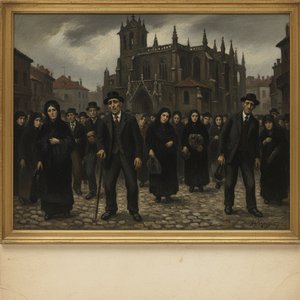
José Gutiérrez Solana: A Chronicle of Spanish Society Through Expressionist Vision
Explore the captivating world of José Gutiérrez Solana, a pivotal Spanish Expressionist painter. Discover his haunting depictions of early 20th-century Spain, influenced by Goya & El Greco. Learn about his key works and lasting legacy.

The Golden Age Reforged: Dramatic Realism & Religious Zeal in Spanish Baroque Art
Explore the dramatic world of Spanish Baroque art! Discover masters like Zurbarán & the powerful influence of religious zeal on painting techniques – a guide for collectors and enthusiasts.
El Greco: Spirituality, Style & Innovation – A Renaissance Master's Legacy
Explore the captivating world of El Greco! Discover his unique style, spiritual intensity, and lasting impact on art history. Learn about this Renaissance master's life, iconic paintings & legacy.


