 Náhled
 Sdílet
 Sdílet
 Podrobnosti o díle

 Stáhnout
 Podobné položky
 Rentgenové snímky
 Slideshow
St. Jerome
 Oil On Canvas
- WallArt
- Baroque Revival
 1600
1600- Early Modern
 110.0 x 95.0 cm
 Frickova sbírka
 Zobrazit více
Ručně malovaná olejová reprodukce
Ručně malovaná olejná barva na plátně ve vašem zvoleném rozměru i s rámem, vyrobená našimi umělci na zakázku. ( Přepnout na tisk Přepnout na obrázek)




P118B $10

P118H $10

P118W $10

P438Z $10

P508JH $12

P508YH $12

P805H $10

P805Z $10

P919BZ $10

P919G $10

P919XJ $10

P959ZH $10

P968JZ $12

W106C $8

W218G $10

W218JH $8

W218Y $10

W307PJ $10

W316G $10

W316PJ $8

W316Y $10

W398PJ $8

W4111J $10

W500HY $15

W500JH $15

W692G $12

W849H $8

W940BG $15

W953PJ $8




Vyberte si z našich přednastavených velikostí, které odpovídají původním proporcím díla.

Můžete zadat vlastní rozměry pro konkrétní rám nebo prostor. Pokud se vámi vybraná velikost neshoduje s proporcemi původního obrazu, dílo buď ořízneme, nebo jej doplníme ručně malovanými prvky. Před zahájením výroby vám bude zaslán digitální náhled ke schválení.
Upozorňujeme, že náhled na obrazovce neodpovídá skutečnému ořezu ani rozšíření. Pouze digitální náhled přesně zobrazí finální kompozici.
Ačkoliv je možné zvolit vlastní velikost, pro zachování původních proporcí doporučujeme vybrat rozměr z předdefinovaného seznamu.
Po přijetí objednávky vám tým OriginalUniqueArt.com zašle e-mail s pokyny a poskytne náhledovou verzi.
Celosvětová doprava () za 3–4 týdny namísto standardních 5 týdnů. (9 srpen). Bez kompromisů v kvalitě.

Zdarma celosvětová expresní doprava

Vysoce kvalitní lněné plátno

Kompletní přepravní pojištění

Záruka vrácení celního poplatku

Záruka přesného barevného shodu

60denní lhůta pro vrácení zboží (pouze při vadách výroby)

100% garance vrácení peněz

Sleva při hromadné objednávce
 Skleněná varianta je dostupná pouze u rozměrů menších než 110 cm

St. Jerome
Technika reprodukce
Rozměry reprodukce
-


Celková cena za výběr
$ 300
Popis díla
A Vision of Spiritual Intensity
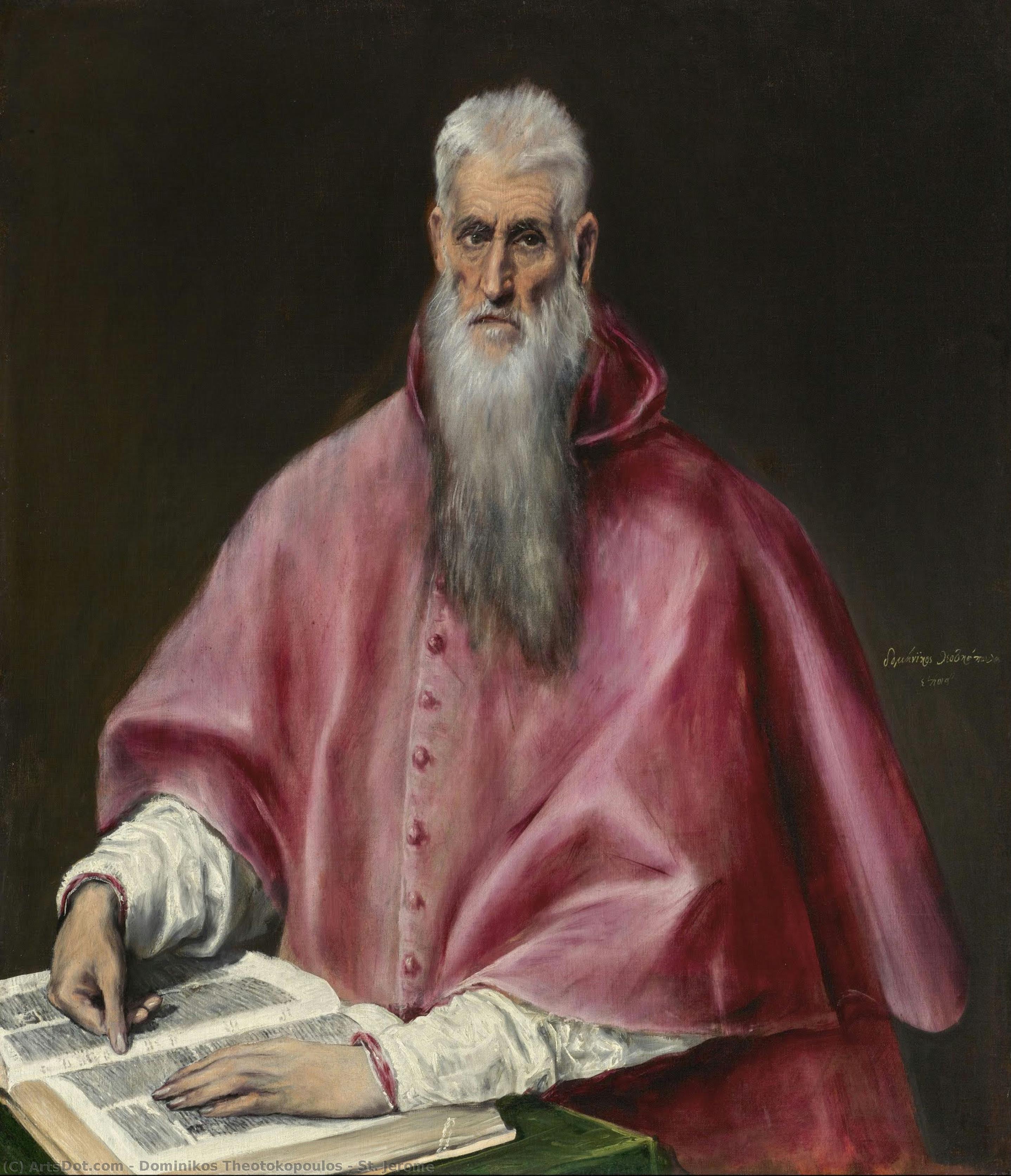
In the quiet, shadowed corners of art history, few figures command the room with as much profound gravity as El Greco’s St. Jerome. Created around 1600 in the fervent atmosphere of Toledo, this masterpiece is far more than a mere portrait of a saint; it is a window into the very soul of Mannerism. The painting captures the venerable Doctor of the Church, St. Jerome, not as a distant icon, but as a man deeply immersed in the weight of his own devotion. As he sits amidst an austere setting, his weathered face and long, flowing white beard serve as a testament to a lifetime of intellectual rigor and spiritual searching. The artist masterfully uses a palette of deep reds and soft pinks against a somber, dark background, ensuring that every wrinkle of wisdom and every fold of his scholarly robes pulls the viewer into his private moment of contemplation.
The technique employed by Domenikos Theotokópoulos—the Greek master known as El Greco—is nothing short of transformative. Moving away from the balanced, harmonious ideals of the High Renaissance, El Greco embraces the expressive distortions of Mannerism to evoke a sense of divine unrest. Through the brilliant use of chiaroscuro, he sculpts Jerome’s form with dramatic light and shadow, creating a three-dimensional presence that feels almost tactile. The elongated proportions and flickering, ethereal light characteristic of his style do not merely represent physical reality; they suggest a spiritual reality that transcends the material world. For the discerning collector or interior designer, this painting offers a commanding focal point, bringing a sense of historical depth and dramatic elegance to any sophisticated space.
The Intersection of History and Devotion
To understand the emotional resonance of this work, one must look to the streets of Toledo during the turn of the 17th century. This was a city pulsating with Catholic piety, a place where the boundaries between the earthly and the divine felt thin. El Greco, having traveled from the Byzantine traditions of Crete through the vibrant studios of Venice and Rome, arrived in Spain with a unique visual language capable of expressing this intense religious fervor. In St. Jerome, we see the culmination of this journey. The saint, famed for translating the Bible into Latin, is depicted with his book—the very vessel of his life's work—symbolizing the bridge between human intellect and divine revelation.
The symbolism within the composition invites a lingering gaze. The stark contrast between the vibrant red of his cape and the murky depths of the background serves to isolate the subject, mirroring the solitary nature of ascetic life. There is a palpable sense of solitude and intellectual hunger that radiates from the canvas. For those looking to adorn a study, library, or a formal gallery, a high-quality reproduction of this piece provides more than just decoration; it offers an invitation to pause, to reflect, and to engage with one of the most emotionally charged periods in Western art history. It is a piece that does not merely hang on a wall—it breathes life into the architecture surrounding it.
Biografie umělce
Doménikos Theotokópoulos, called El Greco
Doménikos Theotokópoulos, known to the world as El Greco – “the Greek” – was a painter whose life and work defied easy categorization. Born in Crete, Greece (1541), his artistic journey took him through Venice and Rome before finding its ultimate expression in the spiritual heartland of Spain: Toledo. El Greco wasn’t merely a product of these places; he synthesized their influences into something wholly unique, a style that anticipated the emotional intensity of Expressionism and the fragmented forms of Cubism centuries later. His early training within the Byzantine tradition instilled in him a meticulous attention to detail and a profound understanding of religious iconography. This foundation, however, wouldn’t confine him. He signed his works in Greek, often appending “Krḗs” – Cretan – as a proud declaration of his origins, even as he ventured into new artistic territories. The seeds of his distinctive style were sown not just in technique but also in the fervent religious climate of his homeland and the rich tapestry of Venetian art.Early Years: Venice and Rome
El Greco’s formative years were spent in Venice around 1567, where he immersed himself in the vibrant artistic scene dominated by titans like Titian, Tintoretto, and Veronese. He diligently studied their mastery of color, composition, and dramatic lighting—skills that would profoundly shape his future endeavors. Recognizing the importance of mastering Western Renaissance techniques, El Greco absorbed their influence, adapting them to his own distinctive vision. His Venetian training resulted in early works such as *Saint Sebastian* (1600), where anatomical detail blends seamlessly with an almost theatrical use of light and shadow—a testament to his ability to fuse Byzantine precision with Venetian dynamism. Subsequently, he traveled to Rome, encountering Mannerism – a style characterized by elongated forms, distorted perspectives, and sophisticated compositions. While he demonstrated considerable talent in the competitive Roman art world, El Greco struggled to gain widespread recognition due to stylistic differences from prevailing tastes of the time. Despite these challenges, his exposure to Mannerist principles undoubtedly broadened his artistic horizons.A Style Unlike Any Other
El Greco’s artistic style is instantly recognizable – and utterly captivating. His figures are often dramatically elongated, their bodies stretched and contorted in poses that convey a sense of spiritual ecstasy or profound anguish. This isn't mere stylistic affectation; it’s an attempt to depict the unseen, the emotional and spiritual realities that lie beyond the surface of things. He masterfully employed color – not necessarily realistic color, but vibrant, often unnatural hues – to heighten the emotional impact of his work. Dramatic lighting, with stark contrasts between light and shadow, creates a theatrical effect, drawing the viewer into the heart of the scene. *The Burial of the Count of Orgaz* (1586-1588), considered his masterpiece, exemplifies these qualities perfectly. The painting depicts a miraculous event – the descent of saints to bury a pious nobleman – with remarkable realism in the portrayal of contemporary figures juxtaposed against ethereal, elongated forms representing divine intervention. He blended Byzantine traditions with Italian Renaissance techniques, forging a style that was both innovative and deeply personal. His later works became increasingly mystical, reflecting his own profound religious beliefs and a growing detachment from conventional artistic norms.Toledo: The Flowering of Genius
El Greco’s relocation to Toledo in 1577 marked a pivotal moment in his artistic career—a move that coincided with the rise of Counter-Reformation fervor and provided him with an environment conducive to exploring his spiritual convictions. Here, he received significant commissions from churches and monasteries, securing patronage from influential figures like Diego de Castilla, Archbishop of Toledo. This support enabled him to produce some of his most celebrated paintings, including *Saint Martin and the Beggar* (1597/1599), *St. Peter in Tears* (1582), and *The Holy Family with Saint Anne and the Infant John the Baptist* (c. 1595/1600). These works demonstrate El Greco’s masterful command of composition, color, and expressive gesture—characteristics that solidified his reputation as one of Spain's foremost artists. Notably, *View of Toledo* (1596-1600) stands apart from his other paintings due to its landscape genre—a rare departure from religious iconography for El Greco—yet it captures the essence of Toledo with an almost visionary quality.Legacy and Rediscovery
El Greco’s artistic legacy extends far beyond his lifetime, influencing generations of artists who recognized him as a precursor to modern art movements like Expressionism and Cubism. His distinctive style—characterized by elongated figures, intense emotion, and dramatic lighting—resonated with artists seeking new ways to convey psychological depth and spiritual experience. Furthermore, El Greco’s pioneering use of color and perspective challenged conventional artistic norms, paving the way for groundbreaking innovations in visual art. Although largely overlooked by art historians during the 19th century, El Greco experienced a resurgence of interest in the 20th century thanks to the recognition of artists like Picasso and Braque who admired his stylistic originality. Today, El Greco is revered as one of Spain’s greatest painters—a visionary artist whose work continues to inspire awe and contemplation with its profound spiritual resonance and unparalleled artistic brilliance.
El Greco
1541 - 1614 , Řecko
Rychlé fakta
- Artistic Movement Or Style: Mannerismus, Baroko
- Artists Who Influenced This Artist:
- Titian
- Tintoretto
- Date Of Birth: 1541
- Full Name: Doménikos Theotokópoulos
- Nationality: Řek
- Notable Artworks:
- The Burial of the Count of Orgaz
- View of Toledo
- El Espolio
- St. Sebastian
- Place Of Birth: Crete, Greece
Související články

El Greco: 25 mistrovských děl pro váš interiér | OriginalUniqueArt.com
Prozkoumejte 25 ikonických děl El Greco – španělského mistra renesance a baroka. Obdivujte jeho duchovní malby, portréty a unikátní styl na OriginalUniqueArt.com. Reprodukce obrazů pro váš interiér.
Top 25 uměleckých děl z Museo del Prado: Velázquez, Goya a mistři španělského baroka | OriginalUniqueArt.com
Prozkoumejte 25 ikonických děl z Museo del Prado v Madridu! Obdivujte Velázqueze, Goyu a El Greca. Historie umění, techniky a inspirace pro váš interiér. Reprodukce obrazů nejvyšší kvality na OriginalUniqueArt.com.
25 Mistrovských Děl Ermitáže: Umění pro Vaši Inspiraci | OriginalUniqueArt.cz
Prozkoumejte 25 ikonických děl z Ermitáže v Petrohradě! Obdivujte Rembrandta, Da Vinciho a další mistry. Historie umění, techniky a inspirace pro váš interiér. Reprodukce obrazů nejvyšší kvality na OriginalUniqueArt.com.
25 Mistrovských Děl Národní Galerie Umění ve Washingtonu | Inspirace pro Váš Domov
Objevte 25 ikonických děl Národní galerie umění ve Washingtonu! Prozkoumejte příběhy Cézanna, Matisse a Picassa. Inspirace pro váš interiér s reprodukcemi obrazů nejvyšší kvality na OriginalUniqueArt.com.
Top 10 mistrovských děl manýrismu: Umění a dekorace pro váš domov
Prozkoumejte 10 ikonických děl manýrismu – od Pontorma po El Greca. Objevte příběhy, techniky a umělecké inovace tohoto fascinujícího období renesance. Luxusní reprodukce obrazů na OriginalUniqueArt.com pro váš interiér! Prohlédněte si celou kolekci online.