Přepnout na tisk
 Zobrazit více







































 U děl nebo reprodukcí, u nichž je jakákoliv strana větší než 105 cm (přibližně 41 palců), bude rám dodán jako sestava v rozloženém stavu. Tato metoda zajišťuje bezpečné doručení a chrání dílo před poškozením během přepravy.


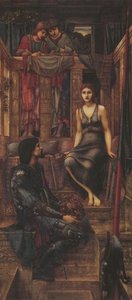
A Portrait Steeped in Mythic Resonance: Exploring Burne-Jones’ “The Baleful Head”
Edward Coley Burne-Jones (1833 – 1898), a luminary of the Pre-Raphaelite Brotherhood and arguably its most commercially successful artist, crafted "The Baleful Head" in 1886—a painting that transcends mere visual representation to delve into profound psychological and symbolic depths. This arresting image depicts a woman cradling a babe while gazing intently at the infant’s head, framed by an ancient oak tree laden with ripe apples. The scene isn't merely picturesque; it’s deliberately positioned within a framework of medieval legend, specifically inspired by Geoffrey Chaucer’s “The Canterbury Tales,” where St. George slays the dragon—a motif Burne-Jones skillfully incorporates into his artistic vision.- Subject Matter & Narrative Context: The composition speaks volumes about themes of motherhood, protection, and confronting darkness. Burne-Jones draws upon Christian iconography to convey a narrative of courage and vigilance against evil forces—a cornerstone of Victorian moral philosophy.
- Style & Technique: Characteristic of Burne-Jones’ oeuvre, “The Baleful Head” exemplifies the Brotherhood's commitment to reviving artistic ideals rooted in medieval art. Employing oil paint on canvas with meticulous detail and glazing techniques, he achieves a luminous surface that captures subtle tonal variations—a hallmark of his masterful craftsmanship.
Symbolism: Apples, Oak Trees & The Dragon’s Shadow
The scattered apples surrounding the figures are laden with symbolic significance. Traditionally associated with immortality and fertility, they represent not only the bounty of nature but also the promise of regeneration—a visual counterpoint to the looming presence of the oak tree. This venerable tree symbolizes strength, endurance, and wisdom, mirroring St. George’s unwavering resolve in battling the dragon. Burne-Jones subtly references Chaucer's tale, suggesting that vigilance and faith are essential for safeguarding innocence and overcoming adversity.Emotional Impact & Aesthetic Considerations
Burne-Jones’ deliberate use of muted colors—primarily ochre, crimson, and emerald green—creates an atmosphere of solemn contemplation. The woman's gaze is unwavering, conveying a palpable sense of determination and sorrowful awareness. This emotive quality aligns perfectly with the Pre-Raphaelite preoccupation with psychological realism—a departure from academic conventions that prioritized idealized beauty. “The Baleful Head” invites viewers to contemplate themes of vulnerability, resilience, and the enduring power of mythic narratives.- Interior Design Inspiration: This artwork’s serene palette and evocative imagery lend themselves beautifully to creating tranquil spaces—particularly nurseries or bedrooms—where comfort and contemplation intertwine.
- Collector's Perspective: Owning a high-quality reproduction of “The Baleful Head” offers an opportunity to appreciate Burne-Jones’ artistic genius and engage with the rich tapestry of Victorian symbolism.
Otázky a odpovědi
Jakým způsobem „The Baleful Head“ od Edward Burne-Jones propojuje Pre-Raphaelite Brotherhood s rodnou zemí umělce?
Dílo v rámci směru Pre-Raphaelite Brotherhood s názvem "The Baleful Head" vytvořil umělec narozený v zemi Spojené království.
Je dílo "The Baleful Head" typické pro to, co Edward Burne-Jones obvykle vytvářel/a?
Mezi opakující se témata umělce Edward Burne-Jones patří medieval symbolism, victorian morality, pre-raphaelite style, mythological narrative, artistic revival; dílo „The Baleful Head“ se zaměřuje na mythology, medieval legend, motherhood, symbolism, victorian morality, christian iconography, decorative arts.
Do jaké fáze tvůrčího rozvoje Edward Burne-Jones patří dílo „The Baleful Head“?
Dílo „The Baleful Head“ pochází z období Mature Period v tvorbě umělce Edward Burne-Jones. Tato klasifikace dílo zasazuje do kontextu vývoje jeho tvůrčí dráhy.
 Náhled v interiéru
 Sdílet
 Sdílet
 Podrobnosti o díle
 Průvodce

 Stáhnout
 Podobné položky
 Rentgenové snímky
 Slideshow
 Q&A
Q&A Statistiky