
 Náhled v interiéru
 Sdílet
 Sdílet
 Podrobnosti o díle
 Průvodce

 Stáhnout
 Podobné položky
 Rentgenové snímky
 Slideshow
 Otázky a odpovědi
 Statistiky
Trinity (detail)


 Zobrazit více
Giclée / Umělecký tisk
Giclée nebo plátěný tisk muzeální kvality s rychlou výrobou a širokou nabídkou povrchových úprav. ( Koupit ručně malovaný obraz Přepnout na digitální obraz)




P118B Kč10

P118H Kč10

P118W Kč10

P438Z Kč10

P508JH Kč12

P508YH Kč12

P805H Kč10

P805Z Kč10

P919BZ Kč10

P919G Kč10

P919XJ Kč10

P959ZH Kč10

P968JZ Kč12

W106C Kč8

W218G Kč10

W218JH Kč8

W218Y Kč10

W307PJ Kč10

W316G Kč10

W316PJ Kč8

W316Y Kč10

W398PJ Kč8

W4111J Kč10

W500HY Kč15

W500JH Kč15

W692G Kč12

W849H Kč8

W940BG Kč15

W953PJ Kč8




Vyberte si z našich přednastavených velikostí, které odpovídají původním proporcím díla.

Zadejte šířku a výšku, které potřebujete pro váš rám nebo stěnu. Tisk lze pouze oříznout, nikdy však nelze zvětšit obraz nad jeho původní rozměr, proto při výběru jiného formátu dochází ke ztrátě části obrazu. Před samotným tiskem vám zašleme digitální náhled k schválení. Obraz zobrazený na této stránce nenabízí skutečný výřez — ten uvidíte pouze v náhledu.
Celosvětové doručení () do 2 týdnů namísto standardních 4/5 týdnů. (8 listopad)

Zdarma celosvětová expresní doprava

Vysoce kvalitní lněné plátno

Kompletní pojištění přepravy

Záruka vrácení celního poplatku

Záruka věrného barevného souladu

100dení lhůta pro vrácení zboží (pouze při vadách výroby)

100% záruka vrácení peněz

Sleva při více objednávkách
 Skleněná varianta je dostupná pouze u rozměrů menších než 110 cm

Trinity (detail)
Giclée / Umělecký tisk
Rozměry reprodukce
-


Celková cena za vybrané možnosti reprodukcí
Kč 1763
The Genesis of a Vision: Domenico Beccafumi's Trinity
Domenico di Pace Beccafumi, a name often overshadowed by the titans of Florence, nevertheless stands as a crucial bridge between the High Renaissance and the burgeoning complexities of Mannerism. Born in the modest Tuscan town of Montaperto around 1486, his artistic journey was one defined not just by technical skill but by an intensely individual vision—a deeply rooted sensibility informed by the traditions of Siena yet boldly reaching towards new expressive possibilities. His story is a testament to how regional artistry could simultaneously embrace and subtly transform broader stylistic trends, culminating in works of profound emotional resonance.
The “Trinity,” painted circa 1513, offers an immediate glimpse into this unique perspective. Commissioned for the Cappella del Manto within the venerable Santa Maria della Scala hospital complex in Siena – a space steeped in history and dedicated to healing – the altarpiece transcends mere devotional representation; it becomes a carefully constructed meditation on faith, sacrifice, and divine presence. Beccafumi’s decision to depict Jesus Christ on the cross as a young man, rather than the more conventional aged figure, immediately establishes a dynamic tension within the composition, injecting a palpable sense of vulnerability and nascent power into the scene.
A Synthesis of Influences: Style and Technique
Beccafumi’s style is remarkably complex, a skillful synthesis of influences from Siena, Florence, and Rome. He inherited the Sienese tradition's emphasis on rich color palettes, dramatic lighting, and a heightened sense of emotional intensity – qualities evident in his masterful use of chiaroscuro to sculpt form and draw the viewer’s eye towards the central figure. Yet, he was also deeply influenced by the Florentine artists who had recently returned from Rome, absorbing their innovations in perspective, anatomical accuracy, and a more dynamic approach to composition. The subtle distortions of figures, particularly in the depiction of the angels, hint at the emerging Mannerist aesthetic – a deliberate departure from the idealized forms of the High Renaissance.
Technically, Beccafumi demonstrates remarkable control over his medium. The oil paint is applied with meticulous detail, creating a surface texture that is both luminous and tactile. The layering of colors—the deep blues and purples of the background contrasted against the vibrant reds and golds of the garments—further enhances the sense of depth and drama. Note also the intricate detailing in the drapery, which flows with an almost sculptural quality, adding to the overall dynamism of the scene.
Symbolism and Spiritual Depth
The “Trinity” is rich in symbolic meaning. The central image of Christ on the cross represents sacrifice and redemption—the core tenets of Christian theology. Above him, the figures of God the Father and the Holy Spirit are rendered with a subtle elegance, suggesting a divine hierarchy while simultaneously conveying a sense of profound unity. The inclusion of two cherubs in the foreground adds an element of innocence and hope, anchoring the scene within a narrative of salvation. The choice of saints flanking Christ—Cosmas and Damian, known for their healing abilities – further reinforces the altarpiece’s connection to the hospital complex where it was originally displayed.
Interestingly, the composition echoes elements found in Raphael's “Foligno Madonna,” suggesting a conscious engagement with contemporary artistic trends. However, Beccafumi transcends mere imitation; he imbues the scene with his own distinctive emotional intensity and spiritual depth. The restless movement of figures, the dramatic lighting, and the carefully orchestrated symbolism all contribute to a powerful and unforgettable visual experience.
A Legacy of Dramatic Emotion
Domenico Beccafumi’s “Trinity” is more than just a religious painting; it's a profound exploration of faith, sacrifice, and the human condition. It stands as a testament to his unique artistic vision—a synthesis of Sienese tradition, Florentine innovation, and personal expression. The work’s enduring appeal lies in its ability to evoke a powerful emotional response, inviting viewers to contemplate the mysteries of life, death, and redemption. Reproductions of this masterpiece capture not only its visual splendor but also the spirit of its creator—a true Sienese visionary who left an indelible mark on the history of Italian Renaissance art.
Otázky a odpovědi
Do které období tvorby Domenico Di Pace Beccafumi patří dílo „Trinity (detail)“?
Dílo „Trinity (detail)“ pochází z období Late Renaissance v tvorbě umělce Domenico Di Pace Beccafumi. Tato klasifikace dílo zasazuje do kontextu vývoje jeho tvůrčí dráhy.
Jaká je vnímaná jasnost díla „Trinity (detail)“ od Domenico Di Pace Beccafumi?
Z hlediska vnímané jasnosti je dílo „Trinity (detail)“ od Domenico Di Pace Beccafumi balanced.
Které muzeum uchovává originál díla "Trinity (detail)"?
Originál díla „Trinity (detail)“ si můžete prohlédnout v instituci Pinacoteca Nazionale, Siena, Itálie.
Biografie umělce
A Sienese Visionary: The Life and Art of Domenico Beccafumi
Domenico di Pace Beccafumi, a name that resonates less immediately than those of his Florentine contemporaries, nonetheless occupies a pivotal position in the narrative of Italian Renaissance art. Born around 1486 in the small Tuscan town of Montaperto, near Siena, Beccafumi’s artistic journey was one of remarkable development, culminating in a style that bridged the High Renaissance and the burgeoning complexities of Mannerism. His story isn't simply about technical skill; it is about a deeply individual vision—a sensibility steeped in the traditions of his Sienese heritage yet boldly reaching towards new expressive possibilities. His origins were humble: the son of a peasant, Giacomo di Pace, his talent was recognized by Lorenzo Beccafumi, who adopted him and provided for his initial artistic training with Mechero, a local Sienese artist. This early grounding in the Sienese school would prove foundational, even as he ventured beyond its established conventions. The Sienese tradition, already diverging from the classical ideals embraced elsewhere in Italy, fostered an environment where emotional intensity and decorative detail were valued, qualities that would become hallmarks of Beccafumi’s unique style.Rome and the Forging of a Unique Style
Around 1509, Beccafumi embarked on a transformative journey to Rome, exposing him to the artistic ferment of the papal city. He encountered the groundbreaking works of Raphael and Michelangelo, absorbing their innovations in composition, anatomy, and dramatic expression. However, unlike many artists who sought to directly emulate these masters, Beccafumi synthesized these influences through his own distinct lens. He didn’t simply *copy* the Roman style; he filtered it through a pre-existing Sienese aesthetic—one characterized by a certain provincialism, an emphasis on decorative detail, and a lingering medieval sensibility. This departure from the harmonious balance of High Renaissance ideals signaled his embrace of Mannerism, though he remained distinctly apart from its more widespread trends. His paintings weren’t merely representations of reality; they were explorations of inner states, imbued with a sense of unease and psychological depth. He skillfully blended the decorative elements and emotional intensity of the Sienese school with the emerging stylistic features of Mannerism—a fusion that would define his artistic legacy.Masterworks and Artistic Innovations
Beccafumi’s output was diverse, encompassing painting, sculpture, mosaic design, and printmaking. Among his most celebrated achievements are the frescoes in the Oratory of St. Benedict in Siena, a testament to his narrative skill and expressive power. The Trinity Triptych, housed in the Pinacoteca Nazionale di Siena, showcases his mastery of oil painting and his ability to convey religious devotion with both grandeur and intimacy. The Annunciation, also at the Pinacoteca Nazionale, exemplifies his distinctive use of color and composition, creating a scene that is both serene and subtly unsettling. However, perhaps his most ambitious undertaking was his direction of the pavement for Siena Cathedral between 1517 and 1544. This monumental project involved intricate designs inlaid with marble and mosaics, depicting scenes from biblical stories—Ahab, Elijah, Melchisedec, Abraham, and Moses among them. Beccafumi not only designed these scenes but also innovated the technical processes used in their creation, demonstrating his remarkable versatility as an artist and craftsman. His skill extended to printmaking, where he excelled in both engraving and woodcut, furthering disseminating his style and ideas beyond Siena’s borders. These prints allowed for wider dissemination of his style and ideas, influencing artists across Italy.A Lasting Impression: The Significance of Beccafumi's Style
Domenico Beccafumi died in Siena in 1551, marking a symbolic end to the city’s long and distinguished tradition of painting. He is rightfully regarded as the last significant representative of the Sienese school, preserving its unique aesthetic qualities while simultaneously anticipating the developments of Mannerism. His work stands apart from the more harmonious compositions of the High Renaissance, embracing instead a sense of emotional tension, instability, and expressive distortion—a characteristic that distinguishes him from many of his contemporaries. This willingness to challenge conventional norms foreshadowed later trends in art, influencing subsequent generations with its innovative techniques and psychological depth. Beccafumi’s legacy is not simply as a painter but as a visionary who dared to explore the boundaries of artistic expression, leaving behind a body of work that continues to captivate and intrigue viewers today. He remains a compelling figure—a testament to the enduring power of individual vision within the broader currents of art history.- Key Characteristics of Beccafumi’s Style:
- Misty, Non-Linear Quality: His paintings often possess an ethereal quality, with forms appearing to dissolve into a hazy atmosphere.
- Jagged Lines and Primal Coloration: Beccafumi favored sharp, angular lines and a bold, unconventional use of color that departed from the more balanced palettes of his contemporaries.
- Emotional Tension and Instability: A pervasive sense of unease and psychological complexity characterizes his work, reflecting a departure from the classical ideals of harmony and proportion.
- Sienese Tradition with Mannerist Influences: He skillfully blended the decorative elements and emotional intensity of the Sienese school with the emerging stylistic features of Mannerism.

Domenico Di Pace Beccafumi
1486 - 1551 , Itálie
Rychlé informace o umělci
- Artistic Movement Or Style: Mannerism
- Artists Or Movements Influenced By This Artist: ['']
- Artists Who Influenced This Artist:
- Raphael
- Michelangelo
- Date Of Birth: c. 1486
- Date Of Death: May 18, 1551
- Full Name: Domenico di Pace Beccafumi
- Nationality: Italian
- Notable Artworks:
- Trinity Triptych
- The Annunciation
- Transit of the Virgin
- Place Of Birth: Montaperto, Italy
Související články
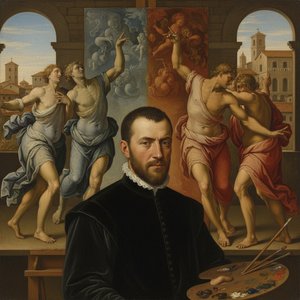
Domenico Beccafumi: A Sienese Master Between Mannerism & Baroque Anticipation
Explore the captivating world of Domenico Beccafumi, a pivotal figure bridging Mannerism & Baroque art. Discover his unique style, religious masterpieces, and lasting legacy with OriginalUniqueArt.
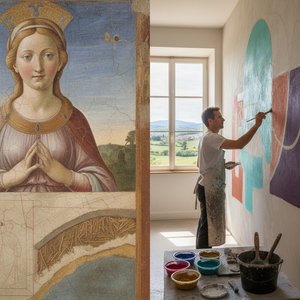
The Enduring Legacy of Fresco Painting: Techniques, History & Contemporary Relevance
Explore the rich history & enduring artistry of fresco painting – from Giotto to Michelangelo! Discover techniques, conservation efforts, & modern applications. Learn how OriginalUniqueArt brings this timeless art form to your home.

The Enduring Legacy of Fresco: Technique, History & Artistic Expression Across Cultures
Explore the rich history & enduring legacy of fresco painting! Discover ancient techniques, Giotto's masterpieces, and modern applications. Expert insights for art lovers & professionals.

The Enduring Legacy of Fresco: Technique, History & Artistic Expression
Explore the rich history & enduring artistry of fresco painting. Discover techniques from Giotto to Michelangelo, conservation efforts, & modern applications. Learn how OriginalUniqueArt brings this timeless art form to your home.
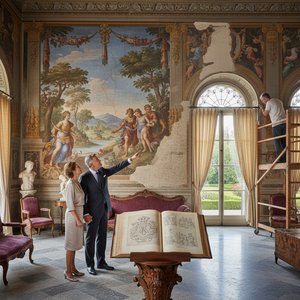
Freska jako rodinné dědictví: Zachovejte svůj původ v obrazech na stěnách
Objevte sílu fresek pro uchování rodinné historie! Kvalitní reprodukce a zakázková malba od . Inspirujte se historií umění a vytvořte jedinečný obraz vašeho původu.

