Realism · 1885
De cavalier (Louis Mettling, 1885)
Louis Mettling (1847–1904) vytvořil dílo De cavalier. Pochází z roku 1885. Patří k hnutí Realism. Je vyrobeno z Oil On Canvas. Nachází se v Rijksmuseum v Amsterdam, Nizozemsko. Rozměry jsou 82.5 × 66 cm.
- 1885
- Oil On Canvas
- 82.5 × 66 cm
- Rijksmuseum, Amsterdam

 Náhled v interiéru

 Ručně malovaná olejná reprodukce
 Sdílet
 Sdílet
 Informační list


 Stáhnout
 Podobné položky
 Rentgenové snímky
 Slideshow
 Otázky a odpovědi

 Statistiky
De cavalier v kostce
- Název díla
- De cavalier
- Autor
- Louis Mettling (1847–1904)
- Rok narození umělce
- Dijon, France
- Datum vytvoření
- 1885
- Technika
- Oil On Canvas
- Rozměry
- 82.5 × 66 cm
- Kde jej vidět
- Rijksmuseum, Amsterdam, Nizozemsko
- Pohyb
- Realism
- Období
- 19th Century
- Motiv
- man, portrait, armor, dark background, shadows, skin tones
Co przedstawuje dílo De cavalier?
A Study in Shadow and Light
In this 1885 oil on canvas, we find ourselves in a quiet, intimate space with a young man. The composition is a medium close-up, focusing on the subject from the chest up, positioned slightly off-center to create a sense of natural, unposed presence. There is a profound stillness here. The lighting is directional, emerging from the upper left to carve the subject out of a deep, dark background. This technique of chiaroscuro leaves much of the face and body in shadow, while catching the contours of the nose, cheek, and hands. It is a deliberate use of light to create volume and a sense of three-dimensional depth.
The color palette is muted and somber, dominated by blacks and deep browns. This darkness is interrupted only by the warm, illuminated tones of the man's skin and a specific metallic, silvery sheen on his gorget. This piece of neck armor provides a sharp textural contrast to the matte darkness of his clothing. The surface of the work bears a fine craquelure, a delicate cracking that speaks to its age and history.
Technical Nuance and Composition
The artist employs a painterly approach where the lines are soft and blended. This is particularly evident in the transitions between light and shadow, which avoids harsh edges in favor of a smooth, gradual movement. The subject's expression is calm and contemplative, lending an emotional weight of quiet dignity to the portrait. To understand the physical presence of this work, one might consider:
- The medium of oil on canvas.
- The specific use of a silvery gorget to catch directional light.
- The muted, earthy tones that define the subject's attire.
- The subtle gradations of tone used to define the facial structure.
The Breton Influence
Flavien-Louis Peslin was deeply shaped by the atmosphere of Brittany. His training at the École des Beaux-Arts de Rennes under masters like Alexandre Cabanel provided him with a foundation in classical beauty and meticulous composition. However, his time in the Pont-Aven artistic colony allowed his style to move toward a more atmospheric realism. In De cavalier, we see this intersection of disciplined academic training and a more sensitive, observational approach to light. The work captures a moment of introspection, reflecting a style that seeks to find the soul of a subject through the careful management of shadow and texture.
Ve kterém muzeu se nachází De cavalier?
Rijksmuseum
Amsterdam, Nizozemsko
Historie a počátky Rijksmuseum Rijksmuseum představuje národní muzeum Nizozemska, jehož kořeny jsou neoddělitelně spjaty s bouřlivými léty následujícími po Francouzské revoluci. Tato instituce byla založena v Haagu 19. listopadu 1798 a právě toto období politických proměn zásadně ovlivnilo raný rozvoj její sbírky.


Vysokorozlišené fotografie díla De cavalier

Louis Mettling, De cavalier (1885), Rijksmuseum. Veřejná doména
Odpovědi na otázky k dílu De cavalier
Kde je dnes možné vidět dílo „De cavalier“ od Louis Mettling?
Originál díla „De cavalier“ si můžete prohlédnout v instituci Rijksmuseum, Amsterdam, Nizozemsko.
V jakém roce vzniklo dílo "De cavalier"?
Vznik díla „De cavalier“ od Louis Mettling se datuje do roku 1885.
Jakou techniku bylo použito pro dílo „De cavalier“ od Louis Mettling?
„De cavalier“ je dílo vytvořené v technice Oil On Canvas.
Jaké jsou rozměry originálu „De cavalier“?
Zaznamenané rozměry díla „De cavalier“ od Louis Mettling jsou 82.5 x 66.0cm. Reprodukce lze objednat v jiných velikostech při zachování stejných proporcí.
Co zachycuje dílo „De cavalier“ od Louis Mettling?
Témata obsažená v díle „De cavalier“ od Louis Mettling zahrnují man, portrait, armor, dark background, shadows, skin tones. Tato témata společně shrnují obsah celého uměleckého díla.
Lze obraz díla „De cavalier“ od Louis Mettling volně reprodukovat?
Co se týče autorských práv, dílo "De cavalier" spadá do v rámci volného užití – autorská práva vypršela.
K kterému umělci je dílo "De cavalier" připisováno?
Dílo "De cavalier" se připisuje autorovi Louis Mettling.
K kterému uměleckému směru patří „De cavalier“ od Louis Mettling?
„De cavalier“ je dílo z období Realism. Tento směr představuje uměleckou tradici, jejíž je dílo součástí.
Do které éry tvorby Louis Mettling spadá dílo "De cavalier"?
V rámci kariéry umělce Louis Mettling spadá dílo „De cavalier“ do období Mature Period. Tato fáze umožňuje jeho srovnání s dalšími díly tohoto umělce.
O umělci, Louis Mettling
1847–1904, France
Louis Mettling
The Quiet Observer of Dijon Born in 1847 in Dijon, France, Louis Mettling grew up in a household with English parents. His early years in the Côte-d'Or region provided a foundation for a life spent observing the subtle shifts of light and shadow. He eventually moved toward formal training, studying at the École des Beaux-Arts in Lyons. It was there that he became a pupil of Alexandre Cabanel, a connection that helped shape his approach to the human form and the structure of his compositions.
Také od autora Louis Mettling
 Portrait of a girl1873
 Market Scene1875
 Old man1883
 The Washing1883

Eseje k tématu De cavalier
 The Discipline of Light: A Study of Academic Realism and Classical PortraitureExplore the mastery of Academic Realism through chiaroscuro and classical portraiture. Discover the enduring power of tradition today.
 Top 10 mistrovských děl holandského baroka – obrazy a umělci | OriginalUniqueArt.czObjevte 10 ikonických děl holandského baroka! Prozkoumejte příběhy Rembrandta, Vermeera a dalších mistrů. Repliky obrazů nejvyšší kvality p…
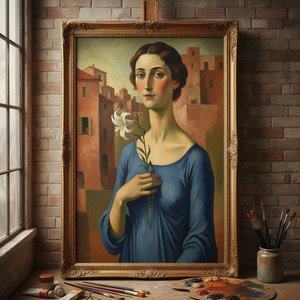 Capturing Elegance: The Soulful Essence and Timeless Grace of Modigliani-Style ArtworksDiscover the profound beauty of Modigliani-style art. Explore the elegance of elongated forms and soulful portraits through our expert cura…