

 Zobrazit v interiéru
 Odeslat
 Sdílet
 Podrobnosti
 Průvodce

 Stáhnout obrázek
 Podobné kousky
 Rentgenové snímky
 Slideshow
 Statistiky
Untitled (958)

 Přečíst si více
Giclée / Umělecký tisk
Giclée nebo plátěný tisk muzeální kvality s rychlou výrobou a širokou nabídkou povrchových úprav. ( Objednat ručně malovanou reprodukci Přepnout na digitální verzi obrazu)




































Vyberte si z našich přednastavených velikostí, které odpovídají původním proporcím díla.

Můžete zadat vlastní rozměry tak, aby výtvor odpovídal konkrétnímu rámu nebo prostoru. Pokud zvolená velikost nebude odpovídat poměru stran původního obrazu, dílo buď ořížeme, nebo obraz rozšíříme pomocí zrcadlového efektu či jednobarevného okraje. Před zahájením výroby vám bude zaslán digitální náhled k schválení.
Mějte prosím na paměti, že náhled na obrazovce neodráží skutečné oříznutí nebo rozšíření. Pouze digitální náhled přesně zobrazí finální kompozici.
Ačkoliv jsou k dispozici i vlastní rozměry, pro zachování původních proporcí doporučujeme vybrat si rozměr z předdefinovaného seznamu.
Celosvětové doručení () do 2 týdnů namísto standardních 4/5 týdnů. (25 září)

Zdarma celosvětová expresní doprava

Vysoce kvalitní lněné plátno

Úplné pojištění přepravy

Záruka vrácení celního poplatku

Záruka věrného barevného shodu

100dení lhůta pro vrácení zboží (pouze při vadách výroby)

100% garance vrácení peněz

Sleva při více objednávkách
 Skleněná varianta je dostupná pouze u rozměrů menších než 110 cm

Untitled (958)
Giclée / Umělecký tisk
Velikost reprodukce
-


Celková cena
$ 80
A Delicate Bloom: Exploring Mackintosh's "Untitled (958)"
This captivating artwork, currently known as “Untitled (958),” offers a glimpse into the refined aesthetic of Charles Rennie Mackintosh, a pivotal figure in the Glasgow Style movement. While lacking a formal title from the artist’s hand, its visual impact speaks volumes about his mastery of decorative arts and his unique approach to floral representation. The painting presents a close-up study of pink flowers interwoven with lush green foliage, creating an intimate and visually rich composition. The presence of three small white dots adds a subtle layer of intrigue – perhaps representing dewdrops or simply serving as delicate accents within the overall design.Style & Technique: Echoes of Art Nouveau
Mackintosh’s style is instantly recognizable, firmly rooted in the Art Nouveau movement but infused with his distinct Scottish sensibility. Unlike the more overtly ornate and flowing forms often associated with Art Nouveau, Mackintosh favored a restrained elegance characterized by geometric precision and simplified lines. This piece exemplifies this approach; while depicting natural forms – flowers and leaves – they are rendered with a clarity and linearity that borders on abstraction. The technique appears to be executed in oil paint, allowing for subtle gradations of color within the petals and leaves, creating depth and texture despite the relatively flat perspective. The close cropping of the subject matter is also characteristic of his work, focusing attention entirely on the beauty of the floral arrangement.Historical Context & The Glasgow Style
Created during Mackintosh’s prolific period (likely around the turn of the 20th century), “Untitled (958)” reflects the burgeoning artistic scene in Glasgow. The "Glasgow Style" was a unique blend of Art Nouveau, Celtic Revival influences, and Scottish vernacular architecture and design. Mackintosh spearheaded this movement, leaving an indelible mark on interior design, furniture making, and decorative arts. His work aimed to create harmonious environments – total works of art encompassing architecture, furnishings, and decorative elements. This painting can be seen as a smaller-scale manifestation of that holistic vision, demonstrating his ability to translate the principles of good design into a captivating floral study. His collaborations with his wife, Margaret Macdonald Mackintosh, were also crucial in shaping this distinctive style; her own symbolic and often mystical imagery frequently complemented his architectural designs.Symbolism & Emotional Impact
While seemingly straightforward in its depiction of flowers, the painting likely carries deeper symbolic weight within the context of Mackintosh’s broader artistic philosophy. Flowers often represent themes of growth, beauty, and transience – concepts that resonate with the Art Nouveau fascination with nature. The restrained palette of pinks and greens evokes a sense of tranquility and understated elegance. The overall effect is one of quiet contemplation; the viewer is invited to appreciate the delicate details and subtle harmonies within this miniature floral world. It’s a piece that inspires serenity and offers a moment of respite from the complexities of modern life, embodying Mackintosh's desire to create spaces and objects that nurture the soul.Biografie umělce
Charles Rennie Mackintosh: A Scottish Visionary
Charles Rennie Mackintosh, born in Glasgow on June 7, 1868, was more than simply an architect; he embodied a philosophical approach to design, striving for a harmonious integration of every element within the built environment. From grand structures to the smallest details of furniture and ornamentation, his vision aimed at creating a holistic aesthetic experience—a distinctly Scottish interpretation of the burgeoning Art Nouveau movement. His early life, amidst eleven siblings in a family where his father served as a police superintendent, offered little indication of the artistic revolution he was about to ignite. His education at Reid’s Public School and Allan Glen's Institution revealed an aptitude for art but also hinted at challenges with traditional academic disciplines—possibly indicative of dyslexia. This divergence from conventional learning may have fostered his unique perspective, allowing him to approach design unbound by established norms. His formative years were profoundly shaped by his apprenticeship under architect John Hutchison, coupled with evening classes at the Glasgow School of Art – a crucible where he forged crucial relationships with fellow students Herbert McNair, Margaret Macdonald, and Frances Macdonald, collectively known as “The Four.” These connections weren’t merely professional; they were deeply collaborative, influencing each other's artistic trajectories and forming the core of what would become the Glasgow Style.Forging a New Aesthetic: The Glasgow Style and Architectural Masterpieces
By the 1890s, Mackintosh had emerged as a leading figure in the “Glasgow Style,” an Art Nouveau variant infused with Celtic symbolism, Japanese aesthetics, and the principles of the Arts and Crafts movement. This wasn’t simply about applying decorative motifs; it was about creating a total work of art—where architecture, furniture, interiors, and even textiles were conceived as interconnected elements of a unified design. His most enduring legacy is undoubtedly the Glasgow School of Art (1897-1909), a building that remains both controversial and profoundly influential. It wasn’t merely a school for artistic education; it was a physical manifestation of Mackintosh's philosophy—a daring exploration of space, light, and organic forms. The building’s innovative use of steel framing allowed for large, open studio spaces bathed in natural light, while its distinctive façade, with its stylized floral motifs and asymmetrical composition, became an iconic symbol of the Glasgow Style. Beyond the School of Art, Mackintosh's genius is evident in projects like Windyhill (1899-1901), a country house that seamlessly integrates with its landscape; Hill House (1902), a masterpiece of domestic architecture characterized by its white harled exterior and evocative interiors; Queen’s Cross Church (1907-1909), a striking example of ecclesiastical design; and Scotland Street School (1904-1906), a whimsical and imaginative building designed to inspire young minds. Central to this period was his marriage in 1900 to Margaret Macdonald, an artist whose talent Mackintosh himself acknowledged as surpassing his own. Their collaboration wasn’t merely a partnership; it was a synergistic fusion of artistic sensibilities that enriched the depth and complexity of his designs.The Influence of “The Four” and Artistic Collaboration
Mackintosh's creative process thrived within the close-knit circle of "The Four"—himself, Margaret Macdonald, Herbert McNair, and Frances Macdonald. This group operated with a remarkable degree of intellectual and artistic freedom, challenging conventional design practices and pushing the boundaries of Art Nouveau. Each member brought unique skills and perspectives to their collaborations, resulting in a remarkably cohesive and innovative style. Margaret’s contributions were particularly significant, often complementing Mackintosh's architectural designs with intricate furniture, textiles, and decorative panels that further enhanced the overall aesthetic harmony. The shared studio space fostered an environment of experimentation and mutual inspiration, leading to a body of work characterized by its elegance, subtlety, and profound emotional resonance. Their approach was deeply rooted in Celtic mythology and symbolism, drawing upon ancient motifs and narratives to create designs that were both visually stunning and intellectually stimulating.A Period of Transition and Artistic Exploration
The outbreak of World War I marked a turning point in Mackintosh's life and career. In 1914, he and Margaret sought refuge from the escalating conflict and shifting architectural tastes by relocating to Walberswick, Suffolk, England. This move signaled a period of relative obscurity and professional decline. Commissions became scarce as his distinctive style fell out of favor with a public increasingly drawn to more conventional designs. However, this wasn’t a time of artistic stagnation. Mackintosh turned his attention to watercolor painting, finding solace and creative expression in depicting flowers and landscapes. These paintings, often characterized by their delicate colors and evocative atmosphere, reveal a different facet of his artistry—a quieter, more introspective approach that nonetheless retained the hallmarks of his unique vision.Legacy and Rediscovery: A Lasting Impact on Modern Design
Charles Rennie Mackintosh died in London on December 10, 1928, at the age of 60, leaving behind a legacy that would take decades to fully appreciate. For years after his death, his work remained largely forgotten, overshadowed by more dominant architectural trends. However, beginning in the 1960s and 1970s, a renewed interest in Art Nouveau and early modernism led to a rediscovery of Mackintosh’s contributions. Scholars and designers began to recognize the profound influence of his work on subsequent generations, acknowledging his pioneering use of space, light, and materials. His emphasis on simplicity, functionality, and the integration of art and architecture resonated with modernist principles, establishing him as a precursor to many of the key movements that shaped 20th-century design. Today, Mackintosh is celebrated as one of Scotland’s most important architects and designers—a visionary artist whose unique aesthetic continues to inspire and captivate audiences worldwide. His buildings stand as testaments to his genius, while his furniture, interiors, and paintings offer a glimpse into the mind of an artist who dared to challenge convention and create a world of beauty and harmony.Exploring Mackintosh’s World: Museums & Further Resources
To truly appreciate the breadth of Charles Rennie Mackintosh's talent, several institutions offer immersive experiences. The National Trust for Scotland’s Hill House in Helensburgh provides a captivating glimpse into his domestic architecture, allowing visitors to explore the meticulously designed interiors and surrounding gardens. The Hunterian Museum and Art Gallery in Glasgow boasts an extensive collection of Mackintosh's works, including furniture, drawings, and architectural models, alongside pieces by Margaret Macdonald Mackintosh and other key figures of the Glasgow Style. The Hunterian Art Gallery further expands on this offering with a dedicated focus on fine art. For those seeking deeper insights, resources like Britannica and Wikipedia offer comprehensive biographical information and critical analyses of his work. These avenues provide opportunities to delve into the world of Charles Rennie Mackintosh—a world where artistry, architecture, and design converge to create an enduring legacy of beauty and innovation.
Charles Rennie Mackintosh
1868 - 1928 , Spojené království
Rychlé informace
- Artistic Movement Or Style: Secesí
- Artists Or Movements Influenced By This Artist: ['Art Nouveau']
- Date Of Birth: 7 června 1868
- Date Of Death: 10 prosince 1928
- Full Name: Charles Rennie Mackintosh
- Nationality: Skotský
- Notable Artworks:
- Untitled (958)
- Untitled (592)
- Glasgow School of Art
- Place Of Birth: Glasgow, Skotsko
Související články
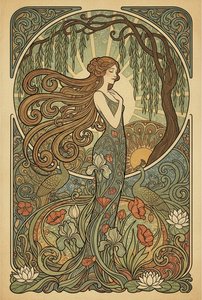
The Flowing Line & Flourishing Form: Exploring Art Nouveau's Aesthetic Legacy
Explore the captivating world of Art Nouveau! Discover its origins, key artists like Horta & Mucha, regional styles, innovative techniques, and lasting influence on architecture & design. A comprehensive guide for art enthusiasts.
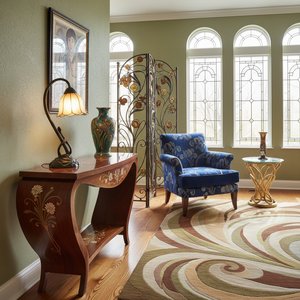
Top 10 mistrovských děl secese: Umění, které definovalo dobu
Objevte 10 ikonických děl secese od Muchy, Klimta a dalších. Ponořte se do příběhů umění, technik a barev tohoto fascinujícího hnutí. Reprodukce obrazů v muzeální kvalitě na OriginalUniqueArt.com! Prozkoumejte celou kolekci online.
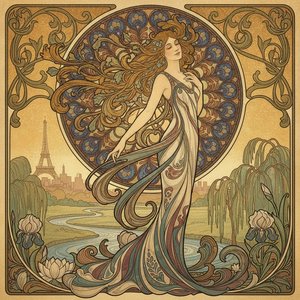
The Elegance of Art Nouveau: Embracing Nature's Fluid Beauty and the Belle Époque Spirit
Discover the enchanting world of Art Nouveau. Explore the organic beauty, flowing lines, and Belle Époque elegance that defined an era of unparalleled craftsmanship and natural inspiration.
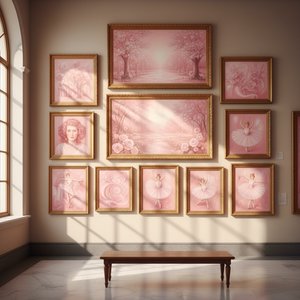
Top 10 slavných obrazů v odstínech světle růžové – umění a inspirace pro interiér
Objevte top 10 slavných obrazů v odstínech světle růžové! Prozkoumejte příběhy Monetových, Renoirových a dalších mistrů. Inspirace pro váš interiér s reprodukcemi nejvyšší kvality na OriginalUniqueArt.com.
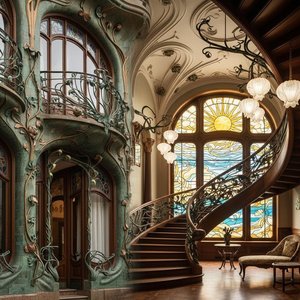
Art Nouveau: The Elegant Fusion of Nature and Design – A Journey Through Organic Sophistication
Discover the exquisite world of Art Nouveau. Explore the elegant fusion of nature and design through architectural masterpieces, organic forms, and the legendary masters of the Belle Époque. Immerse yourself in a journey of timeless sophistication and ornamental beauty.