Přepnout na tisk
 Zobrazit více







































 U děl nebo reprodukcí, u nichž je jakákoliv strana větší než 105 cm (přibližně 41 palců), bude rám dodán jako sestava v rozloženém stavu. Tato metoda zajišťuje bezpečné doručení a chrání dílo před poškozením během přepravy.


A Symphony of Light and Stone
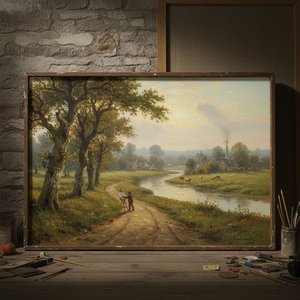
In the quietude of 1859, Charles-François Daubigny captured a moment of profound stillness in his masterpiece, "La Vanne d'Optevoz." This evocative landscape is far more than a mere depiction of a riverside scene; it is an intimate dialogue between the earth and the atmosphere. As a prominent figure of the Barbizon School and a vital precursor to Impressionism, Daubymny utilizes this canvas to explore the delicate interplay of light and texture. The viewer is immediately drawn into the expansive vista of the Optevoz River valley, where the foreground—composed of rugged rocks and muddy banks—slopes gently toward the water’s edge, grounding the composition in a palpable, tactile reality.
The painting unfolds with a masterful sense of depth, guiding the eye through a layered landscape. A grassy hillside rises toward a weathered stone embankment, a feature that highlights Daubigny's fascination with geological authenticity and the enduring presence of man-made structures within nature. In the distance, trees stand as soft silhouettes against a hazy, ethereal sky, employing atmospheric perspective to create an illusion of vast, receding space. This technique subtly blurs the horizon, lending the work an almost dreamlike quality that invites long, contemplative gazes.
The Language of Color and Texture
Daubigny’s palette in "La Vanne d'Optevoz" is a masterclass in earthy tranquility. Eschewing flamboyant or vibrant hues, he relies on a sophisticated arrangement of muted greens, deep browns, and soft greys to mirror the naturalistic essence of a misty morning. These tones whisper of an overcast day, where the light is diffused and shadows are gentle, contributing to an overall mood of serene stability. Subtle traces of blue and white emerge within the sky and the shimmering reflections on the water, providing just enough contrast to animate the surface without disrupting the painting's inherent calm.
The artist’s technique is characterized by a loose, impressionistic brushwork that breathes life into the organic forms of the landscape. Visible strokes build up layers of color, creating a textured surface that mimics the roughness of stone and the softness of lush foliage. This tactile approach allows the water to catch the light in a flickering, rhythmic manner, while the heavy application of paint on the embankment lends weight to the earth. For the collector or interior designer, such a piece offers a rich sensory experience, where the movement of the brush becomes as much a part of the subject as the river itself.
Emotional Resonance and Timeless Appeal
Beyond its technical brilliance, "La Vanne d'Optevoz" carries a profound emotional weight. The scene evokes feelings of peace, solitude, and a deep-seated connection to the natural world. There is a sense of history embedded in the weathered stone structure, suggesting the slow passage of time and the harmonious integration of human presence within the wilder elements of the landscape. It is a work that celebrates the beauty of the fleeting moment—the way light hits a muddy bank or how mist clings to a distant treeline.
For those seeking to infuse a space with sophistication and tranquility, this reproduction serves as an exquisite focal point. Its balanced composition of horizontal stability and vertical contrast makes it versatile for various high-end interiors, offering a window into the soul of 19th-century French landscape painting. To possess such a work is to invite the quiet majesty of the Optevoz valley into one's own surroundings, fostering an atmosphere of reflective grace and timeless elegance.
Otázky a odpovědi
Kde si mohu stáhnout obrázek díla „LA VANNE D'OPTEVOZ“ od Charles-François Daubigny?
Digitální obraz díla „LA VANNE D'OPTEVOZ“ od Charles-François Daubigny si můžete stáhnout na stránce s k dispozici pro stažení Stažení digitální verze: stažení digitálního obrazu ve vysokém rozlišení.
Jakou barevnou harmonii představuje dílo „LA VANNE D'OPTEVOZ“ od Charles-François Daubigny?
„LA VANNE D'OPTEVOZ“ od Charles-François Daubigny představuje Strong Color Unity barevnou harmonii.
Jakou techniku bylo použito pro dílo „LA VANNE D'OPTEVOZ“ od Charles-François Daubigny?
Charles-François Daubigny pro dílo „LA VANNE D'OPTEVOZ“ použil/a techniku Oil On Canvas. Tato technika definuje materiální podstatu originálního díla.
 Náhled v interiéru
 Sdílet
 Sdílet
 Podrobnosti o díle
 Průvodce

 Stáhnout
 Podobné položky
 Rentgenové snímky
 Slideshow
 Otázky a odpovědi
 Statistiky