Náhled v interiéru
 Sdílet
 Sdílet
 Podrobnosti o díle
 Průvodce

 Stáhnout
 Podobné položky
 Rentgenové snímky
 Slideshow
 Statistiky
Ricketts Point, Beaumaris
 Oil
Oil- WallArt
- Impressionism
 1890
1890- 19th Century
 215.0 x 120.0 cm
 National Gallery of Australia
 Zobrazit více
Ručně malovaná olejová reprodukce
Rukou malované olejné plátno v libovolném rozměru i s rámem, vyrobené našimi umělci na zakázku. ( Přepnout na tisk Přepnout na digitální obraz)




P118B Kč10

P118H Kč10

P118W Kč10

P438Z Kč10

P508JH Kč12

P508YH Kč12

P805H Kč10

P805Z Kč10

P919BZ Kč10

P919G Kč10

P919XJ Kč10

P959ZH Kč10

P968JZ Kč12

W106C Kč8

W218G Kč10

W218JH Kč8

W218Y Kč10

W307PJ Kč10

W316G Kč10

W316PJ Kč8

W316Y Kč10

W398PJ Kč8

W4111J Kč10

W500HY Kč15

W500JH Kč15

W692G Kč12

W849H Kč8

W940BG Kč15

W953PJ Kč8




Vyberte si z našich přednastavených velikostí, které odpovídají původním proporcím díla.

Zadejte šířku a výšku, které potřebujete pro váš rám nebo stěnu. Protože se jedná o ruční malbu, při výběru jiného formátu může umělec kolem obrazu domalovat o něco více, nebo jej mírně oříznout — rozhodnete si vy. Před zahájením malby vám zašleme digitální náhled ke schválení. Obraz zobrazený na této stránce neodpovídá skutečnému výsledku — pouze digitální náhled jej zobrazuje.
Po přijetí objednávky vám tým OriginalUniqueArt.com zašle e-mail s pokyny a poskytne náhledovou verzi.
Celosvětová doprava () za 3–4 týdny namísto standardních 5 týdnů. (27 říjen). Bez kompromisů v kvalitě.

Zdarma celosvětová expresní doprava

Vysoce kvalitní lněné plátno

Kompletní pojištění přepravy

Záruka vrácení celního poplatku

Záruka věrného barevného souladu

100dení lhůta pro vrácení zboží (pouze při vadách výroby)

100% záruka vrácení peněz

Sleva při více objednávkách
 Skleněná varianta je dostupná pouze u rozměrů menších než 110 cm

Ricketts Point, Beaumaris
Technika reprodukce
Rozměry reprodukce
-


Celková cena za vybrané možnosti reprodukcí
Kč 6435
A Sun-Drenched Moment in Australian Impressionism
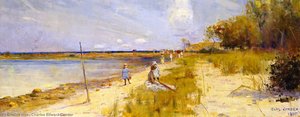
In the luminous masterpiece Ricketts Point, Beaumaris, Charles Edward Conder invites us to step into a world of pure, unadulterated joy. Painted in 1890, this sweeping composition captures more than just a coastal landscape; it captures the very essence of a summer afternoon on the shores of Melbourne. The scene is an exquisite study of light and leisure, where the reflective shallows of the foreground act as a mirror to the sky, drawing the viewer’s eye through the shimmering water toward the distant horizon. Conder, a pivotal figure of the Heidelberg School, demonstrates his profound ability to translate the subtle moods of nature into a vibrant visual language. As we gaze upon the rhythmic movement of the waves and the gentle activity along the shoreline, we are transported to a time when the simple pleasure of watching a sailboat drift across the bay was enough to stir the soul.
The technical brilliance of this work lies in Conder’s bold application of paint and his masterful command of color. Eschewing rigid outlines for a more fluid, impressionistic touch, he uses light to define form and atmosphere. The composition is masterfully balanced; while much of the canvas is dedicated to the expansive, tranquil ocean, the strip of sand and rock provides a grounded stage for human connection. One can almost feel the warmth of the sun through the artist's energetic brushstrokes. The way the light dances upon the wet sand and catches the edges of the figures creates a sense of immediacy, as if the scene were captured in a fleeting heartbeat. For the collector or interior designer, this painting offers a profound sense of openness and vitality, making it an ideal centerpiece for spaces that crave a breath of fresh, coastal air.
The Poetry of Everyday Life
Beyond its technical prowess, Ricketts Point, Beaumaris serves as a poignant narrative of social harmony and the poetic qualities of the natural world. Conder populates his landscape with figures that feel deeply integrated into the environment rather than merely placed upon it. Women in long, flowing dresses wander the shoreline in search of seashells, their movements echoing the gentle ebb and flow of the tide, while a small child plays near the water's edge, embodying the innocent wonder of discovery. This interplay between humanity and nature is central to Conder’s vision; he does not depict man conquering the landscape, but rather finding a rhythmic, peaceful coexistence within it. The presence of the distant sailboat adds a layer of movement and aspiration, suggesting the broader world beyond this intimate coastal retreat.
Historically, this work stands as a testament to the flourishing Australian Impressionist movement, born from the creative synergy between Conder and his contemporaries, Tom Roberts and Arthur Streeton. It reflects a period of intense artistic exploration where the light of the Australian landscape was being redefined through a new, modern lens. To possess a reproduction of such a piece is to hold a fragment of art history—a window into a nostalgic, golden era of Australian life. The emotional impact of the painting is one of profound serenity and optimism; it is a work that celebrates the beauty of the present moment, offering a timeless escape for anyone seeking inspiration, peace, or a touch of classical elegance in their personal surroundings.
Otázky a odpovědi
K kterému uměleckému směru patří „Ricketts Point, Beaumaris“ od Charles Edward Conder?
„Ricketts Point, Beaumaris“ je dílo z období Impressionism. Tento směr představuje uměleckou tradici, jejíž je dílo součástí.
Jaké jsou rozměry originálu „Ricketts Point, Beaumaris“?
Zaznamenané rozměry díla „Ricketts Point, Beaumaris“ od Charles Edward Conder jsou 215 x 120 cm. Reprodukce lze objednat v jiných velikostech při zachování stejných proporcí.
Co zachycuje dílo "Ricketts Point, Beaumaris"?
Motivy díla „Ricketts Point, Beaumaris“ jsou beach, seascape, impressionism, coastal life, leisure, australia, summer day.
Biografie umělce
Early Life and Artistic Journey
Charles Edward Conder (1868 – 1909) byl anglický malíř, grafický umělec a návrhář. Narodil se v Tottenhamu, Middlesex, druhým synem z šesti dětí, Jamese Condora, civilního inženýra a Mary Ann Ayresové. Jeho rané roky byly poznamenány smrtí matky v Indii krátce po narození, kdy byl jen čtyři letý. Umělecká cesta v Austrálii
V roce 1884 se přestěhovala do Sydney, Austrálie, kde pracovala pro svého příbuzného jako zeměměřičský technik pro Novou Gallii Britskou. Nicméně nezaujal ho tento druh práce a mnohem více si oblíbil kreslení krajiny než zeměřování. Už roku 1886 opustil zaměstnání a stal se umělcem pro „Illustrated Sydney News“, kde působil společně s dalšími významnými umělci jako Albert Henry Fullwood, Frank Mahony a Benjamin Edwin Minns. Studoval také na Akademii Julian v Paříži a byl součástí kruhu umělců včetně Henriho Toulouse-Lautrece.
The Heidelberg School and Notable Works
Conderův největší dílo, Odjezd Orientu – Kružnice Quay (1888), ukázalo jeho nové mistrovství ve formě a štětcem. Tato dokonalá výstava přístavu v Sydney Cove byla rychle prodána galerii Orientální v Sydney a Conder tak získal první své dílo, které vstoupilo do veřejné sbírky.
Výstavu „9 x 5 impresionistické výstavy“ v Melbourne společně s Tom Robertem a Arthurem Streetonem si Conder vybudoval pozici ve školském hnutí Heidelberg. Jeho práce byly prezentovány na mnoha výstavách, včetně samostatných výstav.
Legacy and Later Life
Conderovy pozdější roky byly poznamenány nemocí, včetně ochranného nervového systému a epizod děsivé třeskotavosti. Přesto pokračoval v malování a zanechal si dědictví klíčové osoby ve školském hnutí Heidelberg. Jeho dílo bylo lépe přijato v Anglii než ve Francii, kde byl jeho portrét namalován Henri de Toulouse-Lautrecem v roce 1892.

Charles Edward Conder
1868 - 1909 , Spojené království
Rychlé informace o umělci
- Artistic Movement Or Style: Heidelberg School
- Artists Who Influenced This Artist:
- Alfred Daplyn
- Victor Mann
- Julian Ashton
- Date Of Birth: October 24, 1868
- Date Of Death: February 9, 1909
- Full Name: Charles Edward Conder
- Nationality: British
- Notable Artworks:
- Departure of the Orient – Circular Quay
- A holiday at Mentone
- Under The Southern Sun
- Place Of Birth: Tottenham, United Kingdom
Související články

Top 10 impresionistických krajin: Mistrovská díla, která změnila umění | OriginalUniqueArt
Prozkoumejte 10 ikonických impresionistických krajin od Monet, Renoir a dalších. Objevte příběhy umělců, techniky a barevnost tohoto revolučního hnutí. Najděte perfektní obraz pro váš interiér na OriginalUniqueArt.com

Impressionistic Realism's Finest: 10 Masterpieces for Your Home | OriginalUniqueArt
Journey through Impressionistic Realism with 10 iconic masterpieces by Monet, Renoir & Van Gogh. Explore art history, techniques & find museum-quality reproductions for your home at OriginalUniqueArt.com. Discover all masterpieces online!
Capturing Light: A Masterclass in the Ethereal Beauty of Impressionistic Landscapes
Explore the ethereal beauty of Impressionist landscapes. Discover how masters like Monet captured fleeting light through color and texture, and learn to curate these timeless, luminous masterpieces for your home collection.
Pierre-Auguste Renoir: Top 25 děl impresionismu pro váš domov | OriginalUniqueArt.cz
Objevte top 25 děl Pierre-Auguste Renoira – impresionistické ikony plné světla a radosti. Prozkoumejte příběhy slavných obrazů, techniky malby a inspirujte se pro váš domov s OriginalUniqueArt.cz! Reprodukce obrazů nejvyšší kvality.

Top 10 impresionistických krajin: Mistrovská díla, která změnila umění | OriginalUniqueArt.cz
Prozkoumejte 10 ikonických impresionistických krajin od Monet, Renoir a dalších. Objevte příběhy umělců, techniky a barvy, které definovaly toto revoluční hnutí. Najděte dokonalý obraz pro váš interiér na OriginalUniqueArt.cz