Náhled v interiéru
 Sdílet
 Sdílet
 Podrobnosti o díle
 Průvodce

 Stáhnout
 Podobné položky
 Rentgenové snímky
 Slideshow
 Otázky a odpovědi
 Statistiky
Dieppe


 Zobrazit více
Giclée / Umělecký tisk
Giclée nebo plátěný tisk muzeální kvality s rychlou výrobou a širokou nabídkou povrchových úprav. ( Koupit ručně malovaný obraz Přepnout na digitální obraz)




P118B Kč10

P118H Kč10

P118W Kč10

P438Z Kč10

P508JH Kč12

P508YH Kč12

P805H Kč10

P805Z Kč10

P919BZ Kč10

P919G Kč10

P919XJ Kč10

P959ZH Kč10

P968JZ Kč12

W106C Kč8

W218G Kč10

W218JH Kč8

W218Y Kč10

W307PJ Kč10

W316G Kč10

W316PJ Kč8

W316Y Kč10

W398PJ Kč8

W4111J Kč10

W500HY Kč15

W500JH Kč15

W692G Kč12

W849H Kč8

W940BG Kč15

W953PJ Kč8




Vyberte si z našich přednastavených velikostí, které odpovídají původním proporcím díla.

Zadejte šířku a výšku, které potřebujete pro váš rám nebo stěnu. Tisk lze pouze oříznout, nikdy však nelze zvětšit obraz nad jeho původní rozměr, proto při výběru jiného formátu dochází ke ztrátě části obrazu. Před samotným tiskem vám zašleme digitální náhled k schválení. Obraz zobrazený na této stránce nenabízí skutečný výřez — ten uvidíte pouze v náhledu.
Celosvětové doručení () do 2 týdnů namísto standardních 4/5 týdnů. (5 listopad)

Zdarma celosvětová expresní doprava

Vysoce kvalitní lněné plátno

Kompletní pojištění přepravy

Záruka vrácení celního poplatku

Záruka věrného barevného souladu

100dení lhůta pro vrácení zboží (pouze při vadách výroby)

100% záruka vrácení peněz

Sleva při více objednávkách
 Skleněná varianta je dostupná pouze u rozměrů menších než 110 cm

Dieppe
Giclée / Umělecký tisk
Rozměry reprodukce
-


Celková cena za vybrané možnosti reprodukcí
Kč 1767
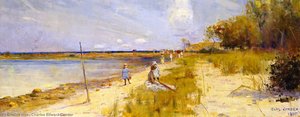
The Scene Unfolds: A Seaside Moment Captured
Charles Edward Conder’s “Dieppe,” painted in 1895, isn't merely a depiction of a coastal scene; it’s an immersion into a fleeting moment of tranquility and observation. The canvas breathes with the muted palette of a late afternoon – a symphony of blues deepening towards the horizon, punctuated by the warm ochres and yellows of the sand and distant buildings. The composition immediately draws the eye along a gentle diagonal path created by the sandy track leading toward the figures strolling along the beach. This isn’t a dramatic seascape; rather, it's an invitation to pause, to contemplate the quiet rhythm of daily life unfolding against the vastness of the sea.
The subject matter itself is deceptively simple: a group of people enjoying a seaside walk. Yet Conder elevates this commonplace activity through his masterful use of Impressionistic techniques. He’s less concerned with precise representation and more interested in capturing the *feeling* of the scene – the diffused light, the sense of warmth, the subtle interplay of color and texture. The figures are rendered with loose brushstrokes, their forms dissolving into the atmosphere, suggesting a momentary impression rather than a detailed portrait.
Impressionistic Techniques: A Dance of Light and Color
Conder’s approach is deeply rooted in Impressionism, a movement that sought to capture the subjective experience of light and color. Notice how he employs broken brushstrokes – short, distinct marks applied side-by-side rather than blended smoothly. This creates a shimmering effect, mimicking the way sunlight dances on water and reflects off surfaces. The layering of paint is equally significant; visible texture adds depth and richness to the canvas, inviting the viewer to examine the surface closely.
The color choices are deliberately restrained, contributing to the overall mood of serenity. He avoids bright, saturated hues, opting instead for a harmonious blend of blues, yellows, and browns. This creates a sense of atmospheric perspective – distant elements appear paler and less distinct, reinforcing the feeling of depth and distance. The use of complementary colors—the blue sky contrasted with the warm sand—further enhances the visual interest and vibrancy of the scene.
Historical Context: The Heidelberg School and Australian Modernism
To understand “Dieppe,” it’s crucial to consider Conder's place within the broader context of Australian art. He was a key figure in the Heidelberg School, a group of artists who developed a distinctly Australian style influenced by Impressionism and Post-Impressionism. Based in Melbourne, the Heidelberg School sought to capture the unique landscapes and light conditions of Victoria’s rural areas.
Conder's move to Sydney in 1884 marked a pivotal moment in his career. He quickly established himself as a talented landscape painter, experimenting with new techniques and styles. “Dieppe” reflects this period of artistic exploration, showcasing Conder’s growing mastery of Impressionistic principles while retaining a distinctly Australian sensibility. The painting's subject matter – a seaside scene – resonated deeply with the Heidelberg School’s focus on capturing the beauty of the natural world.
Symbolism and Emotional Resonance: A Moment of Quiet Reflection
Beyond its technical merits, “Dieppe” possesses a subtle yet powerful symbolic resonance. The figures strolling along the beach represent leisure, connection, and the simple pleasures of life. The vast expanse of the sea symbolizes both opportunity and uncertainty – a reminder of the world beyond our immediate surroundings. The painting evokes a sense of quiet contemplation, inviting the viewer to slow down and appreciate the beauty of the present moment.
Ultimately, “Dieppe” is more than just a landscape; it’s a meditation on light, color, and human experience. It's a testament to Conder's artistic vision and his ability to capture the essence of a fleeting scene with remarkable sensitivity and skill. A reproduction of this work offers a beautiful addition to any collection, bringing a touch of Impressionistic serenity into your home.
Otázky a odpovědi
Kdo je autorem díla "Dieppe" a z jakého roku pochází?
Dílo "Dieppe" vytvořil/a Charles Edward Conder v roce 1895.
Je „Dieppe“ od Charles Edward Conder portrét, krajina nebo čtvercová kompozice?
Formát díla „Dieppe“ je Landscape. Tato informace vám pomůže při plánování umístění reprodukce.
Co zachycuje dílo „Dieppe“ od Charles Edward Conder?
Témata obsažená v díle „Dieppe“ od Charles Edward Conder zahrnují seaside, beach, landscape, impressionism, leisure, tranquility, figures, atmosphere. Tato témata společně shrnují obsah celého uměleckého díla.
Biografie umělce
Early Life and Artistic Journey
Charles Edward Conder (1868 – 1909) byl anglický malíř, grafický umělec a návrhář. Narodil se v Tottenhamu, Middlesex, druhým synem z šesti dětí, Jamese Condora, civilního inženýra a Mary Ann Ayresové. Jeho rané roky byly poznamenány smrtí matky v Indii krátce po narození, kdy byl jen čtyři letý. Umělecká cesta v Austrálii
V roce 1884 se přestěhovala do Sydney, Austrálie, kde pracovala pro svého příbuzného jako zeměměřičský technik pro Novou Gallii Britskou. Nicméně nezaujal ho tento druh práce a mnohem více si oblíbil kreslení krajiny než zeměřování. Už roku 1886 opustil zaměstnání a stal se umělcem pro „Illustrated Sydney News“, kde působil společně s dalšími významnými umělci jako Albert Henry Fullwood, Frank Mahony a Benjamin Edwin Minns. Studoval také na Akademii Julian v Paříži a byl součástí kruhu umělců včetně Henriho Toulouse-Lautrece.
The Heidelberg School and Notable Works
Conderův největší dílo, Odjezd Orientu – Kružnice Quay (1888), ukázalo jeho nové mistrovství ve formě a štětcem. Tato dokonalá výstava přístavu v Sydney Cove byla rychle prodána galerii Orientální v Sydney a Conder tak získal první své dílo, které vstoupilo do veřejné sbírky.
Výstavu „9 x 5 impresionistické výstavy“ v Melbourne společně s Tom Robertem a Arthurem Streetonem si Conder vybudoval pozici ve školském hnutí Heidelberg. Jeho práce byly prezentovány na mnoha výstavách, včetně samostatných výstav.
Legacy and Later Life
Conderovy pozdější roky byly poznamenány nemocí, včetně ochranného nervového systému a epizod děsivé třeskotavosti. Přesto pokračoval v malování a zanechal si dědictví klíčové osoby ve školském hnutí Heidelberg. Jeho dílo bylo lépe přijato v Anglii než ve Francii, kde byl jeho portrét namalován Henri de Toulouse-Lautrecem v roce 1892.

Charles Edward Conder
1868 - 1909 , Spojené království
Rychlé informace o umělci
- Artistic Movement Or Style: Heidelberg School
- Artists Who Influenced This Artist:
- Alfred Daplyn
- Victor Mann
- Julian Ashton
- Date Of Birth: October 24, 1868
- Date Of Death: February 9, 1909
- Full Name: Charles Edward Conder
- Nationality: British
- Notable Artworks:
- Departure of the Orient – Circular Quay
- A holiday at Mentone
- Under The Southern Sun
- Place Of Birth: Tottenham, United Kingdom
Související články
Capturing the Soul: The Most Emotionally Moving Impressionist and Post-Impressionist Masterpieces
Discover the profound emotional depth of Impressionist and Post-Impressionist masterpieces. Explore how legends like Monet, Van Gogh, and Gauguin captured light and soul through evocative landscapes and vibrant brushwork for a timeless connection to art history.

Beyond the Horizon: A Curated Guide to Integrating Post-Impressionist Landscapes into Modern Interiors
Transform your home with the emotive power of Post-Impressionist landscapes. Discover expert tips on selecting hand-painted oil reproductions to create a soulful, vibrant interior that reflects your unique style and connection to nature.

Top 10 impresionistických krajin: Mistrovská díla, která změnila umění | OriginalUniqueArt
Prozkoumejte 10 ikonických impresionistických krajin od Monet, Renoir a dalších. Objevte příběhy umělců, techniky a barevnost tohoto revolučního hnutí. Najděte perfektní obraz pro váš interiér na OriginalUniqueArt.com
Golden Fields & Sun-Drenched Meadows: Capturing the Soul of Impressionist Landscapes
Immerse yourself in the luminous world of Impressionist landscapes. Discover how masters like Monet and Gauguin captured ephemeral light through plein air painting, and learn to bring the soul of sun-drenched meadows into your home with exquisite, hand-painted oil reproductions.

Top 10 impresionistických krajin: Mistrovská díla, která změnila umění | OriginalUniqueArt.cz
Prozkoumejte 10 ikonických impresionistických krajin od Monet, Renoir a dalších. Objevte příběhy umělců, techniky a barvy, které definovaly toto revoluční hnutí. Najděte dokonalý obraz pro váš interiér na OriginalUniqueArt.cz