
 Náhled v interiéru
 Sdílet
 Sdílet
 Podrobnosti o díle
 Průvodce

 Stáhnout
 Podobné položky
 Rentgenové snímky
 Slideshow
 Otázky a odpovědi
 Statistiky
Κόρινθος και Ακροκόρινθος

- 162.0 x 206.0 cm


 Zobrazit více
Giclée / Umělecký tisk
Giclée nebo plátěný tisk muzeální kvality s rychlou výrobou a širokou nabídkou povrchových úprav. ( Koupit ručně malovaný obraz Přepnout na digitální obraz)




P118B Kč10

P118H Kč10

P118W Kč10

P438Z Kč10

P508JH Kč12

P508YH Kč12

P805H Kč10

P805Z Kč10

P919BZ Kč10

P919G Kč10

P919XJ Kč10

P959ZH Kč10

P968JZ Kč12

W106C Kč8

W218G Kč10

W218JH Kč8

W218Y Kč10

W307PJ Kč10

W316G Kč10

W316PJ Kč8

W316Y Kč10

W398PJ Kč8

W4111J Kč10

W500HY Kč15

W500JH Kč15

W692G Kč12

W849H Kč8

W940BG Kč15

W953PJ Kč8




Vyberte si z našich přednastavených velikostí, které odpovídají původním proporcím díla.

Zadejte šířku a výšku, které potřebujete pro váš rám nebo stěnu. Tisk lze pouze oříznout, nikdy však nelze zvětšit obraz nad jeho původní rozměr, proto při výběru jiného formátu dochází ke ztrátě části obrazu. Před samotným tiskem vám zašleme digitální náhled k schválení. Obraz zobrazený na této stránce nenabízí skutečný výřez — ten uvidíte pouze v náhledu.
Celosvětové doručení () do 2 týdnů namísto standardních 4/5 týdnů. (7 listopad)

Zdarma celosvětová expresní doprava

Vysoce kvalitní lněné plátno

Kompletní pojištění přepravy

Záruka vrácení celního poplatku

Záruka věrného barevného souladu

100dení lhůta pro vrácení zboží (pouze při vadách výroby)

100% záruka vrácení peněz

Sleva při více objednávkách
 Skleněná varianta je dostupná pouze u rozměrů menších než 110 cm

Κόρινθος και Ακροκόρινθος
Giclée / Umělecký tisk
Rozměry reprodukce
-


Celková cena za vybrané možnosti reprodukcí
Kč 1763
Corinth with Akrocorinth – A Bavarian Romantic Vision
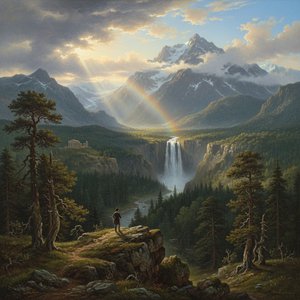
Carl Anton Joseph Rottmann’s “Corinth with Akrocorinth” is more than just a landscape painting; it's a testament to the burgeoning Romantic spirit of Bavaria in 1847, skillfully executed by one of Heidelberg’s most prominent artists. This monumental canvas (162 x 206 cm) captures a dramatic vista of Mount Olympus and its surrounding terrain—a scene steeped in myth and imbued with an almost palpable sense of sublime grandeur. Rottmann's depiction isn’t merely observational; it’s deliberately theatrical, reflecting the influence of Friedrich Schlegel and Ludwig Feuerbach, thinkers who championed imagination and emotion as pathways to understanding the universe.- Artist & Context: Carl Anton Joseph Rottmann (1797-1850) belonged to a circle of artists closely associated with King Ludwig I of Bavaria, who actively fostered artistic innovation. Rottmann’s work embodies the Bavarian Romantic movement's fascination with mythology and heroic landscapes—a reaction against Enlightenment rationalism.
- Style & Technique: Rottmann employed encaustic painting – a technique utilizing heated beeswax mixed with pigments – which allowed for unparalleled luminosity and textural richness. This method, perfected during his travels in Italy, ensured that the colours retained their vibrancy and depth over time, creating an immersive experience for the viewer.
- Composition & Symbolism: The painting’s pyramidal composition directs the eye upwards towards Mount Olympus, symbolizing divine majesty and spiritual aspiration. Rottmann skillfully manipulated light—particularly diffused sunlight—to heighten the drama of the scene and evoke feelings of awe and contemplation.
- Historical Significance: “Corinth with Akrocorinth” exemplifies Rottmann’s contribution to Bavarian art history. It stands as a cornerstone of the Neue Pinakothek's collection, showcasing the Romantic ideal of capturing nature's sublime beauty while simultaneously conveying profound philosophical ideas.
Otázky a odpovědi
K čemu se doporučuje reprodukce díla „Κόρινθος και Ακροκόρινθος“ od Carl Anton Joseph Rottmann?
Doporučené využití tisku díla „Κόρινθος και Ακροκόρινθος“ je Akcentující prvek.
Mohu si prohlédnout rentgenový snímek díla „Κόρινθος και Ακροκόρινθος“ od Carl Anton Joseph Rottmann?
Stránka Rentgenové snímky díla „Κόρινθος και Ακροκόρινθος“ od Carl Anton Joseph Rottmann nabízí interaktivní prohlížeč, který vám umožňuje procházet jedenácti optickými vrstvami obrazu, včetně pohledu ve stylu rentgenu.
Co zachycuje dílo „Κόρινθος και Ακροκόρινθος“ od Carl Anton Joseph Rottmann a jakou náladu vyvolává?
„Κόρινθος και Ακροκόρινθος“ zobrazuje desert landscape, mountain peaks, panoramic view, dramatic light, horse figures, classical composition, romantic era a jeho zachycená nálada je Romantický.
Biografie umělce
The Visionary Landscapes of Carl Rottmann
Born in the tranquil setting of Handschuhsheim, Germany, in 1797, Carl Anton Joseph Rottmann emerged as a profound voice within the movement of German Romanticism. His life and artistry were deeply intertwined with the shifting landscapes of 19th-century Europe, reflecting a period where the sublime beauty of nature met the burgeoning spirit of national identity. Unlike many of his contemporaries who focused on the intimate or the domestic, Rottmann possessed an expansive vision, seeking to capture the monumental scale of the world through sweeping vistas and mythic atmospheres. His journey was one of constant movement, traveling through the rugged terrains of Greece, Italy, and the Bavarian Alps, each location leaving an indelible mark on his palette and his perception of the divine within the natural world.
The development of Rottmann’s style was a masterful evolution from classical precision to a more emotive, atmospheric approach. Influenced by the grand traditions of landscape painting, he moved beyond mere topographical accuracy to embrace the sublime—that specific Romantic quality of awe and terror inspired by the vastness of nature. His technique involved a sophisticated understanding of light and shadow, using them not just to define form, and shape, but to evoke a sense of historical weight and mythic presence. In his hands, a mountain range was never just stone and ice; it was a silent witness to antiquity, a stage for the legends of old. This ability to infuse physical geography with spiritual and historical narrative became the hallmark of his mature period.
A Legacy of Light and Myth
Rottmann’s achievements are most notably seen in his ability to bridge the gap between the tangible world and the realm of imagination. His works often serve as windows into a lost era, where the ruins of ancient civilizations seem to breathe under the soft glow of a Mediterranean sun or the misty shroud of a northern forest. Through his meticulous attention to the interplay of light upon textures—the roughness of weathered stone, the translucency of water, and the softness of clouds—he achieved a level of luminosity that captivated the art world of his time.
The historical significance of his oeuvre lies in its role as a cornerstone of Romantic landscape art. His contributions can be summarized through several key artistic pillars:
- The Synthesis of History and Nature: He pioneered a method of painting where the landscape itself acts as a vessel for historical memory, blending archaeological interest with poetic expression.
- Mastery of Atmospheric Perspective: His use of color temperature and clarity to create depth allowed viewers to feel immersed in the vastness of his depicted scenes.
- Cultural Documentation: Through his travels, he provided a visual record of the European landscapes that were central to the Romantic identity, particularly the Greek and Bavarian vistas.
Ultimately, the work of Carl Rottmann remains a testament to the power of the gaze to transform the ordinary into the extraordinary. He did not merely paint what he saw; he painted what he felt in the presence of greatness. His legacy continues to resonate with those who find beauty in the monumental and meaning in the silent, enduring features of our earth, ensuring his place as a vital figure in the tapestry of 19th-century European art.

Carl Anton Joseph Rottmann
1797 - 1850 , Germany
Rychlé informace o umělci
- Full Name: Joseph Wright of Derby
- Nationality: English
- Date Of Birth: 1797
- Date Of Death: 1850
- Place Of Birth: Handschuhsheim, Germany
- Notable Artworks:
- An Experiment on a Bird in the Air Pump
- The Slaughtered Horse
- A Man Defending His Cart
- Artistic Movement Or Style: Romanticism, Neoclassicism
- Artists Who Influenced This Artist:
- Janys Zedres
- Rembrandt
- Artists Or Movements Influenced By This Artist:
- Joshua Reynolds
- Romanticism
Související články

Romantická krajina v malbě: 10 mistrovských děl, které definovaly umělecký proud | OriginalUniqueArt
Prozkoumejte 10 ikonických děl romantické krajinářské malby! Objevte příběhy Caspara Davida Friedricha, Turnera a dalších mistrů. Reprodukce obrazů nejvyšší kvality pro váš interiér na OriginalUniqueArt.com.

The Sublime and the Picturesque: Exploring Emotion & Nature in Romantic Landscape Painting
Explore the emotional power of Romantic landscape painting! Discover the sublime & picturesque traditions, key artists like Friedrich & Cole, and find your perfect artwork at OriginalUniqueArt.
Evoking Nature's Sublime: A Comprehensive Exploration of 19th-Century Landscape Painting
Explore the captivating world of 19th-century landscape painting! Discover renowned artists like Friedrich & Monet, key movements, and find the perfect artwork to bring nature's serenity into your home. Expert insights at OriginalUniqueArt.

John Constable: 25 mistrovských děl krajinářské poezie | OriginalUniqueArt.com
Prozkoumejte 25 ikonických děl Johna Constabla, mistra anglického krajinářství a romantismu. Obdivujte jeho olejomalby, plátna s venkovskou atmosférou a inspirujte se pro dekoraci interiéru. Reprodukce obrazů nejvyšší kvality na OriginalUniqueArt.com

Evocations of Place: A Historical Journey Through Landscape Art
Explore the rich history of landscape art with OriginalUniqueArt. Discover renowned artists, movements like Impressionism & Romanticism, and expert guidance for collecting timeless pieces. Find your perfect serene escape today!


