

 Zobrazit v interiéru
 Odeslat
 Sdílet
 Podrobnosti
 Průvodce

 Stáhnout obrázek
 Podobné kousky
 Rentgenové snímky
 Slideshow
 Statistiky
The Magdalen
 Oil On Panel
- Italian Renaissance
 1520
1520- Renaissance
 59.0 x 48.0 cm
 Národní galerie umění
 Přečíst si více
Giclée / Umělecký tisk
Giclée nebo plátěný tisk muzeální kvality s rychlou výrobou a širokou nabídkou povrchových úprav. ( Objednat ručně malovanou reprodukci Přepnout na digitální verzi obrazu)




P118B Kč10

P118H Kč10

P118W Kč10

P438Z Kč10

P508JH Kč12

P508YH Kč12

P805H Kč10

P805Z Kč10

P919BZ Kč10

P919G Kč10

P919XJ Kč10

P959ZH Kč10

P968JZ Kč12

W106C Kč8

W218G Kč10

W218JH Kč8

W218Y Kč10

W307PJ Kč10

W316G Kč10

W316PJ Kč8

W316Y Kč10

W398PJ Kč8

W4111J Kč10

W500HY Kč15

W500JH Kč15

W692G Kč12

W849H Kč8

W940BG Kč15

W953PJ Kč8




Vyberte si z našich přednastavených velikostí, které odpovídají původním proporcím díla.

Můžete zadat vlastní rozměry tak, aby výtvor odpovídal konkrétnímu rámu nebo prostoru. Pokud zvolená velikost nebude odpovídat poměru stran původního obrazu, dílo buď ořížeme, nebo obraz rozšíříme pomocí zrcadlového efektu či jednobarevného okraje. Před zahájením výroby vám bude zaslán digitální náhled k schválení.
Mějte prosím na paměti, že náhled na obrazovce neodráží skutečné oříznutí nebo rozšíření. Pouze digitální náhled přesně zobrazí finální kompozici.
Ačkoliv jsou k dispozici i vlastní rozměry, pro zachování původních proporcí doporučujeme vybrat si rozměr z předdefinovaného seznamu.
Celosvětové doručení () do 2 týdnů namísto standardních 4/5 týdnů. (7 říjen)

Zdarma celosvětová expresní doprava

Vysoce kvalitní lněné plátno

Úplné pojištění přepravy

Záruka vrácení celního poplatku

Záruka věrného barevného shodu

100dení lhůta pro vrácení zboží (pouze při vadách výroby)

100% garance vrácení peněz

Sleva při více objednávkách
 Skleněná varianta je dostupná pouze u rozměrů menších než 110 cm

The Magdalen
Giclée / Umělecký tisk
Velikost reprodukce
-


Celková cena
Kč 1665
The Magdalen by Bernardino Luini
Bernardino Luini, a name resonating softly within the annals of Italian Renaissance painting, emerged from the picturesque region surrounding Lake Maggiore around 1480. Born in Runo, a small *frazione* near Dumenza, his early life remains shrouded in some mystery, yet it’s clear that destiny propelled him towards Milan, the vibrant artistic heartland of northern Italy. By 1500, he had relocated with his father, poised to absorb the burgeoning creative energy of the city. While accounts vary regarding his initial training—some credit Giovan Stefano Scotto, others Ambrogio Bergognone—a more profound influence was undoubtedly on the horizon: Leonardo da Vinci. The precise nature of their relationship remains debated, but it’s widely believed Luini worked directly under the master, a formative experience that would indelibly shape his artistic trajectory. This apprenticeship wasn't merely technical; it was an immersion into a world steeped in observation and anatomical precision—a cornerstone of Leonardo’s revolutionary approach to portraying human form.- Subject Matter: The painting depicts Mary Magdalene, portrayed with serene dignity amidst the aftermath of Christ’s crucifixion. Luini meticulously captures her sorrowful gaze and posture, conveying a profound sense of grief and contemplation.
- Style: Luini's style is characterized by its graceful figures—known as “Luinesque”—characterized by elongated eyes and delicately rendered drapery. This aesthetic aligns seamlessly with the prevailing humanist ideals of the Renaissance, prioritizing human emotion and beauty above rigid formalism.
- Technique: Employing oil paint on panel, Luini skillfully utilized *sfumato*, Leonardo’s technique of blurring contours to create atmospheric depth and soften edges. This masterful blending of colors contributes significantly to the painting's ethereal quality and enhances its expressive power.
Historical Context
Painted circa 1520, “The Magdalen” emerged during a period of intense artistic innovation in Milan—a city under the patronage of Federico Borromeo, Bishop of Pavia and ardent supporter of humanist scholarship. Luini’s work reflects the broader cultural currents of the time, mirroring the Renaissance fascination with biblical narratives and exploring themes of faith, compassion, and spiritual redemption. The painting stands as a testament to Luini's ability to distill complex emotions into visually arresting compositions—a hallmark of his artistic legacy.Symbolism
The composition itself is laden with symbolic significance. Mary Magdalene’s posture embodies humility and penitence, reflecting her role as a repentant sinner forgiven by Christ. The muted palette—dominated by greens and browns—evokes the desolate landscape surrounding Jerusalem at the crucifixion, underscoring the painting's solemn atmosphere. Furthermore, Luini’s meticulous attention to detail—particularly in rendering Magdalene’s facial expression—demonstrates his commitment to conveying psychological realism—a departure from earlier artistic conventions.Emotional Impact
“The Magdalen” transcends mere visual representation; it evokes a powerful emotional response in the viewer. The painting's serene beauty juxtaposed with its poignant depiction of sorrow creates a compelling tension that invites contemplation and introspection. Luini’s masterful execution captures the essence of human suffering—transforming grief into an enduring symbol of compassion and spiritual grace. It remains a timeless masterpiece, resonating across centuries with its profound artistic merit and emotional depth.Otázky a odpovědi
Mohu si objednat olejnou reprodukci díla "The Magdalen"?
Ručně malovanou reprodukci díla „The Magdalen“ od Bernardino Luini si můžete objednat přímo na tato stránka: ručně malovaná olejová reprodukce na lněném plátně, vyrábíme na zakázku.
Kolik let bylo Bernardino Luini, když vzniklo dílo „The Magdalen"]?
Bernardino Luini vytvořil/a dílo „The Magdalen“ v возрасте 40 let. Umělec se narodil/a v 1480 a dílo je datováno na 1520.
V jakém roce byl vytvořen "The Magdalen"?
Vznik díla „The Magdalen“ od Bernardino Luini se datuje do roku 1520.
Jakou převládající barvu má dílo „The Magdalen“ od Bernardino Luini?
Dominantní barvou díla „The Magdalen“ od Bernardino Luini je Black (#0c0c0a).
Kdo je autorem díla "The Magdalen"?
Dílo "The Magdalen" vytvořil/a Bernardino Luini. Informace na této stránce popisují originální dílo umělce Bernardino Luini.
Do jaké části domácnosti se hodí reprodukce díla „The Magdalen“?
Dílo „The Magdalen“ od Bernardino Luini je doporučeno do Living Room. Toto doporučení vychází z tématu, barevnosti a nálady daného díla.
Jak lze využít dílo „The Magdalen“ od Bernardino Luini při dekorování interiéru?
Pro použití (Accent) a prostor (Living Room) jsou u díla „The Magdalen“ od Bernardino Luini uvedeny dvě doporučení.
Biografie umělce
A Lombard Luminary: The Life and Art of Bernardino Luini
Bernardino Luini, a name resonating softly within the annals of Italian Renaissance painting, emerged from the picturesque region surrounding Lake Maggiore around 1480. Born in Runo, a small *frazione* near Dumenza, his early life remains shrouded in some mystery, yet it’s clear that destiny propelled him towards Milan, the vibrant artistic heartland of northern Italy. By 1500, he had relocated with his father, poised to absorb the burgeoning creative energy of the city. While accounts vary regarding his initial training—some credit Giovan Stefano Scotto, others Ambrogio Bergognone—a more profound influence was undoubtedly on the horizon: Leonardo da Vinci. The precise nature of their relationship remains debated, but it’s widely believed Luini worked directly under the master, a formative experience that would indelibly shape his artistic trajectory. This apprenticeship wasn't merely technical; it was an immersion into a world of subtle observation, innovative composition, and the elusive quality known as *sfumato*, which Luini would skillfully integrate into his own unique style.The Embrace of Leonardo and the Birth of a Style
Luini’s artistic development wasn’t simply imitation; it was a sensitive assimilation of Leonardo’s techniques filtered through his own Lombard sensibility. He didn’t strive to replicate Da Vinci’s intellectual rigor or anatomical precision, but rather embraced the softer, more lyrical aspects of his style. This is particularly evident in his depictions of women—graceful figures with elongated eyes, often described as “Luinesque” by the discerning eye of Vladimir Nabokov. These captivating gazes possess a gentle melancholy, an inwardness that invites contemplation. Early works like the *Adoration of the Magi* (c. 1505) in San Pietro, Luino, already hint at this emerging style, showcasing a delicate handling of light and shadow and a growing mastery of composition. His frescoes for the Oratory of Santa Maria Nuova in Pilastrello and the subsequent commissions throughout Milan solidified his reputation as a leading artist of the region. The influence of Bernardino Zenale’s *Cantù Polyptych* is also visible in works like *St. Anthony of Padua* (1510s), demonstrating Luini's ability to synthesize diverse influences into a cohesive artistic vision.Frescoes, Palaces, and the Flourishing of Creativity
The first two decades of the 16th century witnessed a period of intense creative activity for Luini. He wasn’t confined to religious subjects; his talents were sought after for secular commissions as well. The frescoes he created between 1509 and 1514 for Villa Pelucca in Sesto San Giovanni stand as a testament to his versatility, depicting mythological scenes with a refined elegance that graced the walls of this aristocratic residence. These works, now housed in Milan’s Pinacoteca di Brera, reveal a painter equally adept at capturing the dynamism of classical narratives and the intimate beauty of human form. He continued to receive prestigious commissions, adorning churches and palaces throughout Lombardy with his distinctive style. His ability to imbue even grand-scale frescoes with an air of intimacy and emotional resonance cemented his position as one of the most sought-after artists of his time.Notable Works and Artistic Techniques
Luini’s oeuvre is characterized by a remarkable consistency in style, despite the diversity of commissions he received. His *Adoration of the Magi* (c. 1505) exemplifies his early mastery of composition and use of *sfumato*, while the frescoes in San Pietro, Luino, demonstrate his ability to create atmospheric depth and evoke a sense of solemnity. The *St. Anthony of Padua* (1510s), a cornerstone of his artistic legacy, showcases his signature elongated figures and subtle rendering of drapery. Luini’s work is particularly notable for its use of muted colors—earth tones, ochres, and browns—which contribute to the overall sense of serenity and introspection. He skillfully employed *chiaroscuro*, creating dramatic contrasts between light and shadow that heighten the emotional impact of his scenes. His meticulous attention to detail, combined with a profound understanding of human psychology, resulted in paintings that are both visually stunning and deeply moving.Legacy and Enduring Appeal
Bernardino Luini passed away in Milan in June 1532, leaving behind a legacy that extended beyond his own lifetime. His son, Aurelio, followed in his footsteps, continuing the family’s artistic tradition. However, it is Bernardino who remains the more celebrated figure, remembered for his graceful figures, delicate *sfumato*, and the uniquely captivating quality of his “Luinesque” women. His work served as an inspiration to subsequent generations of artists, influencing the development of Lombard painting and contributing to the broader currents of Italian Renaissance art. Today, Luini’s masterpieces can be found in museums and churches throughout Italy—the Pinacoteca di Brera being a particularly rich repository of his works. His paintings continue to enchant viewers with their beauty, grace, and enduring emotional power, offering a glimpse into the artistic sensibilities of a bygone era. Salome with the Head of John the Baptist, for example, continues to captivate audiences with its dramatic intensity and masterful execution, while Holy Family with Saints Anne and John the Baptist exemplifies his serene and harmonious compositions.
Bernardino Luini
1480 - 1532 , Itálie
Rychlé informace
- Artistic Movement Or Style: Renesanční, Mannerismus
- Artists Or Movements Influenced By This Artist: ['Luineský styl']
- Artists Who Influenced This Artist: ['Leonardo da Vinci']
- Date Of Birth: c. 1480
- Date Of Death: 1532
- Full Name: Bernardino Luini
- Nationality: Italanský
- Notable Artworks:
- Adorace Magů
- Sv. Antonín Paduánský
- Fresky Villa Pelucca
- Place Of Birth: Reno, Itálie
Související články

The Enduring Power of Painting: A Historical & Contemporary Exploration of Form and Emotion
Explore the rich history & enduring techniques of oil painting with OriginalUniqueArt. Discover masterpieces, learn about art collecting, and find authentic handmade reproductions crafted by skilled artists.
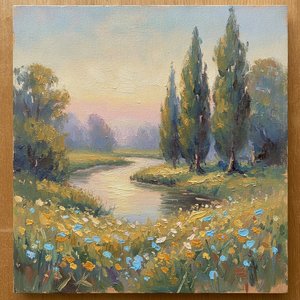
The Timeless Charm of Oil on Board: Reimagining Texture and Light through the Impressionist Lens
Discover the profound intimacy of oil on panel. Explore how Impressionist masters used rigid supports to capture light, texture, and impasto depth through exquisite, handmade oil reproductions for discerning collectors.

Trvalý odkaz olejomalby: Technika, historie a současná praxe
Prozkoumejte historii a techniky olejomalby s námi! Od středověku po současnost – detailní průvodce pro milovníky umění a profesionály. Objevte tajemství mistrů a inspirujte se.

Oil on Canvas: A Historical & Technical Exploration of a Timeless Artistic Medium
Explore the rich history & enduring techniques of oil painting on canvas. Discover the science behind its longevity, conservation practices, and contemporary relevance. Expert insights for art enthusiasts.

The Enduring Legacy of Oil on Canvas: Technique, History & Aesthetic Impact
Explore the rich history & techniques of oil painting – from Renaissance masters to Impressionism. Discover pigments, layering methods, and why this timeless medium endures. Expert insights for artists & art enthusiasts.

