Přepnout na tisk
 Zobrazit více







































 U děl nebo reprodukcí, u nichž je jakákoliv strana větší než 105 cm (přibližně 41 palců), bude rám dodán jako sestava v rozloženém stavu. Tato metoda zajišťuje bezpečné doručení a chrání dílo před poškozením během přepravy.


A Masterful Echo of the Renaissance
In this evocative drawing, titled Copy after Michelangelo, we find ourselves transported to the heart of the sixteenth century, where the shadows of the High Renaissance meet the burgeoning complexity of Mannerism. Created around 1550 by the Bolognese master Bartolomeo Passariente (Passarotti), this work serves as a profound dialogue between generations. The composition centers on a striking female figure, seated with a raw, grounded presence that commands the viewer's immediate attention. Her posture, legs spread wide in a moment of uninhibited vulnerability or perhaps primal strength, anchors a scene teeming with life and movement. As she sits amidst a constellation of surrounding figures, the piece captures a sense of orchestrated chaos, where every limb and gesture contributes to a larger, rhythmic dance of form.
The technique employed here reflects the meticulous discipline of Passarotti’s Roman training. Under the influence of masters like Taddeo Zuccari, the artist utilizes line and shadow to sculpt bodies that feel both ethereal and tangibly heavy. The interplay of light across the central figure's skin creates a luminous quality, drawing the eye through the swirling arrangement of secondary characters. Subtle details, such as the delicate presence of birds fluttering near the periphery, introduce an element of nature’s fleeting grace, contrasting with the monumental, almost sculptural weight of the human forms. This mastery of line work ensures that even in a monochromatic or limited palette, the emotional depth of the scene remains strikingly vivid.
Symbolism and the Mannerist Spirit
To gaze upon this work is to witness the transition from the balanced ideals of the Renaissance to the expressive tension of Mannerism. The arrangement of figures—scattered, overlapping, and captured in various states of repose or motion—suggests a world that is no longer static, but fluid and psychologically complex. The central woman acts as an axis mundi, a focal point around which the drama of the composition revolves. Her nudity and grounded stance may symbolize a return to primordial truths, stripped of artifice, echoing the classical themes that Passarotti so deeply admired in the works of Michelangelo. The birds, often symbols of the soul or the ephemeral nature of life, add a layer of allegorical depth, inviting collectors to contemplate the fleeting beauty of the human condition.
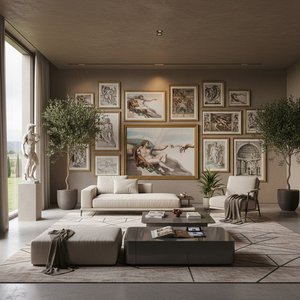
For the discerning collector or interior designer, this piece offers more than mere decoration; it provides a window into an era of profound intellectual and artistic transformation. The drawing’s ability to evoke both intimacy and grandeur makes it a versatile centerpiece for a sophisticated gallery wall or a stately study. Its historical resonance—as a tribute to the divine Michelangelo—lends an air of academic prestige to any space, while its fluid, emotive energy provides a much-needed focal point in modern, minimalist environments. Owning a high-quality reproduction of such a work is an invitation to live amongst the echoes of greatness, surrounding oneself with the enduring power of classical mastery.
Otázky a odpovědi
Jakým způsobem se dílo „Copy after Michelangelo“ zapojuje do témat a stylu umělce Bartolomeo Passerotti?
V rámci tvorby umělce Bartolomeo Passerotti se dílo „Copy after Michelangelo“ řadí do stylu Mannerism a doplňuje tak motivy inspired by michelangelo, mannerist stylistic experimentation, classical antiquity influence, roman training influence, study of human form.
Jakým způsobem se motiv díla „Copy after Michelangelo“ vztahuje k obvyklým tématům umělce Bartolomeo Passerotti?
Mezi zaznamenaná témata umělce Bartolomeo Passerotti – tedy inspired by michelangelo, mannerist stylistic experimentation, classical antiquity influence, roman training influence, study of human form – přináší dílo „Copy after Michelangelo“ specifické zaměření na mannerism, figure study, nude, classical style, renaissance copy, mythological.
Jaké barvy dominují dílu „Copy after Michelangelo“ od Bartolomeo Passerotti?
Dílo „Copy after Michelangelo“ od Bartolomeo Passerotti využívá paletu Pastels, přičemž hlavní barvou je Putty (#dccaa5).
 Náhled v interiéru
 Sdílet
 Sdílet
 Podrobnosti o díle
 Průvodce

 Stáhnout
 Podobné položky
 Rentgenové snímky
 Slideshow
 Q&A
Q&A Statistiky