Text size

() ·

A painting made for you, by hand

Fragment duvar yazısı

Ručně malovaná olejová reprodukce

Rukou malované olejné plátno v libovolném rozměru i s rámem, vyrobené našimi umělci na zakázku. ( Přepnout na tisk Přepnout na digitální obraz)

Popis sbírného předmětu

Pozorujte detailní reprodukci obrazu Antonia Bosia „Fragment duvar yazısı“ z roku 1632. Klasický barokový obraz s bohatými hatchingy a kreslením – perfektní dekorace pro váš domov.

Biografie umělce

Discover Antonio Bosio: A visionary 16th-century painter renowned for his stunning Baroque wall paintings & religious art. Explore his legacy in Valletta & beyond.

from ·

Chapter 1

How large should it be?

Slide to change the size; the picture on the left shows the frame at its real width. The proportions of the original are kept.

Standardní velikost
na zakázku
CM
INCH

Vyberte si z našich přednastavených velikostí, které odpovídají původním proporcím díla.

šířka
výška

Zadejte šířku a výšku, které potřebujete pro váš rám nebo stěnu. Protože se jedná o ruční malbu, při výběru jiného formátu může umělec kolem obrazu domalovat o něco více, nebo jej mírně oříznout — rozhodnete si vy. Před zahájením malby vám zašleme digitální náhled ke schválení. Obraz zobrazený na této stránce neodpovídá skutečnému výsledku — pouze digitální náhled jej zobrazuje.

Chapter 2

How should it arrive?

Choose the edges of the stretched canvas

Choose your frame

Corner sample of the WhiteWrap canvas edge finish, stretched on masivní dřevo bars
White Kč1
Corner sample of the BlurSideWrap canvas edge finish, stretched on masivní dřevo bars
Blurside Kč1
Corner sample of the ExtendedWrap canvas edge finish, stretched on masivní dřevo bars
Extended Kč1
Corner sample of the P118B picture frame: tvarovaný polystyren, 5 cm wide and 3 cm thick
P118B Kč10
Corner sample of the P118H picture frame: tvarovaný polystyren, 5 cm wide and 3 cm thick
P118H Kč10
Corner sample of the P118W picture frame: tvarovaný polystyren, 5 cm wide and 3 cm thick
P118W Kč10
Corner sample of the P438Z picture frame: tvarovaný polystyren, 5.5 cm wide and 3.5 cm thick
P438Z Kč10
Corner sample of the P508JH picture frame: tvarovaný polystyren, 7 cm wide and 3.5 cm thick
P508JH Kč12
Corner sample of the P508YH picture frame: tvarovaný polystyren, 7 cm wide and 3.5 cm thick
P508YH Kč12
Corner sample of the P805H picture frame: tvarovaný polystyren, 5 cm wide and 3.5 cm thick
P805H Kč10
Corner sample of the P805Z picture frame: tvarovaný polystyren, 5 cm wide and 3.5 cm thick
P805Z Kč10
Corner sample of the P919BZ picture frame: tvarovaný polystyren, 7 cm wide and 3.5 cm thick
P919BZ Kč10
Corner sample of the P919G picture frame: tvarovaný polystyren, 7 cm wide and 3.5 cm thick
P919G Kč10
Corner sample of the P919XJ picture frame: tvarovaný polystyren, 7 cm wide and 3.5 cm thick
P919XJ Kč10
Corner sample of the P959ZH picture frame: tvarovaný polystyren, 5 cm wide and 3 cm thick
P959ZH Kč10
Corner sample of the P968JZ picture frame: tvarovaný polystyren, 6 cm wide and 4 cm thick
P968JZ Kč12
Corner sample of the W106C picture frame: masivní dřevo, 5 cm wide and 3 cm thick
W106C Kč8
Corner sample of the W218G picture frame: masivní dřevo, 5 cm wide and 3 cm thick
W218G Kč10
Corner sample of the W218JH picture frame: masivní dřevo, 5 cm wide and 3 cm thick
W218JH Kč8
Corner sample of the W218Y picture frame: masivní dřevo, 5 cm wide and 3 cm thick
W218Y Kč10
Corner sample of the W307PJ picture frame: masivní dřevo, 6 cm wide and 3 cm thick
W307PJ Kč10
Corner sample of the W316G picture frame: masivní dřevo, 6 cm wide and 3 cm thick
W316G Kč10
Corner sample of the W316PJ picture frame: masivní dřevo, 6 cm wide and 3 cm thick
W316PJ Kč8
Corner sample of the W316Y picture frame: masivní dřevo, 6 cm wide and 3 cm thick
W316Y Kč10
Corner sample of the W398PJ picture frame: masivní dřevo, 5 cm wide and 3 cm thick
W398PJ Kč8
Corner sample of the W4111J picture frame: masivní dřevo, 6.5 cm wide and 3.5 cm thick
W4111J Kč10
Corner sample of the W500HY picture frame: masivní dřevo, 7 cm wide and 5 cm thick
W500HY Kč15
Corner sample of the W500JH picture frame: masivní dřevo, 7 cm wide and 5 cm thick
W500JH Kč15
Corner sample of the W692G picture frame: masivní dřevo, 8 cm wide and 4 cm thick
W692G Kč12
Corner sample of the W849H picture frame: masivní dřevo, 5 cm wide and 3 cm thick
W849H Kč8
Corner sample of the W940BG picture frame: masivní dřevo, 7.5 cm wide and 4.5 cm thick
W940BG Kč15
Corner sample of the W953PJ picture frame: masivní dřevo, 6 cm wide and 3.5 cm thick
W953PJ Kč8
Corner sample of the H24-GOLD picture frame: řezané dřevo s gessu, 10 cm wide and 6 cm thick
H24-GOLD Kč30
Corner sample of the H24-SILVER picture frame: řezané dřevo s gessu, 10 cm wide and 6 cm thick
H24-SILVER Kč30
Corner sample of the H36-GOLD picture frame: řezané dřevo s gessu, 15 cm wide and 6.5 cm thick
H36-GOLD Kč45
Corner sample of the H36-SILVER picture frame: řezané dřevo s gessu, 15 cm wide and 6.5 cm thick
H36-SILVER Kč45

Moulding: . Overall size with the frame: .

Chapter 3

Who paints it, and should anything change?

Examples of what can be changed: Replace face with customer photo; Add pet (e.g., replace cat with dog); Include hidden message in background; Change background landscape or elements.
After order, OriginalUniqueArt.com team will email client for instructions and provide a mockup preview

Celosvětová doprava () za 3–4 týdny namísto standardních 5 týdnů. (2 listopad). Bez kompromisů v kvalitě.

Chapter 4

The finishing touches

A nameplate, as in a museum?

Detaily ryté bronzové plakety

This elegant plaque features the artist's name and the title of the artwork, finely engraved for a timeless presentation.

It is made from bronze with a refined, elegant finish. The text is precisely laser-engraved for a sharp and permanent result. Measuring 9x2 cm, the plaque is compact yet easy to read. It's built to be durable and scratch-resistant, offering a professional, museum-quality look. Mounting is simple thanks to the included adhesive backing.

Detaily průhledné akrylové desky

The plaque includes essential engraved details such as the artist's name, the title of the artwork, the date it was created, the type of media used-like oil on canvas or watercolor-a brief description of the piece, and a QR code that links to the complete artwork information.

It is crafted from clear acrylic, offering a sleek, modern appearance. The text is UV-engraved in black to ensure strong visual contrast. With a size of 10x15 cm, it ensures optimal readability. It comes equipped with two metal hooks for secure wall mounting. The plaque is designed to be weather-resistant, making it suitable for various environments, and it includes interactive features that work seamlessly with smartphone scanning.

Detaily černé akrylové destičky

This elegant plaque includes engraved information such as the artist's name, the title of the artwork, the date it was created, the type of media used (like oil on canvas or watercolor), a short description of the artwork, and a QR code for quick access to more information.

The plaque itself is made from refined black acrylic with a premium finish. The text is laser-engraved in white for high contrast and readability. Its size is 10x15 cm, designed to be easy to read. It comes with two metal hooks for professional mounting. The design is sleek and fits any interior style. It is also weather-resistant and durable, with built-in digital integration for mobile compatibility.

A protective varnish?

When do you need it?

Chapter 5

Your painting, as you ordered it

Fragment duvar yazısı

Technika reprodukce

Rozměry reprodukce

-

Vybraní mistři umění

Vyšší míra detailu, jemnosti a delší doba výroby

-

Možnosti rámování reprodukcí

-

-

U děl nebo reprodukcí, u nichž je jakákoliv strana větší než 105 cm (přibližně 41 palců), bude rám dodán jako sestava v rozloženém stavu. Tato metoda zajišťuje bezpečné doručení a chrání dílo před poškozením během přepravy.

Vyžaduje se odborná montáž – nejedná se o produkt pro svépomocnou realizaci (DIY).
Sestava musí být složena a plátno napnuto zkušeným profesionálním rámovačem s použitím dřevěného lepidla (není součástí balení), kleští na napínání plátna a svorek pro udržení pravých úhlů křížů během schnutí lepidla. Nesprávná montáž nebo nerovnoměrné napnutí plátna může způsobit trvalé poškození uměleckého díla, které není kryto naší zárukou.

  • Jsou zahrnuty všechny lišty z masivního dřeva, přesně na míru nařezané.

  • Sestavuje se pomocí součástí balení (šroubů), plus dřevěného lepidla na rohové spoje, které není součástí balení a musí jej zajistit váš rámovač.

  • Vyžaduje se profesionální nářadí, které není součástí sady: kleště na napínání plátna a svorky pro udržení kolmosti příček během schnutí lepidla.

Důležité:
Spoje v rozích vyžadují lepidlo na dřevo, tyčinky musí být přichyceny pomocí svorek, dokud lepidlo zcela neuschne, a pro napnutí plátna na sestavený rám je zapotřebí kleští na natahování plátna. Žádný z těchto náčiní není součástí sady. Před objednáním této velikosti prosím zajistěte zkušeného profesionálního rámovače.

Popisek díla

-

-

Ochranný lak

Lesklý lak (zvýrazňuje barvy, chrání před světlem a vlhkostí)

-

Přizpůsobit své umělecké dílo

Příklady možných úprav: nahrazení obličeje fotografií zákazníka; přidání domácího mazlíčka (např. výměna kočky za psa); vložení skrytého vzkazu do pozadí; změna krajiny nebo prvků v pozadí.

-

Prioritní doručení

Celosvětové doručení () za 3–4 týdny namísto standardních 5 týdnů. (2 listopad). Bez kompromisů v kvalitě.

-

Expresní doručení

Celosvětová doprava () do 5 týdnů. (9 listopad).

V ceně

Celková cena za vybrané možnosti reprodukcí

Kč 7601

Celková cena Kč 7601

Skleněná varianta je dostupná pouze u rozměrů menších než 110 cm

Included with every order

  • Zdarma celosvětová expresní doprava
  • Vysoce kvalitní lněné plátno
  • Kompletní pojištění přepravy
  • Záruka vrácení celního poplatku
  • Záruka věrného barevného souladu
  • 100dení lhůta pro vrácení zboží (pouze při vadách výroby)
  • 100% záruka vrácení peněz
  • Sleva při více objednávkách

Fragmentální nástěnná výzdoba – Antonio Bosio

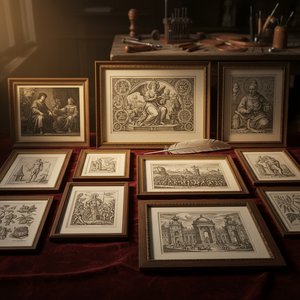
Antonio Bosio byl významným maltézským učením vědcem, prvním systematickým průzkumníkem podzemního Říma („Kolumbus katakomb“) a autorem Roma Sotterranea, který vyprávěl o fascinujícím světě křesťanských památek ukrytých pod povrchem města. Jeho dílo představuje unikátní kombinaci vědeckého pozorování a estetické tvorby – Bosio dokázal zachytit atmosféru doby Římské říše prostřednictvím inovativních technik kreslení a rytinářství, které dnes fascinují odborníky i širokou veřejnost. Tento konkrétní fragment nástěnné výzdoby byl vytvořen kolem roku 1632 a zobrazuje scénu náboženského charakteru – pravděpodobně oslavu svatých nebo křesťanského životopisu. Jeho zpracování využívá metody kreslení, které byly tehdy nejmodernějšími a umožňují přesvědčivě vyjadřovat prostorové vztahy mezi postavami a architekturu.
  • Styl: Bosiovský styl lze jednoznačně zařadit do období raného barokního výtvarníctví, kdy dominovala estetická hlediska vědecké přesnosti. Jeho dílo reflektuje důraz na detailní reprezentaci a využívá bohatou koloritu – zejména kontrast mezi světlem a stínem – aby vytvořilo působivé prostorové dojmy.
  • Technika: Výtvarník používal metody kreslení, které byly tehdy nejmodernějšími – především technikou rytinářství, která umožňovala přesné reprodukce obrazů na papíře. Tento postup odráží Bosiovův přístup k tvorbě umění jakožto vědeckému pozorování a zároveň estetickému vyjádření hodnot a významu křesťanského světa.
  • Kompozice: Fragment nástěnné výzdoby je rozdělený na několik zón, které jsou propojeny důraznými liniemi a perspektivou. Hlavní scénu zdobí ikonografické prvky – například velký kříž – což naznačuje křesťanský původ díla. Zároveň však pozorovatel může sledovat prostorové vztahy mezi postavami a architekturu, což je charakteristické pro výtvarné umění té doby.
  • Použití linií: Bosiovské kreslení vyniká intenzivní technikou rytinářství – především použitím hustých čárových vzorů a překrývajících se linií, které vytvářejí iluzi hloubky a objemu. Tato metoda byla tehdy nejmodernější a umožňovala přesvědčivě vyjadřovat prostorové vztahy mezi postavami a architekturu.
  • Symbolismus: Přítomnost kříže, světících angelů a obrazů svatých má výrazný náboženský význam – odkazuje na základní hodnoty křesťanské víry a oslavuje životopisné události svatých. Celkový tón díla je solemnní a zbožněný, což reflektuje Bosiovův intelektuální zájem o vědecké poznání a zároveň estetické vyjádření hodnot a významu křesťanského světa.
Poznámka: Tento fragment nástěnné výzdoby byl vytvořen pomocí technik rytinářství, které byly tehdy nejmodernějšími – především použitím hustých čárových vzorů a překrývajících se linií, které vytvářejí iluzi hloubky a objemu. Tato metoda byla tehdy nejmodernější a umožňovala přesvědčivě vyjadřovat prostorové vztahy mezi postavami a architekturu. Výtvarník dokázal zachytit atmosféru doby Římské říše prostřednictvím inovativních technik kreslení a rytinářství, které dnes fascinují odborníky i širokou veřejnost. Jeho dílo reflektuje důraz na detailní reprezentaci a využívá bohatou koloritu – zejména kontrast mezi světlem a stínem – aby vytvořilo působivé prostorové dojmy.

Otázky a odpovědi

Jsou barvy díla „Fragment duvar yazısı“ od Antonio Bosio syté, nebo tlumené?

Barvy díla „Fragment duvar yazısı“ od Antonio Bosio mají Ztlumené saturaci. Saturace určuje, jak jsou barvy živé nebo tlumené.

Kde najdu průvodce k dílu "Fragment duvar yazısı"?

Stránka Průvodce pro studenty díla „Fragment duvar yazısı“ od Antonio Bosio nabízí tištěný dvoulistový informační list: samotné umělecké dílo s identifikační tabulkou, časovou osu situující dílo do období života umělce, další díla daného autora, naměřenou barevnou paletu a citace ve čtyřech stylech připravené pro okamžité zkopírování.

Jakou techniku bylo použito pro dílo „Fragment duvar yazısı“ od Antonio Bosio?

Technikou díla „Fragment duvar yazısı“ od Antonio Bosio je Akryl na plátně. Reprodukce mají za cíl věrně zachytit vzhled této techniky.

More about this painting

Náhled v interiéru Náhled v AR Přepnout na tisk Přepnout na digitální obraz Sdílet
Podrobnosti o díle Průvodce Přidat do oblíbených Stáhnout Podobné položky Rentgenové snímky Slideshow Q&A Statistiky

In numbers

  • 1632the year it was painted
  • 29frames to choose from
  • standard sizes, in its own proportions
  • 5weeks to paint and deliver it
Antonio Bosio

Antonio Bosio

1575 - 1629, Malta

Quick facts about Antonio Bosio

  • Full Name: Antonio Bosio
  • Nationality: Maltese
  • Date Of Birth: 1575
  • Date Of Death: 1629
  • Place Of Birth: Valletta, Malta
  • Notable Artworks: ['Roma Sotterranea']
  • Artistic Movement Or Style: Baroque Painting
  • Artists Or Movements Influenced By This Artist: ['Giovanni Battista de Rossi']

Biografie umělce

A Life Dedicated to Unearthing the Sacred Past

Antonio Bosio, born in Valletta, Malta around 1575, was a figure whose life transcended the typical boundaries of artistic practice. While often remembered as a painter, his true legacy lies in his pioneering archaeological work—specifically, his meticulous and passionate exploration of the Roman catacombs. Bosio’s story is one of dedication, intellectual curiosity, and a profound desire to connect with the early Christian world. His family background remains somewhat shrouded in mystery; historical accounts suggest a complex lineage involving a father bound by religious vows and a mother who may have been a North African slave or servant. This personal ambiguity perhaps fueled his lifelong fascination with hidden histories and marginalized narratives.

Bosio’s journey to Rome as a child marked a turning point in his life. He quickly became integrated into the circles of the Knights of Malta, eventually serving as their agent within the city. However, it was not through diplomatic duties that he found his calling but through an insatiable thirst for knowledge about the ancient world beneath his feet. In 1593, he embarked on a systematic study of the catacombs—a network of subterranean burial places used by early Christians and Jews. This undertaking was revolutionary for its time; previous explorations had been sporadic and largely undocumented. Bosio approached the task with an almost scientific rigor, meticulously mapping tunnels, documenting frescoes, and collecting artifacts.

The Roma Sotterranea: A Monumental Publication

Bosio’s most enduring achievement is undoubtedly his *Roma Sotterranea*, a comprehensive account of his catacomb explorations. Published posthumously in 1634, the work represents a monumental effort to preserve and disseminate knowledge about early Christian art and history. The publication wasn't merely a descriptive catalog; it was an attempt to reconstruct the spiritual and cultural landscape of Rome’s earliest communities. The engravings within *Roma Sotterranea* are particularly noteworthy for their detail and accuracy, providing invaluable visual documentation of frescoes that have since deteriorated or been lost. Bosio’s line work captures not only the physical form of the paintings but also a sense of the atmosphere—the dim light, the damp stone, the weight of centuries.

The creation of *Roma Sotterranea* was a painstaking process. Bosio faced numerous challenges, including limited access to certain catacombs, the logistical difficulties of working in subterranean environments, and the lack of established archaeological techniques. He relied heavily on his own observations, supplemented by information gathered from local informants and existing historical sources. The publication’s impact was immediate and far-reaching; it became a standard reference work for scholars and artists alike, shaping perceptions of early Christian art for generations to come.

Artistic Style & Religious Context

While primarily known as an archaeologist, Bosio was also a skilled painter. His artistic style reflects the influence of the Baroque movement—characterized by dramatic compositions, rich colors, and a heightened sense of emotion. He specialized in wall paintings, often depicting religious scenes with a focus on martyrdom and divine intervention. His work can be found in various churches and chapels around Valletta, showcasing his mastery of fresco technique and his ability to convey complex theological concepts through visual imagery.

Bosio’s artistic endeavors were deeply intertwined with his archaeological pursuits. His study of early Christian art informed his own painting style, leading him to incorporate elements of ancient iconography and symbolism into his compositions. He sought to create works that not only celebrated the faith but also evoked a sense of spiritual awe and reverence. The religious context of Bosio’s life—his association with the Knights of Malta and his dedication to uncovering the sacred past—played a crucial role in shaping his artistic vision.

Legacy & Historical Significance

Antonio Bosio's contribution extends beyond the realm of art history; he is considered a foundational figure in the development of modern archaeology. His systematic approach to excavation, documentation, and publication set a new standard for archaeological research. He was among the first to recognize the importance of preserving cultural heritage and making it accessible to a wider audience.

  • Pioneering Methodology: Bosio’s meticulous mapping and documentation techniques laid the groundwork for future archaeological investigations.
  • Preservation of Early Christian Art: *Roma Sotterranea* provided invaluable visual records of frescoes that have since been lost or damaged.
  • Influence on Scholarship & Art: His work became a standard reference for scholars and artists, shaping perceptions of early Christian art for centuries.
  • Connecting Past & Present: Bosio’s dedication to uncovering the sacred past fostered a deeper understanding of Rome’s cultural heritage.

Though his life was cut short in 1629, Antonio Bosio left an indelible mark on the world. He remains a testament to the power of intellectual curiosity, unwavering dedication, and the enduring human desire to connect with the stories of those who came before us. His legacy continues to inspire archaeologists, art historians, and anyone fascinated by the mysteries of the past.

Rychlé informace

  • Influences: Renaissance
  • Year: 1632
  • Title: Wall-painting fragment
  • Artist: Antonio Bosio
  • Medium: Ink on paper

Artový kvíz

U každé otázky je pouze jedna správná odpověď.

Otázka 1:
Jaký umělec vytvořil obraz "Wall-painting fragment"?
Otázka 2:
V kterém roce byla vytvořena tato kresba?
Otázka 3:
Jaká technika byla použita při tvorbě obrazu? Zaměřte se na způsob reprezentace světla a stínu.
Otázka 4:
¿Cuál es el tema principal de esta pintura?
Otázka 5:
¿Qué estilo artístico caracteriza la obra? Busca elementos que reflejen una época histórica específica.
Prozkoumejte umělecká díla uspořádaná podle témat, stylů a charakteristik.