Náhled
 Sdílet
 Sdílet
 Podrobnosti o díle

 Stáhnout
 Podobné položky
 Rentgenové snímky
 Slideshow
 Statistiky
William Fermor
 Oil On Canvas
- WallArt
- Neoclassicism
 1757
1757- Early Modern
 61.0 x 47.0 cm
 Ashmolean Museum
 Zobrazit více
Giclée / Umělecký tisk
Giclée nebo plátěný tisk muzeální kvality s rychlou výrobou a flexibilními možnostmi povrchové úpravy. ( Koupit ručně malovaný obraz Přepnout na digitální obraz)




P118B $10

P118H $10

P118W $10

P438Z $10

P508JH $12

P508YH $12

P805H $10

P805Z $10

P919BZ $10

P919G $10

P919XJ $10

P959ZH $10

P968JZ $12

W106C $8

W218G $10

W218JH $8

W218Y $10

W307PJ $10

W316G $10

W316PJ $8

W316Y $10

W398PJ $8

W4111J $10

W500HY $15

W500JH $15

W692G $12

W849H $8

W940BG $15

W953PJ $8




Vyberte si z našich přednastavených velikostí, které odpovídají původním proporcím díla.

Můžete zadat vlastní rozměry tak, aby výtvor odpovídal konkrétnímu rámu nebo prostoru. Pokud zvolená velikost nebude odpovídat poměru stran původního obrazu, dílo buď ořížeme, nebo obraz rozšíříme pomocí zrcadlového efektu či jednobarevného okraje. Před zahájením výroby vám bude zaslán digitální náhled k schválení.
Mějte prosím na paměti, že náhled na obrazovce neodráží skutečné oříznutí nebo rozšíření. Pouze digitální náhled přesně zobrazí finální kompozici.
Ačkoliv jsou k dispozici i vlastní rozměry, pro zachování původních proporcí doporučujeme vybrat si rozměr z předdefinovaného seznamu.
Celosvětové doručení () do 2 týdnů namísto standardních 4/5 týdnů. (10 září)

Zdarma celosvětová expresní doprava

Vysoce kvalitní lněné plátno

Kompletní přepravní pojištění

Záruka vrácení celního poplatku

Záruka přesného barevného shodu

100dená lhůta pro vrácení zboží (pouze při vadách)

100% garance vrácení peněz

Sleva při hromadné objednávce
 Skleněná varianta je dostupná pouze u rozměrů menších než 110 cm

William Fermor
Giclée / Umělecký tisk
Rozměry reprodukce
-


Celková cena za výběr
$ 80
A Vision of Neoclassical Grace: The Portrait of William Fermor
In the delicate transition between the exuberant flourishes of the Rococo and the disciplined clarity of Neoclassicism, Anton Raphael Mengs’s 1757 masterpiece, “William Fermor,” emerges as a profound testament to artistic evolution. This striking oil on canvas does more than merely capture the likeness of a Scottish-born officer in the Imperial Russian Army; it serves as a window into an era where the intellectual rigor of the Enlightenment began to reshape the visual language of Europe. As one gazes upon the portrait, there is an immediate sense of dignified resolve, a quality that transcends the sitter's individual identity to touch upon universal ideals of nobility and strength.
The technical execution of the piece reveals Mengs’s unparalleled mastery over light and form. Utilizing a sophisticated application of chiaroscuro, the artist orchestrates a dramatic interplay between shadow and illumination to sculpt Fermor’s features with sculptural precision. The subtle textures of the background wall act as a quiet stage, ensuring that the viewer's focus remains anchored on the subject's commanding presence. Every brushstroke contributes to a sense of tactile reality, from the crispness of the white cravat to the heavy, luxurious weight of the crimson coat, inviting the observer to appreciate the meticulous craftsmanship that defines this pivotal work of the mid-18th century.
Symbolism and the Language of Authority
Beyond its surface beauty, “William Fermor” is rich with symbolic layers that would have been deeply legible to a contemporary audience. The sitter’s attire—a vibrant crimson coat embellished with gleaming gold buttons—is far from a mere fashion statement; it is a deliberate reference to royal heraldry, signaling prestige, authority, and a high social standing. This sartorial grandeur is balanced by the refined elegance of his powdered wig and cravat, elements that evoke the idealized dignity of Roman antiquity. Through these details, Mengs aligns Fermor with the classical virtues of gravitas and decorum, echoing the influential aesthetic theories of Johann Joachim Winckelmann.
The composition itself functions as a visual anchor for the Neoclassical movement. By placing Fermor against a restrained, subtly textured backdrop, Mengs avoids the distracting ornamentation typical of the preceding Rococo style, opting instead for a clarity that mirrors the stability and order sought during the Seven Years’ War era. This deliberate simplicity allows the emotional weight of the portrait to resonate more deeply, making it an ideal centerpiece for those who appreciate art that communicates power through restraint rather than excess.
An Enduring Legacy for the Modern Collector
For the discerning collector or interior designer, a high-quality reproduction of “William Fermor” offers much more than a decorative element; it provides a profound connection to art history. The painting’s palette of deep reds, brilliant golds, and soft neutrals possesses a timeless versatility, capable of anchoring a room with a sense of historical weight and intellectual sophistication. Whether placed in a formal study, a grand library, or a contemporary living space, the portrait introduces an atmosphere of stately composure and refined taste.
Owning a piece that embodies the bridge between two great eras allows for a continuous dialogue with the past. The artwork’s ability to evoke both the warmth of human character and the cold precision of classical ideals makes it a captivating subject for contemplation. It remains an evocative choice for those seeking to surround themselves with art that inspires respect, commands attention, and celebrates the enduring beauty of the human spirit captured through the lens of classical perfection.
Biografie umělce
Most mezi světy: Život a dílo Anton Rahela Mengse
Anton Raphael Mengs se objevil v fascinující době evropského umění, v období, kdy zdobné ornamenty rokok dechující elegancí začínaly ustupovat obnovené úctě k klasickým ideálům. Narodil se v roce 1728 v Ústí nad Labem v Čechách – v regionu, který je dnes součástí České republiky – a jeho umělecká cesta byla hluboce ovlivněna jak jeho rodovými kořeny, tak intelektuálními proudy osvícenství. Jeho otec, Ismael Mengs, dánský malíř, který získal ochranu na drážském dvoře, brzy rozpoznal výjimečný talent mladého Antona. Toto uznání vedlo k zásadnímu kroku v roce 1741: přestěhování do Říma, kde se začínající umělec ponořil do studia antických mistrovských děl a díla renesančních velikánů, jako byl Rafael. Právě toto vystavení klasickému umění neotřesitelně poznamenalo jeho estetickou citlivost a vštívil mu hlubokou úctu k klasické formě, jasnosti a kompozici – vlastnostem, které se staly nedotknutelnými znaky jeho dospělého stylu. První roky byly věnovány preciznímu kopírování, nikoli pouze jako cvičení v technice, ale jako hluboký akt umělecké pouti, při níž vstřebával samotnou podstatu Rafaelova génia.Od Drážďan po Madrid: Kariéra napříč dvory
Mengsova kariéra se rozvinula na několika významných evropských dvorech, z nichž každý zanechal svou jedinečlá stopu v jeho uměleckém vývoji. V roce 1749 si zajistil prestižní pozici dvorského malíře ไฟ Fredericka Augusta, kurfürsta saského, což mu přineslo jak finanční stabilitu, tak svobodu udržovat si sídlo v Římě – epicentru jeho umělecké inspirace. Přesto to právě jeho fresky skutečně ugruntovaly jeho pověst. Dílo Parnassus ve Villa Albani v Římě, dokončené kolem roku 1761, se stalo okamžitým senzáčním úspěchem, oslavovaným pro svou harmonickou kompozici, elegantní postavy a subtilní, leč mocnou evokaci klasické mytologie. Toto dílo nebylo pouhou dekorativní ozdobou; bylo to prohlášení – záměrný pokus o syntézu barokní velkoleposti s rodícími se neklasicistickými principy. Následovaly další zakázky, včetně ohromující fresky zdobící kupoli kostela Sant'Eusebio v Římě, která demonstrovala jeho mistrovství v monumentální dekoraci a prostorové iluzi. Jeho nejambicióznějším podnikáním se však zdálo být pozvání ze španělského dvora v roce 1761. Cestoval do Madridu, kde byl pověřen zdobnutím několika královských paláců, což vyvrcholilo nádherným stropem v sále banketů Královského paláce – dílem považovaným za jeden z jeho nejlepších úspěchů, prokazujícím neuvěřitelnou schopnost spojit italskou eleganci se španělskou citlivostí.Spojení s Winckelmannem: Formování neklasicistické myšlenky
Mengsova umělecká evoluce nebyla poháněna pouze vizuálním studiem; byla hluboce protkána intelektuálním diskursem. Zásadní zlom nastal díky jeho blízkému přátelství a spolupráci s Johannem Joachimem Winckelmannem, průkopnickým dějopisem umění, jehož psaná díla se stala základem hnutí neklasicismu. Winckelmann prosazoval návrat k vnímané čistotě a prostotě starověkého řeckého umění a obhajoval estetiku založenou na rozumu, řádu a idealizovaných formách. Mengs Winckelmannovy teorie jen neilustroval; aktivně se podílel na jejich utváření a překládal abstraktní koncepty do hmatatelných uměleckých výrazů. Společně věřili, že skutečná krása nespočívá v povrchní ornamentaci, ale v podstatných principech harmonie a proporce nalezených v klasické antice. Toto partnerství přesáhlo rámec teoretických diskusí; projevilo se přímo v Mengsově malbě, která stále více odrážela Winckelmannův důraz na vznešenou prostotu a střídmé emoce. Vliv byl vzájemný: Winckelmannovo psaní poskytlo filosofický rámec pro Mengsovo umělecké snažení, zatímco Mengsovo umění sloužilo jako vizuální důkaz proveditelnosti – i krásy – neklasicistických ideálů.Odkaz a vliv: Průkopník své doby
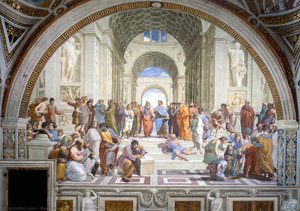
Anton Raphael Mengs zemřel v Římě v roce 1779 a zanechal po sobě odkaz, který sahá daleko za jeho působivý soubor děl. Byl něčím víc než jen malířem; byl klíčovou postavou přechodu z jedné umělecké éry do druhé. Přestože byl zakořeněn v barokní tradici – což je patrné v jeho dramatickém využití světla a stínu i v mistrovství iluzionistických technik – Mengs odvážně přijal rodící se principy neklasicismu a připravil cestu umělcům jako Jacques-Louis David nebo Antonio Canova. Jeho důraz na klasické ideály, v kombinaci s jeho technickou virtuozitou, z něj učinil vedoucí sílu formující evropské umění 18. století. Dílo Škola Athén, namalované pro vévodu z Northumberlandu, stojí jako svědectví o jeho schopnosti syntetizovat historické precedenty se současnou uměleckou citlivostí. Kromě svých obrazů a fresků se Mengsov vliv rozšířil i do oblasti vzdělávání; působil jako ředitel Vatikánské malířské školy, kde vychovával novou generaci umělců hluboce zasazených do klasických principů. Byl komplexní postavou – hluboce věřící katolík, který se zároveň angažoval v myšlenkách osvícenství, umělec, který vyvažoval tradici s inovací. Jeho život a dílo představují fascinující průsečík uměleckých dovedností, intelektuální zvídavosti a historických okolností, čímž si upevnil své místo skutečného průkopníka neklasicistického umění. Jeho dopad rezonuje i dnes a připomíná nám nesmrtelnou sílu klasických ideálů inspirovat a transformovat uměleckou vý expression.
Anton Raphael Mengs
1728 - 1779 , Česká republika
Rychlé fakta
- Artistic Movement Or Style: Klasicismus
- Artists Or Movements Influenced By This Artist: ['Winckelmann']
- Artists Who Influenced This Artist:
- Raphael
- Correggio
- Date Of Birth: 12. března 1728
- Full Name: Anton Raphael Mengs
- Nationality: Německý
- Notable Artworks:
- Parnassus
- Sant' Eusebio
- Škola Athén
- Place Of Birth: Ústí nad Labem, Česká republika
Související články

Baroque Classicism: The Grandeur of Order and Drama in 17th-Century Art History
Explore the profound elegance of Baroque Classicism. Discover how 17th-century masters synthesized dramatic emotion with classical order through the lens of the Counter-Reformation and the works of legends like Carlo Maratta and Andrea Sacchi.

Neoclassical Art: The Timeless Elegance of Order, Virtue, and Classical Grace
Explore the profound elegance of Neoclassical art. Discover the principles of order, symmetry, and virtue through the works of masters like David and Mengs. Immerse yourself in a journey of classical grace and timeless aesthetic perfection.
Baroque Classicism: Reconciling Drama & Order in 17th-Century Art
Explore the captivating world of Baroque Classicism! Discover its history, key artists like Caravaggio & Rubens, and defining characteristics. Expert insights & high-quality reproductions at OriginalUniqueArt.
Neoclassicism Unveiled: The Timeless Elegance of Order, Reason, and Classical Antiquity
Explore the profound elegance of Neoclassicism. Discover how Enlightenment ideals, the discovery of Pompeii, and masters like Jacques-Louis David revived the glory of Greek and Roman antiquity through art defined by order, reason, and timeless beauty.
Rafael: 25 mistrovských děl renesance pro váš domov | OriginalUniqueArt.cz
Objevte 25 ikonických děl Raffaela – od Sixtinské madony po Atény školu. Ponořte se do světa renesance a obdivujte mistrovské obrazy online. Reprodukce obrazů nejvyšší kvality pro váš interiér na OriginalUniqueArt.cz.