 Olejová malba
 Vše o díle Title page







































 U děl nebo reprodukcí, u nichž je jakákoliv strana větší než 105 cm (přibližně 41 palců), bude rám dodán jako sestava v rozloženém stavu. Tato metoda zajišťuje bezpečné doručení a chrání dílo před poškozením během přepravy.


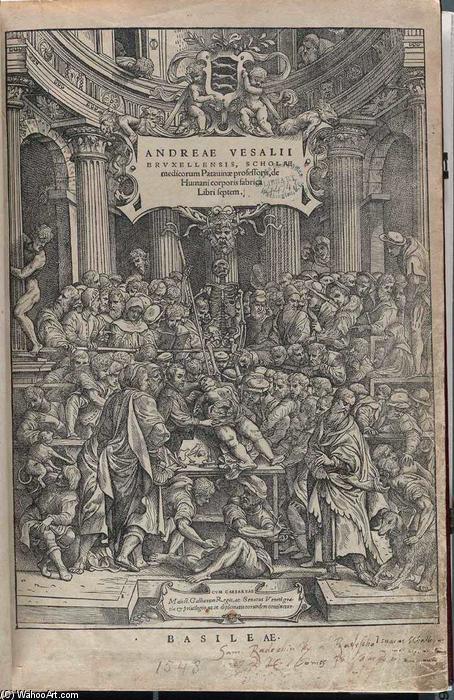
The Identification of the Title Page
This work is the Title page by Andreas Vesalius. It functions as the introductory element for the 1543 first edition of the publication titled De Humani Corporis Fabrica Libri Septem. The page serves as the formal entry point to this specific anatomical volume, establishing the identity of the author and the subject matter through its printed text and accompanying imagery.
The title page is dated 1543. It belongs to the first edition of the larger work, which is a significant anatomical atlas. The text on the page identifies the author as Andreae Vesalii, the Latinized form of Andreas Vesalius. The presence of the name "Basileus" is also noted within the typographic arrangement of the page, indicating its specific placement within the scholarly sequence of the book.
The physical object shows signs of age, including visible creases, stains, and wear along the edges of the paper. A watermark or stamp from the National Library of Medicine in Washington, United States, is located at the bottom of the page. This mark indicates the current provenance and location of this specific copy within a medical collection.
Visual Composition and Decorative Elements
The composition is structured by a series of architectural elements, including columns and arches that frame a central scene. At the top corners of this frame, figures appear in positions suggestive of allegorical or mythological representations. These figures occupy the upper periphery, flanking the central activity. Below them, a gathering of people is arranged around a table or platform. The individuals in this central group are dressed in clothing consistent with 16th-century styles. Some figures are depicted gesturing toward others, while others observe the central activity, some holding books.
The page contains various decorative elements characteristic of the Renaissance period. These include floral motifs and patterns integrated into the design. The layout is organized with a banner-like element at the top containing text, and additional inscriptions are placed around the central scene. The physical condition of the paper shows signs of age, including visible creases, stains, and wear along the edges. A watermark or stamp is located at the bottom of the page.
The Artistic Technique and Medium
The medium of this title page is an engraving. The production of the illustrations involved engraving on wooden blocks, a method that allowed for the reproduction of complex imagery across the publication. This specific work is part of a larger collection that contains more than 250 illustrations. The visual clarity of the print is achieved through the use of meticulous linework and hatching. These techniques create variations in tone and define the edges of the figures and architectural elements through controlled, repetitive strokes.
The execution of the woodcut relies on the precision of these lines to delineate form. Hatching is used to suggest depth and the texture of different surfaces, such as the drapery of the figures' clothing or the structural components of the columns. The linework remains fine and consistent, providing the necessary detail to distinguish between the various subjects gathered in the central scene. The resulting imagery is rendered in black and white, relying entirely on the density and direction of the engraved lines to establish shape and shadow.
Historical Context and Scientific Impact
The publication of this title page in about 1543 represents a watershed moment in anatomical history. It marks the beginning of a shift toward empirical observation in medical science, moving away from the reliance on speculative theories and inherited dogma. By prioritizing direct dissection and physical evidence, the work established a new paradigm for medical illustration. This approach replaced the practice of relying on ancient texts with a method rooted in the actual study of human structures.
The illustrations within this work are recognized as significant achievements of Renaissance art. They demonstrate a high level of technical precision in depicting the human form, including the arrangement of muscles, tendons, and bones. This period saw the transition from theoretical medicine to a rigorous, observational science. The detailed rendering of biological structures helped to transform the role of the anatomical illustrator into that of a scientific investigator.
Otázky a odpovědi
Je dílo Title page ručně malované, nebo jde o tisk?
Ručně malováno: zkušený malíř přetvoří Title page v olejomalbu na lněném plátně.
Jakou velikost si mám vybrat pro Title page?
Velikosti se pohybují od 39.3 x 25.5 cm (Kč4345) až po 239.9 x 155.6 cm (Kč30609); v tabulce na této stránce jsou uvedeny jednotlivé varianty a jejich ceny.
Jak dlouho trvá doručení?
Doručení trvá 4 až 5 týdnů a zahrnuje bezplatnou expresní přepravu po celém světě; na této stránce je k dispozici i možnost urgentní výroby. Dílo můžete vrátit během 100 dnů s plným vrácením peniędzy, bez jakýchkoliv podmínek.
Kde se nachází originál díla Title page?
Originál se nachází ve sbírkách National Library of Medicine, Washington, D.C..
Jakou techniku použil/a Andreas Vesalius pro dílo Title page?
Woodcut
 Náhled v interiéru

 Sdílet
 Sdílet
 Podrobnosti o díle
 Informační list pro studenty


 Stáhnout
 Podobné položky
 Rentgenové snímky
 Slideshow
 Otázky a odpovědi

 Statistiky


