

 Zobrazit v interiéru
 Odeslat
 Sdílet
 Podrobnosti
 Průvodce

 Stáhnout obrázek
 Podobné kousky
 Rentgenové snímky
 Slideshow
 Statistiky
Christ as the Suffering Redeemer
 Oil On Canvas
- WallArt
- Early Renaissance
 1500
1500- Early Medieval
 48.0 x 78.0 cm
 Národní galerie v Kodni
 Přečíst si více
Giclée / Umělecký tisk
Giclée nebo plátěný tisk muzeální kvality s rychlou výrobou a širokou nabídkou povrchových úprav. ( Objednat ručně malovanou reprodukci Přepnout na digitální verzi obrazu)




P118B $10

P118H $10

P118W $10

P438Z $10

P508JH $12

P508YH $12

P805H $10

P805Z $10

P919BZ $10

P919G $10

P919XJ $10

P959ZH $10

P968JZ $12

W106C $8

W218G $10

W218JH $8

W218Y $10

W307PJ $10

W316G $10

W316PJ $8

W316Y $10

W398PJ $8

W4111J $10

W500HY $15

W500JH $15

W692G $12

W849H $8

W940BG $15

W953PJ $8




Vyberte si z našich přednastavených velikostí, které odpovídají původním proporcím díla.

Můžete zadat vlastní rozměry tak, aby výtvor odpovídal konkrétnímu rámu nebo prostoru. Pokud zvolená velikost nebude odpovídat poměru stran původního obrazu, dílo buď ořížeme, nebo obraz rozšíříme pomocí zrcadlového efektu či jednobarevného okraje. Před zahájením výroby vám bude zaslán digitální náhled k schválení.
Mějte prosím na paměti, že náhled na obrazovce neodráží skutečné oříznutí nebo rozšíření. Pouze digitální náhled přesně zobrazí finální kompozici.
Ačkoliv jsou k dispozici i vlastní rozměry, pro zachování původních proporcí doporučujeme vybrat si rozměr z předdefinovaného seznamu.
Celosvětové doručení () do 2 týdnů namísto standardních 4/5 týdnů. (26 září)

Zdarma celosvětová expresní doprava

Vysoce kvalitní lněné plátno

Úplné pojištění přepravy

Záruka vrácení celního poplatku

Záruka věrného barevného shodu

100dení lhůta pro vrácení zboží (pouze při vadách výroby)

100% garance vrácení peněz

Sleva při více objednávkách
 Skleněná varianta je dostupná pouze u rozměrů menších než 110 cm

Christ as the Suffering Redeemer
Giclée / Umělecký tisk
Velikost reprodukce
-


Celková cena
$ 80
A Moment Frozen in Suffering: Andrea Mantegna’s “Christ as the Suffering Redeemer”
Andrea Mantegna's "Christ as the Suffering Redeemer," painted around 1500, isn’t merely a depiction of a biblical scene; it’s a profound meditation on pain, sacrifice, and the very essence of Christian theology. Emerging from the crucible of Renaissance humanism, this work represents a pivotal moment in Mantegna's artistic journey – a deliberate and deeply considered engagement with antiquity that sought to resurrect the grandeur and emotional resonance of Roman art within the burgeoning Italian landscape. Unlike many artists of his time who simply adopted classical forms, Mantegna’s vision was rooted in an almost obsessive pursuit of archaeological accuracy, fueled by his formative years spent under the tutelage of Francesco Squarcione, a painter and collector whose workshop functioned as a living museum dedicated to the study of Roman ruins. This immersion in fragments of a lost empire profoundly shaped Mantegna's approach – evident in the sculpture-like quality of Christ’s body, the dramatic use of perspective, and an overall sense of timelessness that transcends its specific historical context.
Composition and Technique: A Renaissance Masterclass
The painting immediately commands attention with its carefully orchestrated composition. Centering on a seated Christ, rendered in exquisite detail, the scene unfolds within a meticulously constructed landscape – rolling hills receding into a hazy distance, punctuated by the suggestion of distant buildings. The use of a stone sarcophagus as Christ’s throne anchors him firmly to the foreground, creating a powerful visual dialogue between earthly mortality and divine sacrifice. Mantegna masterfully employs linear perspective, drawing the viewer's eye deep into the scene and establishing a convincing sense of spatial depth. The artist’s technique is characterized by a remarkable control over oil paints; glazing and blending are used with breathtaking subtlety to achieve smooth transitions in tone and texture, lending an almost photographic realism to the figures and landscape. Note particularly the delicate rendering of Christ's drapery – each fold and crease meticulously defined, conveying both weight and movement.
Symbolism and Emotional Resonance: Pain, Hope, and Divine Presence
Beyond its technical brilliance, “Christ as the Suffering Redeemer” is rich in symbolic meaning. Christ’s posture, contorted with pain and vulnerability, speaks volumes about his sacrifice – a tangible representation of the immense suffering endured for humanity's salvation. The two angels flanking him are not merely decorative elements; they embody divine presence and offer a silent reassurance of hope amidst despair. The muted color palette—earthy browns, ochres, and subtle blues—contributes to the painting’s somber mood, while the stark contrast between Christ’s pale flesh tones and the darker hues of the landscape further emphasizes his vulnerability. The circular halos surrounding the angels' heads subtly reinforce their divine nature, creating a visual hierarchy that elevates Christ to a position of unparalleled importance. The very choice of a stone sarcophagus as his seat is laden with symbolism – referencing both death and resurrection, hinting at the promise of eternal life.
Historical Context and Artistic Legacy
Painted in 1500, “Christ as the Suffering Redeemer” reflects the broader artistic currents of the High Renaissance. Mantegna’s work stands as a bridge between the Early and High Renaissances, demonstrating a deep respect for classical antiquity while simultaneously forging his own distinctive style. His meticulous attention to detail, coupled with his innovative use of perspective and dramatic lighting, established him as one of the most influential artists of his era. The painting's focus on human anatomy and emotional expression aligns perfectly with the humanist ideals that were shaping artistic thought during this period. It’s a testament to Mantegna’s ability to not only faithfully reproduce classical forms but also to imbue them with profound spiritual meaning, ensuring that “Christ as the Suffering Redeemer” continues to resonate powerfully with viewers centuries later. A reproduction of this work offers a stunning glimpse into the heart of Renaissance artistry and a poignant meditation on themes of faith, suffering, and redemption.
Biografie umělce
A Renaissance Forged in Antiquity: The Life and Art of Andrea Mantegna
Andrea Mantegna, born near Padua around 1431, stands as a pivotal figure bridging the Early and High Renaissances. His artistic journey wasn’t merely about adopting classical forms; it was an immersive excavation of antiquity, a passionate attempt to resurrect the spirit of Rome within the burgeoning Italian Renaissance. Unlike many contemporaries who drew inspiration from classical models, Mantegna possessed a unique fervor for archaeological accuracy. This obsession stemmed from his formative years under Francesco Squarcione, a painter and collector whose workshop functioned less as a traditional studio and more as an academy dedicated to the study of Roman ruins, sculptures, and inscriptions. It was within these walls, surrounded by fragments of a lost empire, that Mantegna’s artistic vision began to take shape—a vision characterized by sculptural forms, dramatic perspective, and an almost obsessive attention to detail. His early life remains somewhat shrouded in mystery; accounts suggest he was discovered as a promising apprentice, his innate talent recognized and nurtured by Squarcione despite humble origins. This unconventional beginning perhaps fueled Mantegna’s relentless pursuit of artistic mastery and his determination to forge a style distinctly his own.The Gonzaga Court and the Illusion of Reality
Mantegna's career truly blossomed when he entered the service of the Gonzaga family in Mantua, becoming court painter in 1488. This patronage provided him with an unprecedented level of artistic freedom and a platform to realize his most ambitious projects. The Gonzaga’s were not simply patrons; they were collaborators, commissioning works that pushed the boundaries of artistic innovation. It was during this period that Mantegna created what is arguably his masterpiece: the *Camera degli Sposi* (Bridal Chamber) frescoes in the Palazzo Ducale. This groundbreaking work transcends mere decoration; it's a complete illusionistic environment, seamlessly integrating architecture and painting to create an extended sense of space. The frescoes depict scenes from the life of the Gonzaga family, portraits that are remarkably lifelike and engaging, and a breathtaking *di sotto in sù* (seen from below) ceiling panel that creates the illusion of an open sky. This masterful manipulation of perspective wasn’t simply about technical skill; it was about creating a world within a room, blurring the lines between reality and representation. The *Camera degli Sposi* is considered one of the most significant achievements in Renaissance art, demonstrating Mantegna's unparalleled ability to create convincing illusions and immerse the viewer in a meticulously crafted environment. Beyond the *Camera degli Sposi*, Mantegna continued to produce works of exceptional quality for the Gonzaga court, including the monumental series *Triumphs of Caesar*. These paintings, inspired by Roman triumphal processions, are not merely historical depictions; they are elaborate allegories celebrating the power and prestige of the Gonzaga family, presented with a grandeur that rivals the imperial ambitions of ancient Rome.A Master of Perspective and Anatomical Precision
Mantegna’s artistic innovations extended far beyond illusionistic environments. He was a pioneer in the use of perspective, often employing techniques that went against conventional methods to achieve dramatic effects. Frequently, he adjusted the horizon line, creating a sense of monumentality and imposing scale. This technique, coupled with his meticulous attention to anatomical detail, gave his figures an unparalleled sense of weight and presence. He wasn’t content with simply representing the human form; he dissected it, studied its musculature, and rendered it with a precision that was revolutionary for his time. His mastery of *trompe-l'oeil* – creating illusions so convincing they deceive the eye – further enhanced this effect, blurring the boundaries between painting and reality. This dedication to anatomical accuracy wasn’t merely an exercise in technical skill; it reflected Mantegna’s deep engagement with classical sculpture and his desire to emulate the idealized forms of antiquity. He sought not just to depict the human body but to capture its inherent dignity and power. His influence on subsequent generations of artists, including Raphael and Michelangelo, is undeniable, as they built upon his foundations in perspective, anatomy, and composition.Key Works and Artistic Development
Mantegna’s artistic development can be traced through a series of key works that reveal the evolution of his style and techniques. Early paintings like *Klanění pastýřů* (The Adoration of the Shepherds) demonstrate his fascination with classical antiquity, evident in the idealized figures and serene atmosphere. The *Mrtvý Kristus* (Dead Christ) showcases his innovative use of perspective and his ability to convey profound emotion through a seemingly simple composition. Later works, such as the *Triumphs of Caesar*, exemplify his mastery of monumental scale and dramatic storytelling. Throughout his career, Mantegna consistently pushed the boundaries of artistic convention, experimenting with new techniques and challenging established norms. His work is characterized by a remarkable balance between realism and idealism, reflecting his deep appreciation for both classical antiquity and Renaissance humanism.Legacy and Enduring Influence
Andrea Mantegna died in Mantua in 1506, leaving behind a legacy that continues to resonate with art historians and enthusiasts alike. His work represents a crucial turning point in the history of Renaissance art, bridging the gap between the Early and High Renaissance styles. He wasn’t simply an imitator of classical forms; he was an interpreter, adapting ancient motifs and techniques to create something entirely new and uniquely his own. His meticulous attention to detail, his mastery of perspective, and his profound engagement with classical antiquity established him as a leading figure of his time. Mantegna’s exploration of classical themes helped revive interest in ancient art and culture, paving the way for the artistic achievements of the High Renaissance. His influence can be seen in the works of countless artists who followed, from Raphael's graceful compositions to Michelangelo's powerful figures. Today, his paintings are housed in major museums around the world, including The National Gallery in London and the Pinacoteca di Brera in Milan, where they continue to inspire awe and admiration.- His innovative use of perspective continues to be studied by artists and art historians.
- His anatomical precision remains a benchmark for realistic representation.
- His dedication to classical themes helped shape the course of Renaissance art.

Andrea Mantegna
1431 - 1506 , Itálie
Rychlé informace
- Artistic Movement Or Style: Renesance
- Artists Or Movements Influenced By This Artist:
- Rafaello
- Michelangelo
- Artists Who Influenced This Artist:
- Donatello
- Jacopo Bellini
- Date Of Birth: 1431
- Date Of Death: 1506
- Full Name: Andrea Mantegna
- Nationality: Italista
- Notable Artworks:
- Lamentace
- Svatý George
- *Camera degli Sposi*
- Triumfy Caesara
- Place Of Birth: Padova, Itálie
Související články

The Enduring Power of Painting: A Historical & Contemporary Exploration of Form and Emotion
Explore the rich history & enduring techniques of oil painting with OriginalUniqueArt. Discover masterpieces, learn about art collecting, and find authentic handmade reproductions crafted by skilled artists.

The Enduring Legacy of Oil on Canvas: Technique, History & Aesthetic Impact
Explore the rich history & techniques of oil painting – from Renaissance masters to Impressionism. Discover pigments, layering methods, and why this timeless medium endures. Expert insights for artists & art enthusiasts.

Trvalý odkaz olejomalby: Technika, historie a současná praxe
Prozkoumejte historii a techniky olejomalby s námi! Od středověku po současnost – detailní průvodce pro milovníky umění a profesionály. Objevte tajemství mistrů a inspirujte se.

Oil on Canvas: A Historical & Technical Exploration of a Timeless Artistic Medium
Explore the rich history & enduring techniques of oil painting on canvas. Discover the science behind its longevity, conservation practices, and contemporary relevance. Expert insights for art enthusiasts.
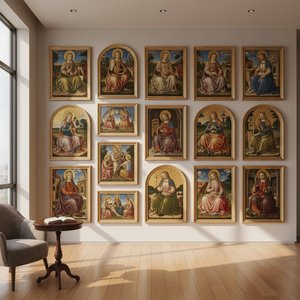
Fra Angelico: 25 mistrovských děl renesančního umění pro váš domov | OriginalUniqueArt.cz
Objevte 25 ikonických děl Fra Angelica – renesančního mistra andělských freskek a náboženských maleb. Prozkoumejte jeho techniku, inspiraci a duchovní poselství. Luxusní reprodukce obrazů pro váš interiér na OriginalUniqueArt.cz


