
 Náhled v interiéru

 Sdílet
 Sdílet
 Podrobnosti o díle
 Průvodce


 Stáhnout
 Podobné položky
 Rentgenové snímky
 Slideshow
 Otázky a odpovědi
 Statistiky
Lupercalia feasts

 Zobrazit více
Giclée / Umělecký tisk
Giclée nebo plátěný tisk muzeální kvality s rychlou výrobou a širokou nabídkou povrchových úprav. ( Koupit ručně malovaný obraz Přepnout na digitální obraz)




































Vyberte si z našich přednastavených velikostí, které odpovídají původním proporcím díla.

Zadejte šířku a výšku, které potřebujete pro váš rám nebo stěnu. Tisk lze pouze oříznout, nikdy však nelze zvětšit obraz nad jeho původní rozměr, proto při výběru jiného formátu dochází ke ztrátě části obrazu. Před samotným tiskem vám zašleme digitální náhled k schválení. Obraz zobrazený na této stránce nenabízí skutečný výřez — ten uvidíte pouze v náhledu.
Celosvětové doručení () do 2 týdnů namísto standardních 4/5 týdnů. (19 listopad)

Zdarma celosvětová expresní doprava

Vysoce kvalitní lněné plátno

Kompletní pojištění přepravy

Záruka vrácení celního poplatku

Záruka věrného barevného souladu

100dení lhůta pro vrácení zboží (pouze při vadách výroby)

100% záruka vrácení peněz

Sleva při více objednávkách
 Skleněná varianta je dostupná pouze u rozměrů menších než 110 cm

Lupercalia feasts
Giclée / Umělecký tisk
Rozměry reprodukce
-


Celková cena za vybrané možnosti reprodukcí
Kč 1750
Biografie umělce
Andrea Camassei: A Baroque Master of Light and Shadow
Born in the Umbrian town of Bevagna in 1602, Andrea Camassei’s life was a testament to both artistic talent and a tragically curtailed career. His early years were steeped in the traditions of Italian painting, yet he possessed an individual vision that quickly distinguished him within the vibrant, competitive environment of Rome during the mid-17th century. While often overshadowed by his more celebrated contemporaries – Domenichino, Guido Reni, and Pietro da Cortona – Camassei’s work reveals a profound understanding of light, color, and dramatic composition, securing him a place as a significant, if somewhat elusive, figure in Baroque art.
Camassei's formal training remains somewhat shrouded in mystery. He apprenticed under Domenichino, a master known for his meticulous realism and ability to capture the nuances of human expression. This early influence is evident in Camassei’s initial works, characterized by a careful attention to detail and a restrained palette. However, he quickly developed a distinctive style, marked by an increased use of chiaroscuro – the dramatic contrast between light and dark – that would become his signature. His first documented commission came in 1627, decorating the chapel of St Philip Neri in Bevagna with scenes from the life of the saint, providing him with invaluable experience and establishing a foundation for his future endeavors.
The Barberini Patronage and Early Rome
By 1628, Camassei had relocated to Rome, entering the orbit of the powerful Barberini family. This patronage proved crucial to his early career, providing him with commissions for elaborate decorations within the Palazzo Barberini – a complex undertaking that involved collaborating with established artists like Guido Reni, Andrea Sacchi, and Pietro da Cortona. These projects demanded not only technical skill but also an understanding of architectural design and the integration of painting into broader spatial arrangements. The frescoes he contributed to Santa Maria della Concezione, depicting scenes from the life of St Peter, showcased his burgeoning talent for creating dynamic compositions filled with movement and emotion.
A pivotal moment in Camassei’s career came in 1631 when he was entrusted with decorating a ceiling in the Palazzo Barberini. This commission – “Apollo and the Muses on Mt Parnassus” – demonstrated his ability to handle large-scale projects, but also highlighted a potential limitation: his reluctance to embrace overly complex or decorative schemes. He famously declined a subsequent, even more ambitious assignment – the decoration of the Gran Salone – recognizing that it exceeded his capabilities. This decision, while perhaps strategically prudent, ultimately contributed to a period of relative obscurity.
Dramatic Narratives and Religious Iconography
Camassei’s most enduring legacy lies in his dramatic depictions of religious narratives and mythological scenes. His paintings are characterized by an intense emotionality, conveyed through expressive gestures, dynamic poses, and a masterful manipulation of light and shadow. The “Massacre of the Niobids” (circa 1645-48), arguably his most famous work, exemplifies this approach. The painting’s chaotic composition, featuring a brutal slaughter of innocent women by zealous priests, is rendered with visceral intensity, capturing both the horror of the event and the underlying moral ambiguity. Other notable works include “St. Erasmus Martyrdom” and “Alexander and Hephaestion,” each demonstrating his ability to infuse historical or mythological subjects with profound psychological depth.
His style was influenced by Poussin’s use of light, color, and composition, as well as the more restrained realism of Domenichino. However, Camassei possessed a unique sensibility, evident in his preference for pastel colors and his ability to create a sense of atmospheric depth. His works are not merely illustrations of biblical or mythological tales; they are carefully constructed narratives designed to evoke contemplation and elicit an emotional response from the viewer.
A Tragic End and Lasting Influence
Andrea Camassei’s career was tragically cut short in 1649, at the age of forty-six. The political turmoil surrounding the deposition of Pope Urban VIII and the exile of his successors severely impacted the patronage system that supported many artists. Despite his talent and potential, Camassei struggled to secure consistent commissions during this period. He spent his final years working for the Palazzo Pamphilj in Rome, producing decorative frescoes depicting scenes from the story of Bacchus and Ariadne.
Although largely forgotten for centuries, Andrea Camassei’s work has experienced a resurgence of interest in recent decades. His paintings are now recognized as significant examples of Baroque art, admired for their dramatic intensity, masterful use of light and shadow, and profound psychological insights. His legacy endures through his captivating depictions of religious narratives and mythological scenes – works that continue to resonate with viewers today.

Andrea Camassei
1602 - 1649 , Italy
Rychlé informace o umělci
- Full Name: Andrea Camassei
- Nationality: Italian
- Date Of Birth: 1602
- Date Of Death: 1649
- Place Of Birth: Bevagna, Italy
- Notable Artworks:
- Massacre of the Niobids
- Hunt of Diana
- Artistic Movement Or Style: Baroque Painting
- Artists Who Influenced This Artist: ['Domenichino']
- Artists Or Movements Influenced By This Artist: ['Raphael']
Související články

Masterpieces of Grandeur: The Top 25 Artworks by Paolo Veronese
Explore 25 iconic Venetian Renaissance masterpieces by Paolo Veronese. Discover the full collection online at OriginalUniqueArt.com.

Master of Antiquity: The 25 Greatest Artworks by Andrea Mantegna
Explore 25 iconic Andrea Mantegna masterpieces of the Renaissance. Discover museum-quality art on OriginalUniqueArt.com.

The Fête Galante & Beyond: Exploring the Artistic World of Jean-Antoine Watteau
Discover the captivating world of Jean-Antoine Watteau, master of the Fête Galante! Explore his iconic paintings, symbolism, and lasting influence on Rococo art. A deep dive for classic art enthusiasts.

Masterpieces of Grandeur: The Top 25 Artworks by Paolo Veronese
Step into the opulence of the Venetian Renaissance with our curated guide to the top 25 Paolo Veronese masterpieces. From grand feasts to luminous colors, explore the stories behind these timeless icons and find museum-quality reproductions. Discover all masterpieces on OriginalUniqueArt.com.
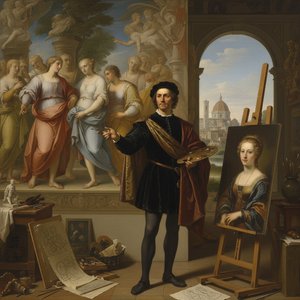
Andrea del Sarto: Florentine Grace, Technical Mastery & Artistic Ambition
Explore the life & art of Andrea del Sarto, a Florentine Renaissance master renowned for harmonious compositions & technical brilliance. Discover his frescoes, portraits, and lasting influence on art history.