
 Náhled v interiéru
 Sdílet
 Sdílet
 Podrobnosti o díle
 Průvodce

 Stáhnout
 Podobné položky
 Rentgenové snímky
 Slideshow
 Q&A
Q&A Statistiky
Monaco, Monte-Carlo

 Zobrazit více
Giclée / Umělecký tisk
Giclée nebo plátěný tisk muzeální kvality s rychlou výrobou a širokou nabídkou povrchových úprav. ( Koupit ručně malovaný obraz Přepnout na digitální obraz)




P118B Kč10

P118H Kč10

P118W Kč10

P438Z Kč10

P508JH Kč12

P508YH Kč12

P805H Kč10

P805Z Kč10

P919BZ Kč10

P919G Kč10

P919XJ Kč10

P959ZH Kč10

P968JZ Kč12

W106C Kč8

W218G Kč10

W218JH Kč8

W218Y Kč10

W307PJ Kč10

W316G Kč10

W316PJ Kč8

W316Y Kč10

W398PJ Kč8

W4111J Kč10

W500HY Kč15

W500JH Kč15

W692G Kč12

W849H Kč8

W940BG Kč15

W953PJ Kč8




Vyberte si z našich přednastavených velikostí, které odpovídají původním proporcím díla.

Zadejte šířku a výšku, které potřebujete pro váš rám nebo stěnu. Tisk lze pouze oříznout, nikdy však nelze zvětšit obraz nad jeho původní rozměr, proto při výběru jiného formátu dochází ke ztrátě části obrazu. Před samotným tiskem vám zašleme digitální náhled k schválení. Obraz zobrazený na této stránce nenabízí skutečný výřez — ten uvidíte pouze v náhledu.
Celosvětové doručení () do 2 týdnů namísto standardních 4/5 týdnů. (1 listopad)

Zdarma celosvětová expresní doprava

Vysoce kvalitní lněné plátno

Kompletní pojištění přepravy

Záruka vrácení celního poplatku

Záruka věrného barevného souladu

100dení lhůta pro vrácení zboží (pouze při vadách výroby)

100% záruka vrácení peněz

Sleva při více objednávkách
 Skleněná varianta je dostupná pouze u rozměrů menších než 110 cm

Monaco, Monte-Carlo
Giclée / Umělecký tisk
Rozměry reprodukce
-


Celková cena za vybrané možnosti reprodukcí
Kč 1738
Monaco Monte Carlo: An Ode to Elegance and Ornamentation
The artwork, “Monaco Monte Carlo,” created in 1897 by Alphonse Maria Mucha, stands as a quintessential emblem of Art Nouveau—a movement that sought to liberate art from academic constraints and embrace the beauty of organic forms inspired by nature. More than just a promotional poster for Monaco’s opulent casino district, it's a meticulously crafted visual poem celebrating luxury, leisure, and the idealized feminine spirit. Mucha’s signature style is immediately recognizable: flowing curvilinear lines dominate the composition, intertwining seamlessly with stylized floral arrangements that burst forth from the central figure’s drapery—a deliberate echo of the natural world and its fecundity.- Style & Influences: Mucha's Art Nouveau aesthetic draws heavily from influences like Pierre-Auguste Renoir and Gustave Moreau, artists who similarly explored themes of mythology and symbolism through decorative painting. However, Mucha distinguishes himself with a singular vision—one that prioritizes graceful movement and sensual beauty above all else.
- Composition & Technique: The poster employs a vertical orientation, maximizing visual impact while maintaining compositional balance. Lithography was the printing technique chosen, ensuring exceptional clarity and tonal gradation – crucial for capturing the shimmering gold leaf accents strategically applied to highlight key floral elements and contribute to the overall ethereal luminescence of the scene.
- Symbolism & Narrative: At its core lies an allegorical representation of femininity—a reclining woman adorned in flowing robes embodies elegance, serenity, and aristocratic grace. Surrounding her are stylized flowers—primarily lilies and roses—representing purity, devotion, and prosperity – motifs commonly found throughout Art Nouveau art.
- Historical Context: Monaco’s burgeoning reputation as a glamorous destination for European aristocracy fueled Mucha's artistic ambition. The poster reflects the broader cultural fascination with exotic locales and idealized beauty during the Belle Époque, capturing the spirit of an era defined by optimism and artistic experimentation.
- Floral Arrangement: The lilies and roses dominate the floral arrangement, meticulously rendered in shades of ivory and blush pink. Their petals are depicted with astonishing realism—a testament to Mucha’s meticulous observation of botanical specimens.
- Line Quality: Mucha achieves this mesmerizing effect through careful consideration of line quality—employing subtle variations in thickness and curvature to create depth and texture without resorting to traditional perspective techniques.
- Atmospheric Perspective: Mucha skillfully employs atmospheric perspective—reducing color saturation and tonal gradation in distant floral elements—to create a convincing illusion of depth.
- Sensual Appeal: Mucha's meticulous attention to detail—particularly in the depiction of drapery folds and floral textures—appeals to the senses—creating a visually stimulating experience that lingers long after viewing.
Otázky a odpovědi
Jsou barvy díla „Monaco, Monte-Carlo“ od Alfons Mucha živé, nebo tlumené?
Dílo „Monaco, Monte-Carlo“ od Alfons Mucha je zachyceno s Balanced Soft saturací a Balanced intenzitou.
Patří dílo „Monaco, Monte-Carlo“ mezi slavná děl směru Art Nouveau?
Dílo "Monaco, Monte-Carlo" je v katalogu hodnoceno jako Recognized mezi díly z období Art Nouveau.
Pod jakými dalšími jmény nebo pseudony je Alfons Mucha známý/á?
Mezi další jména, pod kterými je znám(a) Alfons Mucha, tvůrce díla „Monaco, Monte-Carlo“, patří i Alphonse Maria Mucha.
Biografie umělce
Úvod
Alphonse Maria Mucha, jméno, které se stalo synonymem pro Art Nouveau, byl český malíř, grafik a designér, jehož dílo proniká do srdcí lidí po celém světě. Narodil se v malebné Ivančici na Moravě, v roce 1860, a od dětství projevoval mimořádný talent pro umění. Jeho cesta k slávě byla plná překvapení, spolupráce s legendární herečkou Sarah Bernhardt a ambiciózních projektů, které definovaly estetiku konce 19. století.
Raná Životnost a Vzdělání
Mucha se narodil do rodiny soudního úředníka a jeho matka byla učitelkou. Už v mládí projevoval zájem o malířství, ale jeho studium na Akademii výtvarných umění v Praze ho nedokázalo naplnit. Mucha byl kritický k tradičním postupům a toužil po vlastní, originální cestě v umění. V roce 1887 se rozhodl pro přesun do Paříže, centra evropského uměleckého dění, kde začal usilovat o svůj styl.
Styl a Významné Dělo
Mucha se rychle prosadil v Paříži díky svému jedinečnému Art Nouveau stylu. Jeho díla jsou charakteristická proudícími liniemi, organickými tvary a dynamickým pohybem. Vznikl tzv. „Mucha Style“, který se vyznačoval obzvláště krásnými, idealizovanými ženami v plující róbách, často obklopenými bohatými květinami. Jeho barvy jsou jemné a pastelové, což dodává jeho dílům zvláštní romantický nádech. Mezi jeho nejznámější díla patří plakáty pro Sarah Bernhardt, zejména Gismonda (1894), které mu přinesly okamžitou slávu, cyklus obrazů Slavanská epopej (1912-30) a dekorativní panely pro Universal Exposition v Paříži roku 1900. Jeho dílo se vyznačuje kombinací tradičních českých motivů s moderními prvky Art Nouveau.
Kariérní Milníky a Patrony
Muchaova kariéra nabrala nový rozměr díky spolupráci s Sarah Bernhardt, která mu poskytla mnoho zakázek na plakáty a designy. Velký význam měl i jeho kontakt s Charlesem Richardem Crane, bohatým americkým filantropem, který ho finančně podporoval a umožnil mu realizovat ambiciózní projekt Slavanská epopej. Tato série obrazů představuje oslavu slovanské kultury a historie a je považována za Muchovu největší uměleckou realizaci. Po vzniku samostatného Československa se Mucha stal státním umělcem a navrhl nové poštovní razítka, bankovničky a další státní dokumenty.
Vlivy a Dědictví
Mucha byl ovlivněn českými uměleckými tradicemi i moderními evropskými směry. Jeho styl inspiroval další generace umělců, včetně Evy Prokopcové. Muchaův vliv lze pozorovat v designu, módě a architektuře 20. století. Jeho díla jsou dodnes vystavována po celém světě a jeho jméno je spojováno s elegancí, krásou a uměleckým nadáním.
Pozdější Život a Smrt
Mucha se oženil v roce 1906 s Maruskou Chytilovou. V roce 1910 se narodila jejich dcera Jaroslava. Mucha zemřel 14. července 1939 v Praze, krátce před koncem druhé světové války. Jeho dílo a jeho styl zůstávají inspirací pro umělce i designéry po celém světě.

Alfons Mucha
1860 - 1939 , Česká republika
Rychlé informace o umělci
- Artistic Movement Or Style: Secese
- Artists Or Movements Influenced By This Artist: ['Prokopcová']
- Artists Who Influenced This Artist:
- Renoir
- Moreau
- Date Of Birth: 15. července 1860
- Date Of Death: 14. července 1939
- Full Name: Alphonse Maria Mucha
- Nationality: Češi
- Notable Artworks:
- Slavonské povstání
- Salon des Cent
- Dcery Tespia
- La Ribambelle des Gobelins
- Rozkvesení obilí
- Place Of Birth: Brno, Česká republika
Související články
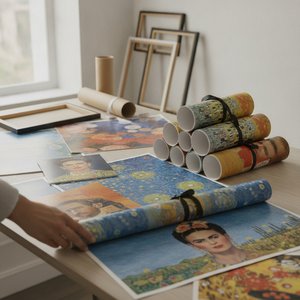
OriginalUniqueArt.com F.A.Q.: Premium Art Poster Prints – Vivid Colors & Versatile Sizing
Discover OriginalUniqueArt.com's premium art poster prints. Featuring 12-color archival pigments for vivid color fidelity and versatile sizing for bespoke decor. Expertly crafted museum-quality reproductions designed for discerning collectors and professional decorators.