Náhled v interiéru
 Sdílet
 Sdílet
 Podrobnosti o díle
 Průvodce

 Stáhnout
 Podobné položky
 Rentgenové snímky
 Slideshow
 Otázky a odpovědi
 Statistiky
Street in Veneux

- 54.0 x 73.0 cm


 Zobrazit více
Giclée / Umělecký tisk
Giclée nebo plátěný tisk muzeální kvality s rychlou výrobou a širokou nabídkou povrchových úprav. ( Koupit ručně malovaný obraz Přepnout na digitální obraz)




P118B Kč10

P118H Kč10

P118W Kč10

P438Z Kč10

P508JH Kč12

P508YH Kč12

P805H Kč10

P805Z Kč10

P919BZ Kč10

P919G Kč10

P919XJ Kč10

P959ZH Kč10

P968JZ Kč12

W106C Kč8

W218G Kč10

W218JH Kč8

W218Y Kč10

W307PJ Kč10

W316G Kč10

W316PJ Kč8

W316Y Kč10

W398PJ Kč8

W4111J Kč10

W500HY Kč15

W500JH Kč15

W692G Kč12

W849H Kč8

W940BG Kč15

W953PJ Kč8




Vyberte si z našich přednastavených velikostí, které odpovídají původním proporcím díla.

Zadejte šířku a výšku, které potřebujete pro váš rám nebo stěnu. Tisk lze pouze oříznout, nikdy však nelze zvětšit obraz nad jeho původní rozměr, proto při výběru jiného formátu dochází ke ztrátě části obrazu. Před samotným tiskem vám zašleme digitální náhled k schválení. Obraz zobrazený na této stránce nenabízí skutečný výřez — ten uvidíte pouze v náhledu.
Celosvětové doručení () do 2 týdnů namísto standardních 4/5 týdnů. (7 listopad)

Zdarma celosvětová expresní doprava

Vysoce kvalitní lněné plátno

Kompletní pojištění přepravy

Záruka vrácení celního poplatku

Záruka věrného barevného souladu

100dení lhůta pro vrácení zboží (pouze při vadách výroby)

100% záruka vrácení peněz

Sleva při více objednávkách
 Skleněná varianta je dostupná pouze u rozměrů menších než 110 cm

Street in Veneux
Giclée / Umělecký tisk
Rozměry reprodukce
-


Celková cena za vybrané možnosti reprodukcí
Kč 1763
The Allure of "Street in Veneux"
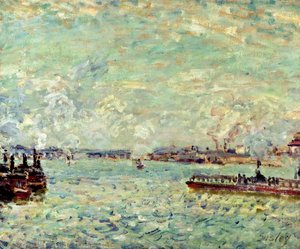
Alfred Sisley's "Street in Veneux," painted in 1883, is more than just a depiction of a small French town; it’s a window into the burgeoning Impressionist movement and a testament to Sisley’s mastery of capturing fleeting moments. This oil on canvas painting, measuring 54 x 73 cm, invites viewers to step into a scene brimming with everyday life, rendered with delicate brushstrokes and a keen eye for light and atmosphere.
Composition and Technique: A Glimpse of Rural Life
The composition is deceptively simple yet profoundly effective. The street itself forms the central axis, lined with buildings that suggest a close-knit community. Figures populate the scene – pedestrians casually strolling, horses pulling carts—each contributing to a sense of movement and vitality. Sisley’s technique exemplifies Impressionism: short, broken brushstrokes create a shimmering effect, capturing the play of light on surfaces. The colors are muted yet vibrant, reflecting the natural tones of the buildings and foliage. Notice how he doesn't meticulously detail every element; instead, he prioritizes conveying the overall impression—the feeling of being present in this quiet French town.
Historical Context: Impressionism and Urbanization
"Street in Veneux" emerged during a period of significant social and economic change in France. The Industrial Revolution was reshaping urban landscapes, yet Sisley chose to focus on the quieter corners of rural life. This choice reflects a broader trend within Impressionism—a desire to capture scenes outside the grand narratives of history painting, celebrating instead the beauty of everyday moments. Sisley’s work stands alongside that of Monet and Renoir, all striving to break away from traditional academic styles and embrace a more subjective and immediate approach to art.
Symbolism and Emotional Impact: Tranquility and Connection
While seemingly straightforward, "Street in Veneux" carries subtle symbolic weight. The presence of the horses and carts hints at the ongoing connection between rural and urban life. The figures, though not individually detailed, represent a sense of community and shared experience. The overall emotional impact is one of tranquility and gentle observation. Sisley doesn't impose a dramatic narrative; instead, he invites viewers to simply *be* present in this scene, experiencing the quiet beauty of a small French town at the turn of the century. The painting evokes feelings of nostalgia, peace, and an appreciation for the simple pleasures of life.
A Lasting Legacy: Sisley's Contribution to Art
Alfred Sisley’s dedication to landscape painting solidified his place as a pivotal figure in the Impressionist movement. "Street in Veneux" exemplifies his artistic vision—a commitment to capturing the fleeting effects of light and atmosphere with remarkable sensitivity. The Musée des Beaux-Arts d'Angers proudly houses this masterpiece, offering art enthusiasts a chance to experience its beauty firsthand. High-quality handmade oil painting reproductions are available at OriginalUniqueArt.com, allowing you to bring the charm and tranquility of "Street in Veneux" into your own home.
Otázky a odpovědi
Lze dílo „Street in Veneux“ zobrazit v náhledu v rozšířené realitě?
Stránka Náhled v rozšířené realitě pro dílo „Street in Veneux“ od Alfred Sisley využívá rozšířenou realitu k tomu, abyste si toto umělecké dílo mohli pomocí kompatibilního zařízení prohlédnout přímo ve svém vlastním prostoru.
K jaké fázi kariéry Alfred Sisley odpovídá datum vzniku díla „Street in Veneux“ z roku 1883?
„Street in Veneux“, vytvořené v roce 1883, pochází z období Mature Period tvorby umělce Alfred Sisley.
Kde mohu najít statistiky k dílu „Street in Veneux“ od Alfred Sisley?
Stránka Statistiky díla „Street in Veneux“ od Alfred Sisley zobrazuje statistiky veřejných návštěv: měsíční návštěvnost tohoto díla, srovnání s nejvíce prohlíženými díly daného umělce a původ jeho návštěvníků.
Biografie umělce
A Life Immersed in Light and Landscape
Alfred Sisley, a name often whispered alongside those of Monet, Renoir, and Pissarro, occupies a unique and profoundly beautiful space within the Impressionist movement. Born in Paris on October 30, 1839, to British parents—William Sisley, a silk merchant, and Felicia Sell, a music enthusiast—he carried a dual heritage that subtly informed his artistic vision. Though he would spend nearly his entire life in France, Sisley retained British citizenship, a fact that brought him personal disappointment later in life when applying for French naturalization was refused. His early years were comfortably bourgeois, affording him the opportunity to pursue studies initially intended for a commercial career in London at the age of eighteen. However, the allure of art proved too strong, and he returned to Paris in 1861, embarking on formal training under Swiss artist Marc-Charles-Gabriel Gleyre at the École des Beaux-Arts. It was here, amidst the burgeoning artistic ferment of the era, that Sisley forged crucial friendships with Monet, Renoir, and Bazille—relationships that would profoundly shape his artistic trajectory. These companions shared a rebellious spirit, rejecting the rigid conventions of academic painting in favor of capturing the fleeting effects of light and atmosphere directly from nature.The Quiet Master of Impressionism
Sisley’s dedication to *plein air* painting—working outdoors, directly observing the natural world—was unwavering. Unlike some of his contemporaries who experimented with diverse genres, Sisley remained steadfastly committed to landscape throughout his career. This focused devotion allowed him to refine a distinctive style characterized by tranquility, delicate color palettes, and a subtle rendering of light. His canvases are often awash in pale shades of green, pink, purple, dusty blue, and cream, creating an atmosphere of serene contemplation. While the early works remain largely lost to time, his mature paintings reveal a meticulous observation of nature combined with a poetic sensibility. He wasn’t interested in grand narratives or dramatic gestures; instead, he found beauty in the everyday—in the gentle flow of rivers, the dappled light filtering through trees, and the quiet charm of rural life. His early struggles for recognition were compounded by his father's financial difficulties following the Franco-Prussian War in 1870, forcing Sisley to rely solely on the sale of his art for sustenance—a precarious existence that shadowed much of his career. He was a true Impressionist, but one who often labored in relative obscurity during his lifetime.Rivers, Canals, and the Essence of Place
Recurring themes permeate Sisley’s oeuvre, most notably his fascination with water. River landscapes became a signature subject, exemplified by his series of paintings created during a trip to England in 1874 along the Thames near Molesey. These works, capturing the tranquil beauty of the river and its surroundings, are considered among his finest achievements—a “perfect moment of Impressionism,” as art historian Kenneth Clark described them. He also developed a deep connection with Moret-sur-Loing, where he lived for many years, immortalizing its canals, bridges, and surrounding countryside in numerous canvases. Paintings like "Watermill near Moret," "Barges on the Loing Canal, Spring", and “Fields around the Forest” showcase his ability to imbue ordinary scenes with a sense of poetic grace. He didn’t merely depict these places; he captured their *essence*, conveying not just what they looked like but how they felt—the gentle breeze, the warmth of the sun, the quiet murmur of the water. This sensitivity to atmosphere and mood is perhaps Sisley's most enduring legacy.Influences and a Lasting Legacy
Sisley’s artistic influences were multifaceted. Gleyre’s academic training provided a foundation in technique, while the camaraderie with Monet, Renoir, and Bazille fostered a shared commitment to Impressionist principles. He absorbed their emphasis on capturing fleeting moments of light and atmosphere but developed his own unique voice—one characterized by restraint and subtlety. Though he often labored in relative obscurity during his lifetime, Sisley’s work is now celebrated for its beauty, sensitivity, and unwavering dedication to portraying nature. His influence can be seen in the works of later landscape painters who sought to capture the ephemeral qualities of light and atmosphere with similar nuance. He was, and remains, a master of light, atmosphere, and the quiet poetry of the natural world.- Major Themes: Landscapes, riverscapes, canals, rural life, atmospheric effects.
- Key Characteristics: Delicate color palettes, subtle rendering of light, tranquil mood, *plein air* painting.
- Influences: Marc-Charles-Gabriel Gleyre, Claude Monet, Pierre-Auguste Renoir, Frédéric Bazille, Barbizon school painters.
Historical Significance
Sisley’s historical significance extends beyond his technical skill and aesthetic sensibility. His unwavering commitment to *plein air* painting, even in the face of financial hardship and critical indifference, paved the way for future generations of artists who sought to break free from academic conventions and embrace a more direct engagement with nature. His paintings offer a glimpse into a rapidly changing world—a world on the cusp of modernity—and remind us of the enduring power of art to capture the beauty and tranquility that can be found even in the most humble of landscapes. He was, and remains, a master of light, atmosphere, and the quiet poetry of the natural world.
Alfred Sisley
1839 - 1899 , Francie
Rychlé informace o umělci
- Artistic Movement Or Style: Impresionismus
- Artists Or Movements Influenced By This Artist: ['Barbizon']
- Artists Who Influenced This Artist:
- Gleyre
- Monet
- Bazille
- Date Of Birth: 1839-10-30
- Date Of Death: 1899-01-29
- Full Name: Alfred Sisley
- Nationality: Francouzsko-Anglický
- Notable Artworks:
- Vodní mlýn u Moretu
- Člunky na kanálu Loing
- Place Of Birth: Paříž, Francie
Související články

Top 10 impresionistických krajin: Mistrovská díla, která změnila umění | OriginalUniqueArt.cz
Prozkoumejte 10 ikonických impresionistických krajin od Monet, Renoir a dalších. Objevte příběhy umělců, techniky a barvy, které definovaly toto revoluční hnutí. Najděte dokonalý obraz pro váš interiér na OriginalUniqueArt.cz

Sir Alfred James Munnings: Top 25 Děl Mistra Koní – Umění a Dekorace pro Vaši Sbírku
Prozkoumejte 25 ikonických obrazů Alfreda Jamese Munnings, mistra koní a anglického impresionismu. Obdivujte realistické krajinomalby, jezdecké scény a válečné obrazy. Reprodukce a luxusní dekorace na OriginalUniqueArt.com! Prohlédněte si celou sbírku online.

Paul Cézanne: 25 mistrovských děl a revoluce v moderním umění | OriginalUniqueArt.cz
Prozkoumejte 25 ikonických děl Paula Cézanna – průkopníka moderního umění a impresionismu. Obdivujte jeho still life, krajiny a portréty. Reprodukce obrazů v nejvyšší kvalitě na OriginalUniqueArt.com. Inspirace pro váš interiér!

Alfred Sisley: Capturing the Ephemeral Essence of Impressionist Landscape
Explore the life & art of Alfred Sisley, a master of Impressionist landscape painting. Discover his dedication to 'en plein air' techniques and serene depictions of nature. Learn about his legacy & find high-quality reproductions at OriginalUniqueArt.

Evocations of Place: A Historical Journey Through Landscape Art
Explore the rich history of landscape art with OriginalUniqueArt. Discover renowned artists, movements like Impressionism & Romanticism, and expert guidance for collecting timeless pieces. Find your perfect serene escape today!