 Náhled v interiéru
 Sdílet
 Sdílet
 Podrobnosti o díle
 Průvodce

 Stáhnout
 Podobné položky
 Rentgenové snímky
 Slideshow
 Q&A
Q&A Statistiky
Romulus and Remus


 Zobrazit více
Získejte soubor připravený k tisku, který svou kvalitou výrazně převyšuje webový náhled. Každý prodávaný digitální obraz pochází z vysokorozlišeného originálu v naší databázi – obvykle o šířce 5 000 až 15 000 pixelů – díky čemuž můžete tisknout ve velkém formátu, provádět těsný střih nebo si s jistotou užít i ty nejjemnější detaily.
Žádný soubor neopustí naše studio bez úprav. Digitální expert kontroluje barvy v porovnání s původním malířským dílem a v případě potřeby je upravuje, poté pomocí profesionálních nástrojů pro retuš zvyšuje ostrost a detailnost — přičemž vždy zůstává věrný tahům štětcem a stylu umělce. Výsledkem je obraz, který vypadá jako malba, nikoliv jako naskenovaný snímek s filtrem.
Schvalování před dokončením: náš expert vám do 72 hodin zašle obraz e-mailem k revizi. Nejsste spokojeni? Můžete požádat o úpravy či opravy, nebo si můžete vyžádat vrácení peněz, pokud kvalita neodpovídá vašim očekáváním.
Tuto kvalitu využívají vydavatelství, designová studia, galerie i tiskárny.
Digitální obrazy
Stáhněte si soubor ve vysokém rozlišení pro osobní prohlížení, tisk nebo kreativní projekty. ( Přepnout na tisk Koupit ručně malovaný obraz)
Součást každé objednávky digitálního obrazu
Profesionální digitální doručení, zaručené
Když si vyberete OriginalUniqueArt.com, nezískáváte pouze obrázek – získáváte digitální umělecké dílo s profesionálně vylepšenými detaily, zpracované s precizností a podpořené zárukou za spokojenost. Zde je vše, co vaše objednávka automaticky obsahuje:

Rychlé doručení e-mailem
Váš digitální obraz ve vysokém rozlišení vám bude zaslán e-mailem do 72 hodin od objednávky – připraven k okamžitému použití.

Digitální soubor s využitím AI
Vaše umělecké dílo je profesionálně optimalizováno pomocí pokročilých nástrojů umělé inteligence a manuální úpravy, což zajišťuje maximální úroveň detailu, ostrosti a přesnosti barev.

Doživotní bezplatné znovuodeslání digitálních obrazů
Soubor jste omylem smazali nebo ztratili? Žádný problém – kdykoliv vám ho znovu zašleme zcela zdarma.

Bez poplatků za dovoz – navždy
Užijte si své umělecké dílo okamžitě bez celních poplatků, daní nebo nákladů na dopravu – digitální stažení je vždy bez daňových povinností.

Záruka přesnosti barev
Díky profesionálním nástrojům a správě barev zajišťujeme, aby váš digitální obraz odrážel původní barvy co nejvěrněji.

100dená záruka spokojenosti
Pokud nebudete s digitálním obrázkem spokojeni, provedeme jeho revizi nebo vám vrátíme 100% platby do 100 dnů – bez jakýchkoliv dotazů.

100% záruka vrácení peněz
Nespokojeni? Získejte plnou náhradu peněz do 100 dnů od obdržení digitálního souboru – bez zbytečných dotazů.

Slevy při hromadných objednávkách
Koupě 3 obrazů ušetří 10% – Koupě 5 obrazů ušetří 15% – Koupě 10+ obrazů ušetří 20%. Ideální pro kreativní projekty, galerie a agentury.
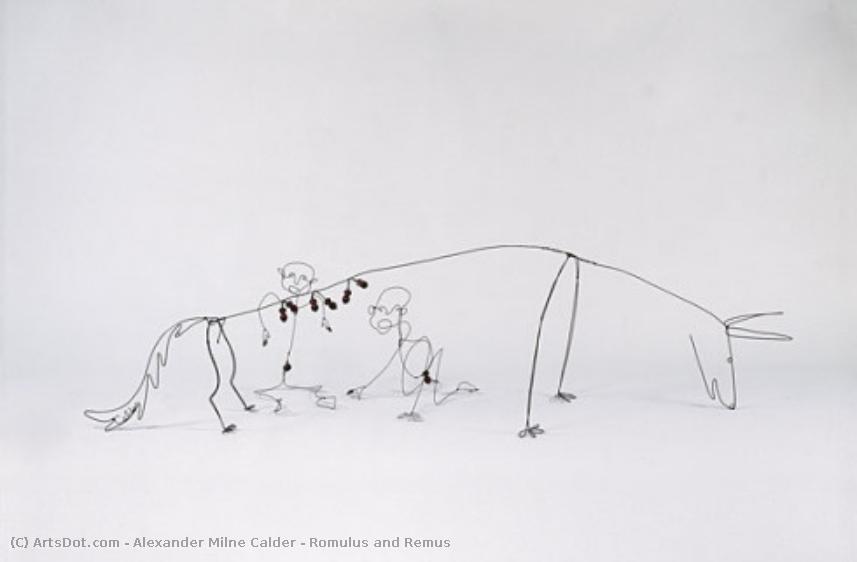
A Moment Frozen in Steel: Exploring Calder’s “Romulus and Remus”
Alexander Milne Calder's "Romulus and Remus," crafted in 1928, isn’t merely a sculpture; it’s a distilled essence of myth rendered in delicate wire. This piece, a testament to the artist’s pioneering approach to three-dimensional form, transcends its subject matter – the legendary founders of Rome – to become a profound meditation on beginnings, brotherhood, and the very act of creation itself. Calder, deeply influenced by Constructivism and early Modernism, sought to liberate sculpture from the constraints of traditional materials, embracing the inherent qualities of industrial wire as both medium and metaphor.
The sculpture’s stark simplicity is its most arresting feature. Two figures, rendered with astonishing grace despite their skeletal construction, stand beneath a subtly arching structure that evokes a horizon line or perhaps a stylized landscape. The color palette – a resolute black and white punctuated by subtle grays – amplifies the work's austerity, forcing the viewer to focus entirely on form and movement. The lines themselves are paramount; thin, almost impossibly delicate wires define every contour, creating an illusion of both fragility and strength. This deliberate reductionist approach mirrors Calder’s broader philosophy: to strip away the superfluous and reveal the fundamental elements of a subject.
The Poetics of Chance and Kinetic Form
Calder's work in this period – particularly his “Cirque Calder” series – exemplifies his fascination with chance and spontaneity. He didn’t meticulously plan every curve or angle; instead, he allowed the wire to guide him, embracing the unpredictable nature of the material. This process is vividly captured in "Romulus and Remus," where the figures appear to be caught mid-action, poised on the precipice of a narrative yet undefined. The slight wobble inherent in the sculpture’s construction – a subtle consequence of its wire composition – hints at a kinetic energy, suggesting that even stillness can hold a dynamic potential.
The technique itself is deceptively complex. Calder skillfully bent and assembled hundreds of individual wires, creating a surprisingly robust structure despite its delicate appearance. The varying thicknesses of the wire contribute to the sculpture’s textural richness, offering subtle shifts in sheen as light catches the metal. This careful manipulation of material speaks to Calder's mastery of his chosen medium – a testament to his ability to transform industrial components into objects of profound beauty and intellectual resonance.
Myth, Brotherhood, and the Dawn of Rome
The subject matter—the story of Romulus and Remus—is deeply rooted in Roman mythology. The legend of the twins suckled by a she-wolf is an enduring symbol of resilience, survival, and the founding of civilization. Calder’s sculpture doesn't simply depict this narrative; it captures its essence – the primal struggle for existence, the bond between brothers, and the birth of a new order. The wire itself can be interpreted as representing the threads that connect us to our past, shaping our present and influencing our future.
Created in 1928, “Romulus and Remus” stands as a pivotal work in Calder’s oeuvre, marking a significant shift towards abstraction while retaining a powerful connection to his artistic roots. It's a sculpture that invites contemplation, prompting viewers to consider the interplay of form, material, and narrative – a timeless meditation on the foundations of human experience.
Otázky a odpovědi
Nachází se dílo „Romulus and Remus“ od Alexander Calder v zemi původu umělce?
Ne – dílo se nachází v zahraničí. Rodimá země Alexander Calder je Skotsko, zatímco muzeum, které uchovává originál díla „Romulus and Remus“, se nachází v zemi Spojené státy americké.
Kdo je autorem díla "Romulus and Remus" a z jakého roku pochází?
Autorem díla „Romulus and Remus“ je Alexander Calder a vzniklo v roce 1928.
Kde mohu najít statistiky k dílu „Romulus and Remus“ od Alexander Calder?
Stránka Statistiky díla „Romulus and Remus“ od Alexander Calder zobrazuje statistiky veřejných návštěv: měsíční návštěvnost tohoto díla, srovnání s nejvíce prohlíženými díly daného umělce a původ jeho návštěvníků.
Biografie umělce
Introduction to Alexander Milne Calder
Alexander Milne Calder (August 23, 1846 – June 14, 1923) was a Scottish-American sculptor renowned for architectural masterpieces like Philadelphia City Hall. His legacy extends beyond his own work, as both his son and grandson became prominent sculptors in the 20th century. Calder’s artistic journey began in Aberdeen, Scotland, where he honed his craft under the tutelage of his father, a stonemason—a profession that instilled in him a lifelong appreciation for material and form. He pursued formal education at the Royal Academy in Edinburgh, immersing himself in classical sculpture traditions before venturing into London's vibrant art scene.- Early Life and Education:
- Born August 23, 1846, Aberdeen, Scotland
- Attended Royal Academy in Edinburgh
- Studied with John Rhind (sculptor)
Career Highlights
Calder’s professional life unfolded during a period of significant artistic innovation. He gained invaluable experience collaborating on monumental sculptures for Philadelphia City Hall—a project that demanded meticulous planning and execution over two decades. This ambitious undertaking cemented his reputation as a visionary architect and sculptor, pushing the boundaries of conventional design. Notably, he created William Penn, a colossal bronze statue commemorating Pennsylvania’s founding father, demonstrating his mastery of large-scale sculptural techniques. Furthermore, Calder's fascination with kinetic art culminated in the creation of *Indian Figure*, a striking sculpture that embodies movement and dynamism—a precursor to his groundbreaking mobiles.- Philadelphia City Hall:
- Commissioned project requiring 250 pieces in marble and bronze
Influence and Legacy
Alexander Stirling Calder (1898–1976), Calder's son, carried forward his father’s artistic spirit, establishing himself as a celebrated sculptor in his own right. Similarly, Alexander “Sandy” Calder—Calder’s grandson—became a respected artist known for his innovative approach to sculpture and installation art. Calder’s influence resonated throughout the 20th century, shaping movements like Abstract Expressionism and inspiring generations of artists to explore new forms of artistic expression. His enduring contribution to modern art is commemorated in museums worldwide, ensuring that Calder's vision continues to captivate audiences and inspire creativity.- Alexander Stirling Calder:
- Sculptor who followed in his father’s footsteps
- Philadelphia City Hall:
- Commissioned project showcasing architectural innovation

Alexander Calder
1898 - 1976 , Skotsko
Stručné informace
- Artistic Movement Or Style: Architectural sculpture
- Artists Who Influenced This Artist: ['John Rhind']
- Date Of Birth: August 23, 1846
- Date Of Death: June 14, 1923
- Full Name: Alexander Milne Calder
- Nationality: Scottish-American
- Notable Artworks:
- Philadelphia City Hall
- William Penn statue
- Place Of Birth: Aberdeen, Scotland