

 Zobrazit v interiéru
 Odeslat
 Sdílet
 Podrobnosti
 Průvodce

 Stáhnout obrázek
 Podobné kousky
 Rentgenové snímky
 Slideshow
 Statistiky
Red Lily Pads (Nénuphars rouges)


 Přečíst si více
Giclée / Umělecký tisk
Giclée nebo plátěný tisk muzeální kvality s rychlou výrobou a širokou nabídkou povrchových úprav. ( Objednat ručně malovanou reprodukci Přepnout na digitální verzi obrazu)




P118B $10

P118H $10

P118W $10

P438Z $10

P508JH $12

P508YH $12

P805H $10

P805Z $10

P919BZ $10

P919G $10

P919XJ $10

P959ZH $10

P968JZ $12

W106C $8

W218G $10

W218JH $8

W218Y $10

W307PJ $10

W316G $10

W316PJ $8

W316Y $10

W398PJ $8

W4111J $10

W500HY $15

W500JH $15

W692G $12

W849H $8

W940BG $15

W953PJ $8




Vyberte si z našich přednastavených velikostí, které odpovídají původním proporcím díla.

Můžete zadat vlastní rozměry tak, aby výtvor odpovídal konkrétnímu rámu nebo prostoru. Pokud zvolená velikost nebude odpovídat poměru stran původního obrazu, dílo buď ořížeme, nebo obraz rozšíříme pomocí zrcadlového efektu či jednobarevného okraje. Před zahájením výroby vám bude zaslán digitální náhled k schválení.
Mějte prosím na paměti, že náhled na obrazovce neodráží skutečné oříznutí nebo rozšíření. Pouze digitální náhled přesně zobrazí finální kompozici.
Ačkoliv jsou k dispozici i vlastní rozměry, pro zachování původních proporcí doporučujeme vybrat si rozměr z předdefinovaného seznamu.
Celosvětové doručení () do 2 týdnů namísto standardních 4/5 týdnů. (25 září)

Zdarma celosvětová expresní doprava

Vysoce kvalitní lněné plátno

Úplné pojištění přepravy

Záruka vrácení celního poplatku

Záruka věrného barevného shodu

100dení lhůta pro vrácení zboží (pouze při vadách výroby)

100% garance vrácení peněz

Sleva při více objednávkách
 Skleněná varianta je dostupná pouze u rozměrů menších než 110 cm

Red Lily Pads (Nénuphars rouges)
Giclée / Umělecký tisk
Velikost reprodukce
-


Celková cena
$ 80
A Dance of Light and Reflection: Unveiling Calder’s “Red Lily Pads”
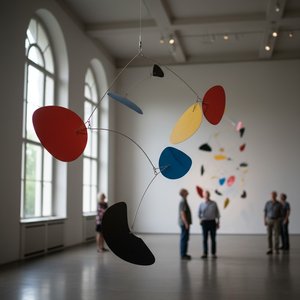
Alexander Milne Calder's "Red Lily Pads (Nénuphars rouges)" isn’t merely a depiction of a serene pond; it’s an invitation to lose oneself in the delicate balance of form, color, and movement. Created in 1956, this captivating sculpture – captured through a masterful photograph – embodies Calder's signature approach: embracing chance and celebrating the ephemeral beauty of nature within a distinctly modern aesthetic. The piece resides within a contemporary architectural space, its organic shapes echoing the curves of the surrounding walls, creating an illusion of seamless integration between art and environment.
The composition immediately draws the eye to the central arrangement of circular lily pads, rendered in a vibrant coral-red that commands attention against the cool neutrality of the white architecture. These aren’t static forms; they possess a subtle dynamism, hinting at an unseen movement – perhaps the gentle sway of water or the whisper of air currents. The delicate wires and rods connecting them are almost invisible, yet crucial to the sculpture's overall effect, suggesting a complex network of support and balance. Calder masterfully utilizes negative space, allowing the surrounding walls to contribute significantly to the artwork’s visual weight and sense of openness.
The Legacy of a Pioneer: Calder and His Architectural Sculptures
To fully appreciate “Red Lily Pads,” it's essential to understand Alexander Milne Calder’s broader artistic trajectory. Born in Aberdeen, Scotland, in 1846, he initially trained as a stonemason before embarking on a career that would ultimately define him as one of the 20th century’s most innovative sculptors. His early work focused on monumental commissions for public buildings, notably his groundbreaking design for Philadelphia City Hall – a project that spanned two decades and involved over 250 individual sculptures. This experience profoundly shaped Calder's approach to architectural sculpture, instilling in him a deep appreciation for the interplay between form, space, and function.
Calder’s fascination with movement is evident throughout his oeuvre, but it’s perhaps most powerfully expressed in his mobiles – kinetic sculptures that respond to air currents. “Red Lily Pads” represents a shift towards a more static form while retaining this core principle of dynamic balance. The photograph captures a fleeting moment of equilibrium, suggesting the constant negotiation between stability and motion that characterizes Calder's work.
Symbolism and Emotional Resonance
The lily pad itself is a potent symbol – representing tranquility, purity, and rebirth. In this context, however, Calder subverts traditional associations, transforming these symbols into an abstract meditation on form and color. The red hue adds a layer of intensity, evoking feelings of passion, energy, and perhaps even a hint of melancholy. The surrounding white walls create a sense of serenity and contemplation, inviting the viewer to lose themselves in the sculpture’s visual rhythm.
Ultimately, “Red Lily Pads” is more than just a beautiful image; it's an invitation to experience the world through Calder’s unique lens. It speaks to our innate desire for balance, harmony, and connection with nature – qualities that resonate deeply in today’s increasingly complex and chaotic environment.
Biografie umělce
Introduction to Alexander Milne Calder
Alexander Milne Calder (August 23, 1846 – June 14, 1923) was a Scottish-American sculptor renowned for architectural masterpieces like Philadelphia City Hall. His legacy extends beyond his own work, as both his son and grandson became prominent sculptors in the 20th century. Calder’s artistic journey began in Aberdeen, Scotland, where he honed his craft under the tutelage of his father, a stonemason—a profession that instilled in him a lifelong appreciation for material and form. He pursued formal education at the Royal Academy in Edinburgh, immersing himself in classical sculpture traditions before venturing into London's vibrant art scene.- Early Life and Education:
- Born August 23, 1846, Aberdeen, Scotland
- Attended Royal Academy in Edinburgh
- Studied with John Rhind (sculptor)
Career Highlights
Calder’s professional life unfolded during a period of significant artistic innovation. He gained invaluable experience collaborating on monumental sculptures for Philadelphia City Hall—a project that demanded meticulous planning and execution over two decades. This ambitious undertaking cemented his reputation as a visionary architect and sculptor, pushing the boundaries of conventional design. Notably, he created William Penn, a colossal bronze statue commemorating Pennsylvania’s founding father, demonstrating his mastery of large-scale sculptural techniques. Furthermore, Calder's fascination with kinetic art culminated in the creation of *Indian Figure*, a striking sculpture that embodies movement and dynamism—a precursor to his groundbreaking mobiles.- Philadelphia City Hall:
- Commissioned project requiring 250 pieces in marble and bronze
Influence and Legacy
Alexander Stirling Calder (1898–1976), Calder's son, carried forward his father’s artistic spirit, establishing himself as a celebrated sculptor in his own right. Similarly, Alexander “Sandy” Calder—Calder’s grandson—became a respected artist known for his innovative approach to sculpture and installation art. Calder’s influence resonated throughout the 20th century, shaping movements like Abstract Expressionism and inspiring generations of artists to explore new forms of artistic expression. His enduring contribution to modern art is commemorated in museums worldwide, ensuring that Calder's vision continues to captivate audiences and inspire creativity.- Alexander Stirling Calder:
- Sculptor who followed in his father’s footsteps
- Philadelphia City Hall:
- Commissioned project showcasing architectural innovation

Alexander Calder
1898 - 1976 , Skotsko
Rychlé informace
- Artistic Movement Or Style: Architectural sculpture
- Artists Who Influenced This Artist: ['John Rhind']
- Date Of Birth: August 23, 1846
- Date Of Death: June 14, 1923
- Full Name: Alexander Milne Calder
- Nationality: Scottish-American
- Notable Artworks:
- Philadelphia City Hall
- William Penn statue
- Place Of Birth: Aberdeen, Scotland
Související články

The Enduring Form: Exploring Themes & Techniques in Sculpture Across Historical Periods
Explore the rich history of sculpture from ancient masterpieces to contemporary innovations. Discover key techniques, influential artists & investment potential for discerning art collectors.

10 legendárních bronzových soch, které změnily umění | OriginalUniqueArt
Objevte 10 legendárních bronzových soch od Michelangela, Rodina a dalších mistrů! Ponořte se do historie umění, technik a příběhů za těmito nadčasovými díly. Najděte inspiraci pro váš interiér s OriginalUniqueArt.com – repliky nejvyšší kvality.

Wassily Kandinsky: Top 25 mistrovských děl abstrakce pro váš interiér | OriginalUniqueArt.com
Prozkoumejte 25 ikonických děl Wassily Kandinského – průkopníka abstraktního umění a expresionismu. Objevte příběhy za barevnými kompozicemi, Bauhaus styl a inspirujte se pro váš interiér s reprodukcemi nejvyšší kvality na OriginalUniqueArt.com.
Alexander Calder: Kinetic Sculpture, Mobile Art & the Poetics of Chance
Explore the revolutionary world of Alexander Calder's kinetic sculptures & mobiles. Discover insights for collectors, acquisition advice, and the enduring legacy of this modern master. Expert analysis & art valuation.

Top 10 mistrovských děl abstraktního expresionismu | Umění a dekorace s OriginalUniqueArt.com
Prozkoumejte 10 ikonických děl abstraktního expresionismu od Pollocka, Rothka a dalších. Objevte příběhy za obrazy, techniky a barevné palety tohoto revolučního uměleckého hnutí. Reprodukce obrazů s OriginalUniqueArt.com – luxusní dekorace pro váš interiér. Prozkoumejte celou kolekci online!
