
 Sdílet
 Sdílet
 Podrobnosti o díle
 Průvodce

 Stáhnout
 Podobné položky
 Slideshow
 Otázky a odpovědi
 Statistiky
Lovers

- 36.0 x 40.0 cm


 Zobrazit více
Giclée / Umělecký tisk
Giclée nebo plátěný tisk muzeální kvality s rychlou výrobou a širokou nabídkou povrchových úprav. ( Koupit ručně malovaný obraz Přepnout na digitální obraz)




































Vyberte si z našich přednastavených velikostí, které odpovídají původním proporcím díla.

Zadejte šířku a výšku, které potřebujete pro váš rám nebo stěnu. Tisk lze pouze oříznout, nikdy však nelze zvětšit obraz nad jeho původní rozměr, proto při výběru jiného formátu dochází ke ztrátě části obrazu. Před samotným tiskem vám zašleme digitální náhled k schválení. Obraz zobrazený na této stránce nenabízí skutečný výřez — ten uvidíte pouze v náhledu.
Celosvětové doručení () do 2 týdnů namísto standardních 4/5 týdnů. (10 listopad)

Zdarma celosvětová expresní doprava

Vysoce kvalitní lněné plátno

Kompletní pojištění přepravy

Záruka vrácení celního poplatku

Záruka věrného barevného souladu

100dení lhůta pro vrácení zboží (pouze při vadách výroby)

100% záruka vrácení peněz

Sleva při více objednávkách
 Skleněná varianta je dostupná pouze u rozměrů menších než 110 cm

Lovers
Giclée / Umělecký tisk
Rozměry reprodukce
-


Celková cena za vybrané možnosti reprodukcí
Kč 1763
A Tender Encounter in the Heart of the Danube School
In the quiet intimacy of Albrecht Altdorfer’s Lovers, painted around 1530, we are invited into a private moment that transcends the centuries. This masterpiece of the Northern Renaissance does not rely on grand, sweeping landscapes to command attention; instead, it finds its power in the subtle, magnetic pull between two souls. The painting captures a man and a woman caught in a delicate dance of connection, their presence nestled within the verdant embrace of a dense forest. As they stand close, engaged in an intimate moment, the viewer is drawn into a world where human emotion and the natural environment are inextricably linked.
Housed in the Budapest Museum of Fine Arts, this fresco fragment serves as a profound emblem of the Danube School—an artistic movement that revolutionized landscape painting. Altdorfer, a pioneer of this era, moved away from the flat, stylized backgrounds of previous Byzantine conventions to embrace a technique defined by meticulous observation. He painstakingly rendered the textures of foliage, bark, and stone, capturing not just the physical reality of the forest, but the way light dances across every surface. This mastery of atmospheric perspective creates a sense of depth that makes the scene feel alive, breathing with a quiet, spiritual significance.
Symbolism and the Eternal Strength of Nature
Beyond its immediate romantic appeal, Lovers is laden with symbolic resonance rooted in medieval tradition. The composition uses the surrounding landscape to mirror the internal state of the subjects. The towering trees, rendered with Altdorfer's signature attention to detail, represent strength and resilience—symbols deeply ingrained in Christian iconography that suggest the enduring power of love. As the dappled sunlight filters through the thick canopy, it evokes biblical references to divine illumination, hinting at a transformative grace descending upon this earthly union.
For the discerning collector or interior designer, this piece offers more than mere decoration; it provides a window into a meditative state. The interplay of light and shadow creates a rhythmic, almost musical quality that can bring a sense of profound serenity to any space. Whether viewed as a study in Renaissance technique or as a poetic tribute to intimacy, the artwork possesses a monumental impact that belies its modest dimensions of 36 x 40 cm.
An Inspiration for Modern Interiors
Integrating a high-quality reproduction of Altdorfer’s work into a contemporary setting allows for a sophisticated dialogue between history and modern aesthetics. The organic textures and earthy color harmonies found in the Danube School style complement a wide array of decor, from classical European estates to minimalist modern apartments. The painting's ability to evoke wonder and contemplation makes it an ideal focal point for rooms designed for reflection, such as libraries, study alcoves, or quiet sitting rooms.
Owning a piece that captures such a delicate balance of realism and expressive impulse is a rare opportunity. It allows the inhabitant of a space to surround themselves with the legacy of the Northern Renaissance—a period where the landscape first became an independent subject, capable of expressing the deepest nuances of the human spirit.
Otázky a odpovědi
Je u díla „Lovers“ od Albrecht Altdorfer povoleno vytvářet reprodukce z důvodu autorského práva?
Originál díla „Lovers“ se nachází v instituci Szépművészeti Múzeum a toto dílo je v rámci volného užití – autorská práva vypršela.
K jaké fázi kariéry Albrecht Altdorfer odpovídá datum vzniku díla „Lovers“ z roku 1530?
Vzhledem k datování z roku 1530 spadá dílo „Lovers“ do Mature Period umělce Albrecht Altdorfer.
Patří dílo „Lovers“ mezi slavná děl směru German Renaissance Landscape Painting?
Dílo „Lovers“ od Albrecht Altdorfer je klasifikováno jako Iconic a patří k享有 směru German Renaissance Landscape Painting.
Biografie umělce
Albrecht Altdorfer: A Pioneer of German Renaissance Landscape
Albrecht Altdorfer, born around 1480 in the vibrant city of Altdorf bei Nürnberg – later known as Regensburg – stands as a truly remarkable figure bridging the late Gothic and burgeoning German Renaissance. He wasn’t merely an artist *of* his time; he fundamentally reshaped its artistic trajectory, most notably through his revolutionary approach to landscape painting. Emerging from a family steeped in artistic tradition—his father, Ulrich Altdorfer, was himself a painter and miniaturist—Altdorfer quickly distinguished himself not as a follower of established styles, but as an independent innovator, forging a path uniquely his own. Regensburg, strategically positioned on the banks of the Danube River, provided him with a stimulating environment – a crossroads of trade, culture, and artistic exchange – that profoundly shaped his sensibilities and fueled his creative vision. Beyond his artistic pursuits, Altdorfer was a man deeply involved in civic life, serving as both town architect and a respected member of the city council; this multifaceted role reflected his versatility and engagement with the world around him. His legacy rests not just on the beauty of his paintings, but on the seismic shift he instigated within the very concept of landscape representation.The Danube School and a Revolutionary Vision
Altdorfer’s place in art history is inextricably linked to the Danube School, an influential group of artists active primarily during the early 16th century in southern Germany. This collective shared a profound fascination with exploring the expressive potential of landscape, elevating it from its traditional role as mere background or setting to become a subject worthy of independent contemplation and artistic treatment. Prior to Altdorfer’s arrival on the scene, landscapes were largely relegated to serving as props within religious narratives or historical scenes – providing context rather than demanding attention. Altdorfer dared to challenge this convention, asserting that nature itself possessed intrinsic value and could be depicted with emotional depth and significance. A pivotal moment in his artistic development occurred around 1511 when he embarked on a transformative journey down the Danube River and into the rugged peaks of the Alps. The dramatic vistas – the towering mountains, the dense forests, the swirling mists – ignited within him an intense passion for capturing the *experience* of being immersed in these landscapes, not simply their visual appearance. This marked a decisive break from traditional approaches; Altdorfer became, arguably, one of the first true landscape painters, prioritizing the conveyance of feeling and atmosphere over strict topographical accuracy. His work, exemplified by pieces like “The Large Spruce,” demonstrates this shift – offering a serene and intricately detailed depiction of nature’s beauty imbued with an almost palpable sense of tranquility.Masterpieces and Artistic Influences
Throughout his career, Altdorfer produced a remarkably diverse body of work encompassing paintings, engravings, drawings, and architectural designs. Among the most celebrated achievements of his oeuvre is *The Battle of Alexander at Issus* (1529), commissioned by Duke William IV of Bavaria – a monumental painting that showcases not only his exceptional technical skill and compositional mastery but also his innovative use of landscape to heighten the dramatic tension of the battle itself. The swirling clouds, jagged mountain ranges, and chaotic melee of soldiers create an overwhelming sense of energy and spectacle, drawing the viewer directly into the heart of the conflict. His collaboration with Emperor Maximilian I in Innsbruck from 1513 further broadened his artistic horizons, providing opportunities to undertake large-scale projects that showcased his versatility and ambition. Altdorfer’s artistic style wasn't born in a vacuum; he was deeply influenced by a confluence of artistic currents. The poetic lyricism of Italian Renaissance masters like Giorgione, the expressive figures of Lucas Cranach the Elder, and the meticulous detail evident in the works of Albrecht Dürer all left their indelible mark on his art. However, Altdorfer skillfully synthesized these diverse influences into a uniquely personal vision – characterized by its intense emotionality, dramatic use of light and shadow, and evocative depictions of nature. His engravings, such as “Mucius Scaevola Burning His Hand,” demonstrate his exceptional skill in this medium, revealing delicate lines and intricate details that convey a sense of movement and drama.Legacy and Lasting Impact
Albrecht Altdorfer’s artistic legacy extends far beyond the 55 panels, 120 drawings, and numerous engravings he created during his lifetime. He fundamentally altered the way artists approached landscape painting, paving the way for future generations to explore its expressive possibilities. His influence can be seen in the works of later German Romantic painters who similarly sought to capture the sublime beauty and emotional power of nature. Today, Altdorfer’s art is proudly displayed in major museum collections across Europe – including the Museum Ostdeutsche Galerie in Germany (where his *Madonna (Beautiful Maria of Regensburg)* resides) and the Kunstsammlungen und Museen Augsburg in Austria – ensuring that his groundbreaking contributions to the history of art continue to be appreciated and studied. His innovative spirit, technical skill, and profound connection to the natural world cemented his position as a towering figure of the German Renaissance—a true pioneer who dared to see landscape not merely as scenery but as a powerful force capable of evoking deep emotion and spiritual meaning. His work stands as a testament to the enduring power of art to transform our perception of the world around us, a legacy that resonates powerfully with audiences even centuries after his death in 1538.Exploring Altdorfer’s Diverse Works
Beyond his iconic landscapes and battle scenes, Altdorfer's artistic range encompassed religious subjects, mythological narratives, and even architectural designs. His depictions of biblical stories, such as “Abraham’s Sacrifice,” are imbued with a dramatic intensity and emotional depth that set them apart from earlier interpretations. He wasn’t simply illustrating scripture; he was exploring the human condition through the lens of faith. His works often featured intimate scenes of religious figures – Christ taking leave of his mother, for example – conveying profound emotions and spiritual contemplation. His engravings frequently depicted mythological subjects, showcasing his ability to combine classical themes with a distinctly German sensibility. Furthermore, as town architect of Regensburg, Altdorfer contributed significantly to the city’s fortifications and urban planning, demonstrating his versatility and engagement with practical matters alongside his artistic pursuits. His ability to seamlessly blend technical skill with emotional depth solidified his position as a leading artist of the Renaissance. Altdorfer's work continues to be studied and admired for its innovative approach to landscape painting and its profound exploration of human emotion.
Albrecht Altdorfer
1480 - 1538 , Německo
Rychlé informace o umělci
- Artistic Movement Or Style: Podunajská škola
- Artists Or Movements Influenced By This Artist: ['Německý romantismus']
- Artists Who Influenced This Artist:
- Albrecht Dürer
- Lucas Cranach
- Date Of Birth: c. 1480
- Date Of Death: 1538
- Full Name: Albrecht Altdorfer
- Nationality: Německý
- Notable Artworks:
- Bitva u Alex.
- Velký smrk
- Sv. Jiří
- Place Of Birth: Regensburg, Německo
Související články

Giclée Prints: Archival Quality & Aesthetic Nuances for the Discerning Collector
Explore the world of giclée prints with OriginalUniqueArt. Learn about archival quality, aesthetic nuances & investment potential. Expert guidance for discerning art collectors seeking museum-quality reproductions and lasting value.

Katsushika Hokusai: 25 mistrovských děl japonského umění pro váš interiér | OriginalUniqueArt.com
Prozkoumejte 25 ikonických děl japonského mistra Katsushiky Hokusaiho! Objevte příběhy za Velkou vlnou, 36 pohledů na horu Fuji a další ukiyo-e tisků. Kvalitní reprodukce obrazů pro váš interiér na OriginalUniqueArt.com.

Evoking Nature's Sublime: A Comprehensive Exploration of 19th-Century Landscape Painting
Explore the captivating world of 19th-century landscape painting! Discover renowned artists like Friedrich & Monet, key movements, and find the perfect artwork to bring nature's serenity into your home. Expert insights at OriginalUniqueArt.
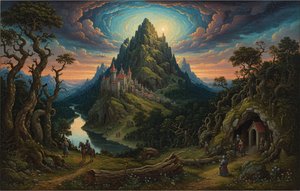
Albrecht Altdorfer: Innovation, Spirituality & the Northern Renaissance Landscape
Explore the groundbreaking art of Albrecht Altdorfer, a pioneer of the Northern Renaissance's Danube School. Discover his innovative landscapes, spiritual symbolism & lasting influence on German painting.

Romantická krajina v malbě: 10 mistrovských děl, které definovaly umělecký proud | OriginalUniqueArt
Prozkoumejte 10 ikonických děl romantické krajinářské malby! Objevte příběhy Caspara Davida Friedricha, Turnera a dalších mistrů. Reprodukce obrazů nejvyšší kvality pro váš interiér na OriginalUniqueArt.com.


