
 Náhled v interiéru
 Sdílet
 Sdílet
 Podrobnosti o díle
 Průvodce

 Stáhnout
 Podobné položky
 Rentgenové snímky
 Slideshow
 Otázky a odpovědi
 Statistiky
Memory of Leonski

- 61.0 x 78.0 cm


 Zobrazit více
Umělecké dílo zobrazené na této stránce je chráněno autorským zákonem, což znamená, že nemůžeme legálně vytvářet ani prodávat jeho identickou reprodukci. Tato ochrana je vymáhána na základě mezinárodních dohod, jako například Berberská úmluva a národními zákony, včetně těch stanovených v Americký autorský zákon – Díl 17. Všechna práva vyhrazena.
Tato metoda je plně v souladu s autorským právem, protože nezahrnuje kopírování ani duplikování chráněného díla. Jde o kreativní reinterpretaci – nový obraz, který je inspirován originálem, ale není s ním identický.
Giclée / Umělecký tisk
Giclée nebo plátěný tisk muzeální kvality s rychlou výrobou a širokou nabídkou povrchových úprav. ( Koupit ručně malovaný obraz Přepnout na digitální obraz)




P118B Kč10

P118H Kč10

P118W Kč10

P438Z Kč10

P508JH Kč12

P508YH Kč12

P805H Kč10

P805Z Kč10

P919BZ Kč10

P919G Kč10

P919XJ Kč10

P959ZH Kč10

P968JZ Kč12

W106C Kč8

W218G Kč10

W218JH Kč8

W218Y Kč10

W307PJ Kč10

W316G Kč10

W316PJ Kč8

W316Y Kč10

W398PJ Kč8

W4111J Kč10

W500HY Kč15

W500JH Kč15

W692G Kč12

W849H Kč8

W940BG Kč15

W953PJ Kč8




Vyberte si z našich přednastavených velikostí, které odpovídají původním proporcím díla.

Zadejte šířku a výšku, které potřebujete pro váš rám nebo stěnu. Tisk lze pouze oříznout, nikdy však nelze zvětšit obraz nad jeho původní rozměr, proto při výběru jiného formátu dochází ke ztrátě části obrazu. Před samotným tiskem vám zašleme digitální náhled k schválení. Obraz zobrazený na této stránce nenabízí skutečný výřez — ten uvidíte pouze v náhledu.
Celosvětové doručení () do 2 týdnů namísto standardních 4/5 týdnů. (6 listopad)

Zdarma celosvětová expresní doprava

Vysoce kvalitní lněné plátno

Kompletní pojištění přepravy

Záruka vrácení celního poplatku

Záruka věrného barevného souladu

100dení lhůta pro vrácení zboží (pouze při vadách výroby)

100% záruka vrácení peněz

Sleva při více objednávkách
 Skleněná varianta je dostupná pouze u rozměrů menších než 110 cm

Memory of Leonski
Giclée / Umělecký tisk
Rozměry reprodukce
-


Celková cena za vybrané možnosti reprodukcí
Kč 1765
A Deserted Shoreline and the Echoes of War
Albert Tucker’s “Memory of Leonski,” painted in 1943, isn't merely a depiction of a beach; it’s a haunting meditation on isolation, morality, and the lingering trauma of World War II. The painting immediately arrests the eye with its stark contrasts – the sun-bleached sand, the deep indigo of the sky, and the solitary figure of Private Edward Leonski sprawled across the shore. Leonski, rendered in a deliberately simplified, almost childlike style, is not presented as a heroic soldier but as a vulnerable, exposed individual, his arms outstretched as if offering an apology or seeking solace. The umbrella he clutches isn’t a symbol of protection from the elements, but rather a fragile shield against an unseen threat – perhaps the memories of violence he carries within him.
The Expressionist Palette and the Melbourne Landscape
Tucker’s distinctive style, rooted in Expressionism and influenced by artists like Van Gogh and Gauguin, is powerfully evident in “Memory of Leonski.” He employs a flattened perspective and bold, gestural brushstrokes to convey a sense of immediacy and emotional intensity. The colors are deliberately muted – ochres, browns, and blues dominate the palette – reflecting the bleakness of wartime Melbourne and the psychological landscape of the subject. The painting’s composition is carefully constructed; the diagonal lines created by Leonski's body and the horizon draw the viewer’s eye into the scene, intensifying the feeling of solitude and vulnerability. The two birds in flight, rendered with a surprising degree of detail amidst the otherwise simplified forms, could be interpreted as symbols of freedom or perhaps simply reminders of a world beyond the immediate crisis.
A Shadowed History: Edward Leonski’s Story
The painting's genesis is inextricably linked to a dark chapter in Melbourne’s history. Private Edward Leonski was an American GI who, in 1942, assaulted and murdered three women – a shocking event that gripped the city with fear and uncertainty. The details of this crime remain largely shrouded in mystery, but Tucker’s painting serves as a poignant memorial to the victims and a stark reminder of the violence that permeated wartime society. The title itself, “Memory of Leonski,” suggests an attempt to grapple with the unsettling legacy of these events, to hold them within the artist's consciousness and translate them into visual form. The Google Arts & Culture entry provides further context, revealing the chilling details of Leonski’s actions and the public’s reaction to them.
Symbolism and Emotional Resonance
Beyond its historical context, “Memory of Leonski” resonates with universal themes of alienation, guilt, and the struggle for redemption. Leonski's nakedness is not presented as erotic but rather as a symbol of vulnerability and exposure – he’s stripped bare, both physically and emotionally. The umbrella, a small gesture against an overwhelming force, speaks to the human desire for protection and control in the face of chaos. The painting evokes a profound sense of melancholy and unease, prompting viewers to contemplate the psychological toll of war and the enduring consequences of violence. It’s a powerful work that lingers long after it has been viewed, inviting repeated contemplation and offering no easy answers.
Otázky a odpovědi
Kde by měla být zavěšena reprodukce díla „Memory of Leonski“ od Albert Tucker?
Dílo v Landscape formátu, reprodukce díla „Memory of Leonski“, se doporučuje do Living Room.
Jakou atmosféru vyzařuje dílo "Memory of Leonski"?
Dílo „Memory of Leonski“ od Albert Tucker je v náladě popsáno jako Calm. Tato klasifikace může pomoci při zařazení díla do konkrétního prostředí.
Jak světlý je celkově obraz "Memory of Leonski"?
Z hlediska vnímané jasnosti je dílo „Memory of Leonski“ od Albert Tucker balanced.
Biografie umělce
Albert Tucker: A Life Bridging Mathematics and Art
- Born: Oshawa, Canada (1905)
- Died: 1995
Albert William Tucker was a remarkable figure whose life defied easy categorization. While primarily recognized as a distinguished Canadian mathematician, his legacy extends into the realm of art and intellectual history. He is celebrated for significant contributions to topology, game theory (particularly for popularizing the "Prisoner's Dilemma"), and non-linear programming, while also leaving behind a body of artistic work that reflects themes of alienation, morality, and social commentary.
Early Life and Education: A Foundation in Mathematics
Tucker’s journey began in Oshawa, Ontario. His upbringing emphasized education, fostering an early aptitude for mathematics. He pursued his undergraduate studies at the University of Toronto, earning a B.A. in 1928 and an M.A. in 1929. His pursuit of advanced knowledge led him to Princeton University where he earned his Ph.D. under the guidance of Solomon Lefschetz in 1932 with a dissertation titled *An Abstract Approach to Manifolds*. This period laid the groundwork for his future contributions, establishing a strong foundation in abstract mathematics.
Mathematical Contributions and Legacy
- The Prisoner's Dilemma: Tucker is widely known for giving name and interpretation to Merrill M. Flood and Melvin Dresher’s model of cooperation and conflict, solidifying its place as a cornerstone of game theory.
- Karush-Kuhn-Tucker Conditions: His work on the Karush-Kuhn-Tucker conditions significantly advanced non-linear programming.
- Mathematical Education: Tucker was deeply committed to mathematics education, serving as chair of the AP Calculus committee for the College Board (1960-1963) and actively participating with the Committee on the Undergraduate Program in Mathematics (CUPM). He also served as president of the Mathematical Association of America (MAA) from 1961-1962.
- Mentorship: Tucker’s influence extended through his mentorship of numerous prominent figures, including Nobel Prize winners John Nash and Lloyd Shapley, and Turing Award winner Marvin Minsky. His collaborations with Harold W. Kuhn further enriched the mathematical landscape.
Tucker's legacy is not solely confined to his direct contributions; it also encompasses his role as a vital source for oral histories within the mathematics community, solidifying his position as a respected and influential figure.
Artistic Expression: Themes of Isolation and Social Commentary
While primarily known for his mathematical achievements, Tucker was also an artist. His paintings, often characterized by expressive figurative styles, explored themes of alienation, morality, and the complexities of human existence. His artistic output reflects a keen observation of social issues and wartime experiences, offering poignant commentary on the human condition.
- Style: Expressionism
- Recurring Themes: Isolation, contemplation, moral dilemmas, depictions of city life, wartime experiences.
Notable artworks such as "Philosopher" exemplify his ability to convey profound emotions through bold lines, dramatic lighting, and a rich color palette. His artistic vision provides another layer to understanding the multifaceted nature of Albert Tucker's intellectual pursuits.

Albert Tucker
1905 - 1995 , Canada
Rychlé informace o umělci
- Full Name: Albert William Tucker
- Nationality: Canadian
- Date Of Birth: 1905
- Date Of Death: 1995
- Place Of Birth: Oshawa, Canada
- Notable Artworks:
- Philosopher
- Memory of Leonski
- Artistic Movement Or Style: Expressionism
Související články
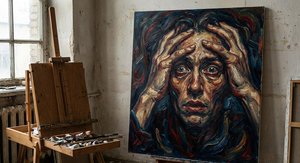
Figurative Expressionism: Emotional Intensity & Subjective Reality in 20th-Century Art
Explore the powerful world of Figurative Expressionism with OriginalUniqueArt. Discover key artists like Kirchner & Beckmann, understand its emotional depth, and learn how to collect this influential 20th-century art movement.

Albert Kretschmer: Capturing 19th-Century Costume & the Seeds of Expressionism
Explore the exquisite costume studies of Albert Kretschmer (1825-1891). Discover his detailed illustrations, influence on art history & connection to early Expressionism. Learn about collecting this remarkable artist's work.

Echoes of Experience: Exploring Representations of Memory in Visual Art
Explore the captivating world of memory in art history! Discover how artists from Rossetti to Hockney evoke emotion & reclaim personal narratives through powerful visual storytelling. Expert insights at OriginalUniqueArt.

Penny Diane Wolin: Navigating Memory, Identity & Place Through Abstract Expressionism
Explore the profound work of Penny Diane Wolin, a master of abstract expressionism & documentary photography. Discover her explorations of memory, identity, and cultural heritage – a compelling investment for discerning art collectors.
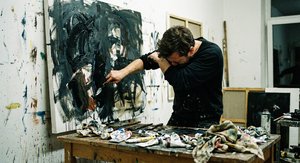
The Raw Emotion of Expressionism: A Deep Dive into its History, Characteristics & Enduring Influence
Explore the raw emotion of Expressionism with OriginalUniqueArt. Discover its history, key artists like Kirchner & Munch, and lasting influence on modern art. Expert insights for collectors & enthusiasts.