

 Преглед в реален мащаб
 Сподели
 Сподели
 Подробности
 Ръководство

 Изтегляне
 Подобни артикули
 Рентгенова снимка
 Слайдшоу
 Статистика
Еуле ам Граб
 Акрил върху платно
- Стени и декорация
- Romanticism
 1837
1837 25.0 x 22.0 cm
 Разгърни целия текст
Ръчно изработена маслена репродукция
Ръчно рисувана маслена картина върху платно във вашия размер и рамка, изработена по поръчка от нашите художници. ( Избор на принт Превключване към дигитално изображение)




P118B $10

P118H $10

P118W $10

P438Z $10

P508JH $12

P508YH $12

P805H $10

P805Z $10

P919BZ $10

P919G $10

P919XJ $10

P959ZH $10

P968JZ $12

W106C $8

W218G $10

W218JH $8

W218Y $10

W307PJ $10

W316G $10

W316PJ $8

W316Y $10

W398PJ $8

W4111J $10

W500HY $15

W500JH $15

W692G $12

W849H $8

W940BG $15

W953PJ $8




Изберете от нашите предварително зададени размери, които съответстват на оригиналните пропорции на произведението.

Можете да въведете свои собствени размери, за да паснат на конкретна рамка или пространство. Ако избраният от вас размер не съответства на пропорциите на оригиналното изображение, ние ще изрежем произведението или ще разширим картината с допълнителни ръчно рисувани елементи. Дигитален макет ще бъде изпратен за ваше одобрение преди започване на производството.
Моля, обърнете внимание, че предпрогледа на екрана не отразява действителното изрязване или разширяване. Само макетът ще покаже точно финалната композиция.
Въпреки че са налични персонализирани размери, препоръчваме да изберете размер от предварително дефинирания списък, за да запазите оригиналните пропорции.
След получаване на поръчка, екипът на OriginalUniqueArt.com ще изпрати имейл до клиента с инструкции и ще предостави примерен макет за преглед.
Доставка по целия свят () в рамките на 3-4 седмици вместо стандартните 5 седмици. (25 Септември). Без компромис с качеството.

Безплатна експресна доставка по целия свят

Висококачествено ленено платно

Пълно застраховане на доставката

Гаранция за възстановяване на митнически такси

Гаранция за пълно съответствие на цветовете

Политика за връщане в рамките на 100 дни (само при дефекти)

100% Гаранция за връщане на сумата

Отстъпка при поръчка на повече произведения
 Опцията със стъкло е налична само за размери под 110 см

Еуле ам Граб
Техника на репродукция
Размер на репродукцията
-


Крайна цена
$ 300
Owl on a Grave: A Meditation on Mortality in Romantic Landscape
Caspar David Friedrich, a titan of German Romanticism, stands as an unparalleled interpreter of the sublime—that profound feeling of awe and terror inspired by nature—a sensation championed by thinkers like Edmund Burke and Coleridge. Among his enduring masterpieces, Owl on a Grave (1837) transcends mere visual representation to embody the core tenets of this influential artistic movement. This painting isn’t simply depicting a scene; it's inviting contemplation about life’s ephemeral nature and humanity’s relationship with eternity—a preoccupation that resonated deeply within the intellectual climate of Friedrich’s time.Composition and Symbolism: The Language of Silence
Friedrich meticulously crafted Owl on a Grave’s composition to maximize its expressive power. Dominating the canvas is an owl perched atop a weathered wooden post or grave marker—a deliberate choice reflecting the pervasive preoccupation with death and decay within Romantic thought. The owl's downward gaze establishes a palpable atmosphere of introspection, prompting viewers to confront existential questions about mortality and acceptance. Complementing this central figure are subtle additions: another bird nestled in the upper left corner – likely symbolizing vigilance and perhaps mirroring the owl’s solemn posture – and a solitary flower positioned on the right side, injecting a touch of fragile beauty into the otherwise austere landscape. The owl itself carries profound symbolic weight, representing wisdom, death, and the afterlife—themes central to Romantic spirituality. Similarly, the grave marker serves as a poignant reminder of mortality, grounding the viewer in the inescapable reality of human existence.Artistic Style and Technique: Gothic Influence Meets Pencil Precision
Friedrich’s artistic style is characterized by its embrace of gothic elements – particularly the dramatic interplay of light and shadow – to evoke feelings of melancholy and spiritual contemplation. He skillfully employs pencil as his medium, achieving remarkable detail and textural nuance—a technique that distinguishes it from earlier neoclassical styles. This meticulous approach allows him to capture the subtle nuances of atmospheric perspective, conveying a sense of depth and realism that underscores the painting’s contemplative character. Unlike many Romantic painters who favored bold brushstrokes and vibrant colors, Friedrich prioritized tonal gradation, creating a visual harmony that reinforces the painting’s solemn mood—a deliberate stylistic choice mirroring the aesthetic sensibilities of artists like Turner and Constable. The muted palette—primarily browns, greys, and ochres—further enhances this effect, conveying a sense of quiet dignity and spiritual seriousness.Context and Significance: Friedrich’s Vision of Humanity’s Place in Nature
Friedrich's artistic endeavors were deeply rooted in the intellectual currents of his time—specifically the burgeoning Romantic movement’s rejection of Enlightenment rationalism in favor of emotion and intuition. He championed the notion that art should inspire awe and reverence for the natural world—a perspective that anticipated the broader cultural shift toward valuing experience over dogma. Like Turner and Constable before him, Friedrich sought to capture not merely what he saw but how it *felt*. His paintings frequently featured solitary figures dwarfed by expansive landscapes—a deliberate strategy designed to convey the insignificance of human existence against the backdrop of cosmic grandeur—a visual motif powerfully communicating the Romantic preoccupation with confronting mortality and contemplating the sublime. This experience, as described by philosophers like Kant, transcends mere sensory perception, accessing a realm of moral understanding and spiritual insight.Preservation and Display: A Testament to Artistic Legacy
The original Owl on a Grave resides within the Pomerania State Museum, Greifswald, Germany—a repository of art and cultural heritage that houses over 14,000 years of Pomeranian history. The museum’s architectural ensemble—characterized by its harmonious blend of Gothic and neo-classical styles—provides an ideal setting for appreciating Friedrich’s masterpiece alongside other significant artworks from the Romantic era—a testament to the enduring power of artistic vision across generations. Its careful curation ensures that future visitors can experience the profound beauty and intellectual depth of this iconic painting, fostering a deeper appreciation for Friedrich's contribution to European art history.- Winter landscape by Caspar David Friedrich
- Biography of Caspar David Friedrich
Биография на художника
A Solitary Vision: The Life and Art of Caspar David Friedrich
Born in the Baltic port city of Greifswald in 1774, Caspar David Friedrich’s life was steeped in a melancholic atmosphere that would profoundly shape his artistic vision. His early years were marked by loss – the deaths of his mother and siblings cast a long shadow, fostering a sensitivity to mortality and transience that became central themes in his work. Initially educated by his older brother Christian in drawing, Friedrich’s formal training began at the University of Leipzig, where he pursued both art and theology, though neither degree was completed. This dual interest – a fascination with the visual world alongside a deep spiritual questioning – would prove crucial to his development as an artist. He sought not merely to depict landscapes but to convey inner emotional states through their evocative beauty—a radical departure from prevailing artistic conventions of his time.Early Influences and Artistic Training
Friedrich’s formative years were shaped by exposure to the intellectual currents of Leipzig, where he encountered thinkers like Kant who championed subjective experience as a path to understanding reality. This philosophical engagement would inform his artistic approach, encouraging him to prioritize emotion over mere representation. His brother Christian provided invaluable support in honing his drawing skills, recognizing Friedrich's innate talent and nurturing his passion for art. Further studies in Copenhagen broadened his technical repertoire, introducing him to the traditions of Dutch landscape painting—particularly the works of Jacob van Ruisdael—which emphasized atmospheric perspective and a contemplative gaze. However, Friedrich resisted imitation, striving instead to forge his own distinctive style rooted in profound psychological insight.The Romantic Landscape: A New Aesthetic
Friedrich’s artistic breakthrough occurred during the early 1800s when he embraced the tenets of Romanticism—a movement characterized by an emphasis on imagination, emotion, and individualism. Rejecting the rational idealism of the Enlightenment, Romantics sought inspiration in nature as a source of spiritual renewal and sublime beauty. Friedrich's canvases are imbued with *Rückenfiguren*, figures seen from behind, which invite viewers to step into the scene and share in the contemplative experience—a technique that became his signature element. He skillfully manipulated light and shadow, creating dramatic compositions that conveyed a sense of grandeur and mystery. Recurring motifs included ancient trees, towering mountains, swirling fog, and crumbling ruins—symbols representing life’s cycles, spiritual longing, and the weight of history.Iconic Paintings and Symbolic Significance
Friedrich produced several masterpieces that exemplify his artistic vision and cemented his place in art history. “The Abbey in the Oakwood” (1809-1810), a haunting depiction of a ruined churchyard bathed in twilight, powerfully communicates themes of decay and remembrance—a poignant meditation on mortality. Perhaps his most celebrated work, “Wanderer Above the Sea of Fog” (c. 1818), embodies the Romantic ideal of confronting the sublime—the awe-inspiring grandeur of nature that dwarfs human insignificance. The solitary figure gazing out over a misty landscape symbolizes both aspiration and humility. Similarly, “Chalk Cliffs on Rügen” (1818) captures the beauty of the Baltic coast while subtly conveying a sense of German national identity—a burgeoning concern during a period of political upheaval. And finally, “The Sea of Ice” (1824), a chilling portrayal of an Arctic wilderness, underscores nature’s indifference to human concerns and evokes feelings of terror and wonder.Legacy and Influence
Friedrich's artistic innovations profoundly impacted subsequent generations of artists—particularly Symbolists and Surrealists who sought to express inner emotions through evocative imagery. His emphasis on subjective experience and psychological depth paved the way for explorations into the subconscious mind and challenged conventional notions of representation. He remains a pivotal figure whose work continues to resonate with audiences today, reminding us of the enduring connection between humanity and the natural world—a connection that Friedrich championed as a pathway to spiritual understanding. His legacy extends beyond his own paintings; he established a tradition of landscape painting that prioritized emotional resonance over mere visual accuracy—a legacy that continues to inspire artists worldwide.
Каспар Давид Фридрих
1774 - 1840 , Германия
Бързи факти
- Artistic Movement Or Style: Романтизъм
- Artists Or Movements Influenced By This Artist: ['Символизъм']
- Artists Who Influenced This Artist: ['Никога не е посочен']
- Date Of Birth: 5 септември 1774 г.
- Date Of Death: 7 май 1840 г.
- Full Name: Caspar David Friedrich
- Nationality: Германец
- Notable Artworks:
- Абатството в дъб
- Ходещ през мъгла
- Place Of Birth: Греифсвальд, Германия
Свързани статии

Топ 25 шедьовъра на Джон Констабъл: Английски пейзажи за вашия дом | OriginalUniqueArt.com
Открийте топ 25 шедьовъра на Джон Констабъл – английски пейзажи, романтизъм и красотата на природата. Репродукции с музейно качество за вашия дом! Разгледайте пълната колекция онлайн на OriginalUniqueArt.com.

Evocations of Place: A Historical Journey Through Landscape Art
Explore the rich history of landscape art with OriginalUniqueArt. Discover renowned artists, movements like Impressionism & Romanticism, and expert guidance for collecting timeless pieces. Find your perfect serene escape today!

Топ 10 шедьовъра на Романтичния пейзаж: Изкуство за вашия дом от OriginalUniqueArt.com
Открийте 10 шедьовъра на Романтичния пейзаж – Фридрих, Търнър и други! Разгледайте историите зад картините, техниките и емоциите. Репродукции с музейно качество от OriginalUniqueArt.com. Вдъхновете се за вашия дом!

The Sublime and the Picturesque: Exploring Emotion & Nature in Romantic Landscape Painting
Explore the emotional power of Romantic landscape painting! Discover the sublime & picturesque traditions, key artists like Friedrich & Cole, and find your perfect artwork at OriginalUniqueArt.
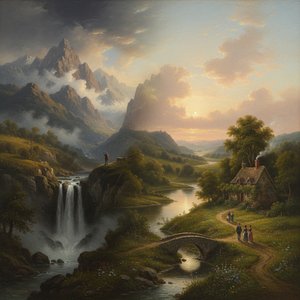
The Sublime and the Picturesque: Exploring Emotion & Nature in Romantic Landscape Painting
Explore the emotional power of Romantic landscape painting! Discover the sublime & picturesque aesthetics, key artists like Friedrich & Cole, and lasting influence on art history. Find your perfect piece at OriginalUniqueArt.


