
 Преглед в реален мащаб
 Сподели
 Сподели
 Подробности
 Ръководство

 Изтегляне
 Подобни артикули
 Рентгенова снимка
 Слайдшоу
 Статистика
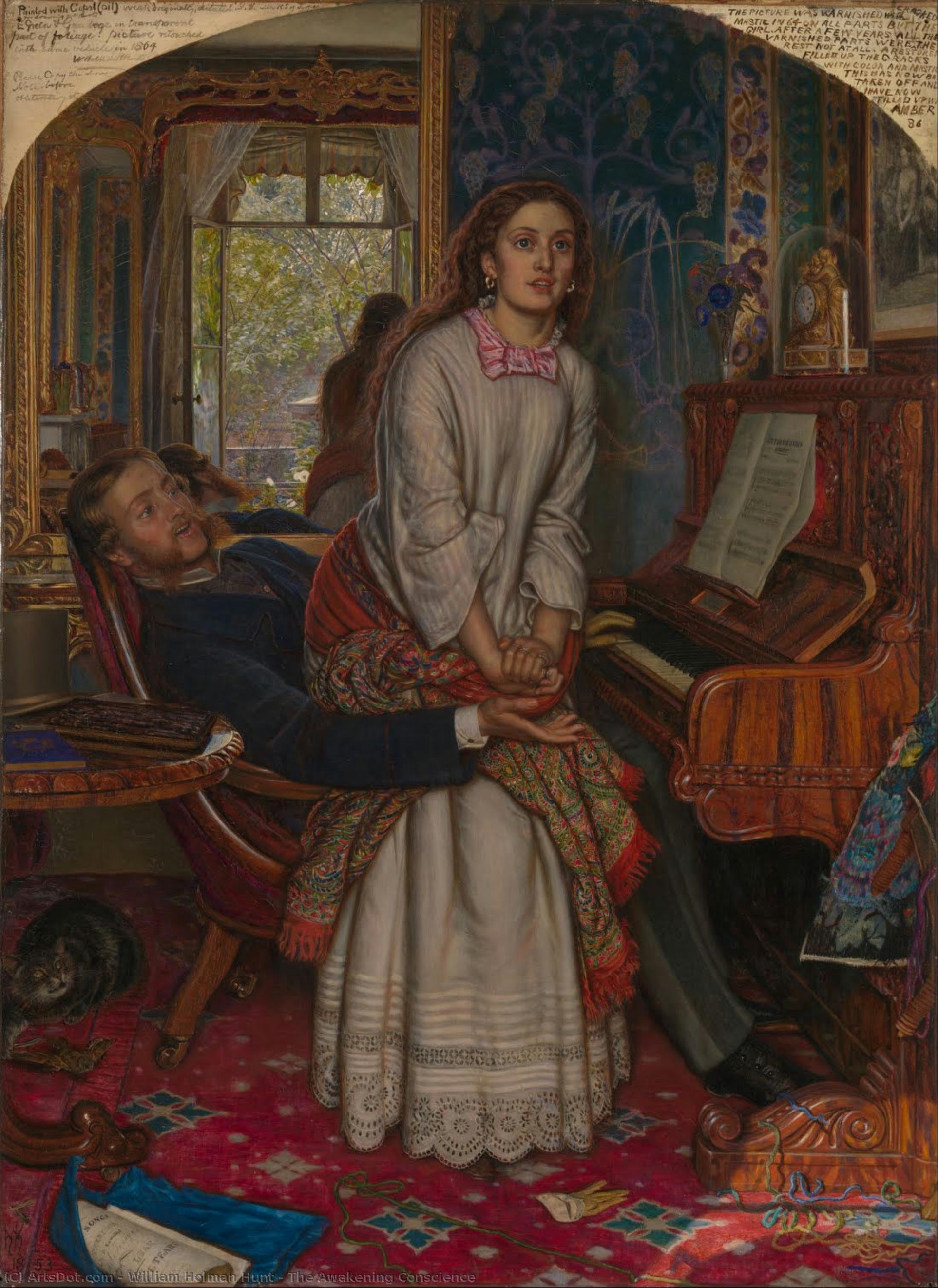
The Awakening Conscience
 Oil On Canvas
- WallArt
- Pre-Raphaelite Brotherhood
 1853
1853 55.0 x 76.0 cm
 Tate Britain
 Разгърни целия текст
Жикле / Художествен принт
Giclée печат или принт върху платно с музейно качество, бързо производство и гъвкави опции за завършен вид. ( Поръчайте ръчно рисувано репродукция на този колекционерски предмет Превключване към дигитално изображение)




P118B €10

P118H €10

P118W €10

P438Z €10

P508JH €12

P508YH €12

P805H €10

P805Z €10

P919BZ €10

P919G €10

P919XJ €10

P959ZH €10

P968JZ €12

W106C €8

W218G €10

W218JH €8

W218Y €10

W307PJ €10

W316G €10

W316PJ €8

W316Y €10

W398PJ €8

W4111J €10

W500HY €15

W500JH €15

W692G €12

W849H €8

W940BG €15

W953PJ €8




Изберете от нашите предварително зададени размери, които съответстват на оригиналните пропорции на произведението.

Въведете необходимата ширина и височина, за да паснат на вашата рамка или стена. Принтовете могат само да се изрязват, но никога не могат да бъдат по-големи от оригиналната картина, така че при размер с различен формат част от изображението ще бъде загубена. Преди да започнем печат, ще ви изпратим дигитален мок업 за одобрение. Изображението, показано на тази страница, не показва реалното изрязване — само мок업ът го показва.
Доставка по целия свят () в рамките на 2 седмици вместо стандартните 4/5 седмици. (22 Октомври)

Безплатна експресна доставка по целия свят

Висококачествено ленено платно

Пълно застраховане на доставката

Гаранция за възстановяване на митнически такси

Гаранция за пълно съответствие на цветовете

Политика за връщане в рамките на 100 дни (само при дефекти)

100% Гаранция за връщане на сумата

Отстъпка при поръчка на повече произведения
 Опцията със стъкло е налична само за размери под 110 см

The Awakening Conscience
Жикле / Художествен принт
Размер на репродукцията
-


Крайна цена
€ 70
The Awakening Conscience: A Victorian Portrait of Moral Reckoning
William Holman Hunt’s “The Awakening Conscience,” painted in 1853, isn't merely a depiction of a clandestine rendezvous; it’s a meticulously crafted tableau of moral crisis and spiritual awakening, a profound exploration of Victorian sensibilities. This oil-on-canvas masterpiece transcends the conventions of portraiture, offering a window into the anxieties and aspirations of a society grappling with rapid social change and burgeoning religious introspection. Hunt, a founding member of the Pre-Raphaelite Brotherhood, deliberately eschewed the polished idealism of academic art, instead embracing a radical commitment to realism, symbolism, and emotional truth – qualities powerfully evident in this arresting work.
A Scene of Disquiet: Narrative and Composition
At first glance, the painting presents a seemingly straightforward domestic scene: a woman, identified as a fallen woman, sits in the lap of her lover within a lavishly furnished room. However, Hunt’s genius lies in layering multiple narratives and symbolic elements that quickly unravel this initial impression. The setting itself—a recently decorated apartment filled with new furniture, an elaborate tapestry, and gleaming objects—immediately signals a disruption of established order and a transgression against Victorian ideals of domesticity. The woman's posture, initially relaxed, subtly shifts as she turns her head towards the window, drawing the viewer’s eye to the stark contrast between the interior world of temptation and the promise of redemption represented by the vibrant spring garden visible beyond.
- The Lover: Represents worldly indulgence and a source of moral corruption.
- The Woman: Embodies vulnerability, regret, and the potential for spiritual rebirth.
- The Room: Symbolizes the artificiality and superficiality of a life lived outside of genuine faith.
- The Window: Represents an escape from earthly constraints and a pathway to moral awakening.
Symbolism Woven into Reality: Details of Moral Weight
Hunt’s meticulous attention to detail is paramount, imbuing the painting with layers of symbolic meaning. The discarded items scattered around the room—a broken glove, a top hat, a partially finished tapestry—speak volumes about wasted opportunities and shattered dreams. The clock concealed beneath glass serves as a potent reminder of time slipping away, while the music on the piano – Thomas Moore’s “Oft in the Stilly Night” – echoes the woman's lost innocence and longing for a simpler past. The presence of various objects—bells, marigolds, and a star—further reinforces the painting’s moral weight, suggesting both warning and hope. Notably, the mirror reflects not just the room but also the garden outside, emphasizing the allure of a life beyond earthly constraints.
Pre-Raphaelite Vision: Light, Color, and Emotional Resonance
“The Awakening Conscience” is a quintessential example of Pre-Raphaelite aesthetics. Hunt employed rich, saturated colors—deep indigoes, vibrant reds, and luminous greens—to create an intensely atmospheric effect. The use of light is particularly significant; it streams dramatically through the window, illuminating the woman’s face and casting long shadows across the room, highlighting the contrast between darkness and enlightenment. The painting's meticulous detail, achieved through painstaking brushwork and a commitment to naturalistic representation, reflects the Pre-Raphaelites’ desire to capture the beauty and complexity of the world with unprecedented accuracy. The overall effect is one of heightened emotional intensity, inviting viewers to contemplate the profound questions of morality, redemption, and the human condition.
This painting continues to resonate today as a powerful meditation on personal responsibility, spiritual yearning, and the enduring struggle between earthly desires and moral conscience. Reproductions offer a remarkable opportunity to experience the depth and complexity of Hunt’s vision, bringing this poignant portrait into any space with an appreciation for art's ability to provoke thought and inspire reflection.
Въпроси и отговори
Коя е фазата от развитието на Уилям Холман Хънт, която представлява „The Awakening Conscience“?
„The Awakening Conscience“ принадлежи към Mature Period от кариерата на Уилям Холман Хънт. Тази класификация свързва творбата с развитието на художника.
Каква техника е използвана за „The Awakening Conscience“ на Уилям Холман Хънт?
Техниката на „The Awakening Conscience“ на Уилям Холман Хънт е Oil On Canvas. Репродукциите са предназначени да предадат визуалния ефект на тази техника.
Каква емоция предава „The Awakening Conscience“ на Уилям Холман Хънт?
„The Awakening Conscience“ на Уилям Холман Хънт предава Melancholic емоционален тон.
Биография на художника
William Holman Hunt: A Life Dedicated to Vision
William Holman Hunt, born in Cheapside, London on April 2, 1827, was far more than simply a painter; he embodied a profound philosophical and spiritual quest, translating his deepest convictions into the vibrant language of canvas. His early life, though rooted within the bustling commercial world of his father’s warehouse business, harbored an artistic inclination that would ultimately defy expectations and reshape the course of Victorian art. Initially destined for a career mirroring his father's mercantile pursuits, Hunt discovered solace and purpose in the act of creation, beginning with clandestine sketching sessions and later, after considerable struggle, formal training at the prestigious Royal Academy Schools. This period of apprenticeship, however, proved to be a restrictive confinement—a realization that he yearned for an artistic expression transcending the rigid conventions of academic art, a desire that would soon propel him toward a revolutionary movement. He perceived a stifling artificiality within contemporary painting and sought a return to the sincerity and meticulous detail found in pre-Renaissance masters, a sentiment central to the formation of the Pre-Raphaelite Brotherhood. Hunt’s journey wasn't merely an aesthetic pursuit; it was a deeply personal quest for truth, morality, and spiritual resonance—a belief that art could be a powerful vehicle for conveying profound ideas and inspiring viewers toward a higher understanding.The Genesis of a Revolutionary Brotherhood
In 1848, amidst the intellectual ferment of London’s artistic circles, William Holman Hunt, alongside Dante Gabriel Rossetti and John Everett Millais, established the Pre-Raphaelite Brotherhood (PRB). This collective wasn't simply an artistic movement; it was a deliberate rebellion against what they perceived as the decline of art since the era of Raphael. The PRB championed a return to the meticulous detail, vibrant colors, and sincere subject matter characteristic of early Italian painting—a style that predated the supposed artificiality and academic conventions established during the High Renaissance. Hunt’s commitment to this philosophy remained unwavering throughout his career, shaping not only his artistic choices but also his entire worldview. His early works, such as *The Hireling Shepherd*, painted in 1851, powerfully exemplify this dedication. The painting's painstaking realism—from the intricate texture of the sheep’s wool to each individual blade of grass—was revolutionary for its time, a stark contrast to the idealized and often superficial representations prevalent in contemporary art. It wasn’t merely a depiction of rural life; it was an attempt to convey moral and symbolic meaning through precise observation of nature, reflecting Hunt's belief that art should illuminate truth and inspire contemplation. *The Awakening Conscience*, also created during this formative period, further solidified his reputation for intensely naturalistic scenes imbued with psychological depth and profound moral weight—a testament to the Brotherhood’s commitment to portraying life with unflinching honesty and symbolic resonance.A Pilgrimage of Faith and Symbolic Depth
Hunt's artistic journey took an extraordinary turn with his extensive travels to the Holy Land in the 1850s and 60s. Driven by a fervent desire for historical accuracy and a profound spiritual yearning, he embarked on a pilgrimage to Palestine and Syria, meticulously documenting landscapes, costumes, and customs. This dedication to authenticity profoundly influenced his later works, imbuing them with an unparalleled sense of realism and spiritual depth—a synthesis of meticulous observation and heartfelt belief. The resulting paintings, such as *The Light of the World* (1850-1853), stand as powerful testaments to this transformative experience. This iconic image – depicting Christ knocking at a door offering salvation to those who open their hearts – became immensely popular during the Victorian era and remains one of the most recognizable religious paintings of the period, capturing both the beauty of the landscape and the profound spiritual message within. Hunt’s meticulous research and artistic skill combined to create works that were not simply visually stunning but also deeply symbolic, reflecting his belief that art could serve as a conduit for spiritual enlightenment.The Language of Symbolism and Moral Narrative
Throughout his career, William Holman Hunt masterfully employed symbolism to convey complex moral narratives within his paintings. He drew heavily upon biblical texts, medieval allegory, and contemporary social commentary, layering multiple meanings beneath the surface of each image. *The Shadow of Death* (1852-1853), for example, depicts the moment of Christ’s sacrifice with a haunting intensity—a visual representation of mortality, judgment, and redemption. The painting's somber colors, dramatic lighting, and carefully rendered details all contribute to its powerful emotional impact, inviting viewers to contemplate the profound questions raised by faith and death. Hunt’s ability to seamlessly blend realism, symbolism, and narrative created works that were both visually captivating and intellectually stimulating—a hallmark of the Pre-Raphaelite style. His meticulous attention to detail wasn't merely a technical skill; it was an integral part of his artistic philosophy—a means of conveying truth and inspiring contemplation through the power of visual representation.Legacy and Enduring Influence
Despite facing significant physical challenges in his later years, including deteriorating eyesight – a devastating blow for a painter so dedicated to meticulous detail – William Holman Hunt continued to create art until his death on September 7, 1910. He published an autobiography in 1905, offering invaluable insights into his artistic philosophy and personal life. His dedication was recognized with appointment to the Order of Merit by King Edward VII that same year. Hunt’s legacy extends far beyond the beauty of his paintings; he revolutionized Victorian art by championing realism, symbolism, and spiritual depth—leaving an indelible mark on generations of artists and viewers alike. His works continue to inspire awe and contemplation, reminding us of the power of art to illuminate the human condition and explore the mysteries of faith. He remains a pivotal figure in British art history, celebrated for his unwavering commitment to artistic integrity and his profound belief in the transformative potential of visual representation.
Уилям Холман Хънт
1827 - 1910 , Великобритания
Бързи факти
- Artistic Movement Or Style: Прерафаелитизъм
- Artists Or Movements Influenced By This Artist: ['Прерафаелитско братство']
- Artists Who Influenced This Artist:
- Джон Ръскин
- Ранни италиански майстори
- Date Of Birth: 2 април 1827
- Date Of Death: 7 септември 1910
- Full Name: William Holman Hunt
- Nationality: Британски
- Notable Artworks:
- The Light of the World
- The Awakening Conscience
- The Shadow of Death
- Place Of Birth: Лондон, Великобритания
Свързани статии

Топ 25 шедьовъра на Данте Габриел Росети: Изкуство, символизъм и красота за вашия дом
Открийте 25 шедьовъра на Данте Габриел Росети! Потопете се в света на прерафаелитизма, символизма и викторианската красота. Висококачествени репродукции за вашия дом – купете картини онлайн на OriginalUniqueArt.com.

Sir John Everett Millais: Pre-Raphaelite Rebellion & Victorian Narrative Detail
Explore the revolutionary art of Sir John Everett Millais & the Pre-Raphaelite Brotherhood. Discover their radical realism, symbolic narratives, and lasting impact on Victorian aesthetics. A deep dive into 19th-century masterpieces.
The Pre-Raphaelite Brotherhood: Rebellion, Romance & Medieval Revival
Explore the captivating world of the Pre-Raphaelite Brotherhood! Discover their rebellious spirit, iconic masterpieces & lasting influence on art history. Learn about Rossetti, Millais & more.
The Pre-Raphaelite Brotherhood: Reclaiming Beauty, Nature, and Truth in Victorian Art History
Explore the revolutionary Pre-Raphaelite Brotherhood. Discover how these visionary artists rejected academic tradition to reclaim beauty, nature, and truth through luminous detail and literary depth in Victorian art history.

Pre-Raphaelite Romanticism: A Guide to Vivid Detail and Medieval Beauty in Victorian Art
Explore the vivid detail and medieval beauty of Pre-Raphaelite Romanticism. Discover the history of masters like Rossetti and Millais through our expert guide to Victorian art, perfect for collectors and professionals seeking authentic, museum-quality reproductions.

