() ·

Картина, създадена специално за Вас, с ръчна изработка

The Glazier

Ръчно изработена маслена репродукция

Ръчно рисувана маслена картина върху платно във вашия размер и рамка, изработена по поръчка от нашите художници. ( Превключване към принт Превключване към дигитално изображение)

Описание на колекционерския предмет

Биография на художника

Уилем де Кунинг (1904-1997) е ключова фигура в абстрактния експресионизъм. Известен с динамичните картини, серията "Жена" и влиянието си върху Ню Йоркската школа. Разгледайте творчеството му!

от ·

Глава 1

Какъв размер трябва да бъде?

Плъзнете, за да промените размера; изображението вляво показва рамката в нейния реален формат. Пропорциите на оригинала са запазени.

Стандартен
персонализиран
CM
INCH

Изберете от нашите предварително зададени размери, които съответстват на оригиналните пропорции на произведението.

ширина
височина

Въведете необходимата ширина и височина, за да паснат на вашата рамка или стена. Тъй като това е ръчна работа, при избор на размер с различен формат художникът може да нарисува малко повече около картината или да отреже малко от периферията — вие избирате. Преди да започне рисуването, ще ви изпратим дигитален мок업 за одобрение. Картината, показана на тази страница, не е реалният резултат — само мок업ът го показва.

Глава 2

Как трябва да бъде доставено?

Изберете страните на разпънатото платно

Изберете своята рамка

Corner sample of the WhiteWrap canvas edge finish, stretched on масивна дървесина bars
Бяло €1
Corner sample of the BlurSideWrap canvas edge finish, stretched on масивна дървесина bars
Размити краища €1
Corner sample of the ExtendedWrap canvas edge finish, stretched on масивна дървесина bars
Разширен €1
Corner sample of the P118B picture frame: формован полистирол, 5 cm wide and 3 cm thick
P118B €10
Corner sample of the P118H picture frame: формован полистирол, 5 cm wide and 3 cm thick
P118H €10
Corner sample of the P118W picture frame: формован полистирол, 5 cm wide and 3 cm thick
P118W €10
Corner sample of the P438Z picture frame: формован полистирол, 5.5 cm wide and 3.5 cm thick
P438Z €10
Corner sample of the P508JH picture frame: формован полистирол, 7 cm wide and 3.5 cm thick
P508JH €12
Corner sample of the P508YH picture frame: формован полистирол, 7 cm wide and 3.5 cm thick
P508YH €12
Corner sample of the P805H picture frame: формован полистирол, 5 cm wide and 3.5 cm thick
P805H €10
Corner sample of the P805Z picture frame: формован полистирол, 5 cm wide and 3.5 cm thick
P805Z €10
Corner sample of the P919BZ picture frame: формован полистирол, 7 cm wide and 3.5 cm thick
P919BZ €10
Corner sample of the P919G picture frame: формован полистирол, 7 cm wide and 3.5 cm thick
P919G €10
Corner sample of the P919XJ picture frame: формован полистирол, 7 cm wide and 3.5 cm thick
P919XJ €10
Corner sample of the P959ZH picture frame: формован полистирол, 5 cm wide and 3 cm thick
P959ZH €10
Corner sample of the P968JZ picture frame: формован полистирол, 6 cm wide and 4 cm thick
P968JZ €12
Corner sample of the W106C picture frame: масивна дървесина, 5 cm wide and 3 cm thick
W106C €8
Corner sample of the W218G picture frame: масивна дървесина, 5 cm wide and 3 cm thick
W218G €10
Corner sample of the W218JH picture frame: масивна дървесина, 5 cm wide and 3 cm thick
W218JH €8
Corner sample of the W218Y picture frame: масивна дървесина, 5 cm wide and 3 cm thick
W218Y €10
Corner sample of the W307PJ picture frame: масивна дървесина, 6 cm wide and 3 cm thick
W307PJ €10
Corner sample of the W316G picture frame: масивна дървесина, 6 cm wide and 3 cm thick
W316G €10
Corner sample of the W316PJ picture frame: масивна дървесина, 6 cm wide and 3 cm thick
W316PJ €8
Corner sample of the W316Y picture frame: масивна дървесина, 6 cm wide and 3 cm thick
W316Y €10
Corner sample of the W398PJ picture frame: масивна дървесина, 5 cm wide and 3 cm thick
W398PJ €8
Corner sample of the W4111J picture frame: масивна дървесина, 6.5 cm wide and 3.5 cm thick
W4111J €10
Corner sample of the W500HY picture frame: масивна дървесина, 7 cm wide and 5 cm thick
W500HY €15
Corner sample of the W500JH picture frame: масивна дървесина, 7 cm wide and 5 cm thick
W500JH €15
Corner sample of the W692G picture frame: масивна дървесина, 8 cm wide and 4 cm thick
W692G €12
Corner sample of the W849H picture frame: масивна дървесина, 5 cm wide and 3 cm thick
W849H €8
Corner sample of the W940BG picture frame: масивна дървесина, 7.5 cm wide and 4.5 cm thick
W940BG €15
Corner sample of the W953PJ picture frame: масивна дървесина, 6 cm wide and 3.5 cm thick
W953PJ €8
Corner sample of the H24-GOLD picture frame: резно дърво с левкас, 10 cm wide and 6 cm thick
H24-GOLD €30
Corner sample of the H24-SILVER picture frame: резно дърво с левкас, 10 cm wide and 6 cm thick
H24-SILVER €30
Corner sample of the H36-GOLD picture frame: резно дърво с левкас, 15 cm wide and 6.5 cm thick
H36-GOLD €45
Corner sample of the H36-SILVER picture frame: резно дърво с левкас, 15 cm wide and 6.5 cm thick
H36-SILVER €45

Рамка: . Общ размер с рамката: .

Глава 3

Кой го рисува и трябва ли нещо да се променя?

Примери за това, което може да бъде променено: Замяна на лицето със снимка на клиента; Добавяне на домашен любимец (напр. замяна на котка с куче); Включване на скрито съобщение на фона; Промяна на пейзажа или елементите на фона.
След получаване на поръчката, екипът на OriginalUniqueArt.com ще изпрати имейл до клиента с инструкции и ще предостави примерен макет

Доставка по целия свят () в рамките на 3-4 седмици вместо стандартните 5 седмици. (4 Ноември). Без компромис с качеството.

Глава 4

Финалните щрихи

Табелка, точно като в музея?

Детайли за гравираната бронзова плака

This elegant plaque features the artist's name and the title of the artwork, finely engraved for a timeless presentation.

It is made from bronze with a refined, elegant finish. The text is precisely laser-engraved for a sharp and permanent result. Measuring 9x2 cm, the plaque is compact yet easy to read. It's built to be durable and scratch-resistant, offering a professional, museum-quality look. Mounting is simple thanks to the included adhesive backing.

Детайли за прозрачната акрилна плака

The plaque includes essential engraved details such as the artist's name, the title of the artwork, the date it was created, the type of media used-like oil on canvas or watercolor-a brief description of the piece, and a QR code that links to the complete artwork information.

It is crafted from clear acrylic, offering a sleek, modern appearance. The text is UV-engraved in black to ensure strong visual contrast. With a size of 10x15 cm, it ensures optimal readability. It comes equipped with two metal hooks for secure wall mounting. The plaque is designed to be weather-resistant, making it suitable for various environments, and it includes interactive features that work seamlessly with smartphone scanning.

Детайли за черната акрилна плака

This elegant plaque includes engraved information such as the artist's name, the title of the artwork, the date it was created, the type of media used (like oil on canvas or watercolor), a short description of the artwork, and a QR code for quick access to more information.

The plaque itself is made from refined black acrylic with a premium finish. The text is laser-engraved in white for high contrast and readability. Its size is 10x15 cm, designed to be easy to read. It comes with two metal hooks for professional mounting. The design is sleek and fits any interior style. It is also weather-resistant and durable, with built-in digital integration for mobile compatibility.

Защитен лак?

Кога ви е необходимо?

Глава 5

Вашата картина, точно както я поръчахте

The Glazier

Вид репродукция

Размер на репродукцията

-

Елитен старши художник

Повече детайлност, изящество и допълнително време за производство

-

Рамка за репродукция

-

-

За произведения на изкуството или репродукции, чийто размер е над 105 см (приблизително 41 инча) във всяка страна, рамката ще бъде изпратена в разглобен вид като комплект за сглобяване. Този метод гарантира безопасна доставка и предотвратява повреди по време на транспортиране.

Изисква се професионално сглобяване – това не е продукт за самостоятелна изработка (DIY).
Комплектът трябва да бъде сглобен, а платното – опънато от опитен професионален багер, като се използва дървено лепило (не е включено в комплекта), клещи за опъване на платно и затягащи скоби, за да се поддържа правотата на подрамника, докато лепилото изсъхне. Неправилното сглобяване или неравномерното опъване на платното може трайно да повреди произведението и не е покрито от нашата гаранция.

  • Всички елементи от масивна дървесина са включени, прецизно изрязани по размер.

  • Сглобява се с предоставените винтове, както и с лепило за дърво за ъгловите връзки, което не е включено в комплекта и трябва да бъде осигурено от вашия рамкар.

  • Изискват се професионални инструменти, които не са включени: щипка за опъване на платно (натягач) и скоби за фиксиране на подрамниците под прав ъгъл, докато лепилото изсъхне.

Важно:
За сглобяването на ъглите е необходимо лепило за дърво, рейките трябва да се фиксират с клещи (затягащи скоби, докато лепилото изсъхне напълно, а за опъването на платното върху готовата рамка е необходим инструмент за опъване на платно. Нито един от тези артикули не е включен в комплекта. Моля, осигурете услугите на опитен професионалист по багетно окантоване, преди да поръчате този размер.

Етикет с име

-

-

Защитен лак

Гланцов лак (подсилва цветовете и предпазва от светлина и влага)

-

Персонализирай моето произведение

Примери за възможности за персонализация: Заменете лицето със снимка на клиента; Добавете домашен любимец (например, заменете котка с куче); Включете скрито съобщение във фона; Променете пейзажа или елементите на фона.

-

Спешно

Доставка по целия свят () в рамките на 3-4 седмици вместо стандартните 5 седмици. (4 Ноември). Без компромис с качеството.

-

Експресна доставка

Доставка по целия свят () в рамките на 5 седмици. (11 Ноември).

Включена

Обща цена

€ 267

Обща цена € 267

Опцията със стъкло е налична само за размери под 110 см

Включено във всяка поръчка

  • Безплатна експресна доставка по целия свят
  • Висококачествено ленено платно
  • Пълно застраховане на доставката
  • Гаранция за възстановяване на митнически такси
  • Гаранция за пълно съответствие на цветовете
  • Политика за връщане в рамките на 100 дни (само при дефекти)
  • 100% Гаранция за връщане на сумата
  • Оферта за отстъпка при поръчка на повече бройки

A Fragmented Portrait of Inner Turmoil

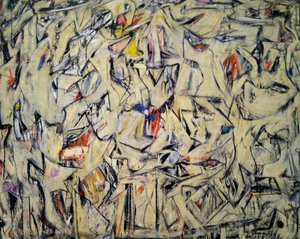
Willem de Kooning’s “The Glazier,” painted in 1940, isn't a straightforward portrait; it’s an arresting glimpse into the artist’s evolving psyche and a potent reflection of the anxieties simmering beneath the surface of mid-20th century America. This work, part of a series exploring male figures, immediately captivates with its unsettling blend of figuration and abstraction – a hallmark of De Kooning's distinctive style that foreshadowed his later, more radical explorations within Abstract Expressionism. The painting presents a woman seated before what appears to be a workbench or studio space, yet the scene feels fundamentally off-kilter, imbued with an atmosphere of quiet contemplation tinged with unease. It’s a deliberate departure from traditional portraiture, opting instead for a fractured representation that prioritizes emotional resonance over realistic depiction.

Earth Tones and Echoes of Italy

The color palette of “The Glazier” is dominated by a rich tapestry of earthy tones – ochres, browns, muted greens, and the occasional flash of teal-blue. These somber hues are strikingly reminiscent of the frescoes found in Boscoreale, Italy, which De Kooning had frequently visited and deeply admired. This connection to Italian Renaissance art subtly informs the painting’s mood, suggesting a yearning for classical beauty juxtaposed with the complexities of modern life. The visible brushstrokes, thick and deliberate, contribute significantly to the texture of the work, creating a tactile surface that draws the viewer in. Notice how the red garment worn by the figure provides a vital point of visual contrast against the predominantly muted background – a small but significant element that anchors the composition.

Deconstructing Form and Spatial Illusion

Technically, “The Glazier” is a masterful demonstration of De Kooning’s evolving approach. The artist employs loose, gestural lines and simplified shapes to deconstruct traditional forms. The woman's figure isn’t rendered with precise anatomical detail but rather through abstracted planes and suggestive curves, creating a sense of ambiguity about her identity and emotional state. Behind her, geometric shapes – squares and rectangles – interlock with organic forms, generating a fragmented spatial arrangement that defies easy interpretation. There is no clear horizon line or depth perspective; instead, the painting operates within a flattened plane, contributing to its overall feeling of disorientation and psychological intensity. This deliberate distortion challenges the viewer’s expectations of representation, forcing them to engage with the work on an emotional rather than purely visual level.

Symbolism and the Artist's Inner World

The symbolism within “The Glazier” remains open to interpretation, reflecting the artist’s own complex inner world. The woman herself could be seen as a representation of the modern individual grappling with uncertainty and alienation. The abstract background elements – hinting at tools, architectural fragments, or perhaps even internal landscapes – suggest a preoccupation with the complexities of contemporary life and the challenges of self-expression. The pensive expression on her face invites speculation about her thoughts and feelings, adding another layer of intrigue to this enigmatic portrait. Ultimately, “The Glazier” serves as a powerful meditation on the nature of identity, perception, and the emotional landscape of a rapidly changing world.

Въпроси и отговори

Каква наситенност и интензивност притежава „The Glazier“ на Уилям де Кунинг?

Цветовете на „The Glazier“ на Уилям де Кунинг излъчват Subtle Color наситеност с Monochromatic интензивност.

Може ли изображението на „The Glazier“ на Уилям де Кунинг да се репродуцира свободно?

„The Glazier“ на Уилям де Кунинг е в все още е защитено с авторско право. Този статус определя как може да бъде репродуцирано изображението на произведението.

Мога ли да поръчам маслена репродукция на "The Glazier"?

Ръчно рисувани копия на „The Glazier“ на Уилям де Кунинг се предлагат в ето този уебсайт: ръчно рисувана маслена репродукция върху ленен холст, чрез неговата страница Ръчно рисувана репродукция.

Още информация за тази картина

Преглед в реален мащаб Преглед с AR Превключване към принт Превключване към дигитално изображение Изпрати
Детайли Ръководство Добави в любими Изтегляне Подобни артикули Рентгенова снимка Слайдшоу Въпроси и отговори Статистика

В цифри

  • 1940годината на създаване
  • 29рамки за избор
  • стандартни размери, в собствените си пропорции
  • 5седмици за рисуване и доставка

За оригинала

Размери
137.0 x 112.0 cm
Уилям де Кунинг

Уилям де Кунинг

1904 - 1997, Нидерландия

Бързи факти за Уилям де Кунинг

  • Artistic Movement Or Style: Абстрактен експресионизъм
  • Artists Or Movements Influenced By This Artist: ['New York School']
  • Artists Who Influenced This Artist:
    • Аршиле Горки
    • Stuart Davis
    • John Graham
  • Date Of Birth: 24 април 1904
  • Date Of Death: 19 март 1997
  • Full Name: Willem de Kooning
  • Nationality: Нидерландски-американец
  • Notable Artworks:
    • Woman I
    • Marilyn Monroe
    • Reclining Man (JFK)
    • Excavation
  • Place Of Birth: Роттердам, Нидерландия

Биография на художника

A Life Forged in Abstraction

Willem de Kooning, a name synonymous with the raw energy and emotional depth of Abstract Expressionism, was born in Rotterdam, Netherlands, in 1904. His early life was marked by a familial split – his parents divorced when he was young – which perhaps instilled within him a sense of restless searching that would permeate his artistic journey. Leaving formal schooling at twelve, de Kooning apprenticed with a commercial art firm, laying the groundwork for his technical skill while simultaneously fueling a desire to break free from conventional constraints. Evening classes at the Academie van Beeldende Kunsten en Technische Wetenschappen in Rotterdam provided further foundational training, but it was a yearning for something more – a bolder, more expressive language – that ultimately propelled him towards America in 1926. His arrival wasn’t straightforward; he famously stowed away on a ship, embodying the spirit of an outsider seeking new horizons. New York City became his adopted home, and its vibrant, often gritty energy profoundly shaped his evolving style. He navigated various jobs – house painter, carpenter – all while relentlessly pursuing his artistic vision, absorbing the city’s pulse into his work.

From Urban Scenes to Abstract Fury

De Kooning's early paintings reflected his immediate surroundings: urban landscapes and portraits that captured the dynamism of New York life. These works, often rendered in muted tones and characterized by a sense of movement, offered a glimpse into the burgeoning metropolis. However, these were merely stepping stones towards a more profound exploration of form and emotion. A pivotal moment came with his connection to Arshile Gorky, whose influence proved transformative. Gorky encouraged de Kooning’s experimentation with abstraction, fostering a willingness to dismantle traditional representation in pursuit of something deeper. De Kooning began to loosen his brushwork, layering colors and creating gestural marks that conveyed feeling rather than precise detail. This shift marked the beginning of a radical departure from representational art, laying the foundation for his later, more abstract works. The 1930s saw de Kooning engage with social realism and mural projects through the Works Progress Administration (WPA), a period that honed his skills but also highlighted the limitations of purely representational art. He found himself drawn to the work of Stuart Davis and John Graham, artists who were pushing boundaries in their own right, exploring new ways to capture the energy and complexity of modern life. This confluence of influences gradually steered him away from literal depiction and toward an increasingly abstract vocabulary.

The Woman Series: A Landmark Achievement

Following World War II, de Kooning emerged as a central figure in the burgeoning Abstract Expressionist movement. This period marked a turning point, culminating in his iconic “Woman” series (1950-1953). These paintings – including the monumental *Woman I*, *Woman II*, and *Woman III* – are not merely depictions of female figures; they are visceral explorations of femininity, sexuality, and the complexities of human emotion. Characterized by aggressive brushstrokes, fragmented forms, and a jarring juxtaposition of colors, the “Woman” series challenged conventional notions of beauty and representation. They were controversial, even shocking to some, but their power lay precisely in their refusal to conform. De Kooning wasn’t interested in creating idealized images; he sought to capture the raw, untamed essence of his subjects. The figures are often distorted and unsettling, reflecting a deeper psychological landscape. Alongside this series, works like *The Glazier* and *Excavation* further demonstrated his dynamic approach to painting, showcasing a masterful command of texture, color, and composition. He didn't shy away from chaos or ambiguity; instead, he embraced them as integral components of his artistic language.

Evolving Landscapes and Enduring Legacy

In the 1960s and beyond, de Kooning’s style underwent another significant evolution. While abstraction remained central to his work, landscape elements began to play a more prominent role, often rendered with a brighter palette and a looser, more fluid brushstroke. He continued to experiment relentlessly throughout his life, exploring different techniques and materials, never content to rest on his laurels. He revisited themes from earlier periods, incorporating them into new compositions with a renewed sense of freedom and experimentation. His later works – such as *Easter Monday* (1976) – demonstrate a remarkable ability to reinvent himself while remaining true to his core artistic principles. De Kooning’s historical significance is undeniable. He helped establish New York City as a global center for art, challenging the dominance of European traditions and paving the way for future generations of artists. His work continues to inspire awe and provoke debate, reminding us of the power of abstraction to convey profound emotional truths. Willem de Kooning passed away in 1997, leaving behind a vast and influential body of work that stands as a testament to his unwavering commitment to artistic innovation and his enduring legacy as one of the most important American artists of the 20th century. His paintings are not just objects; they are windows into a complex and intensely felt inner world.

Key Influences

De Kooning’s artistic development was shaped by a diverse range of influences, both formal and personal. Early exposure to commercial art instilled in him a strong sense of technical skill and an understanding of visual communication. The work of European masters like Picasso and Matisse provided inspiration for his early explorations of form and color. However, it was the encounter with Arshile Gorky that proved particularly transformative, encouraging him to abandon traditional representation and embrace abstraction. Furthermore, the vibrant energy of New York City itself – its diverse population, its rapid pace of change, its gritty underbelly – served as a constant source of stimulation and inspiration. The works of Stuart Davis and John Graham also played a significant role in shaping his artistic vision, demonstrating the possibilities of capturing modern life through abstraction.

Бърза информация

  • Dimensions: 137 x 112 cm
  • Year: 1940
  • Movement: Abstract Expressionism
  • Title: The Glazier
  • Location: Private Collection
  • Medium: Oil on Canvas

Тест за познания по изкуство

За всеки въпрос има само един верен отговор.

Въпрос 1:
What is the primary inspiration for the earthy color palette used in ‘The Glazier’?
Въпрос 2:
Which of the following best describes the composition of ‘The Glazier’?
Въпрос 3:
The abstract background elements in ‘The Glazier’ are likely intended to represent:
Въпрос 4:
What is a key characteristic of De Kooning's brushwork in ‘The Glazier’?
Въпрос 5:
‘The Glazier’ is considered significant within De Kooning's oeuvre because it: