Преглед в реален мащаб
 Сподели
 Сподели
 Подробности
 Ръководство

 Изтегляне
 Подобни артикули
 Рентгенова снимка
 Слайдшоу
 Статистика
Easter Monday


 Разгърни целия текст
Изкуството, представено на тази страница, е защитено от законите за авторско право, което означава, че не можем законно да създаваме или продаваме идентични репродукции. Тази защита се прилага съгласно международни споразумения като Бернска конвенция и от националното законодателство, включително разпоредбите на Закон за авторското право на САЩ – Раздел 17.
Като уважителна и законна алтернатива, ние предлагаме изработени по поръчка, ръчно рисувани произведения на изкуството, вдъхновени от оригинала. Нашите умени и професионални артисти внимателно изучават стила, настроението и артистичната същност на оригиналното произведение, за да създадат ново, уникално творческо произведение, което предизвиква същото чувство – оставайки в същото време самостоятелно оригинално творение.
Този метод е напълно съвместим с законите за авторско право, тъй като не включва копиране или дублиране на защитеното произведение. Вместо това става въпрос за творческа реинтерпретация – нова картина, която е вдъхновена от оригинала, но не е идентична с него.
Ръчно изработена маслена репродукция
Ръчно рисувана маслена картина върху платно във вашия размер и рамка, изработена по поръчка от нашите художници. ( Избор на принт Превключване към дигитално изображение)




P118B €10

P118H €10

P118W €10

P438Z €10

P508JH €12

P508YH €12

P805H €10

P805Z €10

P919BZ €10

P919G €10

P919XJ €10

P959ZH €10

P968JZ €12

W106C €8

W218G €10

W218JH €8

W218Y €10

W307PJ €10

W316G €10

W316PJ €8

W316Y €10

W398PJ €8

W4111J €10

W500HY €15

W500JH €15

W692G €12

W849H €8

W940BG €15

W953PJ €8




Изберете от нашите предварително зададени размери, които съответстват на оригиналните пропорции на произведението.

Можете да въведете свои собствени размери, за да паснат на конкретна рамка или пространство. Ако избраният от вас размер не съответства на пропорциите на оригиналното изображение, ние ще изрежем произведението или ще разширим картината с допълнителни ръчно рисувани елементи. Дигитален макет ще бъде изпратен за ваше одобрение преди започване на производството.
Моля, обърнете внимание, че предпрогледа на екрана не отразява действителното изрязване или разширяване. Само макетът ще покаже точно финалната композиция.
Въпреки че са налични персонализирани размери, препоръчваме да изберете размер от предварително дефинирания списък, за да запазите оригиналните пропорции.
След получаване на поръчка, екипът на OriginalUniqueArt.com ще изпрати имейл до клиента с инструкции и ще предостави примерен макет за преглед.
Доставка по целия свят () в рамките на 3-4 седмици вместо стандартните 5 седмици. (11 Октомври). Без компромис с качеството.

Безплатна експресна доставка по целия свят

Висококачествено ленено платно

Пълно застраховане на доставката

Гаранция за възстановяване на митнически такси

Гаранция за пълно съответствие на цветовете

Политика за връщане в рамките на 100 дни (само при дефекти)

100% Гаранция за връщане на сумата

Отстъпка при поръчка на повече произведения
 Опцията със стъкло е налична само за размери под 110 см

Easter Monday
Техника на репродукция
Размер на репродукцията
-


Крайна цена
€ 259
A Study in Contrast: De Kooning’s ‘Easter Monday’
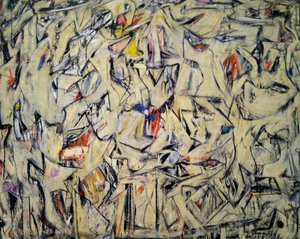
Willem de Kooning's 1956 painting, “Easter Monday,” is not merely a depiction of faces; it’s an intensely psychological exploration rendered with the artist’s signature blend of aggression and vulnerability. The work immediately confronts the viewer with two figures, dramatically differentiated in scale and presence. One face, boldly positioned and adorned with a white hat, dominates the canvas, its gaze direct and seemingly challenging. This figure embodies a forceful assertion, a deliberate engagement that draws us into the painting’s turbulent emotional landscape. The other face, partially obscured and wearing spectacles, offers a quieter, more contemplative response – a subtle acknowledgement of the dominant presence. This juxtaposition immediately establishes a dynamic tension, reflecting perhaps the complexities of human interaction and the struggle for self-expression.
De Kooning's Abstract Expressionist Technique
Executed in oil on canvas, “Easter Monday” exemplifies de Kooning’s mastery of Abstract Expressionism. His technique is characterized by broad, gestural brushstrokes – thick impasto applied with a raw energy that suggests both control and unrestrained emotion. The painting isn't about precise representation; instead, it utilizes fragmented forms and distorted perspectives to convey feeling rather than objective reality. Notice the layering of paint, particularly around the prominent face, creating a sense of depth and texture that adds to the work’s visceral impact. De Kooning’s use of color is equally significant – muted tones punctuated by flashes of white and darker shades contribute to the painting's overall mood of unease and intensity. The horse heads, seemingly placed almost arbitrarily, further disrupt any potential for serene observation, adding another layer of unsettling symbolism.
Symbolism and Context within De Kooning’s Oeuvre
Created during a pivotal period in de Kooning’s career, “Easter Monday” reflects his ongoing exploration of the human figure – often rendered with a deliberately confrontational style. The painting's title, ‘Easter Monday,’ while seemingly straightforward, adds another layer of complexity. Easter, traditionally associated with rebirth and renewal, is juxtaposed with the raw emotional intensity of the scene. This tension speaks to de Kooning’s broader concerns about identity, alienation, and the anxieties of modern life. His work during this period was heavily influenced by Surrealism, particularly its exploration of the subconscious and dreamlike imagery, though he rejected the movement's emphasis on automatic drawing.
A Legacy of Emotional Intensity
“Easter Monday” stands as a powerful example of de Kooning’s ability to translate personal turmoil into universally resonant art. Its enduring appeal lies in its unflinching portrayal of human vulnerability and conflict. The bicycle, a symbol of freedom and movement, adds an element of irony to the composition, suggesting perhaps a futile attempt to escape internal struggles. This painting is more than just a reproduction; it’s a window into the mind of one of America's most influential artists – a testament to his relentless pursuit of emotional truth through bold, expressive brushwork. A hand-painted reproduction offers an unparalleled opportunity to experience the full force of de Kooning’s vision.
Въпроси и отговори
Какво е мястото на „Easter Monday“ на Уилям де Кунинг в историята на изкуството?
Искусствоведската класификация на „Easter Monday“ на Уилям де Кунинг е Abstract Expressionism, от периода на Modern.
Кога е създадено "Easter Monday"?
Създаването на „Easter Monday“ на Уилям де Кунинг датира от 1956.
Каква цветова палитра използва "Easter Monday"?
Цветовете на "Easter Monday" образуват Earthy палитра. Тази класификация описва доминиращите цветни групи.
Има ли наръчник за „Easter Monday“ на Уилям де Кунинг?
Страницата Ръководство за „Easter Monday“ на Уилям де Кунинг предлага двустраничен информационен лист за принтиране: самото произведение с неговата идентификационна таблица, времева лента, поставяща го в периода от живота на художника, други творби на същия автор, измеримата цветова палитра и готови за копиране цитати в четири различни стила.
На кой художник се приписва "Easter Monday"?
Художникът зад "Easter Monday" е Уилям де Кунинг. Произведението е каталогизирано под името на Уилям де Кунинг.
Колко популярна е творбата „Easter Monday“ в рамките на Abstract Expressionism?
„Easter Monday“ е регистрирана като Recognized сред произведенията от Abstract Expressionism в каталога.
На каква възраст Уилям де Кунинг създава „Easter Monday“?
Когато „Easter Monday“ е създадена през 1956, Уилям де Кунинг – роден/а през 1904 – е бил/а на 52 години.
Биография на художника
A Life Forged in Abstraction
Willem de Kooning, a name synonymous with the raw energy and emotional depth of Abstract Expressionism, was born in Rotterdam, Netherlands, in 1904. His early life was marked by a familial split – his parents divorced when he was young – which perhaps instilled within him a sense of restless searching that would permeate his artistic journey. Leaving formal schooling at twelve, de Kooning apprenticed with a commercial art firm, laying the groundwork for his technical skill while simultaneously fueling a desire to break free from conventional constraints. Evening classes at the Academie van Beeldende Kunsten en Technische Wetenschappen in Rotterdam provided further foundational training, but it was a yearning for something more – a bolder, more expressive language – that ultimately propelled him towards America in 1926. His arrival wasn’t straightforward; he famously stowed away on a ship, embodying the spirit of an outsider seeking new horizons. New York City became his adopted home, and its vibrant, often gritty energy profoundly shaped his evolving style. He navigated various jobs – house painter, carpenter – all while relentlessly pursuing his artistic vision, absorbing the city’s pulse into his work.From Urban Scenes to Abstract Fury
De Kooning's early paintings reflected his immediate surroundings: urban landscapes and portraits that captured the dynamism of New York life. These works, often rendered in muted tones and characterized by a sense of movement, offered a glimpse into the burgeoning metropolis. However, these were merely stepping stones towards a more profound exploration of form and emotion. A pivotal moment came with his connection to Arshile Gorky, whose influence proved transformative. Gorky encouraged de Kooning’s experimentation with abstraction, fostering a willingness to dismantle traditional representation in pursuit of something deeper. De Kooning began to loosen his brushwork, layering colors and creating gestural marks that conveyed feeling rather than precise detail. This shift marked the beginning of a radical departure from representational art, laying the foundation for his later, more abstract works. The 1930s saw de Kooning engage with social realism and mural projects through the Works Progress Administration (WPA), a period that honed his skills but also highlighted the limitations of purely representational art. He found himself drawn to the work of Stuart Davis and John Graham, artists who were pushing boundaries in their own right, exploring new ways to capture the energy and complexity of modern life. This confluence of influences gradually steered him away from literal depiction and toward an increasingly abstract vocabulary.The Woman Series: A Landmark Achievement
Following World War II, de Kooning emerged as a central figure in the burgeoning Abstract Expressionist movement. This period marked a turning point, culminating in his iconic “Woman” series (1950-1953). These paintings – including the monumental *Woman I*, *Woman II*, and *Woman III* – are not merely depictions of female figures; they are visceral explorations of femininity, sexuality, and the complexities of human emotion. Characterized by aggressive brushstrokes, fragmented forms, and a jarring juxtaposition of colors, the “Woman” series challenged conventional notions of beauty and representation. They were controversial, even shocking to some, but their power lay precisely in their refusal to conform. De Kooning wasn’t interested in creating idealized images; he sought to capture the raw, untamed essence of his subjects. The figures are often distorted and unsettling, reflecting a deeper psychological landscape. Alongside this series, works like *The Glazier* and *Excavation* further demonstrated his dynamic approach to painting, showcasing a masterful command of texture, color, and composition. He didn't shy away from chaos or ambiguity; instead, he embraced them as integral components of his artistic language.Evolving Landscapes and Enduring Legacy
In the 1960s and beyond, de Kooning’s style underwent another significant evolution. While abstraction remained central to his work, landscape elements began to play a more prominent role, often rendered with a brighter palette and a looser, more fluid brushstroke. He continued to experiment relentlessly throughout his life, exploring different techniques and materials, never content to rest on his laurels. He revisited themes from earlier periods, incorporating them into new compositions with a renewed sense of freedom and experimentation. His later works – such as *Easter Monday* (1976) – demonstrate a remarkable ability to reinvent himself while remaining true to his core artistic principles. De Kooning’s historical significance is undeniable. He helped establish New York City as a global center for art, challenging the dominance of European traditions and paving the way for future generations of artists. His work continues to inspire awe and provoke debate, reminding us of the power of abstraction to convey profound emotional truths. Willem de Kooning passed away in 1997, leaving behind a vast and influential body of work that stands as a testament to his unwavering commitment to artistic innovation and his enduring legacy as one of the most important American artists of the 20th century. His paintings are not just objects; they are windows into a complex and intensely felt inner world.Key Influences
De Kooning’s artistic development was shaped by a diverse range of influences, both formal and personal. Early exposure to commercial art instilled in him a strong sense of technical skill and an understanding of visual communication. The work of European masters like Picasso and Matisse provided inspiration for his early explorations of form and color. However, it was the encounter with Arshile Gorky that proved particularly transformative, encouraging him to abandon traditional representation and embrace abstraction. Furthermore, the vibrant energy of New York City itself – its diverse population, its rapid pace of change, its gritty underbelly – served as a constant source of stimulation and inspiration. The works of Stuart Davis and John Graham also played a significant role in shaping his artistic vision, demonstrating the possibilities of capturing modern life through abstraction.
Уилям де Кунинг
1904 - 1997 , Нидерландия
Бързи факти
- Artistic Movement Or Style: Абстрактен експресионизъм
- Artists Or Movements Influenced By This Artist: ['New York School']
- Artists Who Influenced This Artist:
- Аршиле Горки
- Stuart Davis
- John Graham
- Date Of Birth: 24 април 1904
- Date Of Death: 19 март 1997
- Full Name: Willem de Kooning
- Nationality: Нидерландски-американец
- Notable Artworks:
- Woman I
- Marilyn Monroe
- Reclining Man (JFK)
- Excavation
- Place Of Birth: Роттердам, Нидерландия
Свързани статии

Топ 10 шедьовъра на абстрактния експресионизъм – изкуство за вашия дом от OriginalUniqueArt.com
Разгледайте топ 10 шедьовъра на абстрактния експресионизъм – Полък, Ротко, де Кунинг и други. Открийте историите зад тези емблематични картини и преобразете дома си с изкуство от OriginalUniqueArt.com! Разгледайте пълната колекция онлайн.

Топ 25 шедьоври на Франсиско Гоя: Изкуство, история и лукс за вашия дом
Разгледайте топ 25 шедьоври на Франсиско Гоя – от портрети до исторически картини. Открийте историите, техниките и емоциите зад неговите най-известни творби. Луксозни репродукции за вашия дом в OriginalUniqueArt.com!
Beyond Representation: Exploring the Emotional Landscape of Abstract Expressionism
Explore the profound emotional world of Abstract Expressionism with OriginalUniqueArt. Discover key artists like Pollock & Rothko, learn about collecting, and find museum-quality reproductions to inspire your space.

Willem de Kooning: Abstraction, Gesture & the Evolution of Post-War American Painting
Explore the evolution of Willem de Kooning's iconic Abstract Expressionist paintings. Discover his signature style, key themes & investment potential with expert insights for discerning art collectors.

Топ 25 шедьоври на Василий Кандински: Абстрактно изкуство за вашия дом | OriginalUniqueArt.com
Разгледайте топ 25 шедьоври на Василий Кандински – пионер на абстрактното изкуство и експресионизма. Открийте историите зад цветните композиции, техниките и вдъхновението му. Купете висококачествени репродукции на картини Кандински за вашия дом на OriginalUniqueArt.com!