() ·

Картина, създадена специално за Вас, с ръчна изработка

Romantic landscape

Ръчно изработена маслена репродукция

Ръчно рисувана маслена картина върху платно във вашия размер и рамка, изработена по поръчка от нашите художници. ( Превключване към принт Превключване към дигитално изображение)

Описание на колекционерския предмет

Биография на художника

Въвлюдете се в света на Василий Кандински – революционер на абстрактното изкуство! Открийте ярки емоции, духовни теми и влиянието му върху Баухаус чрез впечатляващи репродукции.

от ·

Глава 1

Какъв размер трябва да бъде?

Плъзнете, за да промените размера; изображението вляво показва рамката в нейния реален формат. Пропорциите на оригинала са запазени.

Стандартен
персонализиран
CM
INCH

Изберете от нашите предварително зададени размери, които съответстват на оригиналните пропорции на произведението.

ширина
височина

Въведете необходимата ширина и височина, за да паснат на вашата рамка или стена. Тъй като това е ръчна работа, при избор на размер с различен формат художникът може да нарисува малко повече около картината или да отреже малко от периферията — вие избирате. Преди да започне рисуването, ще ви изпратим дигитален мок업 за одобрение. Картината, показана на тази страница, не е реалният резултат — само мок업ът го показва.

Глава 2

Как трябва да бъде доставено?

Изберете страните на разпънатото платно

Изберете своята рамка

Corner sample of the WhiteWrap canvas edge finish, stretched on масивна дървесина bars
Бяло €1
Corner sample of the BlurSideWrap canvas edge finish, stretched on масивна дървесина bars
Размити краища €1
Corner sample of the ExtendedWrap canvas edge finish, stretched on масивна дървесина bars
Разширен €1
Corner sample of the P118B picture frame: формован полистирол, 5 cm wide and 3 cm thick
P118B €10
Corner sample of the P118H picture frame: формован полистирол, 5 cm wide and 3 cm thick
P118H €10
Corner sample of the P118W picture frame: формован полистирол, 5 cm wide and 3 cm thick
P118W €10
Corner sample of the P438Z picture frame: формован полистирол, 5.5 cm wide and 3.5 cm thick
P438Z €10
Corner sample of the P508JH picture frame: формован полистирол, 7 cm wide and 3.5 cm thick
P508JH €12
Corner sample of the P508YH picture frame: формован полистирол, 7 cm wide and 3.5 cm thick
P508YH €12
Corner sample of the P805H picture frame: формован полистирол, 5 cm wide and 3.5 cm thick
P805H €10
Corner sample of the P805Z picture frame: формован полистирол, 5 cm wide and 3.5 cm thick
P805Z €10
Corner sample of the P919BZ picture frame: формован полистирол, 7 cm wide and 3.5 cm thick
P919BZ €10
Corner sample of the P919G picture frame: формован полистирол, 7 cm wide and 3.5 cm thick
P919G €10
Corner sample of the P919XJ picture frame: формован полистирол, 7 cm wide and 3.5 cm thick
P919XJ €10
Corner sample of the P959ZH picture frame: формован полистирол, 5 cm wide and 3 cm thick
P959ZH €10
Corner sample of the P968JZ picture frame: формован полистирол, 6 cm wide and 4 cm thick
P968JZ €12
Corner sample of the W106C picture frame: масивна дървесина, 5 cm wide and 3 cm thick
W106C €8
Corner sample of the W218G picture frame: масивна дървесина, 5 cm wide and 3 cm thick
W218G €10
Corner sample of the W218JH picture frame: масивна дървесина, 5 cm wide and 3 cm thick
W218JH €8
Corner sample of the W218Y picture frame: масивна дървесина, 5 cm wide and 3 cm thick
W218Y €10
Corner sample of the W307PJ picture frame: масивна дървесина, 6 cm wide and 3 cm thick
W307PJ €10
Corner sample of the W316G picture frame: масивна дървесина, 6 cm wide and 3 cm thick
W316G €10
Corner sample of the W316PJ picture frame: масивна дървесина, 6 cm wide and 3 cm thick
W316PJ €8
Corner sample of the W316Y picture frame: масивна дървесина, 6 cm wide and 3 cm thick
W316Y €10
Corner sample of the W398PJ picture frame: масивна дървесина, 5 cm wide and 3 cm thick
W398PJ €8
Corner sample of the W4111J picture frame: масивна дървесина, 6.5 cm wide and 3.5 cm thick
W4111J €10
Corner sample of the W500HY picture frame: масивна дървесина, 7 cm wide and 5 cm thick
W500HY €15
Corner sample of the W500JH picture frame: масивна дървесина, 7 cm wide and 5 cm thick
W500JH €15
Corner sample of the W692G picture frame: масивна дървесина, 8 cm wide and 4 cm thick
W692G €12
Corner sample of the W849H picture frame: масивна дървесина, 5 cm wide and 3 cm thick
W849H €8
Corner sample of the W940BG picture frame: масивна дървесина, 7.5 cm wide and 4.5 cm thick
W940BG €15
Corner sample of the W953PJ picture frame: масивна дървесина, 6 cm wide and 3.5 cm thick
W953PJ €8
Corner sample of the H24-GOLD picture frame: резно дърво с левкас, 10 cm wide and 6 cm thick
H24-GOLD €30
Corner sample of the H24-SILVER picture frame: резно дърво с левкас, 10 cm wide and 6 cm thick
H24-SILVER €30
Corner sample of the H36-GOLD picture frame: резно дърво с левкас, 15 cm wide and 6.5 cm thick
H36-GOLD €45
Corner sample of the H36-SILVER picture frame: резно дърво с левкас, 15 cm wide and 6.5 cm thick
H36-SILVER €45

Рамка: . Общ размер с рамката: .

Глава 3

Кой го рисува и трябва ли нещо да се променя?

Примери за това, което може да бъде променено: Замяна на лицето със снимка на клиента; Добавяне на домашен любимец (напр. замяна на котка с куче); Включване на скрито съобщение на фона; Промяна на пейзажа или елементите на фона.
След получаване на поръчката, екипът на OriginalUniqueArt.com ще изпрати имейл до клиента с инструкции и ще предостави примерен макет

Доставка по целия свят () в рамките на 3-4 седмици вместо стандартните 5 седмици. (6 Ноември). Без компромис с качеството.

Глава 4

Финалните щрихи

Табелка, точно като в музея?

Детайли за гравираната бронзова плака

This elegant plaque features the artist's name and the title of the artwork, finely engraved for a timeless presentation.

It is made from bronze with a refined, elegant finish. The text is precisely laser-engraved for a sharp and permanent result. Measuring 9x2 cm, the plaque is compact yet easy to read. It's built to be durable and scratch-resistant, offering a professional, museum-quality look. Mounting is simple thanks to the included adhesive backing.

Детайли за прозрачната акрилна плака

The plaque includes essential engraved details such as the artist's name, the title of the artwork, the date it was created, the type of media used-like oil on canvas or watercolor-a brief description of the piece, and a QR code that links to the complete artwork information.

It is crafted from clear acrylic, offering a sleek, modern appearance. The text is UV-engraved in black to ensure strong visual contrast. With a size of 10x15 cm, it ensures optimal readability. It comes equipped with two metal hooks for secure wall mounting. The plaque is designed to be weather-resistant, making it suitable for various environments, and it includes interactive features that work seamlessly with smartphone scanning.

Детайли за черната акрилна плака

This elegant plaque includes engraved information such as the artist's name, the title of the artwork, the date it was created, the type of media used (like oil on canvas or watercolor), a short description of the artwork, and a QR code for quick access to more information.

The plaque itself is made from refined black acrylic with a premium finish. The text is laser-engraved in white for high contrast and readability. Its size is 10x15 cm, designed to be easy to read. It comes with two metal hooks for professional mounting. The design is sleek and fits any interior style. It is also weather-resistant and durable, with built-in digital integration for mobile compatibility.

Защитен лак?

Кога ви е необходимо?

Глава 5

Вашата картина, точно както я поръчахте

Romantic landscape

Вид репродукция

Размер на репродукцията

-

Елитен старши художник

Повече детайлност, изящество и допълнително време за производство

-

Рамка за репродукция

-

-

За произведения на изкуството или репродукции, чийто размер е над 105 см (приблизително 41 инча) във всяка страна, рамката ще бъде изпратена в разглобен вид като комплект за сглобяване. Този метод гарантира безопасна доставка и предотвратява повреди по време на транспортиране.

Изисква се професионално сглобяване – това не е продукт за самостоятелна изработка (DIY).
Комплектът трябва да бъде сглобен, а платното – опънато от опитен професионален багер, като се използва дървено лепило (не е включено в комплекта), клещи за опъване на платно и затягащи скоби, за да се поддържа правотата на подрамника, докато лепилото изсъхне. Неправилното сглобяване или неравномерното опъване на платното може трайно да повреди произведението и не е покрито от нашата гаранция.

  • Всички елементи от масивна дървесина са включени, прецизно изрязани по размер.

  • Сглобява се с предоставените винтове, както и с лепило за дърво за ъгловите връзки, което не е включено в комплекта и трябва да бъде осигурено от вашия рамкар.

  • Изискват се професионални инструменти, които не са включени: щипка за опъване на платно (натягач) и скоби за фиксиране на подрамниците под прав ъгъл, докато лепилото изсъхне.

Важно:
За сглобяването на ъглите е необходимо лепило за дърво, рейките трябва да се фиксират с клещи (затягащи скоби, докато лепилото изсъхне напълно, а за опъването на платното върху готовата рамка е необходим инструмент за опъване на платно. Нито един от тези артикули не е включен в комплекта. Моля, осигурете услугите на опитен професионалист по багетно окантоване, преди да поръчате този размер.

Етикет с име

-

-

Защитен лак

Гланцов лак (подсилва цветовете и предпазва от светлина и влага)

-

Персонализирай моето произведение

Примери за възможности за персонализация: Заменете лицето със снимка на клиента; Добавете домашен любимец (например, заменете котка с куче); Включете скрито съобщение във фона; Променете пейзажа или елементите на фона.

-

Спешно

Доставка по целия свят () в рамките на 3-4 седмици вместо стандартните 5 седмици. (6 Ноември). Без компромис с качеството.

-

Експресна доставка

Доставка по целия свят () в рамките на 5 седмици. (13 Ноември).

Включена

Обща цена

€ 268

Обща цена € 268

Опцията със стъкло е налична само за размери под 110 см

Включено във всяка поръчка

  • Безплатна експресна доставка по целия свят
  • Висококачествено ленено платно
  • Пълно застраховане на доставката
  • Гаранция за възстановяване на митнически такси
  • Гаранция за пълно съответствие на цветовете
  • Политика за връщане в рамките на 100 дни (само при дефекти)
  • 100% Гаранция за връщане на сумата
  • Оферта за отстъпка при поръчка на повече бройки

Romantic Landscape

Kandinsky's Romantic Landscape stands as a cornerstone of modern art, embodying the spirit of experimentation and emotional expression that defined the early 20th century. Painted in 1911, this monumental oil on canvas—measuring 94 x 129 cm—captures the essence of Wassily Kandinsky’s distinctive style: a harmonious blend of natural observation with vibrant color and geometric abstraction. Its enduring appeal lies not merely in its visual beauty but also in its profound exploration of spiritual ideas and artistic innovation.

The Artistic Context

Kandinsky's creative journey was inextricably linked to the burgeoning Expressionist movement, which prioritized subjective experience over objective representation. Artists like Ernst Ludwig Kirchner and Emil Nolde sought to convey inner feelings through distorted forms and jarring colors—a reaction against the prevailing academic conventions of their time. Kandinsky’s affiliation with Der Blaue Reiter—a collective of avant-garde artists including Franz Marc and Gabriele Münter—further solidified his position at the forefront of artistic discourse. This group championed a radical vision of art as a conduit for spiritual insight, rejecting traditional aesthetics in favor of forms that communicated emotion directly.

Composition and Elements

“Romantic Landscape” immediately draws the viewer’s eye with its dominant element: a radiant sun positioned centrally against a backdrop of swirling clouds. These clouds aren't merely atmospheric phenomena; they are rendered as dynamic shapes—circles, spirals, and undulating bands—that contribute to the painting’s palpable energy. Scattered throughout the scene are figures representing people, subtly integrated into the landscape rather than dominating it. The artist skillfully employs perspective to create depth, layering trees, grasses, and buildings to convey a sense of expansive space. Kandinsky's meticulous brushwork—characterized by loose strokes and bold color palettes—underscores this textural richness.

Artistic Style

Kandinsky’s stylistic approach in Romantic Landscape exemplifies his pioneering experimentation with abstract forms and colors. Rejecting the illusionistic techniques of Impressionism, he prioritized conveying emotion through pure pigment and geometric shapes. The painting showcases a masterful use of chromatic harmony—warm earth tones juxtaposed against brilliant blues—creating a visual experience that transcends literal depiction. Kandinsky’s brushstrokes are deliberately expressive, capturing movement and rhythm while simultaneously hinting at underlying spiritual significance. He sought to liberate color from its descriptive role, allowing it to communicate feelings directly to the viewer's subconscious mind.

Historical Significance

As one of the progenitors of abstract art, Kandinsky played a pivotal role in reshaping artistic conventions and inspiring subsequent generations of artists. His influence can be discerned across diverse movements—from Surrealism to Bauhaus—demonstrating the lasting impact of his conceptual breakthrough. The painting’s genesis coincided with a period of intense intellectual ferment, fueled by developments in psychology (particularly Sigmund Freud's theories on unconsciousness) and philosophy. Kandinsky believed that art could serve as a vehicle for accessing higher realms of consciousness, mirroring the broader cultural preoccupation with spirituality during the era.

Relevance in Modern Art

Contemporary artists continue to draw inspiration from Kandinsky’s innovative vision—embracing abstraction as a means of conveying emotion and exploring the relationship between color and form. His legacy extends beyond painting itself, informing approaches to sculpture, architecture, and design. Romantic Landscape remains a testament to Kandinsky's unwavering conviction that art could transcend mere representation, achieving a profound connection with the human spirit. For those seeking to delve deeper into Kandinsky’s oeuvre, consider visiting Painting by 'Wassily Kandinsky' | Wassily Kandinsky: Romantic landscape on OriginalUniqueArt. To explore the broader context of modern art movements and their philosophical underpinnings, consult Modern Art and List of Paintings by Wassily Kandinsky.

Въпроси и отговори

Каква е яркостта на „Romantic landscape“ на Wassily Wassilyevich Kandinsky?

„Romantic landscape“ на Wassily Wassilyevich Kandinsky има светлост от Bright Balance. Светлостта описва колко светлина изглежда, че отразяват цветовете.

За коя стая се препоръчва „Romantic landscape“ на Wassily Wassilyevich Kandinsky?

Препоръчителното пространство за „Romantic landscape“ на Wassily Wassilyevich Kandinsky е Living Room. Тази препоръка, разбира се, може да бъде адаптирана към вашия интериор.

За какво място и за каква цел се препоръчва "Romantic landscape"?

Препоръчаното приложение (Accent) и пространството (Living Room) са двете насоки, посочени за „Romantic landscape“ на Wassily Wassilyevich Kandinsky.

Още информация за тази картина

Преглед в реален мащаб Преглед с AR Превключване към принт Превключване към дигитално изображение Изпрати
Детайли Ръководство Добави в любими Изтегляне Подобни артикули Рентгенова снимка Слайдшоу Въпроси и отговори Статистика

В цифри

  • 1911годината на създаване
  • 29рамки за избор
  • стандартни размери, в собствените си пропорции
  • 5седмици за рисуване и доставка
Wassily Wassilyevich Kandinsky

Wassily Wassilyevich Kandinsky

1866 - 1944, Русия

Бързи факти за Wassily Wassilyevich Kandinsky

  • Artistic Movement Or Style: Абстрактно изкуство, Експресионизъм
  • Artists Or Movements Influenced By This Artist: ['Абстрактен експресионизъм']
  • Artists Who Influenced This Artist:
    • Клод Моне
    • Ричард Вагнер
  • Date Of Birth: 1866
  • Date Of Death: 1944
  • Full Name: Wassily Wassilyevich Kandinsky
  • Nationality: Руски, Френски
  • Notable Artworks:
    • Мурнау с Радуженным
    • Линия къбрада
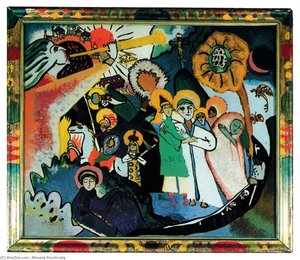
    • Всички светии II
  • Place Of Birth: Москва, Русия

Биография на художника

A Life Immersed in Color and Spirit

Wassily Wassilyevich Kandinsky, born in Moscow in 1866, was a revolutionary figure who irrevocably altered the course of modern art. His journey wasn’t one of immediate artistic calling; initially destined for a career in law and economics at the University of Moscow, it was a profound encounter with Impressionist painting – specifically Claude Monet's “Haystacks” – and a deeply moving experience witnessing Wagner’s opera "Lohengrin" that ignited within him an irrepressible desire to pursue art. This pivotal moment, occurring around age thirty, marked not merely a career change but a complete transformation of perspective, setting him on a path toward pioneering abstraction. He soon relocated to Munich, enrolling at the prestigious Academy of Fine Arts and studying under Franz von Stuck, though even within formal training, Kandinsky’s spirit yearned for exploration beyond conventional boundaries. Early influences included Russian folk art, gleaned from an ethnographic expedition to the Vologda region in 1889, which instilled a fascination with vibrant color palettes and symbolic imagery. This foundation would prove crucial as he began to develop his unique artistic language. These early explorations weren’t simply about aesthetic preference; they were rooted in a deep cultural connection and a burgeoning understanding of how art could communicate beyond the literal. He was particularly drawn to the rich symbolism embedded within Russian icons, which informed his initial approach to color and composition.

The Dawn of Abstraction: From Expressionism to Inner Necessity

Kandinsky’s early works reveal a strong expressionistic bent, characterized by bold colors and emotional intensity – pieces like “Papeln (Poplars)” from 1902 exemplify this period. These paintings were imbued with intense feeling, often depicting landscapes and figures in a highly subjective manner. However, he wasn't content with merely representing the external world; he sought to express inner realities, spiritual truths that transcended mere visual depiction. This quest led him gradually away from representational art and toward a revolutionary exploration of color, form, and their emotional resonance. He believed that colors possessed inherent psychological effects, capable of evoking specific feelings and sensations in the viewer. This conviction was deeply intertwined with his burgeoning interest in Theosophy, a spiritual movement emphasizing esoteric knowledge and universal brotherhood. As he delved deeper into these ideas, Kandinsky’s paintings became increasingly non-objective, shedding recognizable forms in favor of abstract compositions driven by an “inner necessity.” This wasn't simply about abandoning representation; it was about discovering a new visual language capable of expressing the intangible realms of emotion and spirituality. He sought to create a visual equivalent of music, where color and form harmonized to evoke profound emotional responses.
  • Key Influences:** Russian folk art, Impressionism (Monet), Wagnerian opera
  • Early Style:** Expressionistic landscapes and figures with bold colors

Geometric Harmony and Spiritual Resonance

The period following his involvement with the influential artist group Der Blaue Reiter (The Blue Rider), which he co-founded in Munich in 1911, saw a further evolution in Kandinsky’s style. While earlier works often featured fluid, organic shapes, he began to explore geometric abstraction, focusing on the interplay of circles, triangles, and squares. “Several Circles” (140 x 140 cm) stands as a prime example of this phase – a dynamic composition where color and form interact in a harmonious yet energetic dance. He believed that these basic forms held inherent spiritual significance, representing fundamental elements of existence. Kandinsky’s theoretical writings, most notably “Concerning the Spiritual in Art” (1911), articulated these beliefs, laying the groundwork for a new understanding of abstract art as a vehicle for expressing profound spiritual truths. He argued that art should not aim to imitate nature but rather to reveal the artist’s inner world and connect with the viewer on a deeper, more intuitive level.
  • Key Work:** “Several Circles” (1913)
  • Theoretical Contribution:** "Concerning the Spiritual in Art" – outlining his philosophy of abstract art

Bauhaus Influence and Lasting Legacy

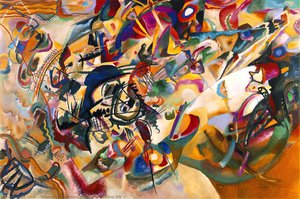
The outbreak of World War I forced Kandinsky’s return to Russia in 1914, but following the Russian Revolution, he found himself increasingly at odds with the prevailing artistic climate. In 1920, he accepted a teaching position at the Bauhaus school in Germany, where he profoundly influenced generations of artists with his theories on color, form, and abstraction. The Bauhaus provided an ideal environment for Kandinsky to further develop his ideas and explore new creative avenues. He continued to experiment with geometric forms and vibrant colors, often incorporating layered impasto techniques to create textured surfaces that added depth and complexity to his compositions – as seen in later works like “An Intimate Party” (1942). After the closure of the Bauhaus by the Nazi regime in 1933, Kandinsky moved to France, where he remained for the rest of his life. His impact on modern art is immeasurable; he is widely recognized as a pioneer of abstract expressionism and a key figure in the development of non-representational painting. His works are held in major museums worldwide, including the Tretyakov Gallery in Moscow, which houses his monumental “Composition VII,” a testament to his artistic vision and enduring legacy.
  • Key Period:** 1920s – Bauhaus influence
  • Later Style:** Geometric abstraction with layered impasto techniques
Kandinsky’s exploration of color, form, and spirituality continues to inspire artists today, solidifying his place as one of the most important figures in 20th-century art history. He didn't just paint pictures; he painted emotions, ideas, and the very essence of the human spirit.

Бърза информация

  • Movement: Expressionism
  • Title: Romantic Landscape
  • Location: Städtische Galerie im Lenbachhaus, Germany
  • Artist: Wassily Kandinsky
  • Medium: Oil on Canvas
  • Dimensions: 94 x 129 cm

Тест за познания по изкуство

За всеки въпрос има само един верен отговор.

Въпрос 1:
What artistic movement heavily influenced Wassily Kandinsky’s approach to painting?
Въпрос 2:
In 'Romantic Landscape', Kandinsky utilizes geometric shapes alongside natural elements. What is the primary purpose of this combination?
Въпрос 3:
What was Kandinsky's association with Der Blaue Reiter group?
Въпрос 4:
What is the dominant color palette employed in 'Romantic Landscape'?
Въпрос 5:
Why is Kandinsky considered a pioneer of abstract art?