Преглед в реален мащаб
 Сподели
 Сподели
 Подробности
 Ръководство

 Изтегляне
 Подобни артикули
 Рентгенова снимка
 Слайдшоу
 Статистика
Couple riding
 Oil On Canvas
- WallArt
- Post-Impressionism
 1906
1906- Modern
 55.0 x 50.0 cm
 Разгърни целия текст
Ръчно изработена маслена репродукция
Ръчно рисувана маслена картина върху платно във вашия размер и рамка, изработена по поръчка от нашите художници. ( Избор на принт Превключване към дигитално изображение)




P118B $10

P118H $10

P118W $10

P438Z $10

P508JH $12

P508YH $12

P805H $10

P805Z $10

P919BZ $10

P919G $10

P919XJ $10

P959ZH $10

P968JZ $12

W106C $8

W218G $10

W218JH $8

W218Y $10

W307PJ $10

W316G $10

W316PJ $8

W316Y $10

W398PJ $8

W4111J $10

W500HY $15

W500JH $15

W692G $12

W849H $8

W940BG $15

W953PJ $8




Изберете от нашите предварително зададени размери, които съответстват на оригиналните пропорции на произведението.

Можете да въведете свои собствени размери, за да паснат на конкретна рамка или пространство. Ако избраният от вас размер не съответства на пропорциите на оригиналното изображение, ние ще изрежем произведението или ще разширим картината с допълнителни ръчно рисувани елементи. Дигитален макет ще бъде изпратен за ваше одобрение преди започване на производството.
Моля, обърнете внимание, че предпрогледа на екрана не отразява действителното изрязване или разширяване. Само макетът ще покаже точно финалната композиция.
Въпреки че са налични персонализирани размери, препоръчваме да изберете размер от предварително дефинирания списък, за да запазите оригиналните пропорции.
След получаване на поръчка, екипът на OriginalUniqueArt.com ще изпрати имейл до клиента с инструкции и ще предостави примерен макет за преглед.
Доставка по целия свят () в рамките на 3-4 седмици вместо стандартните 5 седмици. (25 Септември). Без компромис с качеството.

Безплатна експресна доставка по целия свят

Висококачествено ленено платно

Пълно застраховане на доставката

Гаранция за възстановяване на митнически такси

Гаранция за пълно съответствие на цветовете

Политика за връщане в рамките на 100 дни (само при дефекти)

100% Гаранция за връщане на сумата

Отстъпка при поръчка на повече произведения
 Опцията със стъкло е налична само за размери под 110 см

Couple riding
Техника на репродукция
Размер на репродукцията
-


Крайна цена
$ 300
A Dance of Color and Emotion: Wassily Kandinsky’s “Couple Riding”
Wassily Kandinsky's "Couple Riding," painted in 1906, isn’t merely a depiction of a horse and rider; it’s an immersive experience—a vibrant portal into the artist’s burgeoning abstract world. This oil on canvas, measuring just 55 x 50 cm, belies its modest size with the sheer intensity of color and movement it conveys. Emerging from the Post-Impressionist landscape, the painting captures a fleeting moment of romance against a backdrop that simultaneously grounds the scene in recognizable forms and pushes it toward an increasingly non-representational style. It’s a pivotal work, offering a crucial glimpse into Kandinsky's evolution as he wrestled with how to translate inner feeling onto the canvas—a journey that would ultimately redefine modern art. The painting immediately draws the eye to the central figures: a couple seated comfortably on horseback, their attire hinting at a traditional Russian setting – a subtle nod to Kandinsky’s heritage and cultural roots. Their posture suggests intimacy and shared experience, a quiet joy amidst the bustling cityscape behind them. This isn't a heroic adventure; it’s a tender connection, rendered with an almost dreamlike quality.The Language of Color and Form
Kandinsky’s technique in “Couple Riding” is characterized by his pioneering use of Divisionism—a method he developed alongside Mikhail Larionov. Instead of blending colors on the palette, he applied small, distinct dots or dashes of pure color directly onto the canvas. This creates a shimmering effect as the viewer's eye blends these individual elements together, generating an astonishing vibrancy and luminosity. The cityscape itself is built up in this manner: buildings are fragmented into geometric shapes—rectangles, squares, triangles—each rendered with carefully chosen hues that contribute to the overall composition. Notice how the river flows not as a continuous line but as a series of overlapping blues and greens, creating a sense of depth and movement. The horse, too, is constructed from distinct patches of color, conveying its form through the juxtaposition of tones rather than detailed shading. This deliberate fragmentation reflects Kandinsky’s belief that art should evoke emotions directly, bypassing rational thought.Symbolism and Inner Vision
Beyond its purely visual qualities, “Couple Riding” is rich in symbolic meaning. The horse itself can be interpreted as a symbol of freedom, movement, and perhaps even the unconscious—a vehicle for the couple’s journey into their shared world. The cityscape, with its clocks and boats, represents the passage of time and the complexities of everyday life, yet it fades into the background, suggesting that these external concerns are secondary to the intimate connection between the figures. The traditional clothing worn by the couple adds a layer of nostalgia and cultural significance, grounding the abstract elements in a recognizable reality. Kandinsky was deeply interested in spirituality and believed that art could be a means of accessing higher states of consciousness. “Couple Riding,” therefore, can be seen as an attempt to capture this inner world—a visual expression of feeling rather than a literal representation of the external world.A Bridge Between Tradition and Abstraction
“Couple Riding” stands as a crucial bridge between Kandinsky’s early influences – Impressionism, Fauvism, and even Russian folklore – and his later, more abstract style. While it retains elements of recognizable form, the painting demonstrates a clear shift towards a non-objective approach to art. It's a transitional work, showcasing Kandinsky’s experimentation with color, composition, and symbolism as he moved away from traditional representational techniques. This period was pivotal in the development of modern art, as artists began to explore new ways of expressing themselves—to break free from the constraints of realism and embrace the power of pure feeling. For those seeking a deeper understanding of Kandinsky’s artistic journey, exploring his other works from this era is highly recommended. You can find more information on OriginalUniqueArt.com at Wassily Kandinsky: Couple riding and further insights into Expressionism and its influential artists at Top 5 Famous Expressionism Artists of All Time on OriginalUniqueArt.com. A broader historical context can be found in History of Painting and Western Painting on Wikipedia.Биография на художника
A Life Immersed in Color and Spirit
Wassily Wassilyevich Kandinsky, born in Moscow in 1866, was a revolutionary figure who irrevocably altered the course of modern art. His journey wasn’t one of immediate artistic calling; initially destined for a career in law and economics at the University of Moscow, it was a profound encounter with Impressionist painting – specifically Claude Monet's “Haystacks” – and a deeply moving experience witnessing Wagner’s opera "Lohengrin" that ignited within him an irrepressible desire to pursue art. This pivotal moment, occurring around age thirty, marked not merely a career change but a complete transformation of perspective, setting him on a path toward pioneering abstraction. He soon relocated to Munich, enrolling at the prestigious Academy of Fine Arts and studying under Franz von Stuck, though even within formal training, Kandinsky’s spirit yearned for exploration beyond conventional boundaries. Early influences included Russian folk art, gleaned from an ethnographic expedition to the Vologda region in 1889, which instilled a fascination with vibrant color palettes and symbolic imagery. This foundation would prove crucial as he began to develop his unique artistic language. These early explorations weren’t simply about aesthetic preference; they were rooted in a deep cultural connection and a burgeoning understanding of how art could communicate beyond the literal. He was particularly drawn to the rich symbolism embedded within Russian icons, which informed his initial approach to color and composition.The Dawn of Abstraction: From Expressionism to Inner Necessity
Kandinsky’s early works reveal a strong expressionistic bent, characterized by bold colors and emotional intensity – pieces like “Papeln (Poplars)” from 1902 exemplify this period. These paintings were imbued with intense feeling, often depicting landscapes and figures in a highly subjective manner. However, he wasn't content with merely representing the external world; he sought to express inner realities, spiritual truths that transcended mere visual depiction. This quest led him gradually away from representational art and toward a revolutionary exploration of color, form, and their emotional resonance. He believed that colors possessed inherent psychological effects, capable of evoking specific feelings and sensations in the viewer. This conviction was deeply intertwined with his burgeoning interest in Theosophy, a spiritual movement emphasizing esoteric knowledge and universal brotherhood. As he delved deeper into these ideas, Kandinsky’s paintings became increasingly non-objective, shedding recognizable forms in favor of abstract compositions driven by an “inner necessity.” This wasn't simply about abandoning representation; it was about discovering a new visual language capable of expressing the intangible realms of emotion and spirituality. He sought to create a visual equivalent of music, where color and form harmonized to evoke profound emotional responses.- Key Influences:** Russian folk art, Impressionism (Monet), Wagnerian opera
- Early Style:** Expressionistic landscapes and figures with bold colors
Geometric Harmony and Spiritual Resonance
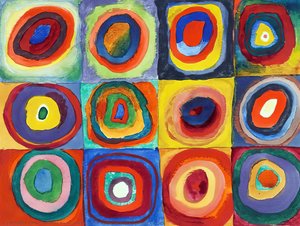
The period following his involvement with the influential artist group Der Blaue Reiter (The Blue Rider), which he co-founded in Munich in 1911, saw a further evolution in Kandinsky’s style. While earlier works often featured fluid, organic shapes, he began to explore geometric abstraction, focusing on the interplay of circles, triangles, and squares. “Several Circles” (140 x 140 cm) stands as a prime example of this phase – a dynamic composition where color and form interact in a harmonious yet energetic dance. He believed that these basic forms held inherent spiritual significance, representing fundamental elements of existence. Kandinsky’s theoretical writings, most notably “Concerning the Spiritual in Art” (1911), articulated these beliefs, laying the groundwork for a new understanding of abstract art as a vehicle for expressing profound spiritual truths. He argued that art should not aim to imitate nature but rather to reveal the artist’s inner world and connect with the viewer on a deeper, more intuitive level.- Key Work:** “Several Circles” (1913)
- Theoretical Contribution:** "Concerning the Spiritual in Art" – outlining his philosophy of abstract art
Bauhaus Influence and Lasting Legacy
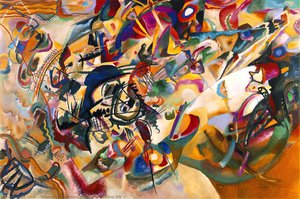
The outbreak of World War I forced Kandinsky’s return to Russia in 1914, but following the Russian Revolution, he found himself increasingly at odds with the prevailing artistic climate. In 1920, he accepted a teaching position at the Bauhaus school in Germany, where he profoundly influenced generations of artists with his theories on color, form, and abstraction. The Bauhaus provided an ideal environment for Kandinsky to further develop his ideas and explore new creative avenues. He continued to experiment with geometric forms and vibrant colors, often incorporating layered impasto techniques to create textured surfaces that added depth and complexity to his compositions – as seen in later works like “An Intimate Party” (1942). After the closure of the Bauhaus by the Nazi regime in 1933, Kandinsky moved to France, where he remained for the rest of his life. His impact on modern art is immeasurable; he is widely recognized as a pioneer of abstract expressionism and a key figure in the development of non-representational painting. His works are held in major museums worldwide, including the Tretyakov Gallery in Moscow, which houses his monumental “Composition VII,” a testament to his artistic vision and enduring legacy.- Key Period:** 1920s – Bauhaus influence
- Later Style:** Geometric abstraction with layered impasto techniques

Wassily Wassilyevich Kandinsky
1866 - 1944 , Русия
Бързи факти
- Artistic Movement Or Style: Абстрактно изкуство, Експресионизъм
- Artists Or Movements Influenced By This Artist: ['Абстрактен експресионизъм']
- Artists Who Influenced This Artist:
- Клод Моне
- Ричард Вагнер
- Date Of Birth: 1866
- Date Of Death: 1944
- Full Name: Wassily Wassilyevich Kandinsky
- Nationality: Руски, Френски
- Notable Artworks:
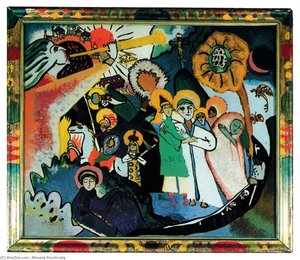
- Мурнау с Радуженным
- Линия къбрада
- Всички светии II
- Place Of Birth: Москва, Русия
Свързани статии

Топ 25 шедьоври на Василий Кандински: Абстрактно изкуство за вашия дом | OriginalUniqueArt.com
Разгледайте топ 25 шедьоври на Василий Кандински – пионер на абстрактното изкуство и експресионизма. Открийте историите зад цветните композиции, техниките и вдъхновението му. Купете висококачествени репродукции на картини Кандински за вашия дом на OriginalUniqueArt.com!

Топ 10 шедьовъра на абстрактния експресионизъм – изкуство за вашия дом от OriginalUniqueArt.com
Разгледайте топ 10 шедьовъра на абстрактния експресионизъм – Полък, Ротко, де Кунинг и други. Открийте историите зад тези емблематични картини и преобразете дома си с изкуство от OriginalUniqueArt.com! Разгледайте пълната колекция онлайн.
The Soul of Color: A Journey into the Emotional Resonance of Lyrical Abstraction
Embark on a cultural journey through Lyrical Abstraction. Explore how masters like Kandinsky used color and motion to translate emotion into visual poetry. Discover the profound beauty of abstract expressionism and learn to curate emotional resonance in your own art collection.
Beyond Representation: Exploring the Emotional Landscape of Abstract Expressionism
Explore the profound emotional world of Abstract Expressionism with OriginalUniqueArt. Discover key artists like Pollock & Rothko, learn about collecting, and find museum-quality reproductions to inspire your space.

Топ 10 шедьовъра на геометричната абстракция за Вашия дом | OriginalUniqueArt.com
Разгледайте топ 10 шедьовъра на геометричната абстракция – Кандински, Мондриан и други! Открийте историите зад тези емблематични картини и добавете елегантност към дома си с репродукции от OriginalUniqueArt.com. Разгледайте пълната колекция онлайн!