
 Преглед в реален мащаб
 Изпрати
 Сподели
 Детайли
 Ръководство

 Изтегляне
 Подобни артикули
 Рентгенова снимка
 Слайдшоу
 Въпроси и отговори
 Статистика
Last Journey

- 43.0 x 57.0 cm


 Прочети повече
Жикле / Художествен принт
Giclée печат или принт върху платно с музейно качество, бързо производство и гъвкави опции за завършен вид. ( Купете ръчно рисувана картина Превключване към дигитално изображение)




P118B €10

P118H €10

P118W €10

P438Z €10

P508JH €12

P508YH €12

P805H €10

P805Z €10

P919BZ €10

P919G €10

P919XJ €10

P959ZH €10

P968JZ €12

W106C €8

W218G €10

W218JH €8

W218Y €10

W307PJ €10

W316G €10

W316PJ €8

W316Y €10

W398PJ €8

W4111J €10

W500HY €15

W500JH €15

W692G €12

W849H €8

W940BG €15

W953PJ €8




Изберете от нашите предварително зададени размери, които съответстват на оригиналните пропорции на произведението.

Въведете необходимата ширина и височина, за да паснат на вашата рамка или стена. Принтовете могат само да се изрязват, но никога не могат да бъдат по-големи от оригиналната картина, така че при размер с различен формат част от изображението ще бъде загубена. Преди да започнем печат, ще ви изпратим дигитален мок업 за одобрение. Изображението, показано на тази страница, не показва реалното изрязване — само мок업ът го показва.
Доставка по целия свят () в рамките на 2 седмици вместо стандартните 4/5 седмици. (7 Ноември)

Безплатна експресна доставка по целия свят

Висококачествено ленено платно

Пълно застраховане на доставката

Гаранция за възстановяване на митнически такси

Гаранция за пълно съответствие на цветовете

Политика за връщане в рамките на 100 дни (само при дефекти)

100% Гаранция за връщане на сумата

Оферта за отстъпка при поръчка на повече бройки
 Опцията със стъкло е налична само за размери под 110 см

Last Journey
Жикле / Художествен принт
Размер на репродукцията
-


Обща цена
€ 72
Last Journey by Vasily Grigoryevich Perov: A Glimpse into Rural Russian Hardship
Vasily Grigoryevich Perov's "Last Journey," painted in 1865, is a poignant masterpiece of Realism that offers a stark and unflinching portrayal of life for the peasantry in 19th-century Russia. Measuring 43 x 57 cm, this oil on canvas work transcends mere depiction; it serves as a social commentary and an emotional exploration of loss, resilience, and the burdens of rural existence.
Composition and Symbolism
The painting depicts a somber scene: three figures – a woman, a young boy, and a girl – accompanied by a dog, are pulling a sled across a snow-covered field. The sled itself carries what is implied to be the body of a deceased individual, shrouded in white fabric. The muted color palette, dominated by earth tones and shades of grey and brown, contributes significantly to the overall atmosphere of melancholy and resignation. The vastness of the snowy landscape emphasizes the isolation and hardship faced by these individuals.
Several symbolic elements enhance the painting's narrative depth:
- The Sled: Represents not only the physical transportation of the deceased but also the heavy burdens – both literal and metaphorical – carried by the family.
- The Snowscape: Symbolizes the harshness and unforgiving nature of their environment, reflecting the challenges they face daily.
- The Figures' Posture: Their bowed heads and weary expressions convey a sense of profound grief and exhaustion. The woman’s posture in particular speaks volumes about her sorrow and responsibility.
- The Dog: A loyal companion, the dog adds another layer of emotional depth to the scene, representing faithfulness amidst adversity.
Artistic Style and Technique
Perov's style is firmly rooted in Realism, a movement that sought to depict everyday life with accuracy and honesty, often highlighting social issues. Influenced by his studies at the Imperial Academy of Arts in St. Petersburg, Perov rejected idealized representations prevalent in academic art, opting instead for a raw and unvarnished portrayal of reality.
The painting's technical execution is characterized by:
- Detailed Observation: Perov’s meticulous attention to detail – the texture of the snow, the worn fabric of their clothing, the expressions on their faces – creates a sense of immediacy and authenticity.
- Subdued Lighting: The diffused lighting enhances the somber mood, casting long shadows and emphasizing the bleakness of the scene.
- Visible Brushstrokes: While blended to create form, Perov’s brushstrokes are visible, adding texture and a sense of movement to the composition.
Historical Context and Emotional Impact
“Last Journey” was created during a period of significant social and political change in Russia. The painting reflects the plight of the peasantry, who constituted the vast majority of the population but lived under harsh conditions with limited opportunities. Perov's work, along with that of other members of the Peredvizhniki movement (Wanderers), aimed to raise awareness about these issues and challenge the status quo.
The painting’s emotional impact is profound. It evokes feelings of sadness, empathy, and a sense of shared humanity. "Last Journey" isn't just a depiction of death; it's a testament to the resilience of the human spirit in the face of adversity, offering a poignant glimpse into the lives of ordinary people struggling to survive in a challenging world.
Въпроси и отговори
Каква атмосфера би създало „Last Journey“ в едно помещение?
Nostalgic атмосферата на „Last Journey“ на Василий Перов съответства на препоръчаното пространство: Living Room.
Защо „Last Journey“ на Василий Перов се препоръчва като подарък?
"Last Journey" предава усещане за Melancholic, а препоръчаният подарък е Anniversary.
Къде е най-подходящо да бъде окачана репродукция на „Last Journey“ на Василий Перов?
Форматът Landscape на произведението „Last Journey“ на Василий Перов е препоръчителен за Living Room. Форматът и пространството заедно служат като ориентир при поставянето на репродукцията.
Биография на художника
A Life Etched in Realism: Vasily Perov and the Soul of Russia
Vasily Grigoryevich Perov, born Vasily Vasiliev on January 21st, 1834, in the remote Siberian town of Tobolsk, was not merely a painter; he was a chronicler of his time, a voice for the voiceless, and a pivotal figure in shaping the course of Russian art. His life story is inextricably linked to the social realities of 19th-century Russia – a world marked by poverty, injustice, and spiritual yearning – themes that he relentlessly explored through his powerful and unflinching realism. Born out of wedlock to Baron Grigory Kridener and Akulina Ivanova, Perov’s early years were defined by an unconventional upbringing, fostering within him a profound sensitivity to the inequalities prevalent in Russian society. This formative experience instilled a deep empathy for the marginalized and a determination to depict their lives with honesty and dignity. The adoption of the surname “Perov,” derived from the Russian word "pero" (feather), a reference to his early skill in calligraphy, became symbolic of his meticulous attention to detail – a characteristic that would define his artistic approach. His formal artistic training began at the Alexander Stupin Art School in Arzamas, where he honed fundamental skills before enrolling at the Moscow School of Painting, Sculpture and Architecture in 1853, an institution that exposed him to a broader range of artistic influences and solidified his technical foundation.Early Recognition and Artistic Development
Perov’s early career was marked by both critical acclaim and personal hardship. He quickly gained recognition for his talent, earning silver and gold medals from the Imperial Academy of Arts – awards that afforded him the opportunity to study abroad in 1861. This period in Western Europe, particularly Paris and Germany, profoundly influenced his artistic sensibilities, exposing him to new techniques and perspectives while simultaneously reinforcing his commitment to realism. It was during this time that he produced some of his most celebrated works, including “Sermon in a Village” (1861), a painting that catapulted him into national prominence. This masterpiece, depicting a disengaged congregation during a church sermon, subtly critiques religious hypocrisy and social apathy – themes that would become recurring motifs in Perov’s oeuvre. The acclaim surrounding "Sermon in a Village" opened doors for him to exhibit his work widely and establish himself as a leading figure in the burgeoning realist movement. However, this success was shadowed by personal tragedy; he lost his wife, Maria, in 1862, an event that deeply affected him and fueled a sense of melancholy that permeated much of his later work. Despite this sorrow, Perov continued to paint with unwavering dedication, producing a prolific body of work that reflected the complexities of Russian life.The Voice of the Voiceless: Themes and Techniques
Perov’s artistic vision was fundamentally rooted in a commitment to portraying Russian society with unflinching honesty – rejecting the idealized depictions favored by many of his contemporaries. He deliberately chose to focus on the lives of ordinary people – peasants, laborers, the marginalized, and those often overlooked or ignored by mainstream art. His paintings are not mere representations of reality; they are powerful social commentaries that expose the hardships, injustices, and spiritual emptiness prevalent in 19th-century Russia. Works like “The Queue at the Fountain” (1865) vividly illustrate the daily struggles of rural life, while "The Last Journey" (1865), depicting a peasant funeral procession, evokes profound sorrow and highlights the vulnerability of those living on the margins of society. Perov’s technique was characterized by meticulous detail, somber color palettes – often dominated by browns, grays, and muted blues – and a masterful use of light and shadow to create dramatic effect. He wasn't interested in romanticizing poverty or suffering; rather, he sought to present it with dignity and empathy, forcing viewers to confront uncomfortable truths about their own society. His portraits were particularly notable for their psychological depth, capturing the weariness and resilience of his subjects with remarkable accuracy. He skillfully employed a technique known as *cloisonnism*, using bold outlines and flat areas of color to define forms and create a sense of solidity and realism.Founding a Movement: The Peredvizhniki
Perov’s dedication to realism aligned perfectly with the burgeoning spirit of artistic rebellion that led to the formation of the Peredvizhniki (Wanderers) in 1870. This collective of Russian realist painters, disillusioned with the constraints of the Imperial Academy of Arts, established an independent society dedicated to exhibiting art throughout Russia – reaching audiences beyond the confines of St. Petersburg and Moscow. The Peredvizhniki aimed to bring art directly to the people, to address social issues through their work, and to promote a uniquely Russian artistic identity. Perov was not merely a member; he was a founding force, instrumental in shaping the movement’s ideals and advocating for its principles. His commitment to portraying the lives of ordinary Russians resonated deeply with the Peredvizhniki's mission, solidifying his position as a leading figure within the group. The Wanderers’ exhibitions became immensely popular, attracting large crowds and sparking important conversations about art, society, and national identity.Legacy and Enduring Influence
Vasily Perov’s untimely death from tuberculosis in 1882 at the age of 48 marked a significant loss for Russian art. However, his legacy continued to inspire generations of artists who followed in his footsteps. His influence can be seen in the works of Ilya Repin and Vasily Surikov, both masters of realist painting who further developed the tradition he helped establish. Perov’s paintings remain relevant today not only for their artistic merit but also for their enduring social commentary. They serve as a powerful reminder of the hardships faced by ordinary people throughout history and continue to provoke empathy and understanding. His works are now housed in prominent collections, including the Tropinin and Contemporary Moscow Artists Museum, ensuring that his vision continues to resonate with audiences worldwide. *Perov’s contribution extends beyond mere artistic skill; he was a social conscience etched onto canvas, a voice for the voiceless, and a pioneer of Russian realism.* He left behind a body of work that not only documented his time but also challenged it, forever changing the landscape of Russian art.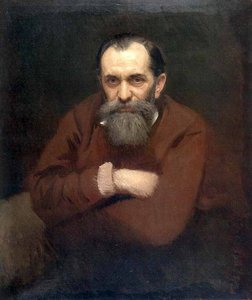
Василий Перов
1833 - 1882 , Русия
Бърза информация
- Artistic Movement Or Style: Реализъм
- Artists Or Movements Influenced By This Artist: ['Предизвикатели (Хора на пътя)']
- Artists Who Influenced This Artist:
- Илюк Репин
- Василий Суриков
- Date Of Birth: 2 януари 1834 г.
- Date Of Death: 29 май 1882 г.
- Full Name: Василий Григорьевич Перов
- Nationality: Руски
- Notable Artworks:
- Проповедник в село
- Опашка пред фонтана
- Place Of Birth: Тоболск, Русия
Свързани статии

Vasily Surikov: Historical Epic & Psychological Realism in 19th-Century Russian Painting
Explore the powerful historical paintings of Vasily Surikov, a leading figure of Russian Realism. Discover his dramatic compositions, psychological depth & lasting influence on 19th-century art. Learn about collecting Surikov's masterpieces.

Russian Realism: The Soulful Power of Truth and the Unyielding Spirit of the Peredvizhniki
Explore the profound depth of Russian Realism. From the social truths of the Peredvizhniki to epic folklore, discover the soulful power of masters like Perov and Yaroshenko through our expert art history insights and museum-quality reproductions.

Vasily Vereshchagin: Realism, War & Subversion in 19th-Century Russian Painting
Explore the powerful realism of Vasily Vereshchagin's war paintings & Central Asian scenes. Discover how this Russian master challenged artistic conventions and offered a brutal, honest depiction of 19th-century conflict. Learn about his legacy for discerning collectors.

Vladimir Makovsky: Realism, Social Commentary & Russian Life in Late 19th-Century Painting
Explore the captivating world of Vladimir Makovsky, a leading Russian realist painter. Discover his insightful depictions of 19th-century life, social commentary & legacy with OriginalUniqueArt.

Romantic Realism's Finest: 10 Masterpieces for Your Home | OriginalUniqueArt
Explore 10 defining masterpieces of Romantic Realism! Discover Courbet, Millet & Daumier's powerful paintings—capturing emotion and social realities. Find museum-quality reproductions for your home at OriginalUniqueArt.com.