
 Преглед в реален мащаб
 Изпрати
 Сподели
 Детайли
 Ръководство

 Изтегляне
 Подобни артикули
 Рентгенова снимка
 Слайдшоу
 Въпроси и отговори
 Статистика
Incorrigible One

- 87.0 x 113.0 cm


 Прочети повече
Получете файл, готов за печат, който предлага много по-високо качество от уеб прегледа. Всяко дигитално изображение, което предлагаме, е извлечено от висококачествен оригинал в нашата база данни — обикновено с ширина между 5 000 и 15 000 пиксела — така че със сигурност да можете да принтирате в голям формат, да кадрирате тесно или да възпроизведете фините детайли.
Нито един файл не напуска нашето студио без внимание. Дигитален експерт проверява цветовете спрямо оригиналната картина и ги коригира при необходимост, след което подобрява яснотата и детайлите с професионални инструменти за ретуш — винаги оставайки верен на мазките и стила на художника. Резултатът е изображение, което изглежда като самата картина, а не като сканиран образ с филтър.
Одобрявате преди финализиране: нашият експерт ще изпрати изображението по имейл в рамките на 72 часа за ваш преглед. Не сте доволни? Можете да поискате подобрения или корекции, или пълно възстановяване на сумата, ако качеството не отговаря на очакванията ви.
Това е качеството, на което разчитат издателства, дизайн студиа, галерии и печатници.
Дигитално изображение
Изтеглете файл с висока резолюция за лично съхранение, принтиране и творчески проекти. ( Превключване към принт Купете ръчно рисувана картина)
Включено във всяка поръчка за дигитални изображения
Гарантирана експертна дигитална доставка
Избирайки OriginalUniqueArt.com, вие не получавате просто изображение – вие придобивате професионално обработена дигитална творба, създадена с прецизност и подкрепена от гаранция за удовлетворение. Ето какво автоматично е включено във вашата поръчка:

Бърза доставка по имейл
Вашето дигитално изображение с висока резолюция ще бъде изпратено по имейл в рамките на 72 часа от поръчката – готово за незабавно използване.

Дигитален файл с подобрено качество чрез ИИ
Вашата картина е професионално оптимизирана чрез усъвършенствани инструменти с изкуствен интелект и ръчна редакция, което гарантира максимална детайлност, яснота и точност на цветовете.

Безплатна доживотна повторна доставка
Изгубили сте или сте изтрили файла си по погрешка? Не се притеснявайте – ще го изпратим отново на Вас по всяко време, безплатно.

Без митнически такси – завинаги
Насладете се на вашето произведение незабавно, без мита, такси или разходи за доставка – дигиталните изтегляния винаги са освободени от данъци.

Гаранция за цветово съответствие
Гарантираме, че вашето дигитално изображение отразява оригиналните цветове възможно най-точно чрез използването на професионални инструменти и системи за управление на цветовете.

100-дневна гаранция за удовлетвореност
Ако не сте доволни от вашето дигитално изображение, ще го преработим или ще възстановим 100% от сумата в рамките на 100 дни – без излишни въпроси.

100% Гаранция за връщане на сумата
Не сте доволни? Получете пълен възврат на сумата в рамките на 100 дни от получаването на вашия цифров файл – без излишни въпроси.

Отстъпки за големи поръчки
Купете 3 изображения, спестете 10% - Купете 5, спестете 15% - Купете 10+, спестете 20%. Идеално за творчески проекти, галерии и агенства.
A Moment of Unyielding Spirit
In the profound depths of Vasily Grigoryevich Perov’s 1873 masterpiece, Incorrigible One, we are thrust into a visceral scene of tension and social friction. The painting captures a raw, cinematic moment: a man in a striking red shirt is being forcibly restrained, his hands bound behind his back. This central figure, the eponymous "incorrigible" soul, stands as a defiant focal point amidst a landscape of looming authority. Surrounding him, two men engage in a grim dialogue of discipline; one holds a whip, a symbol of impending retribution, while another stands sentinel with a stick. The setting—an outdoor space characterized by rugged stone walls and the rustic presence of a horse—adds a layer of earthy realism that grounds the drama in the tangible, often harsh, reality of 19th-century Russian life.
Perov’s mastery of Critical Realism is on full display here. Rather than seeking to beautify the scene, he employs a meticulous technique to document the psychological weight of the encounter. The artist uses light and shadow to sculpt the figures, drawing our eyes to the vibrant crimson of the captive's shirt, which serves as both a visual anchor and a metaphor for his burning, unextinguished spirit. Every detail, from the texture of the brickwork to the curious, watchful gaze of the horse, is rendered with an observational precision that invites the viewer to step into the frame and feel the heavy atmosphere of the courtyard.
The Soul of the Peredvizhniki Movement
To understand this work, one must look toward the historical heartbeat of the Peredvizhniki (The Wanderers) movement, of which Perov was a founding pillar. This era of Russian art sought to move away from the polished, academic traditions of the past and instead bring art to the people, focusing on the poignant, often uncomfortable truths of social inequality and peasant life. In Incorrigible One, Perov does not merely paint a scene of punishment; he paints a commentary on the struggle between individual will and societal control. The presence of the fireplace in the background and the quiet benches suggest a domesticity that has been interrupted by this sudden act of coercion, creating a jarring contrast between peace and violence.
For the discerning collector or interior designer, this painting offers more than just aesthetic value; it provides a profound narrative depth. The composition’s balance of movement and stillness makes it an extraordinary centerpiece for a room that demands conversation and intellectual engagement. Whether placed in a sophisticated study or a grand gallery-style living space, the artwork’s rich textures and emotive power serve as a window into a bygone era of social awakening. It is a piece that resonates with anyone who appreciates art that dares to look closely at the human condition, making it an enduring choice for those seeking a high-quality reproduction that embodies both historical significance and timeless emotional impact.
Въпроси и отговори
За какво се препоръчва използването на принт от "Incorrigible One"?
Препоръчителното приложение за „Incorrigible One“ на Василий Перов е Conversation. Може да се използва и за други цели също.
Как мога да купя цифров файл на „Incorrigible One“ на Василий Перов?
„Incorrigible One“ е достъпна като дигитално изтегляне на изображение с висока резолюция, която може да бъде закупена директно от страницата ѝ Дигитален образ.
Колко светъл е „Incorrigible One“ като цяло?
По отношение на възприеманата яркост, „Incorrigible One“ на Василий Перов е deep_shadow.
Биография на художника
A Life Etched in Realism: Vasily Perov and the Soul of Russia
Vasily Grigoryevich Perov, born Vasily Vasiliev on January 21st, 1834, in the remote Siberian town of Tobolsk, was not merely a painter; he was a chronicler of his time, a voice for the voiceless, and a pivotal figure in shaping the course of Russian art. His life story is inextricably linked to the social realities of 19th-century Russia – a world marked by poverty, injustice, and spiritual yearning – themes that he relentlessly explored through his powerful and unflinching realism. Born out of wedlock to Baron Grigory Kridener and Akulina Ivanova, Perov’s early years were defined by an unconventional upbringing, fostering within him a profound sensitivity to the inequalities prevalent in Russian society. This formative experience instilled a deep empathy for the marginalized and a determination to depict their lives with honesty and dignity. The adoption of the surname “Perov,” derived from the Russian word "pero" (feather), a reference to his early skill in calligraphy, became symbolic of his meticulous attention to detail – a characteristic that would define his artistic approach. His formal artistic training began at the Alexander Stupin Art School in Arzamas, where he honed fundamental skills before enrolling at the Moscow School of Painting, Sculpture and Architecture in 1853, an institution that exposed him to a broader range of artistic influences and solidified his technical foundation.Early Recognition and Artistic Development
Perov’s early career was marked by both critical acclaim and personal hardship. He quickly gained recognition for his talent, earning silver and gold medals from the Imperial Academy of Arts – awards that afforded him the opportunity to study abroad in 1861. This period in Western Europe, particularly Paris and Germany, profoundly influenced his artistic sensibilities, exposing him to new techniques and perspectives while simultaneously reinforcing his commitment to realism. It was during this time that he produced some of his most celebrated works, including “Sermon in a Village” (1861), a painting that catapulted him into national prominence. This masterpiece, depicting a disengaged congregation during a church sermon, subtly critiques religious hypocrisy and social apathy – themes that would become recurring motifs in Perov’s oeuvre. The acclaim surrounding "Sermon in a Village" opened doors for him to exhibit his work widely and establish himself as a leading figure in the burgeoning realist movement. However, this success was shadowed by personal tragedy; he lost his wife, Maria, in 1862, an event that deeply affected him and fueled a sense of melancholy that permeated much of his later work. Despite this sorrow, Perov continued to paint with unwavering dedication, producing a prolific body of work that reflected the complexities of Russian life.The Voice of the Voiceless: Themes and Techniques
Perov’s artistic vision was fundamentally rooted in a commitment to portraying Russian society with unflinching honesty – rejecting the idealized depictions favored by many of his contemporaries. He deliberately chose to focus on the lives of ordinary people – peasants, laborers, the marginalized, and those often overlooked or ignored by mainstream art. His paintings are not mere representations of reality; they are powerful social commentaries that expose the hardships, injustices, and spiritual emptiness prevalent in 19th-century Russia. Works like “The Queue at the Fountain” (1865) vividly illustrate the daily struggles of rural life, while "The Last Journey" (1865), depicting a peasant funeral procession, evokes profound sorrow and highlights the vulnerability of those living on the margins of society. Perov’s technique was characterized by meticulous detail, somber color palettes – often dominated by browns, grays, and muted blues – and a masterful use of light and shadow to create dramatic effect. He wasn't interested in romanticizing poverty or suffering; rather, he sought to present it with dignity and empathy, forcing viewers to confront uncomfortable truths about their own society. His portraits were particularly notable for their psychological depth, capturing the weariness and resilience of his subjects with remarkable accuracy. He skillfully employed a technique known as *cloisonnism*, using bold outlines and flat areas of color to define forms and create a sense of solidity and realism.Founding a Movement: The Peredvizhniki
Perov’s dedication to realism aligned perfectly with the burgeoning spirit of artistic rebellion that led to the formation of the Peredvizhniki (Wanderers) in 1870. This collective of Russian realist painters, disillusioned with the constraints of the Imperial Academy of Arts, established an independent society dedicated to exhibiting art throughout Russia – reaching audiences beyond the confines of St. Petersburg and Moscow. The Peredvizhniki aimed to bring art directly to the people, to address social issues through their work, and to promote a uniquely Russian artistic identity. Perov was not merely a member; he was a founding force, instrumental in shaping the movement’s ideals and advocating for its principles. His commitment to portraying the lives of ordinary Russians resonated deeply with the Peredvizhniki's mission, solidifying his position as a leading figure within the group. The Wanderers’ exhibitions became immensely popular, attracting large crowds and sparking important conversations about art, society, and national identity.Legacy and Enduring Influence
Vasily Perov’s untimely death from tuberculosis in 1882 at the age of 48 marked a significant loss for Russian art. However, his legacy continued to inspire generations of artists who followed in his footsteps. His influence can be seen in the works of Ilya Repin and Vasily Surikov, both masters of realist painting who further developed the tradition he helped establish. Perov’s paintings remain relevant today not only for their artistic merit but also for their enduring social commentary. They serve as a powerful reminder of the hardships faced by ordinary people throughout history and continue to provoke empathy and understanding. His works are now housed in prominent collections, including the Tropinin and Contemporary Moscow Artists Museum, ensuring that his vision continues to resonate with audiences worldwide. *Perov’s contribution extends beyond mere artistic skill; he was a social conscience etched onto canvas, a voice for the voiceless, and a pioneer of Russian realism.* He left behind a body of work that not only documented his time but also challenged it, forever changing the landscape of Russian art.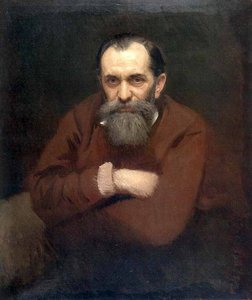
Василий Перов
1833 - 1882 , Русия
Бърза справка
- Artistic Movement Or Style: Реализъм
- Artists Or Movements Influenced By This Artist: ['Предизвикатели (Хора на пътя)']
- Artists Who Influenced This Artist:
- Илюк Репин
- Василий Суриков
- Date Of Birth: 2 януари 1834 г.
- Date Of Death: 29 май 1882 г.
- Full Name: Василий Григорьевич Перов
- Nationality: Руски
- Notable Artworks:
- Проповедник в село
- Опашка пред фонтана
- Place Of Birth: Тоболск, Русия