

 Представи си го
 Изпрати
 Сподели
 Детайли

 Изтегляне
 Подобни
 Рентгенова снимка
 Слайдшоу
 Статистика
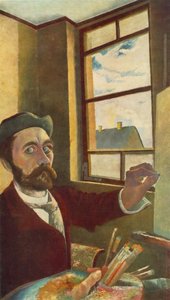
Praying Saviour
 Acrylic On Canvas
- WallArt
- Expressionism
 1903
1903 100.0 x 82.0 cm
 Janus Pannonius Múzeum
 Прочетете повече
Закупете дигитално изображение с висока резолюция и подобрени характеристики, значително по-добро от онлайн прегледа.
Всеки файл е щателно подготвен от нашите специалисти с помощта на съвременни инструменти и експертна ръчна ретуш. Гарантираме, че всяко изображение има изключителна яснота, прецизна цветова точност и фини детайли.
Окончателният файл се доставя по имейл в рамките на 72 часа, оптимизиран за незабавна употреба в професионални, редакционни и печатни среди. Това е същото качество, на което се доверяват водещи дизайнерски студия, издатели и галерии.
Дигитално изображение
Изтеглете файл с висока резолюция за лично показване, принтиране и творчески проекти. ( Превключване към принт Купете ръчно рисувана картина)
Включено във всяка поръчка за дигитални изображения
Експресна дигитална доставка, гарантирана
Когато изберете OriginalUniqueArt.com, вие не получавате само изображение – вие получавате професионално подобрена дигитална творба, създадена с прецизност и подкрепена от гаранция за удовлетворение. Ето всичко, което автоматично се включва в вашата поръчка:

Бърза доставка по имейл
Вашето дигитално изображение с висока резолюция ще ви бъде изпратено по имейл в рамките на 72 часа от поръчката - готово за незабавно използване.

Дигитален файл с подобрено качество чрез изкуствен интелект
Вашата картина е професионално оптимизирана с помощта на усъвършенствани инструменти за изкуствен интелект и ръчна редакция, осигурявайки максимална детайлност, яснота и точност на цветовете.

Безплатна доживотна повторна доставка
Изгубили сте или сте премахнали файла си по погрешка? Не се притежнявайте – ще го изпратим отново на Вас по всяко време, безплатно.

Без такки за мито - никога
Всредите си веднага без мита, данъци или такси по доставка - дигителните приложения винаги са без данъчно освободени.

Гаранция за точност на цветовете
Гарантираме, че вашето дигитално изображение отразява оригиналните цветове възможно най-точно, използвайки професионални инструменти и управление на цветовете.

100-дневна гаранция за удовлетвореност
Ако не сте доволни от вашето дигитално изображение, ще го преработим или ще възстановим 100% от сумата в рамките на 100 дни – без излишни въпроси.

100% Гаранция за връщане на пари.
Не сте доволни? Получете пълен възврат на сумата в рамките на 100 дни от получаването на вашия цифров файл – без излишни въпроси.

Отстъпки за големи поръчки
Купете 3 изображения, спестете 10% - Купете 5, спестете 15% - Купете 10+, спестете 20%. Отлично за творчески проекти, галерии и агенства.
A Moment of Reverence: Tivadar Csontváry Kosztka’s “Praying Saviour”
Tivadar Csontváry Kosztka, born Mihály Tivadar Kosztka on July 5th, 1853, in Kisszeben (modern-day Sabinov, Slovakia), remains a figure of enduring fascination within Hungarian artistic circles—a painter whose life mirrored the turbulent currents of his era and whose canvases pulsed with an arresting blend of spirituality and psychological depth. His formative years were marked by a rich tapestry of influences: his father’s medical practice instilled in him a disciplined intellect alongside familial ties to Polish heritage, while Kosztka himself absorbed the vibrant cultural landscape of Slovakia and Germany—a confluence that undeniably shaped his artistic sensibilities. Unlike many of his contemporaries who embraced Impressionism's fleeting beauty, Kosztka resolutely pursued Expressionism, forging a path distinct from mainstream trends and establishing himself as one of Hungary’s foremost artists.The Expressionist Vision: Atmosphere and Emotion
“Praying Saviour,” completed in 1903, exemplifies the core tenets of Expressionist art—a movement characterized by its rejection of objective representation in favor of conveying subjective emotion and psychological experience. Kosztka eschewed meticulous detail, prioritizing instead a hazy, atmospheric depiction that captures not merely what is seen but how it feels. The muted palette—dominated by shades of grey, ochre, and indigo—creates an oppressive yet contemplative mood, mirroring the solemnity of the depicted prayer scene. Thick brushstrokes dominate the canvas, layering textures and conveying a palpable sense of urgency and emotional intensity. This deliberate disregard for photographic accuracy wasn’t merely stylistic choice; it was a conscious effort to bypass rational thought and tap into primal instincts—a hallmark of Expressionist philosophy.A Biblical Narrative Illuminated
The painting portrays Jesus Christ kneeling before a congregation, bathed in the diffused glow of twilight. Kosztka skillfully utilizes pyramidal composition to draw the viewer’s eye upwards towards Jesus' outstretched hands, symbolizing supplication and yearning for divine grace. The figures surrounding him are rendered with varying degrees of detail—some sharply defined, others blurred into the background—suggesting a hierarchy of importance while simultaneously emphasizing the universality of faith. Notably absent is any explicit depiction of faces; Kosztka deliberately obscures individual expressions, fostering instead an atmosphere of collective contemplation and shared devotion. This anonymity serves to elevate the scene beyond mere biographical representation, transforming it into a timeless meditation on spirituality and human aspiration.Symbolism Embedded in Texture and Color
The dominant grey hue underscores the painting’s solemn mood and evokes feelings of melancholy—a deliberate reflection of the spiritual struggles inherent in faith itself. The scattered trees silhouetted against the darkening sky contribute to the overall sense of isolation and vulnerability, mirroring Jesus' position as a solitary figure confronting divine authority. Kosztka’s masterful use of impasto technique – applying paint thickly onto the canvas – amplifies these textural qualities, creating palpable depth and conveying an emotional resonance that transcends visual perception. The subtle variations in color—particularly the indigo patches adorning the sky—suggest a profound contemplation of the cosmos and its mysteries.Legacy and Emotional Impact
“Praying Saviour” continues to resonate with audiences today due to its uncompromising honesty and its ability to evoke powerful emotions. Kosztka’s masterful portrayal of human vulnerability combined with his evocative Expressionist style ensures that this artwork remains a poignant reminder of the enduring quest for spiritual solace—a testament to the transformative power of art to transcend time and connect us to fundamental truths about the human condition. Its haunting beauty and contemplative atmosphere inspire viewers to consider questions of faith, compassion, and the significance of inner reflection.Биография на художника
Tivadar Csontváry Kosztka: A Painter of Light and Spirit
Tivadar Csontváry Kosztka – a name that, for much of his life, remained largely unknown outside Hungary – is now recognized as one of the nation’s most significant painters. His work transcends mere landscape depiction; it's an immersive experience, a journey into realms of spiritual resonance and breathtaking beauty. Born Mihály Tivadar Kosztka on July 5th, 1853, in Kisszeben (modern-day Sabinov, Slovakia), his origins were deeply rooted in a complex tapestry of cultures – Polish ancestry intertwined with Slovak and German influences, shaping a uniquely perceptive artistic vision. This early exposure to diverse linguistic and cultural currents undoubtedly contributed to the distinctive perspective that would later define his art: a profound connection to both the earthly and the ethereal. For many years, he diligently followed in his father’s footsteps, practicing pharmacy – a profession pursued with dedication until a life-altering experience at the age of twenty-seven irrevocably altered his course. On October 13th, 1880, while immersed in his work, Csontváry claimed to receive a divine calling: a voice declared him destined to become “the greatest painter of the world, greater than Raphael.” This moment became the bedrock of his artistic ambition, propelling him onto an extraordinary and often solitary path.From Apothecary to Artistic Pilgrim
The mystical vision fundamentally reshaped Csontváry’s trajectory. He embarked upon a period of intense preparation, fueled by unwavering self-belief and a relentless pursuit of artistic mastery. Initially met with resistance from traditional art schools – he was deemed unsuitable due to his lack of formal training – he persevered, traveling extensively throughout Europe – Rome, Paris, Munich – studying the works of the masters and honing his skills. However, Csontváry’s ambition extended far beyond mere technical proficiency; he sought something deeper—a unique visual language capable of expressing his inner world. To finance these ambitious journeys, he continued to work as an apothecary, sacrificing personal comfort for the sake of his artistic calling. This dedication reveals a fundamental aspect of his character: a willingness to embrace hardship in pursuit of a higher purpose. His travels weren’t simply sightseeing expeditions; they were deliberate explorations of light, color, and spiritual landscapes. He spent years immersed in the art of the Renaissance, particularly the works of Raphael, yet found himself profoundly dissatisfied with their perceived lack of depth and spiritual resonance. This dissatisfaction ultimately fueled his own artistic quest—to capture a more profound sense of beauty and truth.The ‘Sunway’ and a Unique Artistic Voice
Csontváry's artistic style defies easy categorization. While often associated with Post-Impressionism and Expressionism, he remained largely self-taught, forging his own distinctive path. His paintings are characterized by their monumental scale – many stretching several meters in width and height – and a bold use of color and composition. He developed what he termed the “sunway” (*napút*), an approach that emphasized the transformative power of light and its ability to reveal hidden truths. This wasn’t merely about depicting sunlight; it was about capturing the very essence of illumination, both physical and spiritual. His landscapes are often imbued with a sense of awe-inspiring grandeur, while his depictions of Middle Eastern scenes possess a haunting beauty and an undercurrent of melancholy. Works like *The Lonely Cedar* (1907) and *Pilgrimage to the Cedars in Lebanon* (1907) exemplify this approach—towering trees silhouetted against dramatic skies, evoking feelings of solitude, reverence, and the sublime. Other notable paintings include *Springtime in Mostar* (1903), capturing a romantic vision of the historic town, and *The Wailing Wall in Jerusalem* (1904), a poignant depiction of faith and remembrance. He sought to capture not just the appearance of things, but their underlying spiritual essence—a quality that sets his work apart from many of his contemporaries. The influence of artists like Jean-François Millet is evident in his early works, while later he drew inspiration from the Symbolist movement.A Journey Through Lands of Light and Shadow
Csontváry’s artistic journey took him far beyond Hungary's borders, immersing him in the landscapes and cultures of Europe and the Middle East. He spent years traveling through Italy, Greece, Palestine, Egypt, and Syria, each location leaving an indelible mark on his art. These journeys weren’t merely vacations; they were deliberate explorations of light, color, and spiritual landscapes. The stark beauty of the Mediterranean coast, the towering majesty of Mount Vesuvius, the ancient ruins of Jerusalem—all served as sources of inspiration for his most evocative works. He wasn't simply documenting what he saw; he was interpreting it through the lens of his own intensely personal vision—a vision often tinged with melancholy and a deep reverence for nature’s power. His fascination with light is particularly evident in paintings like *Castellammare di Stabia* (1902), where the interplay of sunlight and shadow creates an atmosphere of both serenity and mystery. The painting captures the essence of the Italian coastline, with its dramatic cliffs, azure waters, and quaint villages—a testament to Csontváry’s ability to distill a complex scene into a single, unforgettable image.Recognition Delayed, Legacy Enduring
Despite his artistic innovations and the growing recognition of his talent among critics in Western Europe, Csontváry faced considerable challenges during his lifetime. His unconventional lifestyle – he was a vegetarian, teetotaler, and pacifist – and his often-prophetic writings led many to dismiss him as an eccentric crank. He struggled to gain widespread acceptance within the Hungarian art establishment, finding greater appreciation among critics in Paris and Vienna. However, even there, full recognition remained elusive. His paintings were rarely sold during his life, and financial hardship plagued his later years. Csontváry died in Budapest on June 20th, 1919, largely unappreciated by the Hungarian art establishment. It was only after his death that his genius began to be fully recognized. Today, Tivadar Csontváry Kosztka is celebrated as one of Hungary’s greatest painters—a visionary artist whose work continues to captivate and inspire. His paintings are held in prestigious collections such as the Hungarian National Gallery in Budapest and the Csontváry Museum in Pécs, ensuring that his legacy will endure for generations to come. In 2006, *Rendez-vous* (1902), also known as “Meeting of the Lovers,” sold at auction for over one million euros—a testament to the enduring power and value of his artistic vision—a fitting tribute to the man who dared to paint his own truth.A Lasting Influence
- Pioneering Spirit: Csontváry’s unwavering commitment to his artistic vision, despite facing rejection and hardship, serves as an inspiration to artists today.
- Unique Style: His “sunway” technique and monumental scale continue to influence landscape painters seeking to capture the spiritual essence of nature.
- Cultural Icon: Csontváry’s work has become a symbol of Hungarian national identity, celebrated for its unique blend of Eastern and Western influences.
- Spiritual Depth: His paintings offer viewers a profound meditation on themes of solitude, faith, and the sublime, resonating with audiences across cultures and generations.
Тивардор Цонтвáри Косткá
1853 - 1919 , Словакия
Бързи факти
- Artistic Movement Or Style: Пост-импресионизъм, Експресионизъм
- Artists Or Movements Influenced By This Artist: ['Унгария']
- Artists Who Influenced This Artist: ['Рафаел']
- Date Of Birth: 5 юли 1853
- Date Of Death: 20 юни 1919
- Full Name: Тъвидар Чонтвáри Косткá
- Nationality: Унгарец
- Notable Artworks:
- Единна кипарица
- Празник в Мостар
- Встреча на любовниците
- Place Of Birth: Сабинов, Словакия