

 Преглед в реален мащаб
 Сподели
 Сподели
 Подробности
 Ръководство

 Изтегляне
 Подобни артикули
 Рентгенова снимка
 Слайдшоу
 Статистика
The Diaries


 Разгърни целия текст
Изкуството, представено на тази страница, е защитено от законите за авторско право, което означава, че не можем законно да създаваме или продаваме идентични репродукции. Тази защита се прилага съгласно международни споразумения като Бернска конвенция и от националното законодателство, включително разпоредбите на Закон за авторското право на САЩ – Раздел 17.
Този метод е напълно съвместим с законите за авторско право, тъй като не включва копиране или дублиране на защитеното произведение. Вместо това става въпрос за творческа реинтерпретация – нова картина, която е вдъхновена от оригинала, но не е идентична с него.
Жикле / Художествен принт
Giclée печат или принт върху платно с музейно качество, бързо производство и гъвкави опции за завършен вид. ( Поръчайте ръчно рисувано репродукция на този колекционерски предмет Превключване към дигитално изображение)




P118B €10

P118H €10

P118W €10

P438Z €10

P508JH €12

P508YH €12

P805H €10

P805Z €10

P919BZ €10

P919G €10

P919XJ €10

P959ZH €10

P968JZ €12

W106C €8

W218G €10

W218JH €8

W218Y €10

W307PJ €10

W316G €10

W316PJ €8

W316Y €10

W398PJ €8

W4111J €10

W500HY €15

W500JH €15

W692G €12

W849H €8

W940BG €15

W953PJ €8




Изберете от нашите предварително зададени размери, които съответстват на оригиналните пропорции на произведението.

Въведете необходимата ширина и височина, за да паснат на вашата рамка или стена. Принтовете могат само да се изрязват, но никога не могат да бъдат по-големи от оригиналната картина, така че при размер с различен формат част от изображението ще бъде загубена. Преди да започнем печат, ще ви изпратим дигитален мок업 за одобрение. Изображението, показано на тази страница, не показва реалното изрязване — само мок업ът го показва.
Доставка по целия свят () в рамките на 2 седмици вместо стандартните 4/5 седмици. (22 Октомври)

Безплатна експресна доставка по целия свят

Висококачествено ленено платно

Пълно застраховане на доставката

Гаранция за възстановяване на митнически такси

Гаранция за пълно съответствие на цветовете

Политика за връщане в рамките на 100 дни (само при дефекти)

100% Гаранция за връщане на сумата

Отстъпка при поръчка на повече произведения
 Опцията със стъкло е налична само за размери под 110 см

The Diaries
Жикле / Художествен принт
Размер на репродукцията
-


Крайна цена
€ 70
The Diaries: An Exploration of Form and Ideology
Peter Friedl’s *The Diaries* (2015) presents a deceptively simple image—a bookshelf crammed with books—yet it embodies a profound conceptual engagement with art history and the broader anxieties surrounding representation. Born in Munich, Austria, in 1967, Friedl is recognized for his ability to dissect formal conventions while simultaneously interrogating their ideological underpinnings. This artwork exemplifies his signature approach: layering hollowed-out forms against one another to disrupt established hierarchies of power and offering a counterpoint to the modernist project’s promises.Conceptual Framework & Historical Context
Friedl draws inspiration from Mieke Bal's assertion that “nothing goes without saying,” prioritizing visual literacy as a crucial element in interpreting art. His work actively resists passive reception, prompting viewers to confront contradictions inherent within artistic endeavors and historical narratives. Specifically referencing the US Department of Housing and Urban Development’s American Homelessness Prevention and Rapid Re-Housing Program—a project designed to combat homelessness through financial assistance—Friedl utilizes the architectural scale model as a symbolic device. This model isn't merely a depiction of space; it represents a political stance, advocating for a future shaped by confronting societal inequities. The series underscores Friedl’s belief that art can serve as a catalyst for critical reflection and social change.Stylistic Characteristics & Technique
The painting itself is characterized by its deliberate austerity. Presented without contextual framing—a conscious decision to isolate the bookshelf—the sculpture invites contemplation on the history of modernism. Friedl employs a technique rooted in meticulous observation, capturing the textures and variations of light across the books’ surfaces. The arrangement isn't random; it reflects Friedl’s interest in presenting disparate concepts within a unified visual form. This juxtaposition highlights the tension between seemingly incompatible ideas—a core element of Friedl’s artistic philosophy. The use of muted colors contributes to an atmosphere of quiet contemplation, mirroring the contemplative mood conveyed by the subject matter itself.Symbolism & Emotional Resonance
The bookshelf serves as more than just a visual motif; it symbolizes knowledge, memory, and the accumulation of experience—themes central to Friedl’s oeuvre. The books themselves represent diverse voices and perspectives, reflecting the complexities of human history and intellectual discourse. By confronting viewers with this densely populated image, Friedl encourages them to engage in a dialogue about representation and its role in shaping our understanding of the world. Ultimately, *The Diaries* resonates with an emotional depth that transcends mere visual aesthetics—it speaks to the enduring human desire for connection and meaning amidst the uncertainties of contemporary life.Concluding Remarks
Thomas Peter Friedl’s *The Diaries* stands as a testament to his unwavering commitment to artistic innovation and intellectual rigor. It exemplifies his ability to transform seemingly commonplace subjects into vehicles for profound philosophical inquiry, cementing his place among the most influential artists of our time. Its understated elegance and conceptual complexity continue to inspire admiration and provoke discussion within the art world.Въпроси и отговори
Какво изобразява „The Diaries“ на Thomas Peter Friedl и каква е неговата атмосфера?
„The Diaries“ на Thomas Peter Friedl съчетава architecture, housingprogram, ideology, scalemodel, textimagerelation, historicalpowerstructures, modernism с Calm атмосфера.
Какво приложение и какво пространство се препоръчват за „The Diaries“ на Thomas Peter Friedl?
„The Diaries“ е предложена за Accent, а препоръчителното пространство е Living Room.
За какво се препоръчва използването на принт от "The Diaries"?
Препоръчителното използване на принт от „The Diaries“ е Accent.
Биография на художника
The Architect of Memory
In the quiet corners of Munich, where his story began in 1967, a mind was forming that would eventually seek to dismantle the very structures we use to understand history. Before he became an interlocutor of representational forms, he moved through the world with a different kind of lens, working as a theater critic. This early immersion in drama and linguistics shaped his later ability to treat the visual field as a stage where power and identity are constantly being reenacted. He did not merely observe; he learned how the placement of a prop or the cadence of a line could alter the perception of truth.
As he moved toward Berlin, his practice began to expand into a multidisciplinary exploration that refused to be pinned down by a single medium. He turned to photography, painting, video, and even architectural scale models to investigate how we construct our political and aesthetic consciousness. His work often functions through a strategy of radical neutrality, where the artist avoids arguing for a specific reading but instead exposes the conditions underging the creation of meaning itself. By using hollowed-out forms and layering disparate elements, he sought to resolve the contradictions found within modernism.
The Weight of the Model
Much of his most profound inquiry resides in the physical presence of the model. In his series known as Rehousing, which spanned from 2012 to 2019, he utilized architectural scale models to reflect on history and ideology. These were not mere miniatures but case studies for a mental geography. He reconstructed the childhood home of his parents in Austria alongside much more politically charged spaces, such as the cabin of Martin Heidegger in the Black Forest, the residence of Ho Chi Minh in Hanoi, and even a slave hut from a plantation in Louisiana. Each structure carried the weight of its own history, acting as a vessel for the ideologies that built them.
This fascination with the intersection of text and image led to monumental installations like The Diaries in 2015. In this work, a bookshelf crammed with over 400 handwritten notebooks presented a deceptively simple image that actually interrogated the anxieties of representation. He used these objects to explore themes of knowledge, memory, and experience, forcing a confrontation with the textures of light and the accumulation of human thought. Through such meticulous observation, he demonstrated that nothing goes without saying.
A Stage for Social Critique
His later explorations often turned toward the theatricality of social struggle. In works like Teatro Popular and his video installations, he utilized techniques from puppet theater and tableaux vivant to highlight the mechanisms of historiography. He was particularly drawn to the permeability of language and the boundaries of identity. His video work Report, created for documenta 14, examined how language can both connect and divide, using the empty stage of a national theater to let actors recite texts in their own mother tongues.
Even when dealing with heavy themes of racial bias and colonial legacies, his approach remained rooted in a piercing dramaturgy. In Liberty City, he staged a reversal of a violent historical event in Miami, using the blurry, uncut quality of footage to mimic an amateur recording. This method allowed him to walk the line between documentation and fiction, challenging the viewer's compassion and their preconceived notions of justice. His career remains a continuous effort to use the tools of art to question the very aesthetics of cultural memory.

Thomas Peter Friedl
1967 - , Germany
Бързи факти
- Full Name: Thomas Peter Friedl
- Notable Artworks:
- The Diaries
- German Village
- Installation View
- Place Of Birth: Munich, Germany
- Date Of Birth: 1967
Свързани статии
ЧЗВ: Стенни картини и фрески – Въпроси относно изработката по поръчка, размера и монтажа
предлага ръчно изработени картини и фрески по поръчка с безупречно качество. Индивидуален подход, експертни консултации и гаранция за удовлетвореност. Създайте уникално произведение на изкуството за вашия дом или бизнес.
Digital Illustration Guide: Scaling Art Procurement Efficiency for Large-Scale Hospitality Projects
Master large-scale art procurement with our guide for hotel designers. Learn to leverage digital illustration, custom mockups, and efficient bulk ordering to scale high-quality, hand-painted reproductions across global hospitality projects with precision and cost-efficiency.
Мащабиране на художествената визия: Поддържане на уникално качество при обемен поръчки за търговски пространства
Разгледайте как да мащабирате художествената визия за търговски пространства без компромис с качеството. Експертни съвети, логистика и персонализация от Smart Art Studio. Консултирайте се сега!
Хармонизиране на идентичността и мащаба: Казус за управление на арт програми в мултибрандови хотелски вериги
Стратегии за успешно управление на арт програми в мултибрандови хотели. Създайте уникална бранд идентичност и впечатляващо преживяване за гостите с експертни съвети и решения.
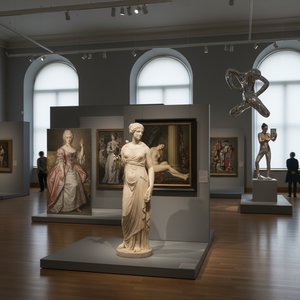
The Allure of the Pose: Representations of 'Model' Through Art History
Explore the fascinating history of the 'art model' through centuries of painting! Discover academic techniques, social contexts & the evolving role of models in art. OriginalUniqueArt offers custom reproductions and expert consultation.