Меню

() ·

A painting made for you, by hand

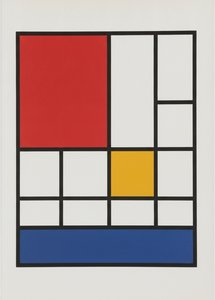
Composition I (still life)

Ръчно изработена маслена репродукция

Ръчно рисувана маслена картина върху платно във вашия размер и рамка, изработена по поръчка от нашите художници. ( Превключване към принт Превключване към дигитално изображение)

Описание на колекционерския предмет

Theo van Doesburg's 'Composition I (Still Life)' is a groundbreaking geometric abstraction exploring form and space through carefully arranged objects – a pivotal work of the De Stijl movement.

Биография на художника

Тео ван Досбур е революционер в изкуството, основоположник на Де Стил и неопластицизма. Геометричните абстракции, влиянието на Баухаус и траен принос към модерното изкуство, архитектурата и дизайна.

from ·

Chapter 1

How large should it be?

Slide to change the size; the picture on the left shows the frame at its real width. The proportions of the original are kept.

Стандартен
персонализиран
CM
INCH

Изберете от нашите предварително зададени размери, които съответстват на оригиналните пропорции на произведението.

ширина
височина

Въведете необходимата ширина и височина, за да паснат на вашата рамка или стена. Тъй като това е ръчна работа, при избор на размер с различен формат художникът може да нарисува малко повече около картината или да отреже малко от периферията — вие избирате. Преди да започне рисуването, ще ви изпратим дигитален мок업 за одобрение. Картината, показана на тази страница, не е реалният резултат — само мок업ът го показва.

Chapter 2

How should it arrive?

Choose the edges of the stretched canvas

Choose your frame

Corner sample of the WhiteWrap canvas edge finish, stretched on масивна дървесина bars
White €1
Corner sample of the BlurSideWrap canvas edge finish, stretched on масивна дървесина bars
Blurside €1
Corner sample of the ExtendedWrap canvas edge finish, stretched on масивна дървесина bars
Extended €1
Corner sample of the P118B picture frame: формован полистирол, 5 cm wide and 3 cm thick
P118B €10
Corner sample of the P118H picture frame: формован полистирол, 5 cm wide and 3 cm thick
P118H €10
Corner sample of the P118W picture frame: формован полистирол, 5 cm wide and 3 cm thick
P118W €10
Corner sample of the P438Z picture frame: формован полистирол, 5.5 cm wide and 3.5 cm thick
P438Z €10
Corner sample of the P508JH picture frame: формован полистирол, 7 cm wide and 3.5 cm thick
P508JH €12
Corner sample of the P508YH picture frame: формован полистирол, 7 cm wide and 3.5 cm thick
P508YH €12
Corner sample of the P805H picture frame: формован полистирол, 5 cm wide and 3.5 cm thick
P805H €10
Corner sample of the P805Z picture frame: формован полистирол, 5 cm wide and 3.5 cm thick
P805Z €10
Corner sample of the P919BZ picture frame: формован полистирол, 7 cm wide and 3.5 cm thick
P919BZ €10
Corner sample of the P919G picture frame: формован полистирол, 7 cm wide and 3.5 cm thick
P919G €10
Corner sample of the P919XJ picture frame: формован полистирол, 7 cm wide and 3.5 cm thick
P919XJ €10
Corner sample of the P959ZH picture frame: формован полистирол, 5 cm wide and 3 cm thick
P959ZH €10
Corner sample of the P968JZ picture frame: формован полистирол, 6 cm wide and 4 cm thick
P968JZ €12
Corner sample of the W106C picture frame: масивна дървесина, 5 cm wide and 3 cm thick
W106C €8
Corner sample of the W218G picture frame: масивна дървесина, 5 cm wide and 3 cm thick
W218G €10
Corner sample of the W218JH picture frame: масивна дървесина, 5 cm wide and 3 cm thick
W218JH €8
Corner sample of the W218Y picture frame: масивна дървесина, 5 cm wide and 3 cm thick
W218Y €10
Corner sample of the W307PJ picture frame: масивна дървесина, 6 cm wide and 3 cm thick
W307PJ €10
Corner sample of the W316G picture frame: масивна дървесина, 6 cm wide and 3 cm thick
W316G €10
Corner sample of the W316PJ picture frame: масивна дървесина, 6 cm wide and 3 cm thick
W316PJ €8
Corner sample of the W316Y picture frame: масивна дървесина, 6 cm wide and 3 cm thick
W316Y €10
Corner sample of the W398PJ picture frame: масивна дървесина, 5 cm wide and 3 cm thick
W398PJ €8
Corner sample of the W4111J picture frame: масивна дървесина, 6.5 cm wide and 3.5 cm thick
W4111J €10
Corner sample of the W500HY picture frame: масивна дървесина, 7 cm wide and 5 cm thick
W500HY €15
Corner sample of the W500JH picture frame: масивна дървесина, 7 cm wide and 5 cm thick
W500JH €15
Corner sample of the W692G picture frame: масивна дървесина, 8 cm wide and 4 cm thick
W692G €12
Corner sample of the W849H picture frame: масивна дървесина, 5 cm wide and 3 cm thick
W849H €8
Corner sample of the W940BG picture frame: масивна дървесина, 7.5 cm wide and 4.5 cm thick
W940BG €15
Corner sample of the W953PJ picture frame: масивна дървесина, 6 cm wide and 3.5 cm thick
W953PJ €8
Corner sample of the H24-GOLD picture frame: резно дърво с левкас, 10 cm wide and 6 cm thick
H24-GOLD €30
Corner sample of the H24-SILVER picture frame: резно дърво с левкас, 10 cm wide and 6 cm thick
H24-SILVER €30
Corner sample of the H36-GOLD picture frame: резно дърво с левкас, 15 cm wide and 6.5 cm thick
H36-GOLD €45
Corner sample of the H36-SILVER picture frame: резно дърво с левкас, 15 cm wide and 6.5 cm thick
H36-SILVER €45

Moulding: . Overall size with the frame: .

Chapter 3

Who paints it, and should anything change?

Examples of what can be changed: Replace face with customer photo; Add pet (e.g., replace cat with dog); Include hidden message in background; Change background landscape or elements.
After order, OriginalUniqueArt.com team will email client for instructions and provide a mockup preview

Доставка по целия свят () в рамките на 3-4 седмици вместо стандартните 5 седмици. (29 Октомври). Без компромис с качеството.

Chapter 4

The finishing touches

A nameplate, as in a museum?

Детайли за гравираната бронзова плака

This elegant plaque features the artist's name and the title of the artwork, finely engraved for a timeless presentation.

It is made from bronze with a refined, elegant finish. The text is precisely laser-engraved for a sharp and permanent result. Measuring 9x2 cm, the plaque is compact yet easy to read. It's built to be durable and scratch-resistant, offering a professional, museum-quality look. Mounting is simple thanks to the included adhesive backing.

Детайли за прозрачната акрилна плака

The plaque includes essential engraved details such as the artist's name, the title of the artwork, the date it was created, the type of media used-like oil on canvas or watercolor-a brief description of the piece, and a QR code that links to the complete artwork information.

It is crafted from clear acrylic, offering a sleek, modern appearance. The text is UV-engraved in black to ensure strong visual contrast. With a size of 10x15 cm, it ensures optimal readability. It comes equipped with two metal hooks for secure wall mounting. The plaque is designed to be weather-resistant, making it suitable for various environments, and it includes interactive features that work seamlessly with smartphone scanning.

Детайли за черната акрилна плака

This elegant plaque includes engraved information such as the artist's name, the title of the artwork, the date it was created, the type of media used (like oil on canvas or watercolor), a short description of the artwork, and a QR code for quick access to more information.

The plaque itself is made from refined black acrylic with a premium finish. The text is laser-engraved in white for high contrast and readability. Its size is 10x15 cm, designed to be easy to read. It comes with two metal hooks for professional mounting. The design is sleek and fits any interior style. It is also weather-resistant and durable, with built-in digital integration for mobile compatibility.

A protective varnish?

When do you need it?

Chapter 5

Your painting, as you ordered it

Composition I (still life)

Вид репродукция

Размер на репродукцията

-

Елитен старши художник

Повече детайлност, изящество и допълнително време за производство

-

Рамка за репродукция

-

-

За произведения на изкуството или репродукции, чийто размер е над 105 см (приблизително 41 инча) във всяка страна, рамката ще бъде изпратена в разглобен вид като комплект за сглобяване. Този метод гарантира безопасна доставка и предотвратява повреди по време на транспортиране.

Изисква се професионално сглобяване – това не е продукт за самостоятелна изработка (DIY).
Комплектът трябва да бъде сглобен, а платното – опънато от опитен професионален багер, като се използва дървено лепило (не е включено в комплекта), клещи за опъване на платно и затягащи скоби, за да се поддържа правотата на подрамника, докато лепилото изсъхне. Неправилното сглобяване или неравномерното опъване на платното може трайно да повреди произведението и не е покрито от нашата гаранция.

  • Всички елементи от масивна дървесина са включени, прецизно изрязани по размер.

  • Сглобява се с предоставените винтове, както и с лепило за дърво за ъгловите връзки, което не е включено в комплекта и трябва да бъде осигурено от вашия рамкар.

  • Изискват се професионални инструменти, които не са включени: щипка за опъване на платно (натягач) и скоби за фиксиране на подрамниците под прав ъгъл, докато лепилото изсъхне.

Важно:
За сглобяването на ъглите е необходимо лепило за дърво, рейките трябва да се фиксират с клещи (затягащи скоби, докато лепилото изсъхне напълно, а за опъването на платното върху готовата рамка е необходим инструмент за опъване на платно. Нито един от тези артикули не е включен в комплекта. Моля, осигурете услугите на опитен професионалист по багетно окантоване, преди да поръчате този размер.

Етикет с име

-

-

Защитен лак

Гланцов лак (подсилва цветовете и предпазва от светлина и влага)

-

Персонализирай моето произведение

Примери за възможности за персонализация: Заменете лицето със снимка на клиента; Добавете домашен любимец (например, заменете котка с куче); Включете скрито съобщение във фона; Променете пейзажа или елементите на фона.

-

Спешно

Доставка по целия свят () в рамките на 3-4 седмици вместо стандартните 5 седмици. (29 Октомври). Без компромис с качеството.

-

Експресна доставка

Доставка по целия свят () в рамките на 5 седмици. (5 Ноември).

Включена

Обща цена

€ 265

Обща цена € 265

Опцията със стъкло е налична само за размери под 110 см

Included with every order

  • Безплатна експресна доставка по целия свят
  • Висококачествено ленено платно
  • Пълно застраховане на доставката
  • Гаранция за възстановяване на митнически такси
  • Гаранция за пълно съответствие на цветовете
  • Политика за връщане в рамките на 100 дни (само при дефекти)
  • 100% Гаранция за връщане на сумата
  • Оферта за отстъпка при поръчка на повече бройки

A Symphony of Geometry: Rediscovering Theo van Doesburg’s Composition I

In the quiet evolution of modernism, few works capture the radical shift from representation to pure abstraction as poignantly as Theo van Doesburg’s Composition I (still life). Created in 1916, this masterpiece serves as a profound bridge between the tangible world and the spiritual realm of geometry. At first glance, the viewer is presented with a familiar tableau—the humble arrangement of bowls, cups, apples, and a vase resting upon a table. Yet, as one lingers, the recognizable forms begin to dissolve. The objects are not merely depicted; they are distilled. Through a masterful application of Neoplasticism, van Doesburg strips away the superficial textures of reality to reveal a skeletal structure of horizontal lines, vertical axes, and overlapping circles that pulse with an internal, rhythmic life.

The technique employed in this work is a testament to the artist's disciplined pursuit of clarity. Eschewing the expressive, thick impasto of his contemporaries, van Does andburg utilized precise, meticulous brushstrokes to apply pigment onto the canvas. This method ensures that every intersection of line and every curve of a circle feels intentional and balanced. The composition is anchored by a central, tree-like structure composed of concentric circles, which draws the eye inward, creating a sense of depth that defies the flatness of the abstract plane. This interplay between the weight of the geometric forms and the lightness of the negative space creates a visual equilibrium that is both intellectually stimulating and aesthetically soothing.

The Spirit of De Stijl: Historical and Symbolic Resonance

To understand Composition I, one must look toward the turbulent era of its birth. Painted amidst the shadows of World War I, the work emerged from a period of intense intellectual ferment. Van Doesburg, alongside luminaries like Piet Mondriaan, sought to establish the De Stijl movement—a collective mission to redefine art’s role in a fractured society. They believed that by moving away from the "sensory" and toward the "universal," art could foster a new sense of cosmic harmony. The painting is not merely an experiment in shape; it is a philosophical manifesto. The dominant circles within the work are deeply symbolic, representing spiritual unity and the infinite nature of the cosmos—concepts heavily influenced by the writings of Wassily Kandinsky.

For the discerning collector or interior designer, this piece offers more than just visual interest; it provides an emotional anchor of warmth and stability. Despite its austere, geometric vocabulary, the palette—rich with warm hues—imbues the canvas with a surprising sense of intimacy. It is a work that demands contemplation, inviting the viewer to transcend the chaos of the external world and enter a realm of pure intellect and emotion. Whether placed in a contemporary gallery setting or as a focal point in a sophisticated modern interior, Composition I radiates a timeless elegance, making it an incomparable choice for those who appreciate art that speaks to both the mind and the soul.

Въпроси и отговори

С какви други имена е известен/а Тео ван Досбург?

Тео ван Досбург се появява и под алтернативните имена Християн Емил Мари Купер, И. К. Бонсет, Алдо Камини, Доус.

Колко души разглеждат "Composition I (still life)"?

Статистиката за „Composition I (still life)“ на Тео ван Досбург се намира на страницата Статистика на произведението: месечни посещения на творбата, посещения на произведенията на художника, както и разпределение на последните посетители по държава и език.

В коя част от дома би изглеждала добре репродукцията на "Composition I (still life)"?

„Composition I (still life)“ на Тео ван Досбург е препоръчано за Living Room. Тази препоръка се основава на темата, цветовете и настроението на произведението.

More about this painting

Преглед в реален мащаб Преглед с AR Превключване към принт Превключване към дигитално изображение Изпрати
Детайли Ръководство Добави в любими Изтегляне Подобни артикули Рентгенова снимка Слайдшоу Q&A Статистика

In numbers

  • 1916the year it was painted
  • 29frames to choose from
  • standard sizes, in its own proportions
  • 5weeks to paint and deliver it
Тео ван Досбург

Тео ван Досбург

1883 - 1931, Нидерландия

Quick facts about Тео ван Досбург

  • Artistic Movement Or Style: Де Стил, Неопластицизъм
  • Artists Or Movements Influenced By This Artist:
    • Баухаус
    • Минимализъм
    • Конструктивизъм
  • Artists Who Influenced This Artist:
    • Ван Гог
    • Кандински
  • Date Of Birth: 30 август 1883 г.
  • Date Of Death: 7 март 1931 г.
  • Full Name: Тео ван Досбург
  • Nationality: Нидерландски
  • Notable Artworks:
    • Изследване на едновременни композиции XXII
    • Композиция с полустойности
    • Танцьорки
  • Place Of Birth: Утрехт, Нидерландия

Биография на художника

The Architect of Abstraction: A Life in Geometric Harmony

Theo van Doesburg, born Christian Emil Marie Küpper in 1883 in Utrecht, Netherlands, wasn’t merely a painter; he was a revolutionary force who fundamentally reshaped the very foundations of modern art. His journey began amidst the lingering echoes of Impressionism and Post-Impressionism, initially mirroring styles reminiscent of Vincent van Gogh – both in subject matter and the intense emotionality conveyed through brushstrokes. However, this early phase served as a crucial prelude, a necessary stepping stone towards the radical transformation that would define his enduring legacy. A pivotal moment arrived in 1913 with his encounter with Wassily Kandinsky’s *Rückblicke*. This text ignited within van Doesburg a profound realization: true artistic expression wasn't about faithfully replicating the external world, but rather channeling an inner, spiritual reality through the pure, unadulterated language of abstraction. It was this conviction that birthed Neoplasticism – more commonly known as De Stijl – a movement he founded and fiercely championed, becoming its most ardent advocate.

Forging a New Visual Language: The Principles of De Stijl

De Stijl wasn’t simply an artistic style; it was a comprehensive philosophical manifesto translated into visual form. Van Doesburg believed in stripping art down to its most essential elements – straight lines, right angles, and the primary colors of red, yellow, and blue, alongside black, white, and gray. This austere palette wasn't born from limitation but from a profound belief that these fundamental forms resonated with an underlying cosmic order, a universal harmony waiting to be revealed through visual representation. He envisioned a *total* work of art, extending far beyond the confines of the canvas to encompass architecture, design, furniture, and even everyday objects – seeking to create a unified aesthetic experience across all aspects of human life. Collaboration was paramount; van Doesburg worked closely with architects like J.J.P. Oud and Gerrit Rietveld, designing stained glass windows, innovative furniture pieces, and entire interiors that meticulously embodied the principles of De Stijl. His collaborations extended beyond individual projects to include fellow artists such as Piet Mondrian, with whom he co-founded the influential journal *De Stijl*, a platform for disseminating their ideas and attracting a vibrant community of like-minded creatives. However, despite their shared origins and initial synergy, tensions gradually emerged between van Doesburg and Mondrian regarding the rigidity of Neoplasticism. Van Doesburg introduced “Elementarism” in 1926 – a bold departure that sought to inject dynamism into the movement, advocating for diagonal lines and a more fluid approach to composition, ultimately leading to a significant schism within De Stijl.

Beyond Painting: A Multifaceted Artistic Vision

While celebrated primarily as a painter, Theo van Doesburg’s artistic pursuits were remarkably diverse and far-reaching. He was a prolific writer, poet, critic, and theorist – using his pen to articulate the complex theoretical underpinnings of De Stijl and challenge conventional notions of art and aesthetics. His engagement with Dadaism in the early 1920s further broadened his artistic horizons, leading him to experiment with collage, typography, and other innovative techniques. This period also saw him teaching at the Bauhaus in Weimar, Germany – a crucible of modern design and architecture – where he shared his ideas with a new generation of artists and designers, fostering dialogue and pushing the boundaries of creative expression. He wasn’t content to remain confined within the traditional realm of painting; van Doesburg actively sought to integrate art into everyday life, believing it had the power to transform society for the better. His designs for interiors and furniture weren't merely aesthetic exercises; they were carefully considered attempts to create harmonious living spaces that reflected the principles of De Stijl – spaces designed to evoke a sense of balance, order, and spiritual connection. A prime example is his collaboration with Sophie Taeuber-Arp and Georges Vantongerloo on designing artist residences in Paris, showcasing a holistic approach to artistic creation – an attempt to build not just buildings but entire worlds imbued with the spirit of De Stijl.

Key Influences and Developments

Van Doesburg’s artistic development was shaped by a confluence of influences. The early impact of Vincent van Gogh's expressive brushwork instilled in him a deep appreciation for emotional intensity, while Kandinsky’s *Rückblicke* provided the crucial conceptual framework for embracing abstraction as a means of accessing spiritual truth. Furthermore, his exposure to Cubism and Futurism broadened his understanding of geometric forms and dynamic composition – though he ultimately rejected their emphasis on representation in favor of pure abstraction. The Dada movement's embrace of chance and anti-establishment sentiment also influenced his approach to art, encouraging him to question traditional conventions and explore new possibilities. His time at the Bauhaus exposed him to innovative design principles and a collaborative spirit that profoundly shaped his artistic practice. His interest in typography and graphic design led to explorations of visual communication as an integral part of the De Stijl aesthetic.

Legacy and Enduring Influence

Despite his tragically short life – he died suddenly in 1931 at the age of 47 – Theo van Doesburg’s impact on modern art remains profound and enduring. De Stijl, though relatively short-lived as a cohesive movement, exerted an enormous influence on subsequent artistic developments, including Bauhaus design, Minimalism, Constructivism, and countless other movements that sought to simplify forms, reduce color palettes, and prioritize functionalism. His emphasis on geometric abstraction, pure color, and the integration of art into everyday life continues to resonate with artists and designers today. Van Doesburg’s legacy extends far beyond his paintings and designs; it lies in his unwavering commitment to artistic innovation, his relentless pursuit of a universal aesthetic language, and his belief in the transformative power of abstraction – a vision that continues to inspire those who seek to create a more beautiful, harmonious, and meaningful world through art.

Бърза информация

  • Medium: Oil on canvas
  • Subject or theme: Still life
  • Influences: Kandinsky
  • Notable elements or techniques: Geometric abstraction
  • Year: 1916

Тест за познания по изкуство

За всеки въпрос има само един верен отговор.

Въпрос 1:
What is the primary focus of Composition I (still life)?
Въпрос 2:
In what year was De Stijl magazine established?
Въпрос 3:
What was Theo van Doesburg's initial artistic influence?
Въпрос 4:
What was Theo van Doesburg's aim for De Stijl?
Въпрос 5:
What is the significance of the tree-like structure in Composition I?
Разгледайте произведения на изкуството, организирани по теми, стилове и характеристики.