
 Преглед в реален мащаб
 Изпрати
 Сподели
 Детайли
 Ръководство

 Изтегляне
 Подобни артикули
 Рентгенова снимка
 Слайдшоу
 Въпроси и отговори
 Статистика
The Black Banner

- 76.0 x 205.0 cm


 Прочети повече
Жикле / Художествен принт
Giclée печат или принт върху платно с музейно качество, бързо производство и гъвкави опции за завършен вид. ( Купете ръчно рисувана картина Превключване към дигитално изображение)




P118B €10

P118H €10

P118W €10

P438Z €10

P508JH €12

P508YH €12

P805H €10

P805Z €10

P919BZ €10

P919G €10

P919XJ €10

P959ZH €10

P968JZ €12

W106C €8

W218G €10

W218JH €8

W218Y €10

W307PJ €10

W316G €10

W316PJ €8

W316Y €10

W398PJ €8

W4111J €10

W500HY €15

W500JH €15

W692G €12

W849H €8

W940BG €15

W953PJ €8




Изберете от нашите предварително зададени размери, които съответстват на оригиналните пропорции на произведението.

Въведете необходимата ширина и височина, за да паснат на вашата рамка или стена. Принтовете могат само да се изрязват, но никога не могат да бъдат по-големи от оригиналната картина, така че при размер с различен формат част от изображението ще бъде загубена. Преди да започнем печат, ще ви изпратим дигитален мок업 за одобрение. Изображението, показано на тази страница, не показва реалното изрязване — само мок업ът го показва.
Доставка по целия свят () в рамките на 2 седмици вместо стандартните 4/5 седмици. (6 Ноември)

Безплатна експресна доставка по целия свят

Висококачествено ленено платно

Пълно застраховане на доставката

Гаранция за възстановяване на митнически такси

Гаранция за пълно съответствие на цветовете

Политика за връщане в рамките на 100 дни (само при дефекти)

100% Гаранция за връщане на сумата

Оферта за отстъпка при поръчка на повече бройки
 Опцията със стъкло е налична само за размери под 110 см

The Black Banner
Жикле / Художествен принт
Размер на репродукцията
-


Обща цена
€ 72
A Vision of Sorrow and Solidarity
In the hauntingly powerful oil on canvas, The Black Banner, Samuel Hirszenberg captures a moment of profound collective grief that transcends time. Painted in 1905, this monumental work serves as a visceral window into the turbulent landscape of Russian-dominated Poland at the dawn of the twentieth century. The composition presents a dense, somber crowd of figures, all unified by a sea of black clothing and mourning attire. As the eye wanders through the throng, it encounters a tapestry of human emotion; some faces are etched with silent despair, while others gaze outward with a haunting intensity. The sheer scale of the piece, measuring 76 x 205 cm, allows the viewer to feel submerged within the assembly, as if standing amidst the very mourners depicted on the canvas.
The technical mastery of Hirszenberg is evident in his ability to manipulate light and shadow to evoke a sense of heavy, atmospheric tension. The artist utilizes a realistic style, likely influenced by his rigorous training at the academies of Kraków and Munich, to render the textures of fabric, the grimness of the outdoor setting, and the subtle nuances of facial expressions. There is a deliberate, rhythmic quality to the placement of the figures, creating a sense of movement that leads the viewer toward the most poignant elements of the work. The sky above, visible through the gaps in the crowd, offers a stark, cold contrast to the dark, earthbound weight of the people below, emphasizing the isolation and the heavy burden of their shared reality.
The Weight of History and Symbolism
Beyond its formal beauty, The Black Banner is a deeply political and social document. Hirszenberg was a pioneer in using his brush to expose the harrowing plight of Jewish communities during the era of pogroms. The painting functions as more than just a portrait of a crowd; it is a symbolic representation of resilience in the face of devastation. The "black banner" suggested by the title and the somber palette serves as a metaphor for the mourning period of an entire people. One can almost sense the palpable tension in the air, where the terror of the individual—perhaps even reflected in the artist's own gaze—merges with the collective strength of the community.
For the discerning collector or interior designer, this artwork offers a profound emotional anchor for any space. It is a piece that demands contemplation, making it an ideal centerpiece for galleries, libraries, or sophisticated living environments where art is intended to provoke thought and conversation. A high-quality reproduction of this masterpiece allows one to bring this historical gravity into a contemporary setting, providing a sophisticated touch of academic depth and dramatic flair. To possess such a work is to hold a piece of history that speaks of the enduring human spirit, making it an invaluable addition to a curated collection of fine art.
Въпроси и отговори
Какъв е основният нюанс, който прелива през „The Black Banner“ на Samuel Hirszenberg?
Доминиращ Ochre to Sepia нюанс прелива през „The Black Banner“ на Samuel Hirszenberg.
Как се съотнася стилът на „The Black Banner“ с епохата на неговия създател?
В „The Black Banner“ на Samuel Hirszenberg изкуството от направлението Realism се среща с епохата на 19th Century.
На кой етап от кариерата на Samuel Hirszenberg съответства датата от 1905 на „The Black Banner“?
Датираната с 1905 г. творба „The Black Banner“ принадлежи към Mature Period на развитието на Samuel Hirszenberg.
Биография на художника
Samuel Hirszenberg: Life and Legacy
Early Life and Education
- Samuel (Shmuel) Hirszenberg was born on February 22, 1865, in Łódź, Poland, the eldest son of a weaving mill worker.
- Despite his father’s disapproval, he pursued his passion for art with financial assistance from a local doctor.
- He began his artistic training at the Academy of Fine Arts in Kraków at age 15, deeply influenced by the realistic style of Jan Matejko.
- From 1885 to 1889, he continued his studies at the Royal Academy of Arts in Munich.
Early Career and Recognition
- His early work, “Jeschibah” (1887), garnered significant attention.
- An exhibition at the Kunstverein Munich (1889) led to a silver medal at an art exhibition in Paris.
- He further honed his skills at the Académie Colarossi in Paris, completing his artistic education.
Return to Poland and Artistic Development
- In 1891, Hirszenberg returned to Poland and settled in Łódź in 1893.
- His early paintings – “Talmudic Studies,” “Sabbath Afternoon,” “Uriel Acosta,” and “The Jewish Cemetery” – initially aligned with the Jewish genre painting tradition of artists like Leopold Horowitz, Isidor Kaufmann, and Maurycy Gottlieb.
- However, his work gradually shifted towards Symbolism, exploring themes of Jewish history and exile.
Major Works and Themes
- His most renowned paintings from this period include “The Wandering Jew” (1899), “Exile” (1904), and “Czarny Sztandar / Black Flag” (1905).
- He spent over four years creating “The Eternal Jew,” exhibited at the Paris Salon in 1900, but was disappointed by its reception.
- His work often depicted themes of suffering, displacement, and Jewish identity.
Later Life and Legacy
- Disheartened by the lack of recognition, Hirszenberg took a year-long trip to Italy in 1901 for health reasons.
- In 1904, he moved to Kraków and immigrated to Palestine in 1907.
- He became a lecturer at the newly founded Bezalel School in Jerusalem, headed by Boris Schatz.
- Sadly, Hirszenberg died in Jerusalem on September 15, 1908, after a brief but intense creative period.
Historical Significance
- Samuel Hirszenberg is recognized as an important figure in Polish-Jewish art, bridging Realism and Symbolism.
- His evocative depictions of Jewish life, history, and exile continue to resonate with audiences today.
- He contributed significantly to the development of early Israeli art through his work at the Bezalel School.

Samuel Hirszenberg
1865 - 1908 , Poland
Бърза информация
- Name: Samuel Hirszenberg
- Movement:
- Realism
- Symbolism
- Birth Date: February 22, 1865
- Death Date: September 15, 1908
- Birth Place: Łódź, Poland
- Nationality: Polish-Jewish
- Date Of Birth: 1865
- Date Of Death: 1908
- Influenced By: Jan Matejko
- Notable Works:
- Jeschibah
- The Wandering Jew
- Exile
- Black Flag
- The Sabbath Rest
- Place Of Birth: Lodz, Poland
Свързани статии

Топ 10 шедьовъра на тъгата: Изкуство за дълбоки емоции и интериор
Разкрийте 10 шедьовъра на тъгата и меланхолията в изкуството – Ван Гог, Мунк и други. Историите зад картините, символизмът и емоциите. Висококачествени репродукции на OriginalUniqueArt.com! Разгледайте колекцията онлайн.

Топ 10 шедьовъра в черно: Изкуство и емоция от OriginalUniqueArt.com
Разгледайте топ 10 шедьовъра в черно – от Ван Гог до Мунк! Открийте историите зад картините, техниките и емоциите. Репродукции с музейно качество на OriginalUniqueArt.com. Разгледайте пълната колекция онлайн!
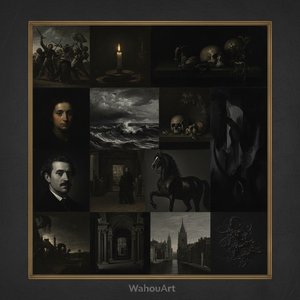
Топ 10 шедьовъра в нюансите на слоновата кост и черното: Изкуство за вашия дом от OriginalUniqueArt
Разгледайте топ 10 шедьовъра, доминирани от нюансите на слоновата кост и черното! Открийте историите зад известни картини от импресионизма до абстрактното изкуство. Купете висококачествени репродукции на OriginalUniqueArt.com и превърнете дома си в галерия.
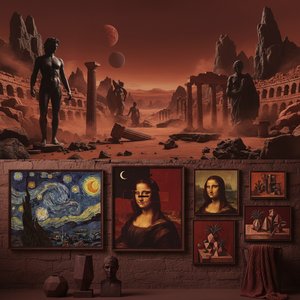
Топ 10 шедьовъра в нюансите на черното: Изкуство и елегантност за вашия дом
Разгледайте топ 10 шедьовъра, доминирани от нюансите на черното! Открийте историите зад известни картини от експресионизма и сюрреализма. Купете висококачествени репродукции за вашия дом на OriginalUniqueArt.com
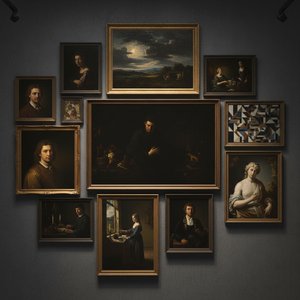
Топ 10 шедьовъра в нюансите на тъмното: Живописни истории и артистичен блясък
Разкрийте тайните на 10 шедьовъра, доминирани от нюансите на тъмното. От Рембранд до Гоя – истории за артистичен блясък и драматична живопис. Купете репродукции с музейно качество на OriginalUniqueArt.com и преобразете дома си!