Маслено живопис
 Всичко за Brattata







































 За произведения на изкуството или репродукции, чийто размер е над 105 см (приблизително 41 инча) във всяка страна, рамката ще бъде изпратена в разглобен вид като комплект за сглобяване. Този метод гарантира безопасна доставка и предотвратява повреди по време на транспортиране.


The Electric Pulse of Pop Art: Reimagining Brattata
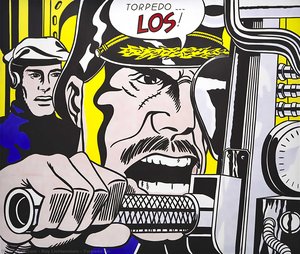
Brattata, a 1962 masterpiece by the visionary Roy Lichtenstein, serves as a thunderous declaration of the power inherent in popular culture. At first glance, the painting presents itself as a single, high-octle panel plucked from the pages of a mid-century comic book, specifically inspired by DC Comics’ All-American Men of War #89. Yet, to view it merely as a reproduction of pulp fiction is to miss its profound artistic rebellion. Lichtenstein takes the ephemeral, disposable imagery of mass media and elevates it to the status of high art, freezing a moment of intense aerial combat within the dignified confines of an oil on canvas. The composition centers on a pilot, his face etched with a grim, focused determination, surrounded by the mechanical chaos of a cockpit. Through this lens, Lichtenstein invites us to find beauty in the manufactured and significance in the mundane, making it an irresistible centerpiece for any collection that celebrates the intersection of fine art and modern iconography.A Symphony of Dots and Primary Colors
The technical brilliance of Brattata lies in Lichtenstein’s meticulous mimicry of commercial printing processes. He famously employed the Ben-Day dot technique—a method of using small, closely spaced colored dots to create shading and secondary colors—to replicate the halftone look of cheap newsprint. This deliberate choice creates a fascinating tension between the hand-painted nature of the work and its machine-made appearance. The color palette is strikingly bold, dominated by the primary triad of red, yellow, and blue. These vibrant blocks of color are delineated by thick, authoritative black outlines that lend the piece a graphic, almost architectural strength. For the interior designer, this high-contrast aesthetic offers a dynamic energy; the way the bright yellows and reds pop against the structured lines makes the artwork a commanding focal point in contemporary or minimalist spaces, injecting a sense of rhythmic movement and visual excitement into a room.Narrative Tension and the Modern Icon
Beyond its striking surface, Brattata pulsates with an underlying narrative intensity. The inclusion of a text balloon—bearing the words, "That was their mistake - because it gave me more targets than I could have shot at"—anchors the visual action in a specific moment of strategic calculation and wartime drama. This dialogue does more than just tell a story; it integrates language directly into the visual texture of the painting, blurring the line between reading and viewing. The subject matter reflects the cultural anxieties of the Cold War era, capturing the tension of military preparedness through a stylized, almost detached lens. There is an emotional duality at play: the visceral excitement of combat paired with the cool, calculated detachment of the Pop Art movement. For collectors, owning a piece like Brattata means possessing a fragment of history that continues to challenge our perceptions of heroism, technology, and the very definition of artistic originality.Въпроси и отговори
Нарисувана ли е на ръка Brattata или е принтирана?
Изработено на ръка: професионален художник репродуцира Brattata с маслени бои върху ленен хол.
Какъв размер да избера за Brattata?
Размерите на оригинала са 106 x 106 cm. Размерите варират от 31.6 x 31.6 cm (€179) до 239.6 x 239.6 cm (€1857); в таблицата на тази страница са изброени основните размери и техните цени.
Колко време отнема доставката?
Доставката отнема от 4 до 5 седмици с безплатна експресна доставка до цял свят; на тази страница е предлагана опция за спешно производство. Можете да върнете продукта в рамките на 100 дни за пълен възстановяване на сумата, без никакви условия.
Каква техника е използвал(а) Рой Лихтенщайн за Brattata?
Oil On Canvas
 Преглед в реален мащаб

 Изпрати
 Сподели
 Детайли
 Информационен лист


 Изтегляне
 Подобни артикули
 Рентгенова снимка
 Слайдшоу
 Въпроси и отговори

 Статистика