Преглед в реален мащаб
 Сподели
 Сподели
 Подробности
 Ръководство

 Изтегляне
 Подобни артикули
 Рентгенова снимка
 Слайдшоу
 Статистика
The Last Judgment (detail) (8)


 Разгърни целия текст
Жикле / Художествен принт
Giclée печат или принт върху платно с музейно качество, бързо производство и гъвкави опции за завършен вид. ( Поръчайте ръчно рисувано репродукция на този колекционерски предмет Превключване към дигитално изображение)




P118B €10

P118H €10

P118W €10

P438Z €10

P508JH €12

P508YH €12

P805H €10

P805Z €10

P919BZ €10

P919G €10

P919XJ €10

P959ZH €10

P968JZ €12

W106C €8

W218G €10

W218JH €8

W218Y €10

W307PJ €10

W316G €10

W316PJ €8

W316Y €10

W398PJ €8

W4111J €10

W500HY €15

W500JH €15

W692G €12

W849H €8

W940BG €15

W953PJ €8




Изберете от нашите предварително зададени размери, които съответстват на оригиналните пропорции на произведението.

Можете да въведете собствени размери, за да паснат на конкретна рамка или пространство. Ако избраният от Вас размер не съвпада с пропорциите на оригиналното изображение, ние ще изрежем произведението или ще разширим изображението с огледален или едноцветен ръб. Дигитален макет ще бъде изпратен за Ваше одобрение преди започването на производството.
Моля, имайте предвид, че предпрегледът на екрана не отразява реалното изрязване или разширяване. Само макетът ще покаже точно финалната композиция.
Въпреки че са налични персонализирани размери, препоръчваме да изберете размер от предварително дефинирания списък, за да запазите оригиналните пропорции.
Доставка по целия свят () в рамките на 2 седмици вместо стандартните 4/5 седмици. (13 Октомври)

Безплатна експресна доставка по целия свят

Висококачествено ленено платно

Пълно застраховане на доставката

Гаранция за възстановяване на митнически такси

Гаранция за пълно съответствие на цветовете

Политика за връщане в рамките на 100 дни (само при дефекти)

100% Гаранция за връщане на сумата

Отстъпка при поръчка на повече произведения
 Опцията със стъкло е налична само за размери под 110 см

The Last Judgment (detail) (8)
Жикле / Художествен принт
Размер на репродукцията
-


Крайна цена
€ 69
A Vision of Eternity: The Divine Drama of Rogier van der Weyden
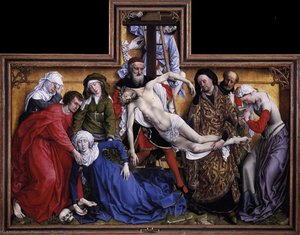
To gaze upon this detail from Rogier van der Weyden’s The Last Judgment is to step through a portal into the profound spiritual intensity of the fifteenth century. Created around 1446, this masterpiece does not merely depict a biblical event; it orchestrates a cosmic reckoning. At its heart lies the figure of Jesus Christ, radiating an unparalleled authority that is simultaneously terrifying and deeply compassionate. He sits at the epicenter of a swirling, celestial vortex, where the boundaries between the divine and the damned blur amidst a sea of angels and demons. For the modern viewer, this fragment serves as a breathtaking window into the Early Netherlandish soul, offering a moment of stillness within a grand, eternal movement.
The technical brilliance of Van der Weyden is nothing short of revolutionary. Moving away from the flatter, more stylized traditions of the preceding era, he embraced an almost unsettling realism. Through the meticulous application of translucent oil glazes—a technique perfected by the masters of his time—he achieved a depth of color and texture that feels palpable to the touch. One can almost feel the weight of the heavy, sculptural folds in Christ’s robes and the delicate, luminous skin of the surrounding figures. Every brushstroke is an exercise in precision, capturing the subtle gradations of light that dance across faces etched with a spectrum of human emotion: from the wide-eyed awe of the saved to the visceral terror of those facing judgment.
Symbolism and the Weight of History
Beyond its aesthetic splendor, this work is steeped in the turbulent atmosphere of its era. The mid-15th century was a time of significant religious and social upheaval in Europe, marked by the shadows of the Hussite Wars and a growing existential anxiety regarding salvation. Van der Wey Weyden translates these historical tensions into visual language. The composition itself acts as a moral compass; the arrangement of figures—some ascending toward the light, others descending into shadow—serves as a powerful allegory for the ultimate destiny of the human soul. Even the inclusion of subtle natural elements, such as the small bird or the distant horse, grounds this cosmic event in a recognizable reality, bridging the gap between the earthly and the divine.
For the discerning collector or interior designer, a reproduction of this detail offers more than just decoration; it provides a focal point of profound intellectual and emotional depth. The painting’s ability to command attention through its dramatic chiaroscuro and intricate detail makes it an exquisite addition to any curated space. Whether placed in a quiet study to inspire contemplation or as a centerpiece in a grand hall to evoke historical grandeur, this work brings the timeless mastery of the Northern Renaissance into the contemporary home, inviting a continuous dialogue between the viewer and the sublime.
Въпроси и отговори
Цветовете на „The Last Judgment (detail) (8)“ на Рогир ван дер Уейден наситени или приглушени ли са?
„The Last Judgment (detail) (8)“ на Рогир ван дер Уейден е заснето с Balanced Soft наситеност.
Как е изградена цветовата композиция на „The Last Judgment (detail) (8)“ на Рогир ван дер Уейден?
В „The Last Judgment (detail) (8)“ Statement контрастът е съчетат с Strong Color Unity хармония.
Как се съотнасят цветовете в "The Last Judgment (detail) (8)" един с друг?
Цветовият хармонизъм на „The Last Judgment (detail) (8)“ е описан като Strong Color Unity.
Какво вид произведение е „The Last Judgment (detail) (8)“?
В каталога „The Last Judgment (detail) (8)“ на Рогир ван дер Уейден е класифициран като WallArt. Тази категория помага за намирането на подобни творби.
На каква възраст Рогир ван дер Уейден създава „The Last Judgment (detail) (8)“?
Когато „The Last Judgment (detail) (8)“ е създадена през 1446, Рогир ван дер Уейден – роден/а през 1400 – е бил/а на 46 години.
Каква сюжетна линия и атмосфера съчетава „The Last Judgment (detail) (8)“ на Рогир ван дер Уейден?
"The Last Judgment (detail) (8)" изобразява religious iconography, judgement day, christ figure, heavenly realm, hellscape, divine justice, medieval art, а уловеното настроение е Dramatic.
Откъде мога да изтегля „The Last Judgment (detail) (8)“ на Рогир ван дер Уейден?
„The Last Judgment (detail) (8)“ на Рогир ван дер Уейден може да бъде изтеглен от страницата за Изтегляне на произведението, като дигитално изтегляне на изображение с висока резолюция.
Коя е датата на създаване на „The Last Judgment (detail) (8)“ на Рогир ван дер Уейден?
Създаването на „The Last Judgment (detail) (8)“ на Рогир ван дер Уейден датира от 1446.
Биография на художника
A Master of Emotion: The Life and Legacy of Rogier van der Weyden
Rogier van der Weyden, born around 1400 in the vibrant city of Tournai, nestled within what is now Belgium, emerged as a pivotal figure in the blossoming world of Early Netherlandish painting. While details surrounding his early life remain somewhat elusive, it’s believed he initially honed his skills not with brush and pigment, but as a goldsmith. This formative training instilled within him an unwavering dedication to meticulous detail and a refined sensibility for craftsmanship – qualities that would become hallmarks of his artistic style. The precision demanded by working with precious metals undoubtedly translated into the exquisite rendering of textures, fabrics, and expressions that define his masterpieces. He wasn’t merely depicting reality; he was recreating it with painstaking accuracy, imbued with an almost reverent attention to detail.From Tournai to Brussels: A Rising Star
By 1427, van der Weyden had ascended to the rank of master within the Guild of Saint Luke in Tournai, a testament to his burgeoning talent and skill. This marked a significant turning point, solidifying his position as a professional artist and opening doors to important commissions. His ascent continued when he entered the service of Philip the Good, Duke of Burgundy, in 1435 – a patronage that would profoundly shape his career for the remainder of his life. Serving as court painter afforded him not only financial security but also access to an elite circle of influence and exposure to some of the most discerning eyes of the era. It was during this period that van der Weyden’s artistic vision truly began to mature, moving away from the somewhat rigid conventions of earlier Netherlandish painters towards a more emotionally resonant and naturalistic approach. He wasn't simply painting religious scenes; he was striving to evoke genuine feeling in the viewer, to create an experience that transcended mere observation.The Language of Feeling: Style and Technique
Rogier van der Weyden’s artistic signature is immediately recognizable through several defining characteristics. His palette was remarkably rich and diverse, a vibrant tapestry of colors carefully chosen to avoid repetition and create depth and complexity within his compositions. He possessed an extraordinary ability to convey profound emotion – *pathos* – particularly in depictions of religious subjects like the Lamentation, where grief and sorrow are palpable. This emotional intensity wasn’t achieved through dramatic gestures or exaggerated expressions; rather, it was subtly woven into the very fabric of the painting, conveyed through delicate nuances of facial expression, body language, and composition. His figures, while adhering to the conventions of the time, demonstrate a growing interest in realistic representation – not just in anatomy and drapery, but also in capturing the psychological states of his subjects. They possess a dignified, almost sculptural quality, particularly evident in his grand triptychs, lending them an air of solemnity and reverence. He masterfully employed oil paint, building up layers of translucent glazes to achieve luminous effects and create a sense of depth and realism that was revolutionary for its time.Notable Works and Enduring Masterpieces
Throughout his prolific career, van der Weyden produced numerous works that stand as testaments to his artistic prowess. *St Luke Drawing a Portrait of the Madonna*, housed in the Museum of Fine Arts, Boston, showcases his mastery of oil on panel and meticulous observation. The *Lamentation*, residing in the Musée des Beaux-Arts Tournai, Belgium, is perhaps his most celebrated work – a powerfully emotive depiction of Christ’s mourning, renowned for its dramatic use of *chiaroscuro* and its ability to evoke profound sorrow in the viewer. Multiple versions of *The Deposition* exist, each demonstrating his skill in conveying grief and drama with breathtaking sensitivity. The *Annunciation*, a masterpiece of refined style and attention to detail, exemplifies his ability to imbue even the most traditional subjects with a sense of freshness and vitality. And finally, the intricate and richly detailed *Bladelin Triptych* stands as a monumental achievement – a complex altarpiece that showcases the full range of van der Weyden’s artistic abilities. These works, and many others, continue to captivate audiences today, solidifying his position as one of the most important painters of the 15th century.Lasting Influence: A Legacy Forged in Paint
Van der Weyden’s influence extended far beyond the borders of his native Flanders. His works were highly sought after throughout Europe, particularly in Italy and Spain, where they introduced a new level of emotional depth and naturalism to local artistic traditions. Although his fame experienced a period of relative decline in the 17th century, a rediscovery during the 19th century cemented his place as one of the most important painters of the 15th century. He stands alongside Jan van Eyck and Robert Campin as one of the “three great” Early Flemish masters, each contributing uniquely to the development of Northern Renaissance art. His innovative techniques and emotionally charged compositions paved the way for future generations of artists, inspiring countless imitators and influencing the course of Western painting for centuries to come. He helped establish oil painting as the dominant medium and elevated the status of the artist within society, transforming them from skilled craftsmen into revered creators. Rogier van der Weyden’s legacy continues to resonate today, a testament to his enduring genius and his profound understanding of the human condition.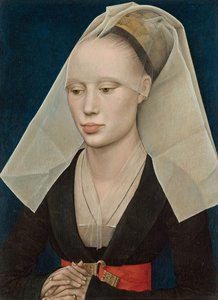
Рогир ван дер Уейден
1400 - 1464 , Белгия
Бързи факти
- Artistic Movement Or Style: Ранно нидерландско изкуство
- Artists Or Movements Influenced By This Artist: ['Италиански Ренесанс']
- Artists Who Influenced This Artist:
- Роберт Камплин
- Ян ван Ейк
- Date Of Birth: c. 1400
- Date Of Death: 1464
- Full Name: Rogier van der Weyden
- Nationality: Белгийски
- Notable Artworks:
- Светата Литургия
- Плачът на Мария
- Положение в гроба
- Place Of Birth: Tournai, Белгия
Свързани статии
Топ 25 шедьовъра на Хиероним Бош: Разгадаване на символите в изкуството за вашия дом
Разгадайте мистериите на Хиероним Бош с топ 25 негови шедьовъра! Открийте символизма, историята и техниките зад всяка картина. Репродукции за вашия дом – OriginalUniqueArt.com.

Divine Drama: A Connoisseur’s Journey Through the Sublime Masterpieces of the Last Judgment
Embark on a profound journey through the most awe-inspiring Last Judgment masterpieces. From Michelangelo’s celestial frescoes to Dürer’s intense engravings, uncover the divine drama and sacred iconography that have shaped Western art history with our expert editorial guide.

Топ 10 шедьоври на Раннонидерландското изкуство: История, артисти и красота за вашия дом
Разгледайте 10 шедьовъра на Раннонидерландското изкуство – Ян ван Ейк, Робер Кампен и други. Открийте историите зад тези емблематични картини и превърнете дома си в галерия с OriginalUniqueArt.com! Разгледайте колекцията онлайн.
Топ 25 шедьовъра на Fra Angelico: Ренесансово изкуство за вашия дом | OriginalUniqueArt.com
Открийте 25 шедьовъра на Fra Angelico – символ на Ренесанса и духовната живопис. Разгледайте историите зад неговите картини, фрески и икони. Купете висококачествени репродукции за вашия дом в OriginalUniqueArt.com!
Джорджо Вазари: 25 шедьовъра на Джото ди Бондоне – изкуство за вашия дом
Открийте 25 шедьовъра на Джото ди Бондоне – ренесансов гений и пионер в изкуството! Фрески, Мадони, Христос и библейски сцени. Вдъхновете се за вашия дом с висококачествени репродукции на OriginalUniqueArt.com.