Neo-Dada · 1955
Monogram (Робърт Раушенбърг, 1955)
Робърт Раушенбърг (1925–2008) създаде Monogram. Датира от 1955. Това произведение принадлежи към движението Neo-Dada.
- 1955

 Преглед в реален мащаб

 Ръчно изработена маслена картина
 Изпрати
 Сподели
 Информационен лист


 Изтегляне
 Подобни артикули
 Рентгенова снимка
 Слайдшоу
 Въпроси и отговори

 Статистика
Monogram накратко
- Заглавие
- Monogram
- Художник
- Робърт Раушенбърг (1925–2008)
- Роден в
- Порт Артър, САЩ
- Дата
- 1955
- Движение
- Neo-Dada
- Обект
- ram, tire, assemblage, decay, transformation, industrial
Какво е изобразено в Monogram?
A Fusion of Nature and Industry: Robert Rauschenberg's "Monogram"
Robert Rauschenberg’s 1955 “Monogram” is a seminal work from his groundbreaking “Combines” series, a pivotal moment in art history that blurred the lines between painting, sculpture, and assemblage. This iconic piece transcends simple categorization, offering a complex visual narrative rich with symbolism and challenging traditional artistic boundaries. It's a powerful statement about post-war American culture, consumerism, and the evolving role of the artist.
Subject & Style: Neo-Dada Meets Pop Art
At its core, "Monogram" presents a striking juxtaposition of organic and industrial elements. The central image is the head of a ram, instantly recognizable through its long, curving horns. However, Rauschenberg doesn't present this animal in a naturalistic way. Instead, he obscures the face with painted markings, transforming it into an almost abstract form. Behind the ram’s head looms a large tire – a ubiquitous symbol of American transportation and industrial progress. This unexpected pairing is characteristic of the Neo-Dada movement, which Rauschenberg helped pioneer. Neo-Dada rejected the seriousness of Abstract Expressionism, embracing humor, irony, and found objects to critique societal norms. The work foreshadows elements of Pop Art, anticipating its embrace of everyday imagery and mass culture.
Technique & Materials: The "Combine" Process
“Monogram” exemplifies Rauschenberg’s innovative “Combines.” This term, coined by the artist himself, describes works that incorporate a variety of materials beyond traditional paint on canvas. Here, he utilizes a tire, fabric scraps, paper fragments, and painted surfaces to create a layered and textured composition. The base upon which the ram's head rests is covered in a collage-like arrangement of these disparate elements – torn papers, crumpled fabrics—adding to the work’s chaotic yet compelling visual energy. Rauschenberg’s technique involved a process of intuitive layering and assemblage, often incorporating materials he found or collected, further emphasizing the element of chance and spontaneity within his creative practice.
Symbolism & Historical Context
The symbolism in "Monogram" is open to interpretation, contributing to its enduring appeal. The ram itself can be seen as a symbol of power, virility, and even aggression. Its painted-over face suggests a loss of identity or a questioning of traditional representations. The tire, representing industrialization and mobility, introduces a contrasting element of modernity and perhaps even environmental concern. Created in 1955, the work reflects the post-war American landscape – a period of rapid economic growth, consumerism, and technological advancement. The piece can be viewed as a commentary on this era's complex relationship with nature and industry, questioning the impact of human progress on the natural world.
Emotional Impact & Legacy
"Monogram" evokes a range of emotions – from curiosity and intrigue to unease and even a sense of playful absurdity. The unexpected combination of elements challenges viewers to reconsider their perceptions of art and its relationship to everyday life. The work’s impact on subsequent generations of artists is undeniable, influencing the development of assemblage art, Pop Art, and contemporary sculpture. Owning a reproduction of "Monogram" allows you to bring this iconic piece into your space—a conversation starter and a testament to Rauschenberg's revolutionary vision.
Изображения с висока резолюция на Monogram
Защитено от авторско право: тези файлове са за лична употреба и не представляват лиценз за препубликуване.
Робърт Раушенбърг, Monogram (1955).
Отговори на въпроси относно Monogram
В коя година е създадено „Monogram“ на Робърт Раушенбърг?
„Monogram“ на Робърт Раушенбърг е създадена през 1955.
Какво изобразява „Monogram“ на Робърт Раушенбърг?
„Monogram“ на Робърт Раушенбърг изобразява: ram, tire, assemblage, decay, transformation, industrial, found objects, surreal.
Намира ли се „Monogram“ на Робърт Раушенбърг в обществено достояние?
Що се отнася до авторското право, „Monogram“ е в все още е защитено с авторско право.
Кой е създал "Monogram"?
Художникът зад "Monogram" е Робърт Раушенбърг. Произведението е каталогизирано под името на Робърт Раушенбърг.
Към кое художествено течение принадлежи „Monogram“ на Робърт Раушенбърг?
„Monogram“ на Робърт Раушенбърг принадлежи към художественото направление Neo-Dada. Това движение определя стилистичния контекст на произведението.
Към кой период от кариерата на Робърт Раушенбърг принадлежи „Monogram“?
"Monogram" представлява Mid-Career на Робърт Раушенбърг.
На колко години е бил Робърт Раушенбърг, когато е създал „Monogram“ през 1955?
Когато „Monogram“ е създадена през 1955, Робърт Раушенбърг – роден/а през 1925 – е бил/а на 30 години.
Какво определя правния статус на „Monogram“ на Робърт Раушенбърг по отношение на авторското право?
„Monogram“ на Робърт Раушенбърг е в все още е защитено с авторско право. Срокът на авторското право се изчислява от годината на смъртта на художника, която е през 2008.
Как се вписва „Monogram“ в цялостното творчество на Робърт Раушенбърг?
"Monogram" споделя със другите творби на Робърт Раушенбърг своя Neo-Dada стил и заложените теми: dadaism & surrealism, assemblage art techniques, pop art sensibilities, representative of 'combines' style, exploration of found object art, key work in rauschenberg’s oeuvre, demonstrates his experimental approach, juxtaposition of nature/industry.
За художника Робърт Раушенбърг

1925–2008, САЩ
Робърт Раушенбърг
Животът на Робърт Раушенбърг: Пътят към Иновацията Робърт Раушенбърг, роден Милтън Ърнест Раушенбърг през 1925 година в Порт Артър, Тексас, сред петролните пейзажи на Юга, е художник, чието съществуване сякаш отразява динамичната енергия и трансформиращия дух, които внесе в света на изкуството. Детството му не е белязано от едно място; професията на баща му налага номадски начин на живот, преминавайки през разнообразни терени, които фино засаждат у него восприемчивост към различни визуални стимули и готовност да приеме промяната. Това ранно излагане насърчава чувствителност, настроена към текстурите и ритмите на американския живот – подток, дълбоко оформящ артистичните му търсения. Въпреки първоначалния интерес към фармакологията в Университета на Тексас, пътят на Раушенбърг бързо се отклонява, отвеждайки го към изкуството – първо от необходимост по време на военната служба в флота, а след това с фокусирано обучение в Художествения институт на Канзас Сити и най-важното, в Блек Маунтън Колидж в Северна Каролина.
Други творби на Робърт Раушенбърг
 Имоти (Imoti)1963
 Знаци1970
 Barge1963
 Odalisk1958
Есеи по темата Monogram
 Francis Picabia: Dada's Provocateur – Reassessing Mechanical Forms & Mystical UndercurrentsExplore the revolutionary art of Francis Picabia – Dada's enigmatic provocateur. Discover his mechanical forms, hidden symbolism & lasting …
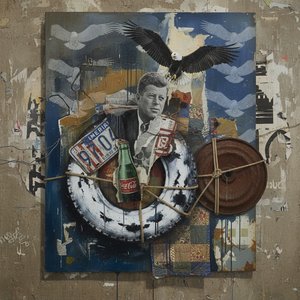 Robert Rauschenberg: Bridging Painting & Life – A Comprehensive Exploration of Combines, Silkscreens, and the Erasure of BoundariesExplore the revolutionary art of Robert Rauschenberg – Combines, silkscreens & more. Discover his impact on Pop Art, investment potential &…
 Spontaneity and Matter: Distinguishing CoBrA from Art InformelMaster the differences between CoBrA and Art Informel with our expert guide. Learn to identify these post-war movements today.