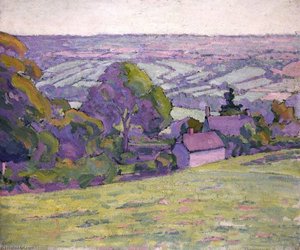
Преглед в реален мащаб
 Сподели
 Сподели
 Подробности
 Ръководство

 Изтегляне
 Подобни артикули
 Рентгенова снимка
 Слайдшоу
 Статистика
Showing at Tattersalls
 Acrylic On Canvas
- WallArt
- Camden Town Group
 1919
1919- 19th Century
 58.0 x 71.0 cm
 Ашмолеан Музей на изкуството и археологията
 Разгърни целия текст
Ръчно изработена маслена репродукция
Ръчно рисувана маслена картина върху платно във вашия размер и рамка, изработена по поръчка от нашите художници. ( Избор на принт Превключване към дигитално изображение)




P118B €10

P118H €10

P118W €10

P438Z €10

P508JH €12

P508YH €12

P805H €10

P805Z €10

P919BZ €10

P919G €10

P919XJ €10

P959ZH €10

P968JZ €12

W106C €8

W218G €10

W218JH €8

W218Y €10

W307PJ €10

W316G €10

W316PJ €8

W316Y €10

W398PJ €8

W4111J €10

W500HY €15

W500JH €15

W692G €12

W849H €8

W940BG €15

W953PJ €8




Изберете от нашите предварително зададени размери, които съответстват на оригиналните пропорции на произведението.

Въведете необходимата ширина и височина, за да паснат на вашата рамка или стена. Тъй като това е ръчна работа, при избор на размер с различен формат, художникът може да нарисува малко повече около картината или да отреже малко от периферията — вие избирате. Преди да започне рисуването, ще ви изпратим дигитален мок업 за одобрение. Картината, показана на тази страница, не е реалният резултат — само мок업ът го показва.
След получаване на поръчка, екипът на OriginalUniqueArt.com ще изпрати имейл до клиента с инструкции и ще предостави примерен макет за преглед.
Доставка по целия свят () в рамките на 3-4 седмици вместо стандартните 5 седмици. (24 Октомври). Без компромис с качеството.

Безплатна експресна доставка по целия свят

Висококачествено ленено платно

Пълно застраховане на доставката

Гаранция за възстановяване на митнически такси

Гаранция за пълно съответствие на цветовете

Политика за връщане в рамките на 100 дни (само при дефекти)

100% Гаранция за връщане на сумата

Отстъпка при поръчка на повече произведения
 Опцията със стъкло е налична само за размери под 110 см

Showing at Tattersalls
Техника на репродукция
Размер на репродукцията
-


Крайна цена
€ 263
The Scene Unfolds: Robert Polhill Bevan’s Capturing of a Moment
Robert Polhill Bevan's "Showing at Tattersalls" isn’t merely a depiction of a horse race; it’s a meticulously crafted tableau vivant, a frozen moment brimming with the energy and social significance of Victorian England’s most prestigious racing event. Painted in 1919, during a period of significant artistic transition – moving away from the rigid formality of academic art towards the vibrant expressiveness of early modernism – the canvas offers a surprisingly intimate view of an elite world. The painting transports us to Tattersalls, not just as a venue for horse trading, but as a microcosm of Victorian society, a place where wealth, status, and tradition converged.
Bevan’s masterful use of light and shadow immediately draws the eye. A diffused daylight filters through the windows, casting long, dramatic shadows across the brick flooring, creating an atmospheric depth that anchors the scene. The figures are rendered with a remarkable degree of realism, yet imbued with a subtle sense of abstraction – their faces often obscured by hats or coats, suggesting a detachment and emphasizing the spectacle itself rather than individual personalities. This deliberate ambiguity invites the viewer to become part of the scene, observing from a slightly removed perspective.
A Camden Town Pioneer: Style and Technique
Bevan was a key figure in the Camden Town Group, a collective of artists who sought to capture the gritty realities of London life with bold colors and expressive brushstrokes. “Showing at Tattersalls” exemplifies this approach, though it’s arguably more restrained than some of his later works. The painting showcases Bevan's distinctive style – characterized by smooth planes of color, sharp outlines, and a deliberate flattening of perspective. He employs a technique reminiscent of Impressionism but pushes beyond mere representation, prioritizing the emotional impact of color and form.
- Color Palette: A muted palette dominated by browns, grays, and ochres creates a sense of understated elegance and reflects the somber atmosphere of the scene.
- Brushwork: Short, broken brushstrokes contribute to the painting’s dynamic energy, particularly in the depiction of the horses' musculature.
- Composition: The carefully arranged figures and the receding perspective create a sense of depth and movement, guiding the viewer’s eye through the scene.
Historical Context & Symbolism
Tattersalls, established in 1763, held immense importance within British society. It was more than just a horse sales venue; it represented the pinnacle of equestrian achievement and a significant indicator of wealth and social standing. The presence of numerous spectators – gentlemen in top hats and coats, ladies elegantly dressed – underscores this status. The clock visible in the upper left corner subtly reinforces the importance of time and schedule within this world of racing and commerce.
Beyond the immediate depiction of a horse race, “Showing at Tattersalls” offers a glimpse into Victorian values: the emphasis on tradition, social hierarchy, and the pursuit of excellence. The meticulous detail given to the horses themselves – their powerful legs, flowing manes – speaks volumes about the value placed on these animals as symbols of status and prestige.
A Legacy of Modernism
Robert Polhill Bevan’s “Showing at Tattersalls” stands as a pivotal work in British art history. It represents a crucial bridge between Impressionism and modernism, demonstrating Bevan's willingness to experiment with color and form while retaining a strong sense of realism. His ability to capture the energy and atmosphere of a specific moment in time – a bustling scene within a world of privilege – solidifies his place as a pioneering figure in the development of British art at the turn of the 20th century. Reproductions of this painting offer a captivating window into a bygone era, inviting viewers to contemplate the enduring appeal of spectacle and social observation.
Въпроси и отговори
Кога е създадена и от кой стил е „Showing at Tattersalls“ на Робърт Полихил Бевън?
„Showing at Tattersalls“ на Робърт Полихил Бевън е датирана със 1919 г. и принадлежи към Camden Town Group.
Как се свързва сюжетът на „Showing at Tattersalls“ с обичайните теми на Робърт Полихил Бевън?
"Showing at Tattersalls" изобразява horse race, victorian era, spectators, urban scene, black and white, competition, social event, докато утвърдените теми на Робърт Полихил Бевън са impressionism, camden town group, british modernism, urban life, social commentary, leisure class, bevan’s experimentation, fauvism”. Сравнението между двете показва как произведението се свързва с обичайните сюжети на художника.
Каква техника и размер е оригиналът на „Showing at Tattersalls“ на Робърт Полихил Бевън?
Техниката на „Showing at Tattersalls“ на Робърт Полихил Бевън е Acrylic On Canvas, а размерите му са 58 x 71 cm.
Биография на художника
A Pioneer of British Modernism: The Life and Art of Robert Polhill Bevan
Robert Polhill Bevan, born in Hove in 1865, occupies a pivotal yet often understated position within the narrative of early 20th-century British art. Emerging from a Quaker background steeped in banking connections – his parents were Richard Alexander Bevan and Laura Maria Polhill – he defied conventional expectations to become a daring innovator, a key figure in the transition from Impressionism towards more radical explorations of color and form. His journey was one of constant experimentation, absorbing influences from across Europe while forging a distinctly personal artistic vision that would profoundly impact the development of modern art in Britain. Bevan’s early education at Westminster School of Art under Fred Brown provided a solid foundation, but it was his subsequent studies at the Académie Julian in Paris that truly ignited his creative spark. There, he encountered a constellation of rising stars – Paul Sérusier, Pierre Bonnard, Édouard Vuillard, and Maurice Denis – artists who were challenging academic conventions and embracing new approaches to painting. These encounters proved formative, exposing Bevan to the principles of synthetism and laying the groundwork for his future explorations.Early Influences and Artistic Formation
Bevan’s formative years instilled in him a deep appreciation for meticulous observation and disciplined technique—qualities that would characterize his entire artistic career. His upbringing within a Quaker family fostered values of integrity and social responsibility, shaping his worldview and informing his engagement with the broader cultural landscape. Recognizing his innate talent for drawing, Bevan benefited from private instruction with Arthur Earnest Pearce (1859–1934), who later became a designer for Doulton’s potteries—a connection that would prove invaluable in nurturing his artistic sensibilities. The Westminster School of Art under Frederick Brown provided him with a crucial grounding in traditional art training, equipping him with the skills necessary to master perspective and draughtsmanship. However, it was Paris – specifically the Académie Julian – where Bevan truly blossomed as an artist. Surrounded by fellow innovators like Sérusier, Bonnard, Vuillard, and Denis—artists who were actively dismantling established artistic hierarchies—he absorbed the revolutionary ideas of synthetism and embraced a bold new vision for painting. These encounters fundamentally altered his artistic trajectory, propelling him toward experimentation with color and form that would distinguish him from many of his peers.Brittany: The Catalyst for Color
The allure of Brittany exerted an irresistible influence on Bevan’s artistic development during the summers of 1890 and 1891. Drawn to Pont-Aven—a coastal town rapidly gaining renown as a haven for artists seeking respite from Parisian society—he immersed himself in the vibrant atmosphere fostered by Gauguin and his fellow Impressionists. The bold hues and simplified geometries championed by these pioneers resonated deeply with Bevan’s sensibilities, informing his early sketches and prints. He meticulously documented the landscape—the rugged coastline, the verdant hillsides, and the shimmering waters—capturing not merely visual accuracy but also an emotional response to the sublime beauty of nature. This fascination with Breton landscapes would endure throughout his life, serving as a constant source of inspiration for his paintings and lithographs. The influence of Gauguin’s expressive use of color is palpable in Bevan's early works, demonstrating a willingness to abandon naturalistic representation in favor of conveying subjective experience—a pivotal step toward embracing the tenets of Fauvism.The Emergence of Fauvist Expression
Around 1904, Bevan embarked on a path of experimentation with pure color that anticipated the burgeoning movement of Fauvism on the continent. His painting “Courtyard” stands as a testament to this transformative moment—a daring departure from Impressionistic subtlety in favor of intense chromatic vibrancy. Bevan deliberately rejected blending colors to create tonal gradations, opting instead for juxtaposing complementary hues—such as orange and blue—to generate visual impact and heighten emotional resonance. This stylistic choice aligns perfectly with the Fauvist aesthetic, which prioritized color above all else—a radical assertion that challenged prevailing artistic conventions and signaled a decisive break from academic tradition. Like Matisse and Derain, Bevan sought to liberate color from its descriptive role, harnessing it as an expressive tool to convey mood and emotion—a strategy that would become central to his oeuvre.Camden Town Group and Legacy
Bevan’s artistic endeavors extended beyond individual paintings; he actively participated in the formation of influential art collectives that reshaped British artistic culture. As a founding member of the Camden Town Group—alongside Gore, Ginner, Bell and Hepworth—he championed a vision of modern art rooted in urban life and informed by social consciousness. The group’s members deliberately rejected the prevailing aesthetic trends of their time, prioritizing bold color palettes and simplified forms to depict scenes from London’s industrial landscape. Bevan's involvement with Camden Town Group solidified his reputation as a trailblazer—a figure who dared to challenge artistic dogma and forge new paths for British art. His legacy continues to inspire artists today, demonstrating the enduring power of experimentation and conviction in shaping artistic innovation. Bevan’s paintings—particularly those depicting landscapes and urban vistas—remain treasured examples of early twentieth-century British art, embodying a commitment to both aesthetic beauty and social engagement. His contribution to the Camden Town Group ensured that British painting would continue to evolve in bold new directions.
Робърт Полихил Бевън
1865 - 1925 , Великобритания
Бързи факти
- Artistic Movement Or Style: Фавизъм, Дивионизм
- Artists Or Movements Influenced By This Artist: ['Модерна британска изкуство']
- Artists Who Influenced This Artist:
- Валтер Сикерт
- Паоло Гугенхайм
- Жозеф Кроуъл
- Date Of Birth: 1865
- Date Of Death: 1925
- Full Name: Robert Polhill Bevan
- Nationality: Британски
- Notable Artworks:
- Дъхът на полето
- Колесни карети
- Къща
- Place Of Birth: Hove, Великобритания
Свързани статии
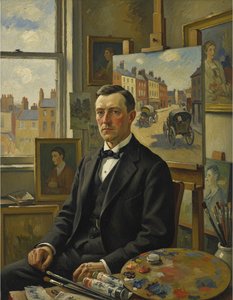
Robert Bevan: Pioneering British Post-Impressionism & the Camden Town Group's Intimate Vision
Explore the life & work of Robert Bevan, a pioneer of British Post-Impressionism and founding member of the Camden Town Group. Discover his vibrant landscapes and lasting impact on early 20th-century art.

The Equine Muse: A Historical & Artistic Exploration of Horses in Painting
Explore the captivating history of horses in painting! Discover Renaissance masterpieces, Baroque grandeur & expert insights for collecting equestrian art. Learn about symbolism, techniques & lasting value with OriginalUniqueArt.

Hubert Robert: Picturing Ruins, Preserving Memory – A Study of Romantic Antiquarianism & Artistic Innovation
Explore the captivating world of Hubert Robert, master of Romantic landscape painting & 'capriccio' ruins. Discover his historical context, artistic innovations, and collecting insights with OriginalUniqueArt.
The Noble Steed: A Historical and Artistic Exploration of Horses in Fine Art
Explore the rich history of horses in fine art! From ancient depictions to Renaissance masterpieces & beyond, discover iconic artworks and artists. Learn about symbolism, techniques, and find museum-quality reproductions at OriginalUniqueArt.
The Noble Steed on Canvas: A Historical & Artistic Exploration of Horse Painting Across Cultures
Explore the rich history of horse painting! Discover masterpieces from Stubbs to Munnings & learn about symbolism, techniques & artists. Find museum-quality reproductions at OriginalUniqueArt.