Преглед в реален мащаб
 Сподели
 Сподели
 Подробности
 Ръководство

 Изтегляне
 Подобни артикули
 Рентгенова снимка
 Слайдшоу
 Статистика
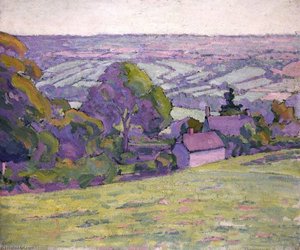
Evening in the Culme Valley
 Oil On Canvas
- WallArt
- Post-Impressionism
 1912
1912- Modern
 51.0 x 61.0 cm
 Разгърни целия текст
Жикле / Художествен принт
Giclée печат или принт върху платно с музейно качество, бързо производство и гъвкави опции за завършен вид. ( Поръчайте ръчно рисувано репродукция на този колекционерски предмет Превключване към дигитално изображение)




P118B $10

P118H $10

P118W $10

P438Z $10

P508JH $12

P508YH $12

P805H $10

P805Z $10

P919BZ $10

P919G $10

P919XJ $10

P959ZH $10

P968JZ $12

W106C $8

W218G $10

W218JH $8

W218Y $10

W307PJ $10

W316G $10

W316PJ $8

W316Y $10

W398PJ $8

W4111J $10

W500HY $15

W500JH $15

W692G $12

W849H $8

W940BG $15

W953PJ $8




Изберете от нашите предварително зададени размери, които съответстват на оригиналните пропорции на произведението.

Можете да въведете собствени размери, за да паснат на конкретна рамка или пространство. Ако избраният от Вас размер не съвпада с пропорциите на оригиналното изображение, ние ще изрежем произведението или ще разширим изображението с огледален или едноцветен ръб. Дигитален макет ще бъде изпратен за Ваше одобрение преди започването на производството.
Моля, имайте предвид, че предпрегледът на екрана не отразява реалното изрязване или разширяване. Само макетът ще покаже точно финалната композиция.
Въпреки че са налични персонализирани размери, препоръчваме да изберете размер от предварително дефинирания списък, за да запазите оригиналните пропорции.
Доставка по целия свят () в рамките на 2 седмици вместо стандартните 4/5 седмици. (25 Септември)

Безплатна експресна доставка по целия свят

Висококачествено ленено платно

Пълно застраховане на доставката

Гаранция за възстановяване на митнически такси

Гаранция за пълно съответствие на цветовете

Политика за връщане в рамките на 100 дни (само при дефекти)

100% Гаранция за връщане на сумата

Отстъпка при поръчка на повече произведения
 Опцията със стъкло е налична само за размери под 110 см

Evening in the Culme Valley
Жикле / Художествен принт
Размер на репродукцията
-


Крайна цена
$ 80
A Serene Encounter with the English Countryside
In the quietude of Evening in the Culme Valley, created in 1912 by the master of British Modernism, Robert Polhill Bevan, we are invited to step into a world where time seems to decelerate. This exquisite oil on canvas is far more than a mere depiction of a landscape; it is a profound meditation on the harmony between humanity and the natural world. As the sun begins its descent, casting a soft, transformative light across the valley, the viewer is greeted by a lush tapestry of verdant greens and deep, earthy tones. The composition is masterfully balanced, guiding the eye through a rolling terrain where the gentle undulations of the hills meet a sky of tranquil blue, punctuated by wisps of drifting clouds.
The painting captures a specific, fleeting moment of pastoral peace. Within this sprawling landscape, two solitary figures are nestled—one perched upon a hillside and another positioned toward the right periphery. Their presence does not disrupt the solitude of the scene but rather provides a vital sense of scale and human connection to the vastness of the Culme Valley. This subtle inclusion of life evokes a sense of Romanticism, reminiscent of the legendary John Constable, yet infused with the burgeoning modern sensibilities that Bevan championed throughout his career.
Technique, Color, and the Modernist Touch
What distinguishes this work is Bevan’s sophisticated command of color and light. Moving beyond the purely observational techniques of Impressionism, Bevan utilizes a palette that feels both grounded in reality and heightened by artistic emotion. The interplay between the vibrant green foliage and the occasional striking accents of red leaves creates a rhythmic visual melody, preventing the eye from resting too long in one place and instead encouraging a continuous journey across the canvas. His brushwork, while maintaining the structural integrity of the trees and hills, possesses a fluid quality that captures the atmospheric haze of an approaching evening.
For the discerning collector or interior designer, this piece offers a unique versatility. The painting’s ability to evoke tranquility makes it an ideal centerpiece for spaces designed for reflection and repose. Whether placed in a sun-drenched morning room or a sophisticated study, the work brings with it an air of historical prestige and organic warmth. The subtle textures of the oil on canvas, when rendered in a high-quality reproduction, allow the light to dance across the surface, mimicking the original's ability to transform the mood of a room.
A Legacy of Light and Landscape
To understand Evening in the Culme Valley is to understand the evolution of British art at the dawn of the twentieth century. Bevan, a pioneer who bridged the gap between traditional landscape painting and the radical experiments of modernism, imbues this work with a sense of enduring stability. There is a profound emotional resonance found in the way he captures the "essence" of the English countryside—not just as a physical location, but as a psychological sanctuary.
Owning or displaying a reproduction of this masterpiece allows one to invite the timeless beauty of the 1912 landscape into the modern home. It serves as a constant reminder of the beauty found in stillness and the enduring power of nature to soothe the human spirit. As an investment in atmosphere and art history, this painting stands as a testament to Bevan's ability to find the extraordinary within the ordinary, making it a captivating choice for anyone looking to enrich their environment with depth, color, and soul.
Биография на художника
A Pioneer of British Modernism: The Life and Art of Robert Polhill Bevan
Robert Polhill Bevan, born in Hove in 1865, occupies a pivotal yet often understated position within the narrative of early 20th-century British art. Emerging from a Quaker background steeped in banking connections – his parents were Richard Alexander Bevan and Laura Maria Polhill – he defied conventional expectations to become a daring innovator, a key figure in the transition from Impressionism towards more radical explorations of color and form. His journey was one of constant experimentation, absorbing influences from across Europe while forging a distinctly personal artistic vision that would profoundly impact the development of modern art in Britain. Bevan’s early education at Westminster School of Art under Fred Brown provided a solid foundation, but it was his subsequent studies at the Académie Julian in Paris that truly ignited his creative spark. There, he encountered a constellation of rising stars – Paul Sérusier, Pierre Bonnard, Édouard Vuillard, and Maurice Denis – artists who were challenging academic conventions and embracing new approaches to painting. These encounters proved formative, exposing Bevan to the principles of synthetism and laying the groundwork for his future explorations.Early Influences and Artistic Formation
Bevan’s formative years instilled in him a deep appreciation for meticulous observation and disciplined technique—qualities that would characterize his entire artistic career. His upbringing within a Quaker family fostered values of integrity and social responsibility, shaping his worldview and informing his engagement with the broader cultural landscape. Recognizing his innate talent for drawing, Bevan benefited from private instruction with Arthur Earnest Pearce (1859–1934), who later became a designer for Doulton’s potteries—a connection that would prove invaluable in nurturing his artistic sensibilities. The Westminster School of Art under Frederick Brown provided him with a crucial grounding in traditional art training, equipping him with the skills necessary to master perspective and draughtsmanship. However, it was Paris – specifically the Académie Julian – where Bevan truly blossomed as an artist. Surrounded by fellow innovators like Sérusier, Bonnard, Vuillard, and Denis—artists who were actively dismantling established artistic hierarchies—he absorbed the revolutionary ideas of synthetism and embraced a bold new vision for painting. These encounters fundamentally altered his artistic trajectory, propelling him toward experimentation with color and form that would distinguish him from many of his peers.Brittany: The Catalyst for Color
The allure of Brittany exerted an irresistible influence on Bevan’s artistic development during the summers of 1890 and 1891. Drawn to Pont-Aven—a coastal town rapidly gaining renown as a haven for artists seeking respite from Parisian society—he immersed himself in the vibrant atmosphere fostered by Gauguin and his fellow Impressionists. The bold hues and simplified geometries championed by these pioneers resonated deeply with Bevan’s sensibilities, informing his early sketches and prints. He meticulously documented the landscape—the rugged coastline, the verdant hillsides, and the shimmering waters—capturing not merely visual accuracy but also an emotional response to the sublime beauty of nature. This fascination with Breton landscapes would endure throughout his life, serving as a constant source of inspiration for his paintings and lithographs. The influence of Gauguin’s expressive use of color is palpable in Bevan's early works, demonstrating a willingness to abandon naturalistic representation in favor of conveying subjective experience—a pivotal step toward embracing the tenets of Fauvism.The Emergence of Fauvist Expression
Around 1904, Bevan embarked on a path of experimentation with pure color that anticipated the burgeoning movement of Fauvism on the continent. His painting “Courtyard” stands as a testament to this transformative moment—a daring departure from Impressionistic subtlety in favor of intense chromatic vibrancy. Bevan deliberately rejected blending colors to create tonal gradations, opting instead for juxtaposing complementary hues—such as orange and blue—to generate visual impact and heighten emotional resonance. This stylistic choice aligns perfectly with the Fauvist aesthetic, which prioritized color above all else—a radical assertion that challenged prevailing artistic conventions and signaled a decisive break from academic tradition. Like Matisse and Derain, Bevan sought to liberate color from its descriptive role, harnessing it as an expressive tool to convey mood and emotion—a strategy that would become central to his oeuvre.Camden Town Group and Legacy
Bevan’s artistic endeavors extended beyond individual paintings; he actively participated in the formation of influential art collectives that reshaped British artistic culture. As a founding member of the Camden Town Group—alongside Gore, Ginner, Bell and Hepworth—he championed a vision of modern art rooted in urban life and informed by social consciousness. The group’s members deliberately rejected the prevailing aesthetic trends of their time, prioritizing bold color palettes and simplified forms to depict scenes from London’s industrial landscape. Bevan's involvement with Camden Town Group solidified his reputation as a trailblazer—a figure who dared to challenge artistic dogma and forge new paths for British art. His legacy continues to inspire artists today, demonstrating the enduring power of experimentation and conviction in shaping artistic innovation. Bevan’s paintings—particularly those depicting landscapes and urban vistas—remain treasured examples of early twentieth-century British art, embodying a commitment to both aesthetic beauty and social engagement. His contribution to the Camden Town Group ensured that British painting would continue to evolve in bold new directions.
Робърт Полихил Бевън
1865 - 1925 , Великобритания
Бързи факти
- Artistic Movement Or Style: Фавизъм, Дивионизм
- Artists Or Movements Influenced By This Artist: ['Модерна британска изкуство']
- Artists Who Influenced This Artist:
- Валтер Сикерт
- Паоло Гугенхайм
- Жозеф Кроуъл
- Date Of Birth: 1865
- Date Of Death: 1925
- Full Name: Robert Polhill Bevan
- Nationality: Британски
- Notable Artworks:
- Дъхът на полето
- Колесни карети
- Къща
- Place Of Birth: Hove, Великобритания
Свързани статии
Топ 25 шедьовъра на Клод Моне: Вдъхновение за вашия дом | OriginalUniqueArt.bg
Разгледайте топ 25 шедьовъра на Клод Моне – импресионистични пейзажи, водни лилии и светлина в картините. Вдъхновете се за вашия декор с висококачествени репродукции на OriginalUniqueArt.bg! Открийте цялата колекция онлайн.

Топ 25 шедьовъра на Джон Констабъл: Английски пейзажи за вашия дом | OriginalUniqueArt.com
Открийте топ 25 шедьовъра на Джон Констабъл – английски пейзажи, романтизъм и красотата на природата. Репродукции с музейно качество за вашия дом! Разгледайте пълната колекция онлайн на OriginalUniqueArt.com.
Serene Visions: Exploring Themes of Tranquility in Art History & Contemporary Practice
Explore the history of serene landscape art & discover artists who evoke tranquility. Find the perfect calming artwork for your home with expert guidance from OriginalUniqueArt.

Топ 10 шедьовъра в нюансите на синьото: Изкуство за вашия дом от OriginalUniqueArt.com
Разгледайте топ 10 шедьовъра в нюансите на синьото – от Моне до Ван Гог! Открийте историите зад картините, техниките и значението им. Купете висококачествени репродукции на OriginalUniqueArt.com и превърнете дома си в галерия.
Verdant Visions: Exploring the Symbolism & Aesthetic Impact of Green in Art History
Explore the rich history & symbolism of green in art! Discover iconic paintings, techniques, and how to bring verdant harmony into your home with OriginalUniqueArt's expert guide.