
 Преглед в реален мащаб
 Изпрати
 Сподели
 Детайли
 Ръководство

 Изтегляне
 Подобни артикули
 Рентгенова снимка
 Слайдшоу
 Въпроси и отговори
 Статистика
Radha in the Moonlight

- 146.0 x 105.0 cm


 Прочети повече
Жикле / Художествен принт
Giclée печат или принт върху платно с музейно качество, бързо производство и гъвкави опции за завършен вид. ( Купете ръчно рисувана картина Превключване към дигитално изображение)




P118B €10

P118H €10

P118W €10

P438Z €10

P508JH €12

P508YH €12

P805H €10

P805Z €10

P919BZ €10

P919G €10

P919XJ €10

P959ZH €10

P968JZ €12

W106C €8

W218G €10

W218JH €8

W218Y €10

W307PJ €10

W316G €10

W316PJ €8

W316Y €10

W398PJ €8

W4111J €10

W500HY €15

W500JH €15

W692G €12

W849H €8

W940BG €15

W953PJ €8




Изберете от нашите предварително зададени размери, които съответстват на оригиналните пропорции на произведението.

Въведете необходимата ширина и височина, за да паснат на вашата рамка или стена. Принтовете могат само да се изрязват, но никога не могат да бъдат по-големи от оригиналната картина, така че при размер с различен формат част от изображението ще бъде загубена. Преди да започнем печат, ще ви изпратим дигитален мок업 за одобрение. Изображението, показано на тази страница, не показва реалното изрязване — само мок업ът го показва.
Доставка по целия свят () в рамките на 2 седмици вместо стандартните 4/5 седмици. (4 Ноември)

Безплатна експресна доставка по целия свят

Висококачествено ленено платно

Пълно застраховане на доставката

Гаранция за възстановяване на митнически такси

Гаранция за пълно съответствие на цветовете

Политика за връщане в рамките на 100 дни (само при дефекти)

100% Гаранция за връщане на сумата

Оферта за отстъпка при поръчка на повече бройки
 Опцията със стъкло е налична само за размери под 110 см

Radha in the Moonlight
Жикле / Художествен принт
Размер на репродукцията
-


Обща цена
€ 72
A Vision of Divine Love: Raja Ravi Varma’s *Radha in the Moonlight*
Raja Ravi Varma's *Radha in the Moonlight*, painted in 1890, stands as a pinnacle of Indian Romanticism and a testament to his unparalleled skill in synthesizing Western academic training with deeply rooted Hindu iconography. This captivating portrait transcends mere representation; it embodies the essence of the ‘uttama nayika,’ the ideal woman figure from classical Sanskrit literature – a being of profound beauty, intelligence, and spiritual grace. The painting’s enduring appeal lies not just in its technical brilliance but also in its ability to evoke a timeless narrative of love, devotion, and the merging of earthly and divine realms.
- Subject & Narrative: At its heart, *Radha in the Moonlight* depicts Radha, the beloved consort of Krishna, poised on the precipice of their legendary romance. The scene captures a moment of anticipation, perhaps just as Krishna emerges from the trees, hinting at the passionate love play that defines their mythology.
- Technique & Style: Ravi Varma’s mastery is immediately apparent in his meticulous rendering of form and texture. Executed with the precision characteristic of academic painting – a style he adopted after studying in London – the work showcases a remarkable understanding of light, shadow, and anatomical detail. The use of rich pigments, particularly in the vibrant hues of Radha's attire and the shimmering water, contributes to the painting’s luminous quality.
- Historical Context: Created during a period of significant cultural exchange between India and Europe, *Radha in the Moonlight* reflects Ravi Varma’s innovative approach. He skillfully adapted European techniques – particularly in his use of perspective and composition – while firmly grounding them within the conventions of Indian art tradition. His royal patronage further enabled him to explore ambitious themes and experiment with scale, culminating in works that were both groundbreaking and deeply resonant with contemporary audiences.
Symbolism & Iconography
The painting is laden with symbolic meaning, drawing upon a rich tapestry of Hindu mythology and iconography. The presence of the *pooja thali* – a platter adorned with flowers and sweetmeats – immediately establishes Radha’s role as a devotee engaged in ritual worship. This gesture signifies her reverence for Krishna and underscores the central theme of their relationship: a harmonious blend of earthly love and divine devotion. The rocks upon which she sits represent stability and grounding, while the glimmering water symbolizes purity and transformation. The setting itself – a serene landscape with trees and mountains – evokes a sense of timelessness and spiritual refuge.
- Krishna’s Absence: Notably, Krishna himself is absent from the scene. This deliberate omission emphasizes Radha's central role as the object of devotion and highlights her inner world of longing and yearning.
- Traditional Attire: Radha’s traditional Indian attire – a *sari* – further reinforces her identity as an embodiment of classical Indian aesthetics and values. The intricate details of her clothing, rendered with exquisite precision, speak to the importance of adornment and beauty in Hindu culture.
Emotional Impact & Artistic Legacy
*Radha in the Moonlight* possesses a profound emotional impact, captivating viewers with its serene beauty and evocative atmosphere. Ravi Varma’s ability to convey Radha's inner state – her intelligence, sensitivity, and longing – elevates this painting beyond a mere depiction of a mythological figure. It is a powerful meditation on love, devotion, and the human condition. Raja Ravi Varma’s work has had an enduring legacy, influencing generations of Indian artists and solidifying his place as one of the most important figures in the history of modern Indian art. This reproduction offers a unique opportunity to experience the full beauty and emotional depth of this iconic masterpiece.
Size:** 146 x 105 cm Date:** 1890 Artist:** Raja Ravi Varma (1848-1906)Въпроси и отговори
Какви са реалните размери на „Radha in the Moonlight“ на Раджа Рави Варма?
Размерите на оригиналната творба „Radha in the Moonlight“ на Раджа Рави Варма са 146 x 105 cm. Репродукции могат да бъдат поръчани в други размери, като се запазват същите пропорции.
Мога ли да гледам "Radha in the Moonlight" като слайдшоу на цял екран?
„Radha in the Moonlight“ на Раджа Рави Варма може да бъде разгледано като слайдшоу на страницата Слайдшоу на произведението.
Какъв е препоръчителният размер за печат на "Radha in the Moonlight"?
За произведението „Radha in the Moonlight“ се препоръчва печат с размер Large. Налични са и други размери със същите пропорции.
Биография на художника
The Princely Brush: Raja Ravi Varma and the Dawn of Modern Indian Painting
Raja Ravi Varma, a name that echoes through the halls of Indian art history, was more than just a painter; he was a cultural architect who skillfully blended European academic techniques with the vibrant soul of Hindu mythology. Born in 1848 within the opulent confines of Kilimanoor Palace, nestled amidst the lush landscapes of Kerala, his life unfolded as a remarkable synthesis of aristocratic privilege and an unyielding creative spirit. He wasn’t merely capturing images; he was breathing life into ancient narratives, forging a new visual language for India that would resonate deeply with its people. His family's deep roots within the Travancore royal house – two of his daughters later becoming integral members of the royal family – provided him with an unparalleled understanding of Indian courtly traditions and values, profoundly shaping his artistic vision. From a young age, Ravi Varma displayed an extraordinary aptitude for art, nurtured by his uncle, Raja Raja Varma, who introduced him to the world of drawing and painting, primarily within the established framework of the Tanjore School. However, this was merely the foundation upon which he would build something truly revolutionary – a fusion of East and West that redefined Indian artistic expression.A Fusion of Worlds: Technique and Inspiration
Ravi Varma’s artistic journey took an extraordinary turn during his travels and interactions with British officials stationed in India. He became utterly captivated by the realism, precision, and technical mastery evident in European academic painting. He diligently studied its principles – perspective, anatomy, light, and shadow – not simply to imitate, but to understand how these elements could be harnessed to convey emotion and narrative depth within his own work. Crucially, unlike many of his contemporaries who merely adopted Western styles superficially, Varma ingeniously adapted these techniques to serve distinctly Indian subjects. His canvases transformed into vibrant stages for scenes from the Ramayana, the Mahabharata, and the Puranas, populated by gods and goddesses rendered with a newfound naturalism that was both startlingly lifelike and deeply evocative. He didn’t merely illustrate religious stories; he imbued them with human emotion, psychological complexity, and an almost palpable sense of drama. Consider his portrayal of *Hansa Damayanthi*, where the heroine's longing gaze and delicate posture convey a depth of feeling previously unseen in Indian art – a testament to Varma’s ability to transcend mere representation and capture the very essence of human experience. His mastery of oil painting, a relatively new medium in India at the time, allowed him to achieve an unprecedented level of detail, luminosity, and emotional intensity. The rich colors, subtle gradations of light, and meticulously rendered textures created a visual feast that captivated audiences and established him as a pioneer of modern Indian painting.Democratizing Art: Lithographs and Public Appeal
Recognizing that his exquisite paintings were largely confined to the elite circles of royalty and art connoisseurs, Raja Ravi Varma embarked on a bold initiative – establishing the Raja Ravi Varma Fine Arts Lithographic Press in 1894. This groundbreaking venture was nothing short of revolutionary. By utilizing lithography, a printing technique that allowed for the mass production of affordable images, he democratized access to his art like never before. Suddenly, scenes from Hindu mythology and religious narratives were no longer restricted to temples or palaces; they adorned homes across India, becoming objects of worship, cultural pride, and shared identity. The lithographs weren’t simply reproductions; they were carefully crafted interpretations that captured the essence of Varma's originals – a testament to his artistic vision and meticulous attention to detail. This act of “democratizing art” had a profound impact on Indian society, fostering a wider appreciation for visual culture and shaping popular perceptions of religious iconography. The lithographs became symbols of national identity, uniting people across social and economic divides through their shared connection to these iconic images.Royal Patronage and Artistic Development
Ravi Varma’s artistic development was significantly shaped by the patronage he received from various royal courts throughout India. He began his career as a court painter in Travancore, where he honed his skills under the guidance of Rama Swamy Naidu, a seasoned palace painter. Later, he served in the royal courts of Mewar, Baroda, and Mysore, each experience enriching his artistic repertoire and exposing him to diverse cultural influences. This constant interaction with royalty provided him with access to resources, materials, and opportunities for experimentation that would have otherwise been unavailable. The support of these royal patrons allowed him to travel extensively, study different artistic traditions, and develop a uniquely hybrid style – one that seamlessly blended European academic techniques with the rich tapestry of Indian mythology and aesthetics. His ability to navigate these diverse environments and adapt his art to suit different cultural contexts is a testament to his versatility and artistic genius.Legacy and Enduring Influence
Raja Ravi Varma passed away in 1906, leaving behind a legacy that continues to inspire and influence artists today. He wasn’t merely a painter; he was a visionary who fundamentally altered the course of Indian art history. His work not only transformed the landscape of Indian painting but also laid the foundation for modern Indian art by challenging conventional norms, embracing innovation, and skillfully blending tradition with modernity. His paintings remain powerful testaments to his genius – masterpieces that capture the beauty, spirituality, and cultural richness of India. He is rightly regarded as one of the most important figures in Indian art history, a pioneer who dared to forge a new path and inspire generations of artists to come. His influence can be seen in the works of subsequent generations of Indian artists who sought to create a distinctly national artistic identity, reflecting both their heritage and their aspirations for the future.- Explore artworks: Discover masterpieces like "Portrait of a Gentleman," "Hansa Damayanthi," and "The Maharani of Travancore" through online databases.
- Visit museums: Immerse yourself in Varma’s legacy at The Raja Ravi Varma Heritage Foundation, The Ganesh Shivaswamy Foundation, and the Kiran Nadar Museum of Art.
- Further research: Consult Wikipedia and Google Arts & Culture for detailed biographical information and scholarly insights.
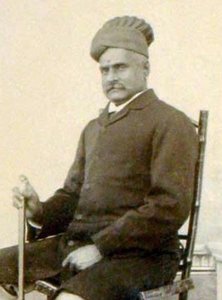
Раджа Рави Варма
1848 - 1906 , Индия
Бърза информация
- Artistic Movement Or Style: Академичен и индийски фюжън
- Artists Or Movements Influenced By This Artist: ['Съвременна индийска изкуство']
- Artists Who Influenced This Artist: ['Европейски майстори']
- Date Of Birth: 29 април 1848
- Date Of Death: 2 октомври 1906
- Full Name: Raja Ravi Varma
- Nationality: Индиец
- Notable Artworks:
- Ханса Дамаянти
- Махарани на Траванкоре
- Шакунтала
- Place Of Birth: Киламанавро, Индия
Свързани статии

Panoramic Visions of Empire: The Daniells’ Artistic Collaboration & Legacy
Explore the captivating 'Oriental Scenery' by Thomas & William Daniell. Discover their pioneering aquatint prints of India, imperial context, artistic collaboration, and lasting legacy. A deep dive for history lovers.
Joseph Henry Sharp: Capturing the Spirit of the Plains – Life, Art & Legacy
Explore the life & art of Joseph Henry Sharp, a founding member of the Taos Society of Artists renowned for his realistic depictions of Native American culture and Western landscapes. Discover his legacy with OriginalUniqueArt.
Shadow Catcher: Edward S. Curtis & the Ethnographic Portraiture of a Vanishing West
Explore the life & work of Edward S. Curtis, the 'Shadow Catcher,' and his groundbreaking photographic documentation of Native American cultures. Discover iconic images from *The North American Indian* and a critical look at his lasting legacy.

Raja Ravi Varma: Bridging Tradition & Modernity in 19th-Century Indian Art
Explore the life & art of Raja Ravi Varma, a pioneer who fused European techniques with Indian iconography. Discover his iconic paintings, lasting legacy, and influence on modern Indian art at OriginalUniqueArt.
George Catlin: Witnessing & Representing Indigenous Life on the American Frontier
Explore the captivating art of George Catlin, renowned for his vivid portraits & landscapes documenting Native American life on the frontier. Discover a vanishing world through stunning paintings and historical context.

