

 Преглед в реален мащаб
 Сподели
 Сподели
 Подробности
 Ръководство

 Изтегляне
 Подобни артикули
 Рентгенова снимка
 Слайдшоу
 Статистика
Untitled


 Разгърни целия текст
Изкуството, представено на тази страница, е защитено от законите за авторско право, което означава, че не можем законно да създаваме или продаваме идентични репродукции. Тази защита се прилага съгласно международни споразумения като Бернска конвенция и от националното законодателство, включително разпоредбите на Закон за авторското право на САЩ – Раздел 17.
Този метод е напълно съвместим с законите за авторско право, тъй като не включва копиране или дублиране на защитеното произведение. Вместо това става въпрос за творческа реинтерпретация – нова картина, която е вдъхновена от оригинала, но не е идентична с него.
Жикле / Художествен принт
Giclée печат или принт върху платно с музейно качество, бързо производство и гъвкави опции за завършен вид. ( Поръчайте ръчно рисувано репродукция на този колекционерски предмет Превключване към дигитално изображение)




P118B €10

P118H €10

P118W €10

P438Z €10

P508JH €12

P508YH €12

P805H €10

P805Z €10

P919BZ €10

P919G €10

P919XJ €10

P959ZH €10

P968JZ €12

W106C €8

W218G €10

W218JH €8

W218Y €10

W307PJ €10

W316G €10

W316PJ €8

W316Y €10

W398PJ €8

W4111J €10

W500HY €15

W500JH €15

W692G €12

W849H €8

W940BG €15

W953PJ €8




Изберете от нашите предварително зададени размери, които съответстват на оригиналните пропорции на произведението.

Въведете необходимата ширина и височина, за да паснат на вашата рамка или стена. Принтовете могат само да се изрязват, но никога не могат да бъдат по-големи от оригиналната картина, така че при размер с различен формат част от изображението ще бъде загубена. Преди да започнем печат, ще ви изпратим дигитален мок업 за одобрение. Изображението, показано на тази страница, не показва реалното изрязване — само мок업ът го показва.
Доставка по целия свят () в рамките на 2 седмици вместо стандартните 4/5 седмици. (22 Октомври)

Безплатна експресна доставка по целия свят

Висококачествено ленено платно

Пълно застраховане на доставката

Гаранция за възстановяване на митнически такси

Гаранция за пълно съответствие на цветовете

Политика за връщане в рамките на 100 дни (само при дефекти)

100% Гаранция за връщане на сумата

Отстъпка при поръчка на повече произведения
 Опцията със стъкло е налична само за размери под 110 см

Untitled
Жикле / Художествен принт
Размер на репродукцията
-


Крайна цена
€ 70
A Chronicle of Overtown: Purvis Young’s ‘Untitled’ (1980)
Purvis Young's art wasn’t born within the pristine walls of an artist’s studio, but rather emerged from the vibrant, often turbulent streets of Miami’s Overtown neighborhood. This particular piece, “Untitled” (1980), is a potent distillation of that lived experience—a layered testament to a community’s resilience, its struggles, and its enduring spirit. It's not merely a painting; it’s an archive, a memory captured in ink and paper, a window into a forgotten corner of American history.
The artwork itself is a captivating assemblage, dominated by a stack of aged books – their yellowed pages hinting at countless stories absorbed and then largely discarded. These aren't simply decorative; they’re the foundation upon which Young constructs his narrative. Affixed to the front cover is an abstract painting—a dynamic swirl of black ink against a textured background of browns, tans, and subtle blues. The style leans heavily into expressionism, mirroring the raw emotion and immediacy of Young’s process. There's a deliberate lack of polish; the brushstrokes are visible, the edges frayed, suggesting a work created with urgency and without meticulous planning – a reflection of Young’s own approach to his art.
The Language of Found Materials
Young’s genius lay in his resourceful use of discarded materials. He didn't seek out canvases or traditional paints; instead, he embraced the detritus of urban life—old books, newspapers, magazines, correspondence, and even discarded bills – transforming them into the very fabric of his art. “Untitled” exemplifies this perfectly. The books themselves are not just a backdrop but actively contribute to the composition, their worn covers and fragmented pages symbolizing forgotten histories and untold narratives. The layering of these found elements creates a rich tapestry of textures and visual information, inviting the viewer to piece together their own interpretation.
The abstract painting adhered to the book cover adds another layer of complexity. It’s difficult to discern specific figures or forms within its swirling patterns, yet it evokes a sense of movement, energy, and perhaps even chaos – mirroring the social dynamics of Overtown at the time. Young often used these abstract elements as vehicles for expressing emotions and ideas that were difficult to articulate directly.
Overtown: A Community in Transition
To fully appreciate “Untitled,” it’s crucial to understand the historical context surrounding Purvis Young's work. Overtown, a predominantly Black neighborhood in Miami, was a vibrant hub of Jamaican culture and community life in the mid-20th century. However, by the late 1960s, it faced systematic displacement due to urban renewal projects – specifically, the construction of Interstate 395, which effectively cleaved the neighborhood apart. Young’s art became a powerful record of this transition—a poignant documentation of Overtown's social life, its struggles, and ultimately, its loss.
The drawings within the books themselves offer glimpses into this world: basketball games, horse races, pregnant women, funerals – scenes of everyday life rendered with an arresting immediacy. They are not idealized representations; they capture the grit, the hardship, but also the joy and resilience of a community facing immense challenges.
Symbolism and Emotional Resonance
“Untitled” is more than just a visual record; it’s imbued with potent symbolism. The aged books represent memory and the passage of time, while the fragmented pages suggest broken narratives and lost histories. The abstract painting embodies the chaotic energy of urban life and the difficulty of capturing complex emotions. Ultimately, the artwork evokes a sense of melancholy—a recognition of loss and displacement – but also a profound appreciation for the enduring spirit of a community.
Purvis Young’s work continues to resonate today because it speaks to universal themes of identity, memory, and social justice. “Untitled” is a powerful reminder that art can be born from adversity and that even the most discarded materials can hold extraordinary beauty and meaning. It's a piece that invites contemplation, sparking dialogue about history, community, and the power of artistic expression.
Въпроси и отговори
Колко наситени са цветовете на "Untitled"?
Цветът на „Untitled“ е с Muted наситен и с Balanced интензивност.
В коя част от дома би изглеждала добре репродукцията на "Untitled"?
Репродукция на „Untitled“ се вписва отлично в Living Room.
Каква ориентация има „Untitled“ на Пурвис Юнг?
„Untitled“ на Пурвис Юнг е Square композиция. Пропорциите си заслужават да бъдат проверени преди избор на размер на принта.
Биография на художника
A Life Forged in Overtown: The Story of Purvis Young
Purvis Young’s art wasn't born in a sterile studio, but rather emerged from the vibrant, chaotic heart of Miami’s Overtown neighborhood—a place he didn’t merely depict, but truly *lived* and breathed. Born in Liberty City in 1943, his journey was one defined by self-discovery, fueled by hardship, keen observation, and an unwavering commitment to translating the soul of his community onto any surface available to him. He wasn't a formally trained artist; his education stemmed from immersing himself deeply within art books during a period of incarceration, followed by relentless study at Miami’s public libraries – a testament to his innate curiosity and self-directed learning. This autodidactic approach became the cornerstone of his artistic identity—a deliberate rejection of established norms, mirroring the remarkable resilience of Overtown itself. His early life was marked by significant challenges, including time spent incarcerated for breaking and entering, an experience that profoundly shaped his worldview and ignited a creative fire within him. Upon his release, he didn’t seek out galleries or the patronage of established dealers; instead, he turned inward, finding inspiration in the decaying beauty and the raw humanity surrounding him – transforming discarded materials into powerful expressions of his surroundings.The Alchemy of Found Objects
Purvis Young's artistic process was as unique and unconventional as his vision. He wasn’t driven by a desire for pristine canvases or expensive materials; rather, he scoured Overtown—a neighborhood undergoing dramatic transformation and decline – for discarded wood, scrap metal, old books, fragments of wallpaper, and anything else that caught his eye. These weren't simply *materials*; they were the very essence of the community he sought to represent, imbued with memories, stories, and a sense of forgotten history. He meticulously transformed these castoffs into powerful assemblages – layering drawings, paintings, and text in a deliberately chaotic yet strangely harmonious manner. This technique wasn’t merely about resourcefulness or ingenuity; it was a deliberate act of reclamation—a way of giving voice to the marginalized, the overlooked, and the discarded. His work frequently featured recurring motifs: horses symbolizing freedom and hope, angels representing spirituality and faith, and fragmented figures engaged in ritualistic acts – all rendered with an expressive rawness that conveyed both profound despair and unwavering optimism. The surfaces themselves were often textured, layered, and deliberately distressed, mirroring the physical and emotional landscape of Overtown—its beauty intertwined with its struggles. He didn’t just paint *about* the neighborhood; he painted *with* it, incorporating its very fabric into his art.Influences and a Singular Voice
While largely self-taught, Young wasn't entirely isolated from artistic currents. The mural movement of the 1960s profoundly influenced him, inspiring him to create large-scale works directly within Overtown—transforming dilapidated walls into vibrant canvases that documented the lives and struggles of its residents. He absorbed influences from a diverse range of sources – evident in his eclectic style – yet he never simply imitated or copied existing styles. His work possesses a distinct aesthetic – a raw energy, a chaotic beauty, and a poignant social commentary that sets him apart. Some critics have noted echoes of Expressionism and Surrealism within his imagery, but these are filtered through the unique lens of his personal experience and cultural context. He wasn’t interested in replicating established styles; he was intent on forging his own visual language—one that could capture the complexities of urban life and the resilience of the human spirit. His work often felt deeply rooted in folk art traditions, yet it possessed a distinctly modern sensibility.A Chronicle of a Community
Purvis Young's significance extends far beyond mere aesthetics; his work serves as an invaluable historical document, preserving the memory of Overtown during a period of profound transformation and social upheaval. He captured the essence of a community facing displacement, poverty, and systemic injustice – giving voice to those who were often marginalized and ignored by mainstream society. His paintings weren’t simply representations of people; they *were* portraits of individuals, imbued with personality, dignity, and a sense of lived experience. The recurring imagery—horses galloping towards the horizon, angels watching over the city—suggested themes of hope, faith, and the pursuit of freedom. His art became a visual chronicle of Overtown’s soul, documenting its triumphs and tribulations with unflinching honesty.Recognition and Lasting Legacy
For years, Young's work circulated primarily within a devoted local following – a testament to his talent and the genuine connection he forged with the people of Overtown. Collectors like Jane Fonda, Damon Wayans, Jim Belushi, and Dan Aykwood recognized the power and originality of his vision early on, providing crucial support during a time when mainstream art institutions largely overlooked him. The documentary *Purvis of Overtown* (2006) brought wider attention to his life and work, but it was ultimately the increasing recognition from prestigious museums – including the American Folk Art Museum, the Pérez Art Museum Miami, and the Smithsonian American Art Museum – that solidified his place in art history. In 2018, he was posthumously inducted into the Florida Artists Hall of Fame—a remarkable achievement for an artist who had largely operated outside the established art world. Today, his paintings are held in collections around the globe, serving as a powerful reminder of the transformative power of art and the enduring legacy of a truly unique and visionary artist.
Пурвис Юнг
1943 - 2010 , Съединени Американски Щати
Бързи факти
- Artistic Movement Or Style: Социално изразяване
- Date Of Birth: 4 февруари 1943 г.
- Date Of Death: 21 април 2010 г.
- Full Name: Purvis Young
- Nationality: Американски
- Notable Artworks:
- Неопределено (1980)
- Неопределено (1978)
- Place Of Birth: Либерти Сити, САЩ
Свързани статии
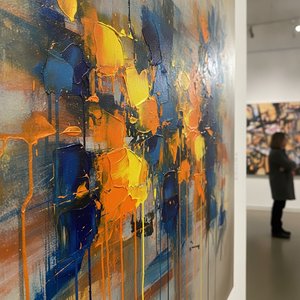
Beyond the Lines: Mastering the High-Impact World of Contemporary Abstraction
Master the high-impact world of contemporary abstraction. Discover how bold colors, textures, and modern movements like Abstract Expressionism can transform your space with premium, high-energy art curated for the design-conscious professional.

Топ 25 шедьоври на Василий Кандински: Абстрактно изкуство за вашия дом | OriginalUniqueArt.com
Разгледайте топ 25 шедьоври на Василий Кандински – пионер на абстрактното изкуство и експресионизма. Открийте историите зад цветните композиции, техниките и вдъхновението му. Купете висококачествени репродукции на картини Кандински за вашия дом на OriginalUniqueArt.com!
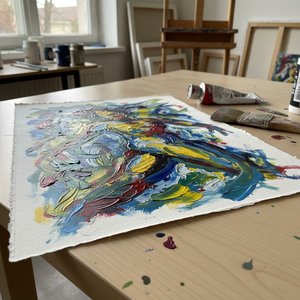
Acrylic on Paper: A Modern Canvas for Contemporary Expression
Explore the versatility of acrylic painting on paper! Discover expert techniques, artist insights & archival practices for creating stunning contemporary art. Learn more at OriginalUniqueArt.

Топ 10 шедьовъра на абстрактния експресионизъм – изкуство за вашия дом от OriginalUniqueArt.com
Разгледайте топ 10 шедьовъра на абстрактния експресионизъм – Полък, Ротко, де Кунинг и други. Открийте историите зад тези емблематични картини и преобразете дома си с изкуство от OriginalUniqueArt.com! Разгледайте пълната колекция онлайн.

Топ 10 шедьовъра на геометричната абстракция за Вашия дом | OriginalUniqueArt.com
Разгледайте топ 10 шедьовъра на геометричната абстракция – Кандински, Мондриан и други! Открийте историите зад тези емблематични картини и добавете елегантност към дома си с репродукции от OriginalUniqueArt.com. Разгледайте пълната колекция онлайн!


